Unlike wheeled walking bikes:
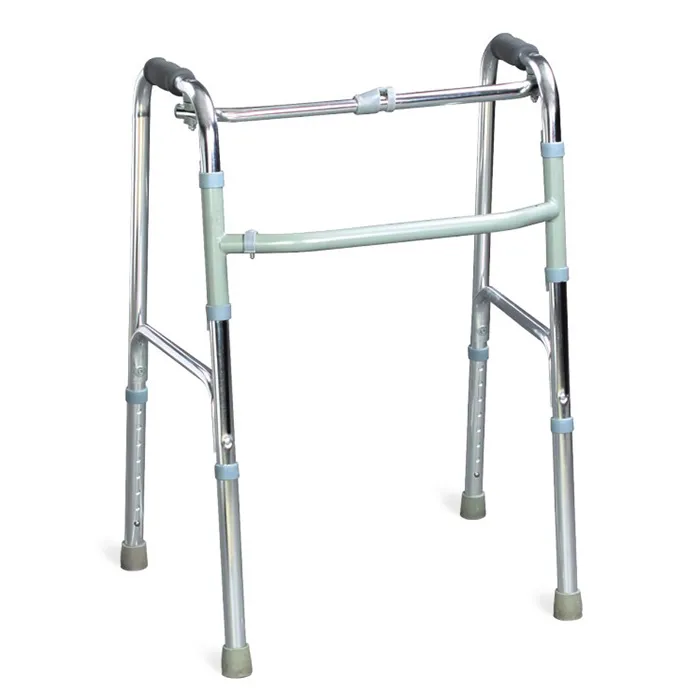
A wheelless walking bike has no wheels at all; the user must lift the bike to move it forward.
This basic yet stable method gives it an irreplaceable advantage in balance support.
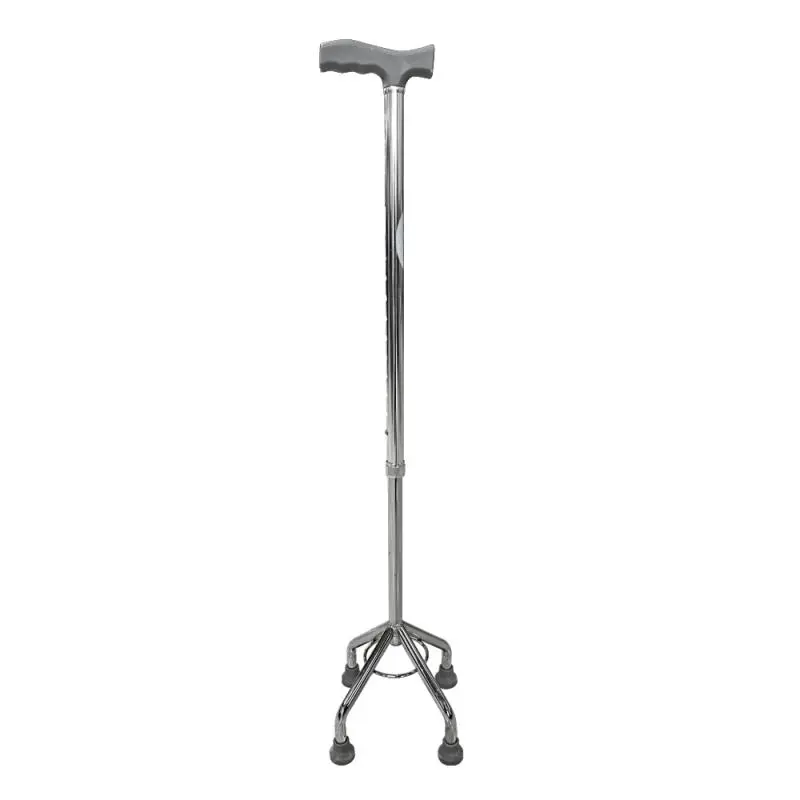
In terms of balance, the rollator walker is significantly superior to the walking stick.
✅ The rollator walker is more stable than the walking stick and is more suitable for severe balance problems.
✅ The walking stick is best suited for people with mild balance instability or weakness in one leg.
Typical structural features of a walking frame:
• Mostly four-legged
• Usually wheelless, or with two front wheels and no rear wheels
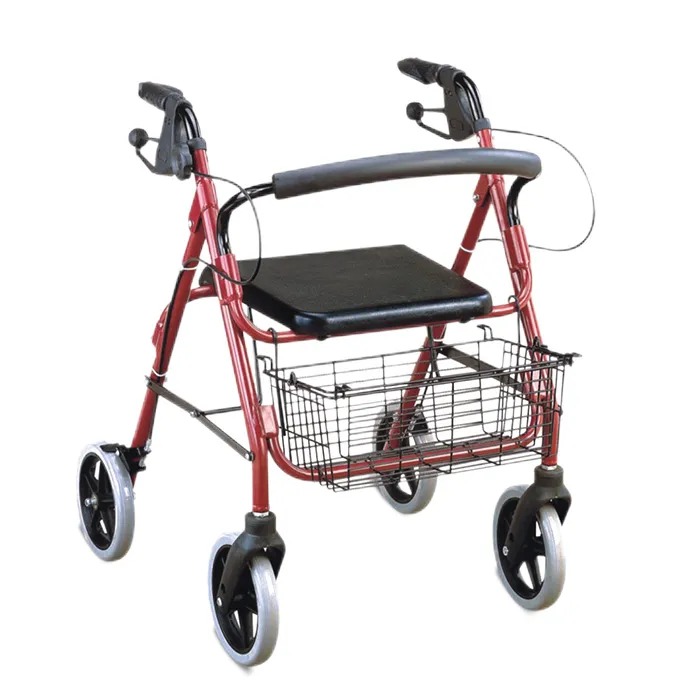
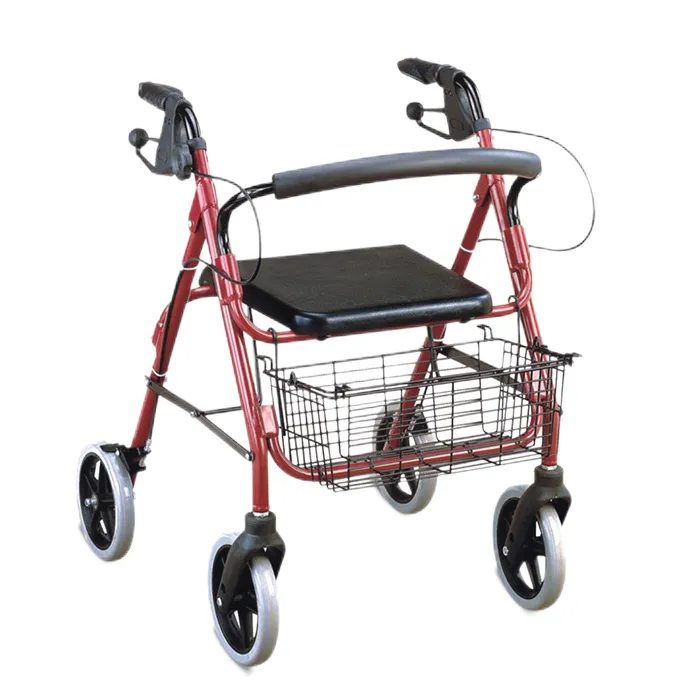
Typical structural features of a rollator (four-wheeled):
• Four large wheels (generally 6-10 inches)
• Built-in braking system (grip-type handbrake)
The 4-wheel rollator is currently the most common, structurally comprehensive, and widely applicable type of rollator. Many people with weaker balance prioritize this type of product because it provides not just "semi-support," but a complete combination of stability and flexibility.
• A 4-wheel rollator is an assistive device that allows users to "stand and walk."
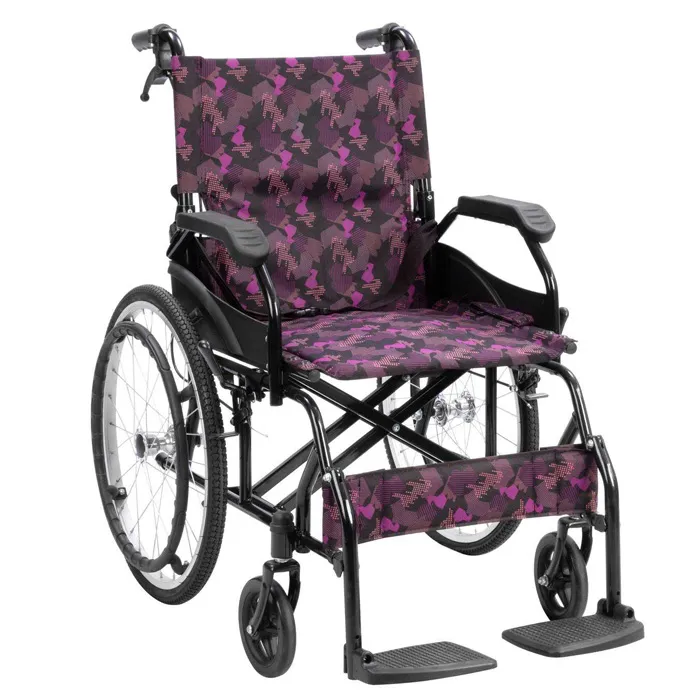
• A wheelchair is a mobility aid that allows users to "sit and be pushed or self-propelled."
In other words, a 4-wheel rollator requires the user to have a certain level of standing and walking ability, while a wheelchair is suitable for people who cannot walk or are not suitable for standing for extended periods.
Decreased balance is a major reason why many people start using a rollator.
If you frequently rely on walls, furniture, or others to maintain balance, then using a rollator is very necessary.
Yes, using a 4-wheel rollator for walking is an excellent form of exercise for seniors.
The reasons are as follows:
• Enhances leg strength and endurance
• Improves balance and posture
• Improves cardiovascular function
• Reduces the risk of falls
• Helps seniors maintain daily walking habits
No.
The "seat" of a 4-wheel rollator is designed for rest stops, not for being pushed while seated.
This means that any movement of the 4-wheel rollator walker while seated (whether by the user, a family member pushing, or sliding down a slope) is dangerous.
Most 4-wheel rollators come with a seat, but not all.
Based on mainstream market trends, 4-wheel rollators generally fall into two main categories:
1. 4-wheel rollators with seats (most common)
2. 4-wheel rollators without seats (relatively rare)
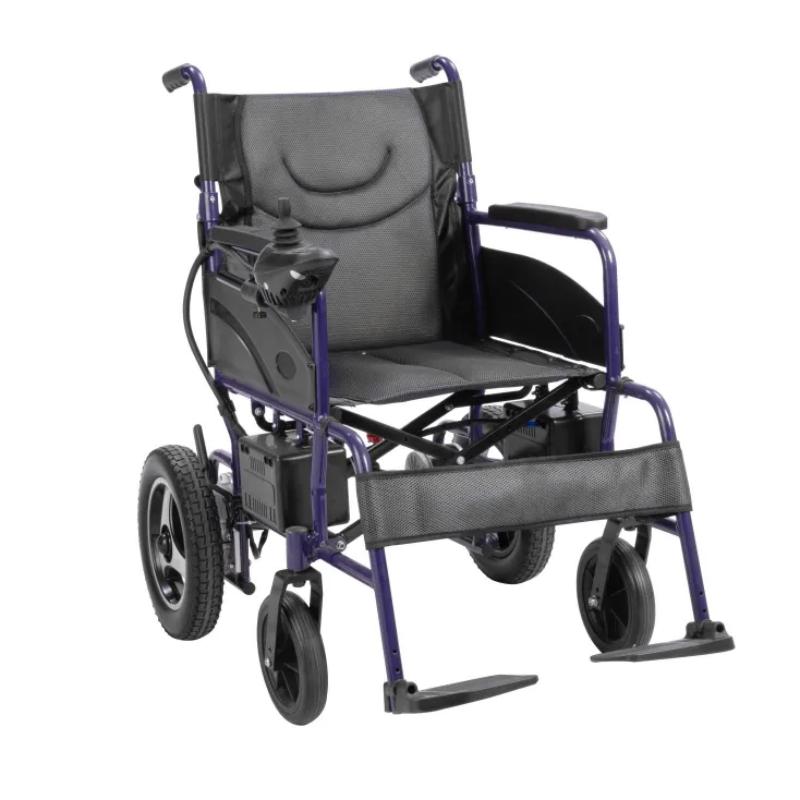
An electric wheelchair is a seated assistive device that is electrically powered and moves through a control system. Compared to a rollator walker, it not only solves the problem of "walking fatigue" but also comprehensively improves safety, stability, and comfort.