
In assistive devices, stability is one of the core factors users care about most. For users with weak balance, insufficient lower limb strength, or reduced motor control, a highly stable walking aid not only assists walking but also significantly reduces the risk of falls and increases user safety.
Therefore, "What is the most stable walking aid?" has become a key question frequently discussed by many users, family members, and caregivers.
Among various walking aids, wheelless walking aids (also known as wheelless walking frames or four-legged walking frames) are widely considered to be the most stable. Their simple structure, multiple support points, even force distribution, low center of gravity, and stable placement provide solid support in various environments, making them particularly suitable for users with severe balance deficiencies.
This article will provide an in-depth analysis of the topic "What is the most stable walking frame?", helping users systematically understand the structure, stability advantages, suitable users, and why wheelless walking aids are considered the most stable walking aframes.
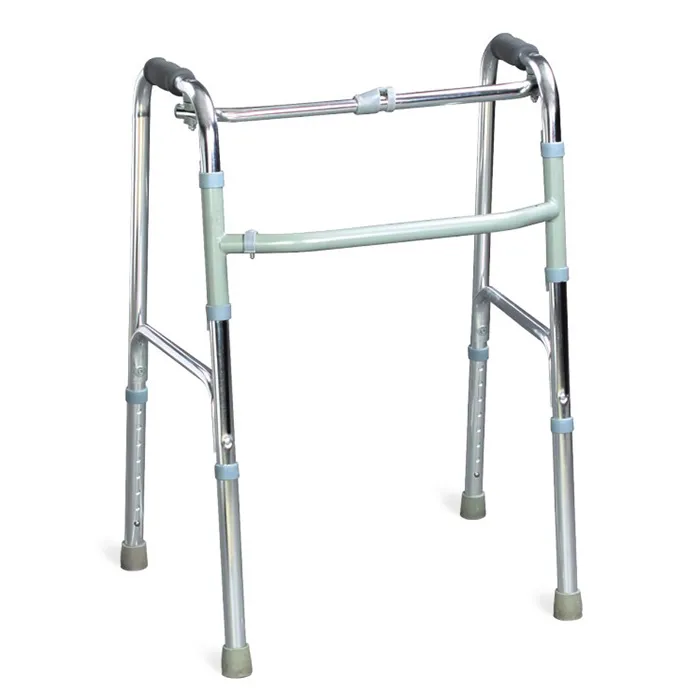
What is a wheelless walking aid?
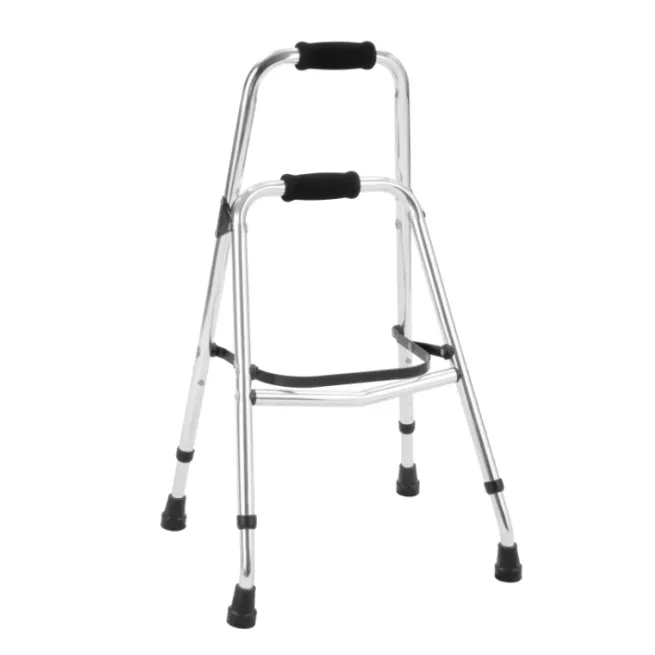
A wheelless walking frame is a type of mobility aid that relies entirely on a four-point stable support system. It consists of the following parts:
• Four sturdy metal support legs
• A U-shaped frame
• Handrails on both sides
• Height adjustment mechanism
• Rubber anti-slip pads
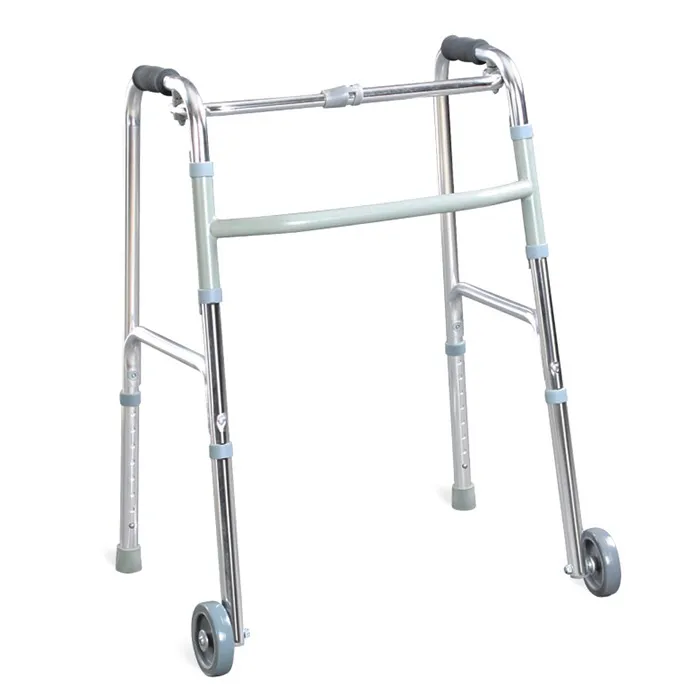
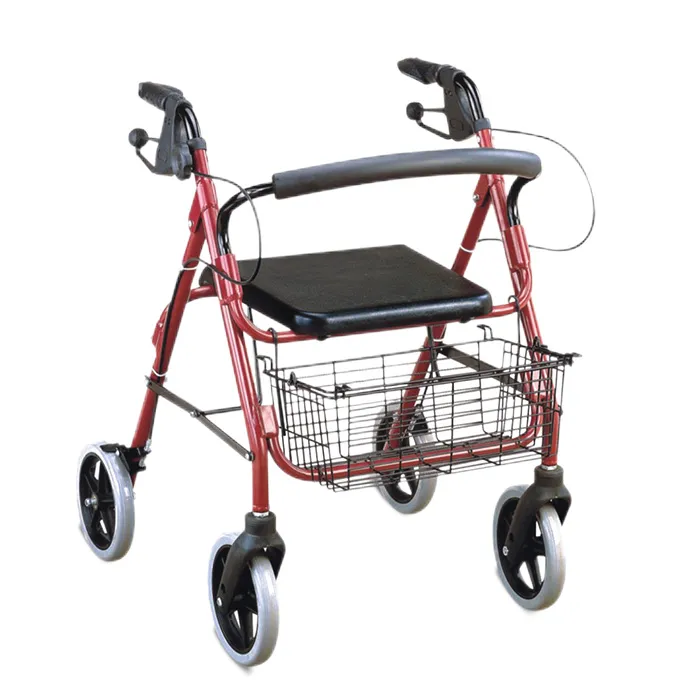
Unlike wheeled walking frames:
A wheelless walking frame has no wheels at all; the user must lift the bike to move it forward.
This basic yet stable method gives it an irreplaceable advantage in balance support.
Why is a wheelless walking frame considered the most stable type of mobility aid?
The main reasons why wheelless walking frames are considered the most stable mobility aid include:
1. Highest stability due to the four-point ground structure
The four support legs of a wheelless walking frame firmly on the ground form a natural "four-point support system."
The advantages of four-point support include:
• Large base surface
• Even resistance
• Reasonable force distribution
• Less prone to tipping over
In contrast, wheeled walking bikes are susceptible to slippage and directional deviation during movement.
2. No Wheels = Absolutely No Slipping
Many wheeled walking frames, even with braking systems, can slip on wet surfaces or due to user instability, leading to accidental movement. Wheelless walking aids, having no wheels, therefore:
• Will not slip
• Will not suddenly lurch forward
• Will not tip over due to brake failure
• Are virtually impossible to move when stationary
This is the key reason for their superior stability.
3. Large Support Base, Minimal Balance Requirements
Wheelless walking aids have a large front-to-back and lateral width, forming a wide and stable "safety frame."
In the principles of physical balance:
The larger the reference surface, the harder it is to lose balance.
Therefore, wheelless walking aids can withstand greater lateral center of gravity shifts, helping those with weaker balance maintain stability.
4. Low Center of Gravity, Less Prone to Tipping Over
The height of the support legs on wheelless walking aids is adjustable, and the low center of gravity of the frame makes it almost impossible for them to tip over sideways.
Even if the user suddenly loses their balance laterally, the wheelless walking frame can:
• Provide immediate reaction force
• Stabilize the body
• Prevent lateral falls
5. No forward slippage hazard during use
Common risks of wheeled walking frames include:
• The bike will slip forward when the user loses their grip
• It may move even on a slight incline
• It is more difficult to control downhill
Wheelless walking frames do not have these problems.
What are the stabilizing characteristics of a wheelless walking frame's structure?
To better understand its stability, we can analyze it from a structural detail perspective.
1. Four rubber feet provide strong friction
Each foot is made of non-slip rubber or wear-resistant material, which can:
• Increase friction
• Prevent loss of control on wet surfaces
• Suppress lateral slippage
• Reduce vibration
This allows the wheelless walking bike to stand stably on surfaces such as tile, wood flooring, and concrete.
2. Reinforced Frame Reduces Swaying
The wheelless walking bike's left-right and front-back structures are connected by metal beams, forming:
• A lateral stabilization system
• A front-back stabilization system
• Overall mechanical support
This structure makes the walking frame less prone to deformation even under eccentric forces.
3. Adjustable Handrail Height Reduces Center of Gravity Shift
Users can adjust the walking frame according to their height, allowing for a natural standing posture without hunching.
Correct height results in:
• A more natural center of gravity
• A more stable body posture
• A safer force angle
This is crucial for balance.
4. U-Shaped Design Facilitates Walking Within the Frame
Users can walk inside the wheelless walking aid, keeping their body in a "stable center area."
This design surrounds the user within the support structure, providing stable support even when swaying.
Are wheelless walking aids safer than wheeled walking aids?
From a stability perspective, the answer is clearly:
Yes, wheelless walking aids are safer.
The following is a professional analysis from multiple perspectives:
1. Wheelless walking aids eliminate the risk of "bike slipping away."
The most common risks associated with using wheeled walking aids are:
• Slipping forward
• Slipping sideways
• Uncontrolled movement
Wheelless walking aids, lacking wheels, completely avoid these risks.
2. More stable support when standing
Users can rely entirely on the wheelless walking aid to support their body weight without worrying about it slipping away.
This is particularly significant for:
• Individuals with severe balance problems
• The elderly
• The physically weak
3. Safer when sitting down or standing up
Many users easily lose their balance when getting up from a chair or sitting down, and wheelless walking aids can provide a stable support point.
Wheeled walking aids are unsuitable for supporting oneself when standing up, as they may slip and cause falls.
4. More Stable for Indoor Use
Many indoor environments present:
• Slippery floors
• Narrow passageways
• Difficult steps
• Furniture obstacles
Wheel-free walking aids are stable and reliable in these environments, providing better safety.
Who are wheel-free walking aids best suited for?
Wheel-free walking aids are not suitable for everyone, but they are ideal for the following groups:
1. People with very poor balance
For example:
• Those who cannot stand independently
• Those who are prone to tipping over
• Those with poor upper and lower body coordination
Wheel-free walking aids provide maximum safety.
2. Elderly people with insufficient strength
Many elderly people:
• Lack strength
• Unsteady gait
• Slow reaction time
Wheel-free walking aids provide safe and stable support.
3. Users who need maximum safety
For example:
• Those who have fallen before
• Those with a fear of falling
• Those who wobble noticeably while walking
Wheel-free walking aids reduce the risk of falling again.
4. For beginners learning to walk
Wheelless walkers are ideal for:
• Walking training
• Balance training
• Basic rehabilitation
Especially crucial in the early stages.
What are the advantages of wheelless walkers in maintaining balance?
Specifically, wheelless walkers offer the following advantages in balance:
1. Four-point stable support counteracts lateral swaying
If the body leans to the left or right, the wheelless walker immediately provides counter-support.
2. Prevents accidental movement due to surface inclines
For example:
• Bathrooms
• Slopes
• Slippery floors
The wheelless walker remains in place.
3. Provides complete enveloping support
Unlike wheeled walkers, which primarily provide frontal support, wheelless walkers offer more comprehensive protection.
4. Prevents slipping when fully reliant on the walker
This is extremely significant for people with severe balance problems.
Is walking with a wheelless walker more strenuous?
Wheelless walking aids do require users to lift the bike before moving forward, making them slightly more strenuous than wheeled walking bikes.
However, this doesn't detract from their status as the "most stable walking aid."
The increased effort typically manifests in:
• Greater use of upper body strength
• Increased energy expenditure due to the lifting motion
• Need for stride control
But lower balance requirements result in higher safety.
"Strenuous" and "stable" are two different metrics, and wheelless walking aids still outperform all wheeled types in terms of stability.
How to choose the right wheelless walking aid for you?
When choosing a wheelless walking aid, consider the following:
1. Height must be suitable for the user's height
Correct height reduces bending and improves stability.
2. Frame material sturdiness
Including:
• Aluminum alloy
• Steel
The more sturdy the material, the safer it is.
3. Are the foot pads non-slip and wear-resistant?
The quality of the foot pads directly affects stability.
4. Is the frame width suitable for a home environment?
The width should be suitable for passageways, rooms, and bathrooms.
5. Are the handrails comfortable and easy to grip?
High-quality handrails can reduce user fatigue.
How experienced is Yikang Medical in hospital equipment manufacturing?
Foshan Yikang Medical Technology Co., Ltd. has over a decade of experience in the hospital and rehabilitation equipment industry. Starting from hardware and mechanical component production in 2010, we expanded to electric and manual wheelchairs, hospital beds, and nursing beds by 2014. As a trusted OEM factory for many major international brands, we supply high-quality products globally. Our factory supports customization, allowing clients to adjust product color, configuration, and features.