
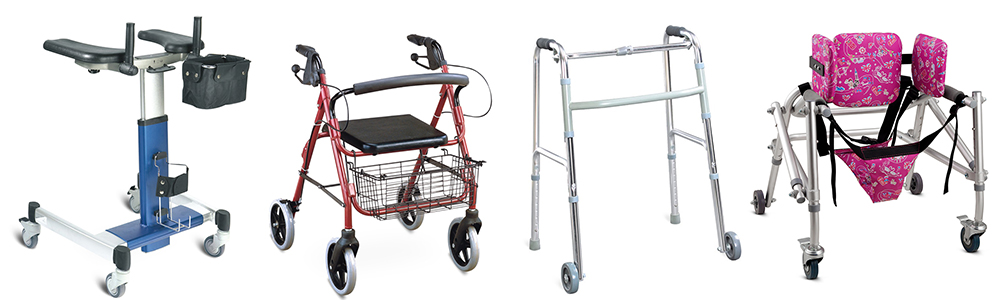
For people with poor balance, choosing the right rollator walker is a key factor affecting safety, comfort, and walking ability. Common types of rollators on the market include 4-wheel rollators, 2-wheel rollators, and wheelless walkers. Each type has a different structural design and stability, and is suitable for different user groups.
So, which type of rollator walker is best for people with poor balance?
From a stability perspective, 4-wheel rollators are usually the most common and preferred choice, especially suitable for people who can walk independently but need extra stability, flexibility, and rest areas.
For people with more severe balance problems, or those who need the rollator to support a larger weight, wheelless walkers or 2-wheel rollators may be a more stable option.
This article will analyze the characteristics of different rollator walkers in depth from aspects such as structure, stability, support, applicable scenarios, and safety to help people with poor balance make a more suitable choice.
How should people with poor balance choose a rollator?
Decreased balance is commonly seen in:
• Age-related weakening of coordination
• Decreased muscle strength
• Spinal, joint, or muscle disorders
• Post-operative recovery
• Neurological disorders
For safer walking, a rollator walker should provide sufficient stable support, good maneuverability, and a design tailored to the user's specific needs.
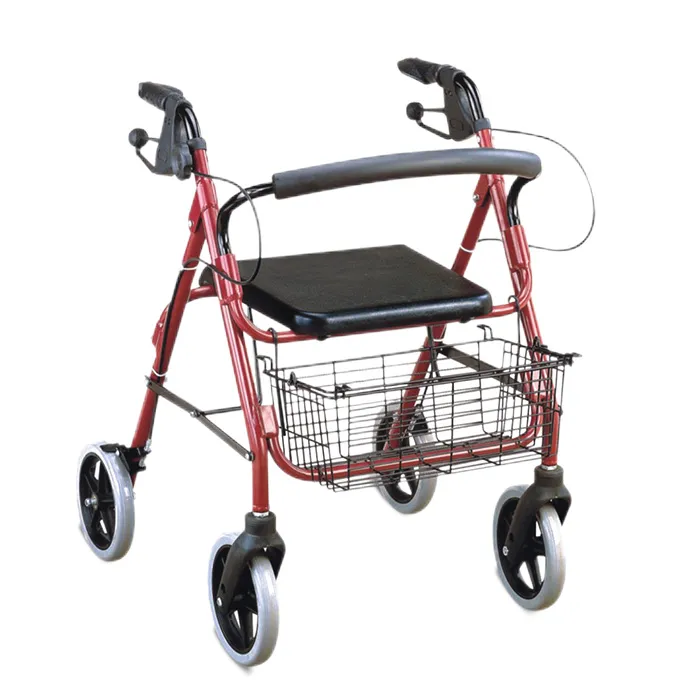
Of all types, the 4-wheel rollator walker is a commonly recommended choice due to its stable frame, four-wheel support, good maneuverability, and built-in seat. For users with higher stability requirements, wheelless walkers are also considered safer assistive devices due to their non-rolling design and greater controllability.
Why is a 4-wheel rollator suitable for most people with weaker balance?
The 4-wheel rollator walker is currently the most common, structurally comprehensive, and widely applicable type of rollator. Many people with weaker balance prioritize this type of product because it provides not just "semi-support," but a complete combination of stability and flexibility.
What kind of stability does a 4-wheel rollator provide?
The advantage of a 4-wheel rollator walker comes from its "four-point grounding structure," which distributes weight and stabilizes the center of gravity, effectively reducing the risk of tipping over.
Key sources of stability include:
• Front and rear wheels for support, preventing the center of gravity from tilting forward or backward.
• Wide wheelbase design enhances lateral stability.
• U-shaped or stable frame structure maintains balance.
• Adjustable handle height for a natural support posture.
For those who can walk independently but need additional balance assistance, the 4-wheel rollator walker provides "stable but not bulky" support.
Is the flexibility of a 4-wheel rollator also suitable for people with poor balance?
Yes. Flexibility means easier daily activities, such as:
• Turning around indoors
• Navigating narrow spaces
• Switching between indoor and outdoor use
• Shopping and walking
The 4-wheel rollator features a swivel design on the front wheels, allowing for flexible changes in direction without requiring the user to lift the device, reducing the risk of instability caused by lifting the rollator walker.
Why is the built-in seat in a 4-wheel rollator beneficial for people with poor balance?
Almost all four-wheeled rollator walkers come with a seat, which is not only their most distinctive feature but also provides crucial safety for people with poor balance.
For example:
• Allows for rest during walking
• Prevents further loss of balance due to fatigue
• Allows for longer walks
• Provides a place to sit while waiting in line
The seat elevates the four-wheeled rollator from a "walking aid" to a "stable platform."
Who is a wheel-less walker more suitable?
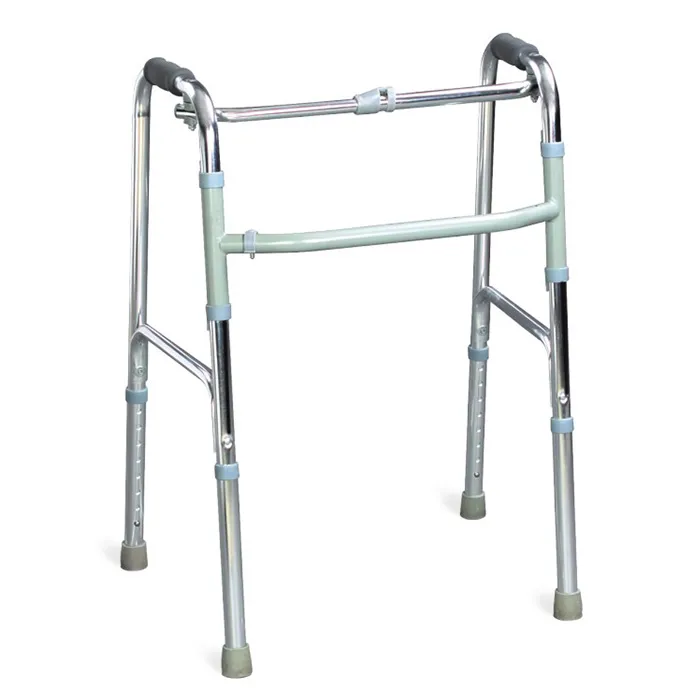
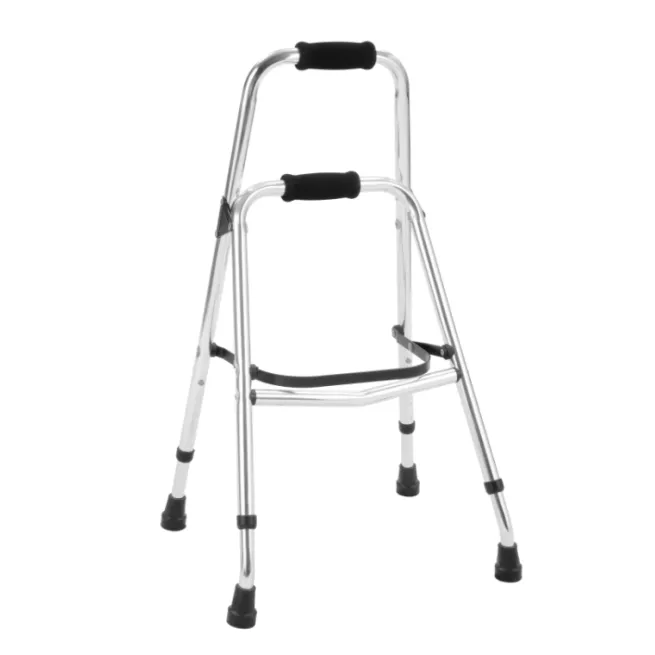
While four-wheeled rollators are suitable for most users with some walking ability, wheel-less walkers offer greater stability and a sense of security for those with more severe balance problems.
Why are wheel-less walkers more stable?
Wheel-less walkers use a "four-legged ground structure" with no rolling parts, so the user must lift the rollator to move forward. This "controlled movement" allows the user to have complete control over speed and pace.
The stability benefits include:
• All four feet are firmly planted on the ground
• No wheels, preventing slippage or loss of control
• Strong support, able to withstand greater weight
• No being pushed around during use
• Suitable for people with strong upper body strength
For people prone to falls, with insufficient leg strength, or significant coordination difficulties, a wheelless walker is a more stable option.
What scenarios are wheelless walkers suitable for?
Wheelless walkers are more suitable for indoor environments, such as:
• Flat ground
• Short travel distance
• Users need strong support
• No need for rapid movement
However, it should be noted that wheelless walkers require users to lift the device to move forward, so they are not suitable for people with weak arm strength.
4-Wheel Rollator vs. Wheelless Walker: Which is more suitable for people with poor balance?
To help readers make a more accurate judgment, we compare the two types of rollator walkers from multiple perspectives.
In terms of structural stability, which rollator is more stable?
The wheelless walker is more stable.
With all four feet evenly grounded and supported entirely by friction, there's no risk of rolling, making it more suitable for users with severe balance issues.
A 4-wheel rollator walker also offers stability, but it prioritizes "stability with enhanced mobility."
Suitable for:
• Those with some walking ability
• Those needing extended activity
• Those wanting a resting seat
• Those needing convenient gas and mobility
If ranking stability from "safest" to "most flexible":
Walker without wheels → Two-wheel rollator walker→ 4-wheel rollator walker
For those with poor balance, which offers better support?
• Walker without wheels: Provides maximum support and stable support throughout.
• 4-wheel rollator walker: Offers good support, but its design leans more towards "mobility assistance" than maximum support.
Which is more efficient for walking?
The 4-wheel rollator walker is significantly better.
It doesn't require lifting; a gentle push is all it takes to move, saving energy and reducing fatigue, making it suitable for those who can walk independently.
Which rollator walker is safer?
To distinguish between "mild instability" and "severe balance impairment":
• Mild instability → A 4-wheeled rollator walker is safer.
• Severe balance impairment or prone to falls → A wheelless walker is safer.
Therefore, the safest choice depends on the user's ability, not the device itself.
Which rollator should people with different balance abilities choose?
For easier assessment, the following classification is based on common balance ability levels.
1. Mild Balance Issues
Characteristics:
• Can walk independently
• Occasionally loses balance
• Requires prolonged activity
Recommendation: 4-wheel rollator walker
Reasons:
• High flexibility
• Sufficient stability
• Includes a seat for rest
• More suitable for daily activities and outings
2. Moderate Balance Issues
Characteristics:
• Slower walking speed
• Fatigues easily
• Requires significant support
Recommendation: Two-wheel rollator walker or a more stable 4-wheel rollator walker
Two-wheel rollators offer a better balance between stability and lightness, while a stable 4-wheel rollator walker provides more functionality and mobility.
3. Severe Balance Issues
Characteristics:
• Unstable stance
• Difficulty controlling center of gravity
• May rely on the rollator for weight-bearing
• Prone to falls
Recommendation: Wheelless walker
Reasons:
• Safest for all four feet on the ground
• Does not roll
• Maximum support
• Controllable movement, avoids falls
Which types of balance problems are best suited for a 4-wheel rollator?
The 4-wheel rollator walker is not designed for the most severe walking disabilities, but rather provides optimal support for:
• Those with insufficient leg strength but capable of standing independently
• Mild tremors or gait instability
• Those needing stability when outdoors
• Those needing to rest frequently while walking
• Those seeking to improve their independence through assistance
For these individuals, the 4-wheel rollator can significantly improve safety and quality of life.
What types of balance problems are best suited for wheelless walkers?
Wheelless walkers are suitable for:
• Those who are very prone to losing their balance
• Those with insufficient leg strength
• Those with relatively strong upper limb strength
• Those with a limited range of daily activities
• Those primarily using indoor devices
• Those requiring a device where safety is paramount
They are especially suitable for users recovering from surgery or illness who require maximum stability.
How to determine whether to choose a 4-wheel rollator or a wheelless walker?
If you are still undecided, you can use the following four assessment criteria to determine your choice:
1. Is your goal to walk more freely or with maximum stability?
• Want to walk further and more easily? → 4-wheel rollator walker
• Want the strongest stability and support? → Wheelless walker
2. Is your balance sufficient to support pushing movement?
• If you can control your speed → 4-wheel rollator walker is more suitable
• If you cannot control your pace → Wheelless walker is safer
3. Do you need the rollator to support weight?
• If you need to support heavy weights → Wheelless walker is better
• If mainly used for assisting movement → 4-wheel rollator walker is sufficient
4. Is the usage scenario primarily indoors or outdoors?
• Indoors + short distances → Wheelless walker
• Outdoors + long distances + shopping/walking → 4-wheel rollator
Which rollator is best for people with poor balance?
Different levels of balance problems require different types of rollator walkers:
✔ For mild to moderate balance problems: A 4-wheel rollator is the best solution.
It offers:
• Stable structure
• Flexible operation
• Built-in seat for rest
• Suitable for indoor and outdoor use
• Suitable for most people with mild balance problems
✔ For severe balance problems: A wheelless walker is more suitable.
It offers:
• Strongest support
• No slipping or excessive movement
• Full control
• Suitable for people with severe balance problems
Why choose Yikang Medical for customized hospital equipment?
Yikang Medical specializes in customized hospital and rehabilitation equipment, including hospital beds, nursing beds, wheelchairs, walkers, crutches, shower chairs, and toilet chairs. Based in Foshan, China, we became an OEM factory for top brands in 2014. Global buyers trust Yikang Medical for purchasing high-quality, customizable products directly from a professional Chinese manufacturer, providing efficient delivery and competitive pricing for wholesale and long-term partnerships.