
Among assistive devices, walking sticks and rollator walkers are the two most commonly used tools for the elderly, patients in rehabilitation, and those with lower limb weakness. One of the most frequently asked key questions when users choose assistive devices is:
"Which is better for maintaining balance: a walking stick or a rollator walker?"
Balance ability is directly related to walking safety, and choosing the right assistive device is a crucial factor in reducing falls, alleviating pain, and improving confidence.
Therefore, understanding the differences in balance support between walking sticks and rollator walkers is fundamental knowledge that all users and their families must possess.
What are the basic structural differences between walking sticks and rollator walkers?
To determine their impact on balance, it's essential to understand their structural design.
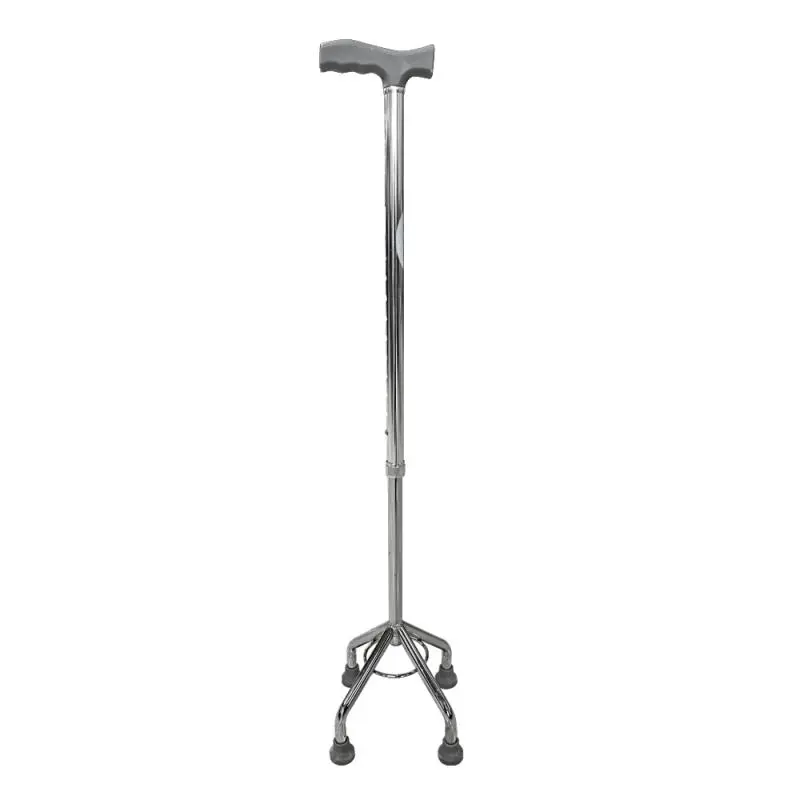
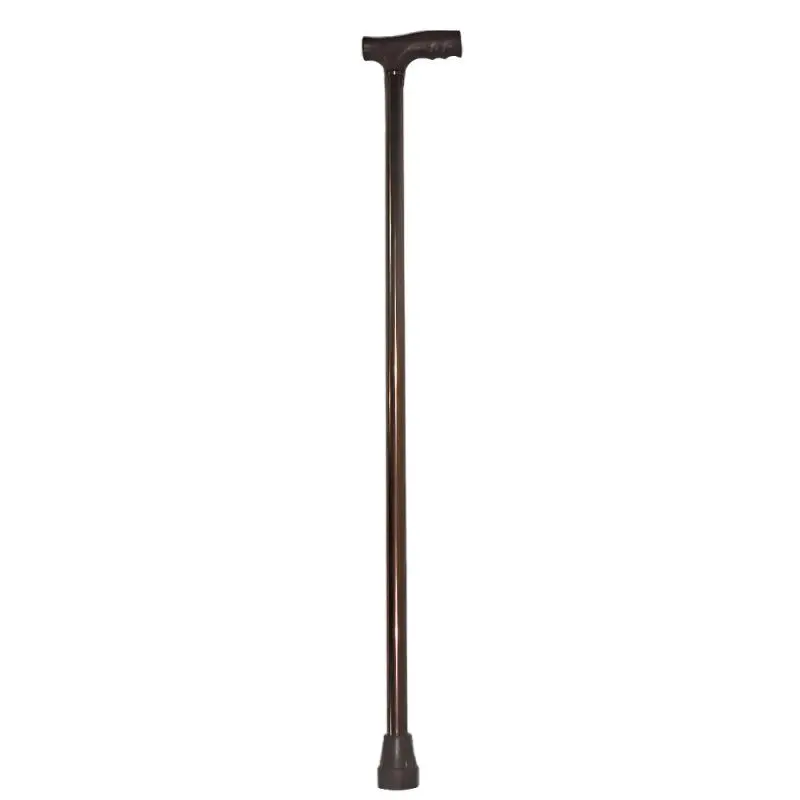
The Structure of a Walking Stick
A walking stick typically consists of the following parts:
• A single support pole
• A rubber tip
• An adjustable length structure
• A handle (straight or curved)
A walking stick has only one point of contact with the ground.
The Structure of a Rollator Walker
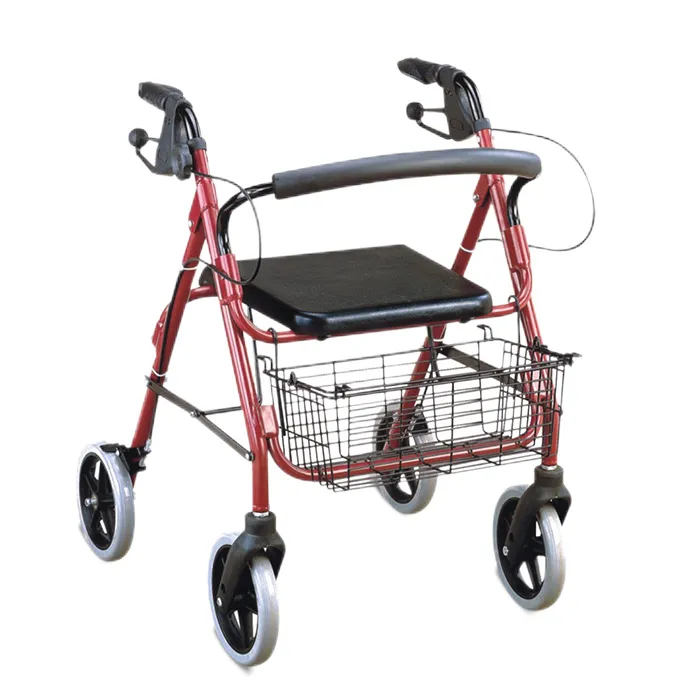
A rollator walker is a multi-contact support device. Common structures include:
• Four-point metal frame (wheelless walking aid)
• Rollator walker with wheels (2-wheel, 3-wheel, 4-wheel)
• Handbrake system
• Height-adjustable handrails
• Wide base support structure
Rollator walkers provide multi-point contact support, generally four points of contact or four wheels of contact, making them far more stable than walking sticks.
Therefore, the two have fundamentally different design philosophies, which is the fundamental source of the difference in stability.
Why is a rollator walker more stable than a walking stick?
The main reason is a larger support base, more fulcrums, and a more robust structure.
The following are the key factors contributing to the higher stability of rollator walkers:
1. Significantly more support points
• Walking stick: 1 fulcrum
• Rollator walker: 4 points of ground contact (wheelless), or 4 wheel contact (with wheels)
The more support points, the easier it is to maintain balance.
2. Larger Support Base Area
The rollator walker's frame extends horizontally and horizontally, front and back, forming a large, stable structure.
The physics of stability tells us: the larger the base area, the less likely it is to tip over.
3. Rollator Walkers Can Support More Body Weight
Rollator walkers can support a larger proportion of body weight, allowing those with weaker balance to place more of their weight on the rollator walker.
Walking sticks, on the other hand, can only support 20-25% of body weight at most.
4. Rollator Walker Structure with Counteracting Resistance, Reducing the Risk of Tipping Over
Rollator walkers have support points in both the front and back directions, therefore:
• Less likely to fall when leaning forward
• Support from a handrail or frame when leaning backward
Walking sticks cannot provide similar protection.
5. Easier to Maintain a Central Balance When Using a Rollator Walker
The single-point support of a walking stick shifts the center of gravity towards the cane, while the rollator walker keeps the body centered within the frame, making it easier to maintain balance.
What are the limitations of walking sticks in terms of balance support?
While walking sticks are lightweight, inexpensive, and versatile, they do have significant shortcomings in terms of balance support.
1. Single-point support cannot provide a true balance system
Walking sticks are designed to:
• Reduce pressure on one leg
• Increase slight lateral stability
They are not intended to support overall balance.
2. Cannot support full body weight
Walking sticks have limited weight-bearing capacity and can only help transfer some of the pressure.
For people with severe balance problems, relying solely on a walking stick can easily lead to:
• Leaning forward
• Instability
• Arm fatigue
• Increased risk of falling with the stick sideways.
3. Walking sticks lack a front support structure
When the user leans forward, the walking stick cannot catch the body.
Rollator walkers, on the other hand, have a frame or wheels for front support.
4. Difficult for those with weak arm strength
Walking sticks require relatively high:
• Wrist strength
• Shoulder strength
• Arm control
People with poor balance often also have weak arm strength.
When should a rollator walker be the first choice?
The following situations warrant prioritizing a rollator walker:
1. Significantly decreased balance
Including:
• Unsteady gait
• Prone to swaying
• Inability to stand independently for extended periods
A rollator walker provides a complete support structure, significantly improving stability.
2. Gait incoordination or insufficient lower limb strength
A rollator walker can replace some lower limb strength, helping users walk safely.
3. History of falls
A history of falls is a strong indication for choosing a rollator walker.
4. Balance disorders caused by brain or neurological diseases
Such as:
• Cerebellar problems
• Weakened nerve conduction
• Age-related balance degeneration
A rollator walker provides more stable support.
5. Need for prolonged or cross-space movement
Walking in different scenarios such as at home, outdoors, shopping malls, and hospitals, a rollator walker provides continuous safety.
Which users are more suitable for using a walking stick?
While rollator walkers offer advantages in balance, walking sticks still have their suitable users. Walking sticks are suitable for:
1. People with mild balance problems
Those requiring only slight lateral support and not a full support frame.
2. People with pain or weakness in one leg
For example:
• Knee inflammation
• Mild discomfort after hip surgery
• Ankle sprain recovery period
The unilateral support of a walking stick can effectively reduce pressure.
3. People with strong arm strength and good walking ability
Upper limb strength is crucial when using a walking stick.
4. Families with short walking distances and confined spaces
Walking sticks are small and maneuverable in small spaces.
Where does the difference in stability between rollator walkers and walking sticks come from?
From a physical perspective, stability depends on two core factors:
• Number of support points
• Size of the support base
Rollator walkers are significantly superior to walking sticks in both of these aspects.
1. The rollator walker's multi-point support creates a stable environment
Four-point ground contact = four legs supporting a person.
Four-wheel support = four stable fulcrums maintaining balance.
Walking sticks, on the other hand, only support lateral forces at one point, insufficient to maintain overall balance.
2. The rollator walker has a larger support base
The rollator walker's frame naturally forms a stable "fall-proof zone," allowing the user to safely maintain their center of gravity.
3. Users with poor balance can maintain central body symmetry using the rollator walker
When using walking sticks, the body tends to lean towards the stick, making it easier to lose balance.
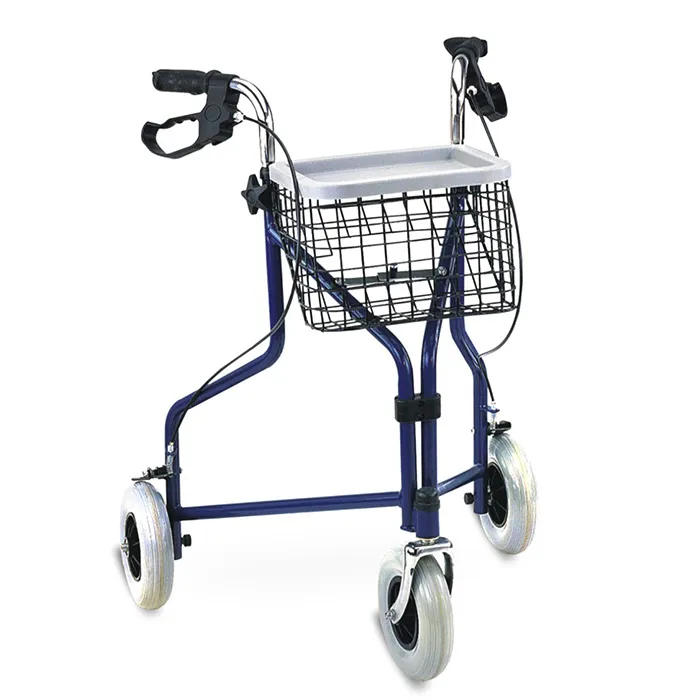
Which structure of the rollator walker best improves balance?
Multiple structures of the rollator walker enhance balance, with the most effective including:
1. Wide base frame
Making the rollator walker less prone to tipping over, greatly improving stability.
2. Upright handrails
Helping the user keep their torso upright, preventing forward or sideways tilting.
3. Multi-point support system (front and back)
Unlike the walking stick which has only one support point, the rollator walker has contact at both the front and back, preventing falls.
4. The body can walk within the rollator walker frame
The user is "enclosed" in a stable structure, effectively distributing weight.
Is it easier to maintain body balance using a rollator walker?
The answer is: Yes.
The rollator walker makes the user's center of gravity more stable because:
• No need to shift weight to one side
• The body can be positioned in the center of the rollator walker
• The upper limbs do not need to bear the entire balance task
• The rollator walker supports the body weight
• The frame provides lateral balance control
Therefore, the rollator walker is significantly more conducive to maintaining body balance stability.
What factors should be considered when choosing a rollator walker or walking stick?
For safe and effective use, consider the following when making your choice:
1. Level of balance ability
• Severe balance problems → Rollator walker
• Mild instability → Walking stick
2. Lower limb strength
A rollator walker is more suitable for people with insufficient lower limb strength.
3. History of falls
If you have a history of falls, a rollator walker should be the first choice.
4. Home environment and space size
• Spacious space → Rollator walker
• Narrow space → Walking stick
5. Walking distance and frequency
Walking more and for longer periods → Rollator walker is more suitable.
6. Upper limb strength
Walking sticks require stronger upper limb strength, while rollator walkers require less.
In Terms of Maintaining Balance, Rollator Walkers Are Significantly Better Than Walking Sticks
✅ Rollator walkers are more stable than walking sticks and are more suitable for severe balance problems.
✅ Walking sticks are best suited for people with mild balance instability or weakness in one leg.
Rollator walkers are significantly superior to walking sticks in terms of structural stability, support, safety, and center of gravity control. Therefore, for users who need strong balance support, rollator walkers are a more scientific and safer choice.