

In the field of modern elderly care and mobility assistance, "rollator walkers" and "electric wheelchairs" are often considered two types of devices with similar functions but different positioning. As users age or their mobility impairments worsen, many begin to consider:
When a rollator walker can no longer meet their mobility needs, what is the best alternative?
The answer is—an electric wheelchair.
This article will systematically analyze why an electric wheelchair is the ideal alternative to a rollator walker from multiple perspectives, including design principles, functional differences, target audience, safety, comfort, operation methods, and long-term advantages.
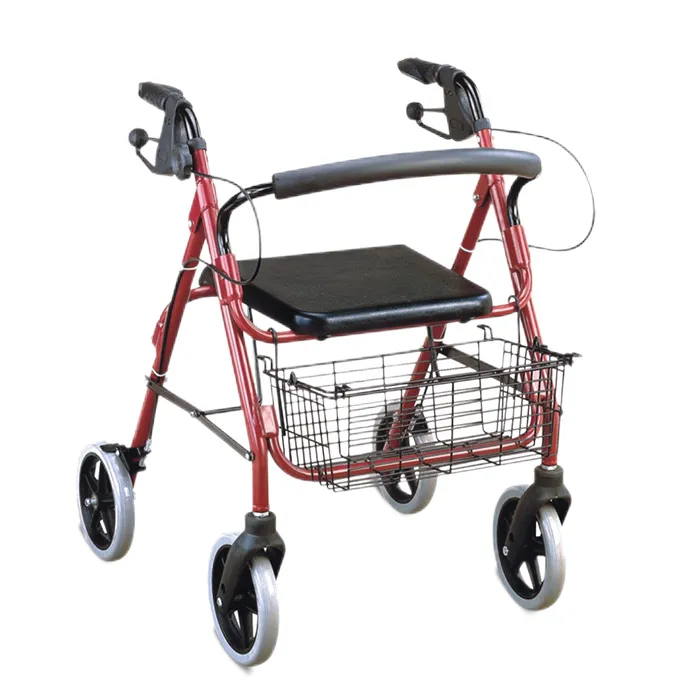
What is a rollator walker? What are its functional limitations?
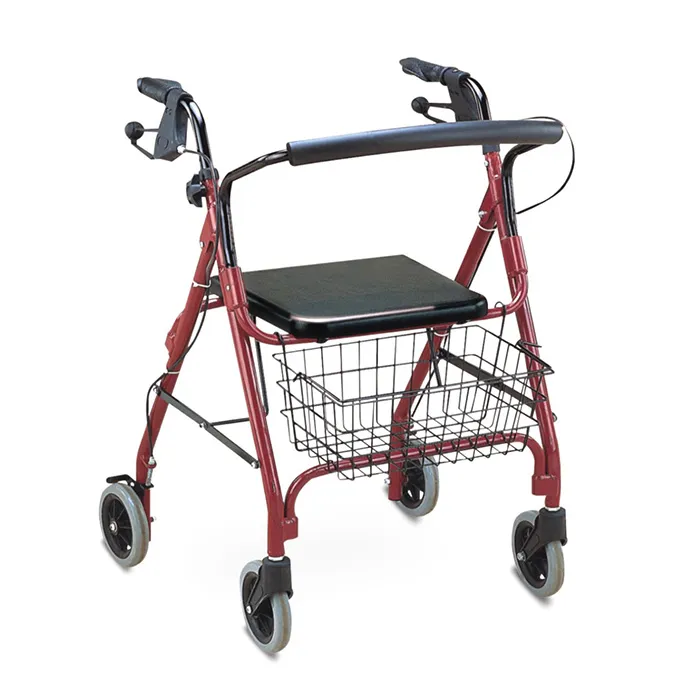
A rollator walker is a simple assistive tool that helps people with walking instability maintain balance. It typically consists of four support legs or wheels, and the user maintains stable forward movement by holding handles with both hands and leaning slightly forward.
While rollator walkers can indeed help people with mild mobility impairments increase their independence, their limitations are also obvious:
1. Requires active walking by the user
Rollator walkers only provide support and balance; they do not provide propulsion. 1. If the user's lower limbs are weak or lack physical strength, walking will still be difficult.
2. Users need good upper limb strength
Because the user relies on their hands to support their center of gravity, it requires significant arm muscle strength.
3. Fatigue accumulates quickly
Prolonged use of a rollator walker can easily lead to fatigue in the wrists, shoulders, and lower back.
4. Outdoor environments are very restrictive
Uneven surfaces, uphill or downhill areas are extremely unfriendly to rollator walkers, making it easy to lose balance.
Therefore, when users begin to experience the following:
• A significant decrease in walking distance;
• Decreased balance;
• Insufficient arm strength for support;
• The need for prolonged movement or outdoor activities.
At this point, an electric wheelchair becomes the best alternative.
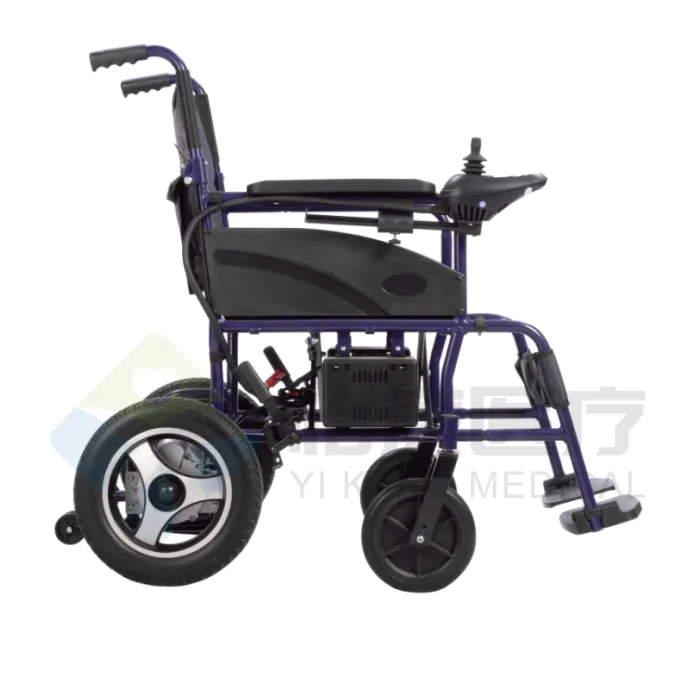
Why is an electric wheelchair the best alternative to a rollator walker?
An electric wheelchair is a seated assistive device that is electrically powered and moves through a control system. Compared to a rollator walker, it not only solves the problem of "walking fatigue" but also comprehensively improves safety, stability, and comfort.
Here are the core logics behind electric wheelchairs as an alternative:
1. Upgrade from "Assisted Walking" to "Active Mobility"
Rollator walkers require pushing, while electric wheelchairs are driven by motors, requiring no physical effort.
2. Upgrade from "Temporary Support" to "Long-Term Use"
Electric wheelchairs are designed for daily mobility, providing stable support for extended periods.
3. Upgrade from "Passive Balance" to "Active Control"
Users can easily control direction, speed, and stopping using joysticks or buttons.
4. Upgrade from "Limited Spaces" to "Multi-Scene Applicability"
Electric wheelchairs can be used flexibly in indoor environments, community streets, parks, and more.
Electric wheelchairs are not simply "seated rollator walkers," but rather a systematic mobile device that enables people with mobility impairments to regain their ability to live independently.
What are the core differences between electric wheelchairs and rollator walkers?
1. Different Power Sources
• Rollator walker: Relies entirely on the user's own strength for movement.
• Electric wheelchair: Driven by a motor system, requiring no physical effort from the user.
2. Different Support Methods
• Rollator walkers provide support points but cannot support the entire body weight.
• Electric wheelchairs fully support the body weight, providing continuous support.
3. Different Operation Methods
• Rollator walkers require continuous pushing;
• Electric wheelchairs are operated via levers or buttons, allowing for one-handed control.
4. Different Target Audiences
• Rollator walkers are suitable for individuals with mild gait instability;
• Electric wheelchairs are suitable for individuals with severely limited mobility.
5. Different Safety and Stability
• Rollator walkers are prone to slipping on uneven surfaces;
• Electric wheelchairs are equipped with anti-roll wheels, braking systems, and center-of-gravity control designs, resulting in greater stability.
In summary, electric wheelchairs represent a comprehensive upgrade of rollator walkers in terms of functionality, comfort, and safety.
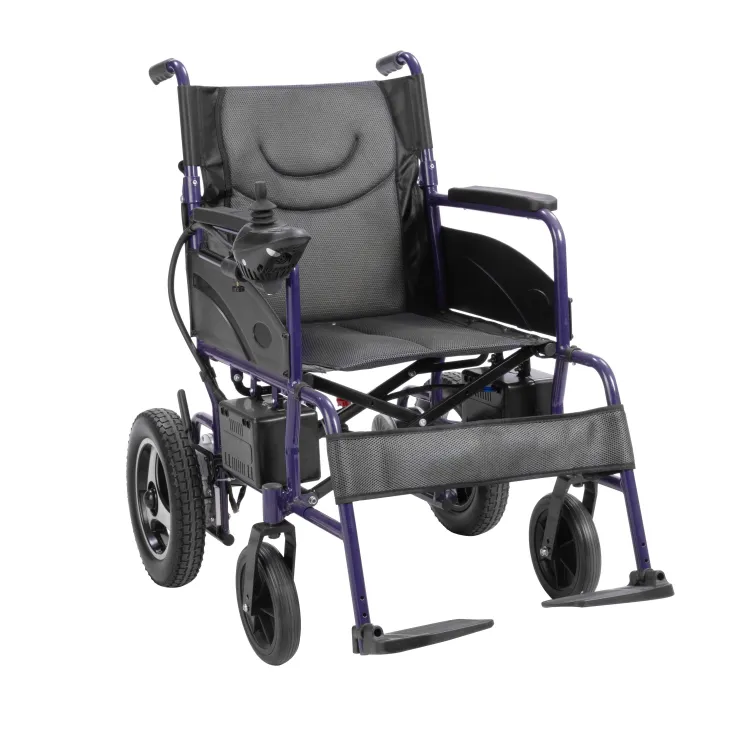
What are the key structural advantages of electric wheelchairs?
To understand the expertise of electric wheelchairs, it is essential to understand their main components.
1. Motor System
Electric wheelchairs are equipped with high-efficiency motors, typically available in front-wheel drive, rear-wheel drive, or mid-drive configurations.
• Front-wheel drive: Flexible handling, suitable for indoor use.
• Rear-wheel drive: Powerful motor, suitable for outdoor use.
2. Control System
Handle controllers allow for precise adjustment of direction and speed, enabling users to easily control their movement.
3. Battery System
Powered by lithium or lead-acid batteries, offering a range of 15–30 kilometers.
4. Safety System
Includes anti-roll wheels, electronic braking, overcurrent protection, and anti-slip tires to ensure safe operation.
5. Seat Support System
The ergonomic seat features adjustable backrest and footrests, ensuring comfort even during extended periods of sitting.
These structural features combine to make electric wheelchairs a safe, comfortable, and convenient mobility tool, far exceeding the functional scope of a rollator walker.
What are the significant advantages of using an electric wheelchair compared to a rollator walker?
1. Saves Energy and Reduces Fatigue
Users don't need to expend arm and leg strength; the motor-driven system significantly reduces physical strain.
2. Simple Operation and Easy Learning
Forward, backward, and turning can be controlled with just a handle or button, suitable for all ages.
3. Strong Adaptability to Various Terrain Surfaces
Electric wheelchairs can handle slopes, paving stones, lawns, and other surfaces, where rollator walkers are prone to instability.
4. Enhanced Safety Protection
Anti-tipping devices, braking systems, and center of gravity control effectively prevent falls and slips.
5. Suitable for Long-Term Use
Suitable for long-distance travel and daily commutes, requiring no frequent rest stops.
6. Improves Psychological and Social Independence
Electric wheelchairs allow users to go out independently, shop, and meet friends, significantly improving their quality of life.
Therefore, when rollator walkers can no longer support daily activities, electric wheelchairs are not only a substitute but also an important extension of independent living.
Are electric wheelchairs really safer than rollator walkers?
Safety is the primary consideration when choosing assistive devices.
1. Electric wheelchairs have a more stable center of gravity
Rollator walkers rely on the user's balance during movement, while the center of gravity of an electric wheelchair is fixed at the bottom of the frame, preventing it from easily tipping over.
2. More advanced braking systems
Most electric wheelchairs are equipped with both electronic and manual braking systems, automatically locking the wheels when going downhill or coming to a stop.
3. Higher load-bearing capacity of the frame
Electric wheelchairs have a robust structure and can support 120-150 kg, preventing rollator walkers from deforming under excessive weight.
4. Ergonomic seating design
A fixed seating posture and back support help maintain body balance, reducing muscle tension and the risk of falls.
From a safety perspective, electric wheelchairs provide systemic protection, while rollator walkers only offer limited support.
Can electric wheelchairs provide a better comfort experience?
The answer is yes. Electric wheelchairs far surpass rollator walkers in terms of comfort.
1. Adjustable Backrest and Footrests
Users can adjust the angle to suit their body condition, reducing pressure on their back and legs.
2. Shock-Damping Wheel System
Equipped with shock-absorbing springs and non-slip tires, it maintains stability even on uneven surfaces.
3. Padded Seat Support
Ergonomically designed for prolonged sitting, reducing the risk of pressure sores.
4. Excellent Noise Control
The electric drive system operates smoothly with extremely low noise, enhancing the riding experience.
Therefore, the electric wheelchair is not only a mobility tool but also a "mobile cabin," combining comfort and stability.
Is an electric wheelchair suitable for all Rollator Walker users?
Not all Rollator Walker users need to immediately switch to an electric wheelchair. It is particularly suitable for the following:
• Limited walking distance: Those who walk less than 50 meters at a time.
• Decreased balance: Those who sway or easily lose balance while walking.
• Upper limb weakness: Those who cannot hold the Rollator Walker for extended periods.
• Chronic or joint diseases: Such as arthritis or myasthenia gravis. • For those hoping to regain mobility: Electric wheelchairs allow them to reintegrate into social activities.
For those with mild walking impairments, rollator walkers are still useful; however, once mobility is significantly limited, electric wheelchairs are a more scientific and safer alternative.
How to Choose the Right Electric Wheelchair?
When choosing an electric wheelchair, the following factors are particularly crucial:
1. Usage Environment
Primarily indoors: Choose a model with a small turning radius and lightweight construction.
Primarily outdoors: Choose a rear-wheel drive model with a longer range.
2. User's Weight and Height
Confirm the weight-bearing capacity to avoid overloading and affecting motor lifespan.
3. Control Method
Hand levers, buttons, or head controls should be selected based on the user's ability.
4. Battery Capacity
Choose an appropriate range based on daily travel distance (generally 15–30 kilometers).
5. Folding and Storage
If you need to take it into a car or elevator, choose an electric wheelchair with a foldable design.
6. After-Sales Service and Parts Replacement
Choose a brand with a stable after-sales service system for easy long-term maintenance.
Electric Wheelchairs: Restoring Freedom for People with Mobility Impairments
A comprehensive comparison reveals:
• Rollator walkers are suitable for people with mild mobility impairments, primarily for short-distance assistance;
• Electric wheelchairs are suitable for users with declining physical strength who cannot walk long distances, representing a natural upgrade from roller walkers.
Electric wheelchairs not only offer greater safety and comfort but also truly enable users to achieve a lifestyle of "free movement while seated."
It is not just a means of transportation but a solution for restoring independence, autonomous travel, and enhancing the dignity of life.
Therefore, when rollator walkers no longer meet daily needs, electric wheelchairs are the best and most scientifically sound alternative.
How Competitive Are Yikang Medical’s Prices?
Our prices are very competitive due to our in-house production and efficient sourcing in China. We eliminate middlemen costs, allowing us to pass savings directly to our clients. Whether you're looking for cheap medical beds in bulk or affordable wheelchairs with high-quality features, Yikang Medical provides excellent value for money.