

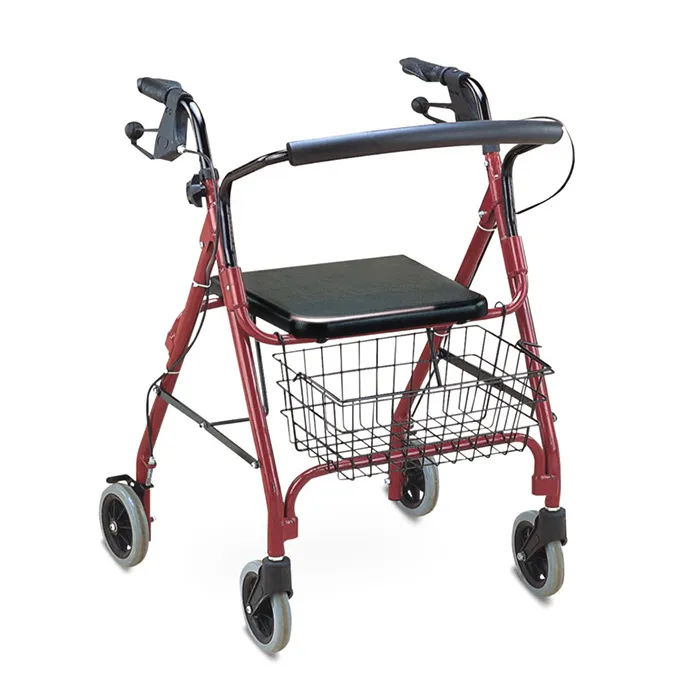
A 4-wheel rollator (also known as a four-wheeled walking aid or four-wheeled walking booster) is a common walking aid, especially suitable for the elderly, patients in rehabilitation, and users with insufficient lower limb strength but who can maintain some balance. It is known for its four large wheels, handbrake system, and seat storage design, and is often used as a stabilizing aid for outdoor walking.
Many people have a common question when using a 4-wheel rollator:
"Can I sit on the seat of the 4-wheel rollator and have someone push me?"
Or
"Can I move the 4-wheel rollator walker myself while seated?"
The answer is very clear: No. Sitting and moving a 4-wheel rollator is dangerous and considered incorrect use.
This article will comprehensively explain why sitting while using a 4-wheel rollator poses significant risks and provide professional guidance on the correct and safe way to use it.
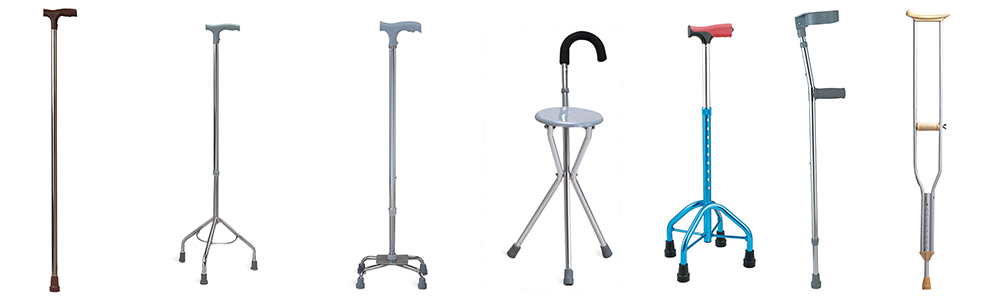
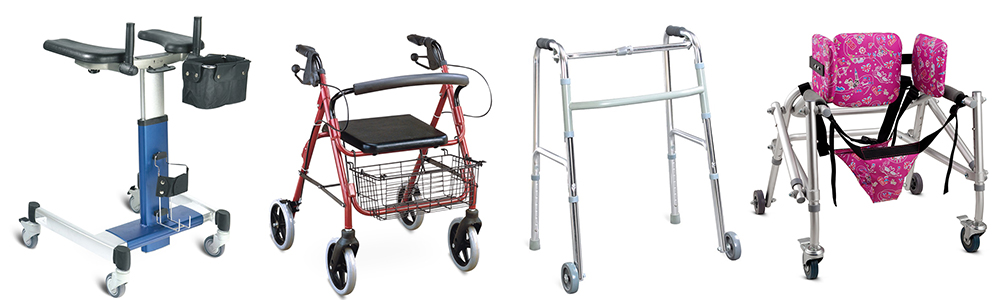
Why can't you walk while seated using a 4-wheel rollator? What are the risks?
Before understanding the risks, we must clarify one point:
The "seat" of a 4-wheel rollator is designed for rest stops, not for being pushed while seated.
This means that any movement of the 4-wheel rollator walker while seated (whether by the user, a family member pushing, or sliding down a slope) is dangerous.
The main dangers of moving a 4-wheel rollator while seated include:
1. High center of gravity, making it extremely easy to tip over.
2. Brakes are not designed for carrying passengers and are ineffective in emergencies.
3. The wheels are not large enough to withstand the dynamic pressure of pushing while seated.
4. The seat is not a safety seat and lacks backrest support and restraint.
5. The pushing process is greatly affected by the ground, making it prone to bumps or loss of control.
6. Speed is almost impossible to control downhill.
7. Temporary stress can damage the frame, posing a risk of mechanical breakage.
Therefore, moving a 4-wheel rollator walker while seated violates its design principles and is extremely risky.
What is the purpose of the 4-wheel rollator's seat?
Many people misunderstand the function of the 4-wheel rollator's seat. In reality:
The true purpose of the seat is: to allow you to sit down and rest when you're tired while walking.
It is not:
• A wheelchair
• A mobility scooter
• A push chair
• A tool for family members to push around
• A device for moving while seated
Therefore, sitting down = resting, not moving.
What happens to the center of gravity of a 4-wheel rollator when seated?
Understanding this shift in center of gravity helps in understanding potential hazards.
1. When walking: The center of gravity is between the user's body and the frame, making it relatively stable.
The user grips the handlebars of the 4-wheel rollator walker with both hands, leans forward, and the force is transferred to the frame to maintain balance.
2. When seated: The center of gravity rises significantly and is concentrated above the seat.
Because:
• The seat is too high
• There are no seat belts or guardrails
• The rider's center of gravity leans backward
This causes the entire 4-wheel rollator's center of gravity to:
• Shift backward
• Shift upward
• Be unstable
Once it moves:
• It can tip over even with slight bumps
• Sudden braking can cause it to tip forward and fall out
• It is more likely to lose control uphill or downhill
Therefore, from an engineering perspective, using a 4-wheel rollator walker while seated is very dangerous.
Why do the brakes fail when using a 4-wheel rollator while seated?
The 4-wheel rollator uses:
A manual braking system (like a bicycle handbrake).
The braking system is designed for:
• Stopping while moving
• Preventing the vehicle from rolling away
• Engaging the parking brake for rest after parking
It is not:
• Not for stopping with a passenger at high speed
• Not for dealing with downhill skidding
• Not for controlling passenger movement
When a person is seated on it:
• Excessive dynamic weight
• Inability for the user to reach the handbrake with both hands
• Inability for the person pushing the vehicle to brake quickly
• Increased braking distance
• Insufficient braking force to counteract gravity
Attempting to brake while going downhill or accelerating may result in:
• Tilt over
• Forward lurch and fall
• Complete rollover
• Damage to braking components
Therefore, the braking system itself indicates:
The 4-wheel rollator is not a vehicle and cannot be used while seated.
Can a 4-wheel rollator be used as a wheelchair? Why not?
A 4-wheel rollator walker is fundamentally different from a wheelchair.
Project | 4-Wheel Rollator | Wheelchair |
| Design Purpose | Aids walking | Seated mobility |
| Seat Structure | For simple rest | Professional weight-bearing and safety seat |
| Braking System | Handbrake for walking | Medical-grade fixed brakes |
| Center of Gravity | High and unstable | Low and stable position |
| Propulsion Method | User-operated push | For caregiver or user mobility |
| Restraint Device | None | Multiple straps, guardrails, and backrest |
From any perspective, a 4-wheel rollator cannot be considered a substitute for a wheelchair.
Why is it easy for a 4-wheel rollator to tip over while seated?
Causes of tipping over include:
1. High center of gravity
2. Narrow wheelbase
3. Insufficient wheel diameter to resist lateral forces
4. Uneven ground
5. Sudden acceleration or braking
6. The person pushing the rollator cannot precisely control the direction
7. Vibrations during forward movement accumulate instability
Especially:
Tilting is most likely to occur when turning
because the center of gravity shifts outward, causing instantaneous instability.
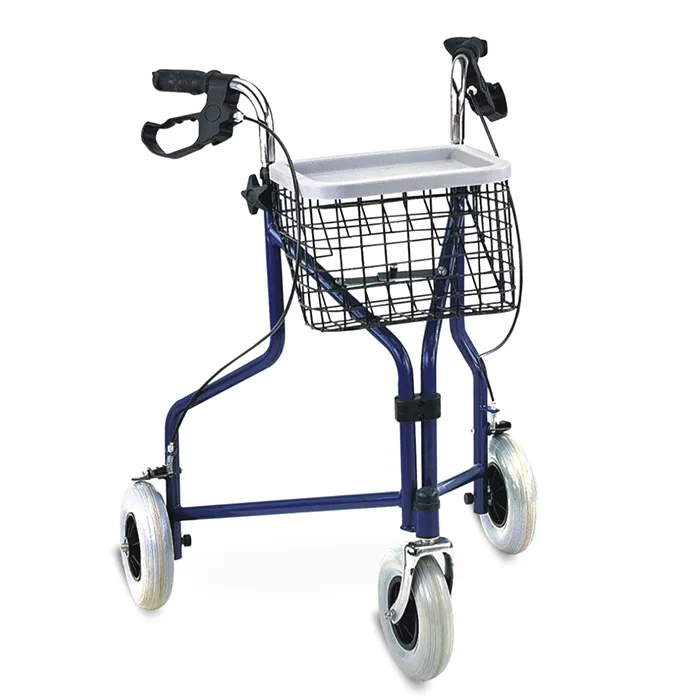
What risks are there if someone pushes you while you are seated on a 4-wheel rollator?
Pushing someone else while they are seated on a 4-wheel rollator poses serious dangers:
1. The person pushing the rollator cannot brake in time
The handbrake is in the front, and the person pushing from behind cannot control it.
2. Incorrect point of force when pushing from behind
The frame is not designed for pushing a seated person.
3. Difficulty in controlling speed
Especially downhill, the speed increases rapidly.
4. Ground obstacles pose a danger
Small stones, potholes, and slopes can all cause an instantaneous tipping.
5. The person pushing bears immense responsibility and pressure
A slight misstep could lead to a fall.
6. The wheels cannot withstand dynamic loads
Loads will far exceed the vehicle's design limits, increasing the risk of component damage.
In other words:
Pushing someone while they sit on a 4-wheel rollator is not only dangerous but also severely violates its design intent.
What situations seem safe but are actually dangerous?
Many misconceptions lead people to believe that "it's okay to move a 4-wheel rollator while sitting," but these are still dangerous, including:
• On a flat indoor surface
• Moving a short distance
• In a shopping mall with a slippery floor
• Pushing at a very slow speed
• With someone nearby to assist
The user feels "very stable"
But the truth is:
As long as there is movement, the risk exists; even a slight bump can cause a tipping over.
Human safety tolerance is extremely low; there is no room for complacency.
Will sitting while moving a 4-wheel rollator damage the device?
Yes.
The 4-wheel rollator walker is not designed for "carrying people." Sitting while moving it may cause:
1. Frame deformation
2. Loose welds
3. Wheel detachment or deformation
4. Damaged brake cables
5. Fatigue fracture of the seat support structure
These damages not only affect the lifespan but also directly endanger the user's safety.
What is the correct way to use a 4-wheel rollator?
To use a 4-wheel rollator walker safely, remember the following principles:
1. Use it to "push," not to "carry."
The 4-wheel rollator walker is an auxiliary walking tool, not a means of transportation.
You must stand and hold the handlebars with both hands while pushing it.
2. The seat is for rest only.
Do not:
• Glide while seated
• Push while seated
• Have someone push you while seated
• Go downhill while seated
• Turn while seated
Do:
• Stop and sit down when you need a rest
• Relax while seated
• Rest safely with the parking brake engaged
3. Sit down only after the vehicle has come to a complete stop.
When sitting down, you must:
• Engage the handbrake
• Ensure the 4-wheel rollator walker is not on a slope
• The ground is level
• The vehicle is not wobbling
4. Do not use as a substitute for a wheelchair or mobility scooter.
If the user absolutely needs to:
• Move while seated
• Be pushed by someone else
• Travel long distances
Then:
A wheelchair
An electric mobility scooter
A stroller-style mobile device
Instead of the 4-wheel rollator.

Can you sit and walk using the 4-wheel rollator? —Absolutely not, this is dangerous!
The structure, purpose, and safety design of a 4-wheel rollator dictate that:
• Moving while seated = Dangerous
• Moving while pushing a seated person = Dangerous
• Sliding downhill while seated = Dangerous
• Sliding while seated = Dangerous
A 4-wheel rollator walker is:
A walking aid, not a vehicle.
The purpose of the seat is:
To rest, not to walk.
To use a 4-wheel rollator walker safely, always operate it strictly according to its intended use. Never put yourself or others at risk.
How does Yikang Medical manufacture electric wheelchairs?
Yikang Medical is a professional Chinese manufacturer and supplier of electric wheelchairs and other rehabilitation equipment. Since 2014, we have specialized in electric and manual wheelchairs, hospital beds, and nursing beds, producing high-quality products as an OEM factory for several leading brands. Our electric wheelchairs are designed for comfort, reliability, and ease of use, suitable for hospitals, nursing homes, and individual users.
Purchasing from us ensures a trusted Chinese manufacturer, efficient delivery, and professional support for wholesale and large-volume orders.