
How to Choose the Right Walking Stick for Seniors? A Comprehensive Guide to Selecting Single-Tip, Quad-Base, Seat-Equipped, and Foldable Walking Sticks
Among the many assistive devices available for the elderly, the walking stick is arguably the most common and practical. While many view it merely as a tool to make walking less strenuous, a walking stick truly suited to a senior's physical condition does much more: it improves gait, reduces joint strain, effectively lowers the risk of falls, and enhances both independence and safety when moving about. According to World Health Organization (WHO) data, approximately 28% to 35% of people aged 65 and older experience at least one fall annually, with the rate exceeding 40% for those over 80. Falls are a leading cause of fractures, disability, and long-term hospitalization among the elderly; therefore, selecting the right walking aid is not just about comfort—it is a crucial measure for safeguarding health and safety.
However, faced with a vast array of products on the market, many consumers are unsure where to begin. Common misconceptions include the beliefs that higher prices guarantee better quality, that heavier sticks offer greater stability, or that all walking sticks are essentially the same. In reality, the ideal product varies significantly depending on the user's physical condition, mobility, lifestyle, and usage environment. For instance, a senior in good physical health might be best suited to a single-tip walking stick, whereas someone with poor balance would benefit more from a quad-base model. Frequent travelers might prioritize foldable sticks, while those who enjoy long walks, park visits, or waiting in lines often find seat-equipped walking sticks more suitable. Only by making an informed choice based on actual needs can a walking stick truly serve its purpose as an effective aid.
This article explores how seniors can make informed choices regarding walking sticks. It provides a detailed overview covering product types and features, target users, purchasing tips, usage instructions, common misconceptions, and daily maintenance. We hope this guide helps families find the walking aid solution that is truly right for their elderly loved ones.
Why do seniors need a walking stick that is truly suited to them?
Many older adults, for psychological reasons, associate using a walking stick with being "old"; consequently, even when their gait becomes unsteady, they are often reluctant to adopt such assistive devices. However, from medical and rehabilitative perspectives, timely use of a walking stick is not a sign of physical decline, but rather a proactive measure to prevent falls, protect joints, and prolong one's ability to live independently.
As we age, muscle strength, nerve reaction speed, and balance gradually decline. Research indicates that after age 60, muscle mass decreases by approximately 8% to 10% per decade, with the rate of loss accelerating after age 70. Meanwhile, conditions such as knee osteoarthritis, degenerative lumbar spine disease, osteoporosis, hip disorders, stroke sequelae, and Parkinson's disease can all affect an older adult's gait to varying degrees. Signs such as shortened strides, slower walking speeds, difficulty turning, or struggle with stairs indicate that the body requires external support.
A suitable walking stick helps distribute body weight, improves the center of gravity, reduces pressure on the knee and ankle joints, and enhances stability while standing and walking. For many seniors, a walking stick not only reduces physical fatigue but also boosts psychological confidence, encouraging them to go out for walks, shop, travel, or participate in community activities—thereby improving both physical health and mental well-being. Thus, choosing the right walking stick goes far beyond simple mobility assistance; it is a vital tool for enhancing quality of life and maintaining independence for longer.
What types of walking sticks for seniors are common on the market, and how do they differ?
The market for walking sticks for seniors is increasingly diverse. Based on base structure and functionality, they can generally be categorized into four types: single-tip sticks, four-legged (quad) sticks, sticks with built-in seats, and foldable sticks. Although all serve as mobility aids, they cater to different needs and usage scenarios; therefore, it is important to fully understand the features of each type before purchasing.
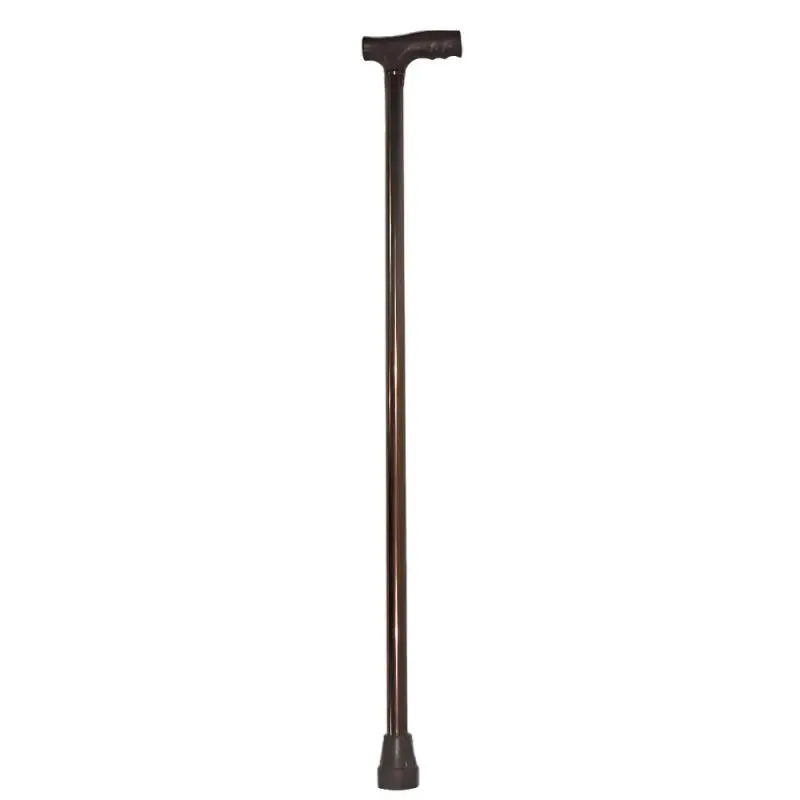
Single-tip walking stick: Lightweight and agile, suitable for daily walking assistance
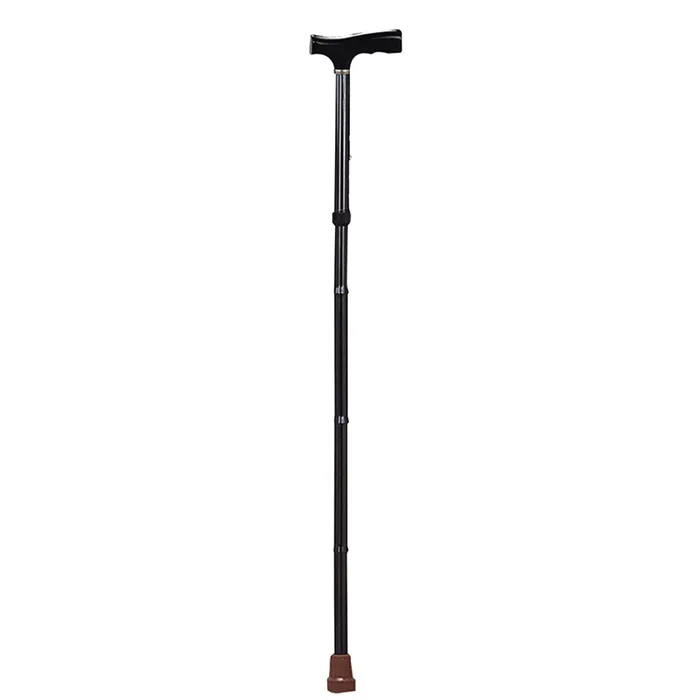
The single-tip walking stick currently holds the largest market share and is the type most frequently chosen by seniors making their first purchase. As the name suggests, it features a single point of contact at the base, making it lightweight and agile—ideal for navigating stairs and tight spaces. Most mainstream single-tip walking sticks are made of aluminum alloy and weigh between 300 and 500 grams, ensuring they do not place excessive strain on the arm, even during prolonged use.
For seniors in relatively good health—experiencing only mild knee degeneration, slight leg pain, or occasional difficulty walking—a single-tip walking stick offers sufficient support. Its design is particularly versatile for daily activities like shopping, neighborhood walks, or boarding buses, as it is not easily constrained by limited space. However, because it relies on a single contact point, it demands better balance; for seniors who are noticeably unsteady on their feet or have a history of frequent falls, a single-tip model may not provide adequate safety.
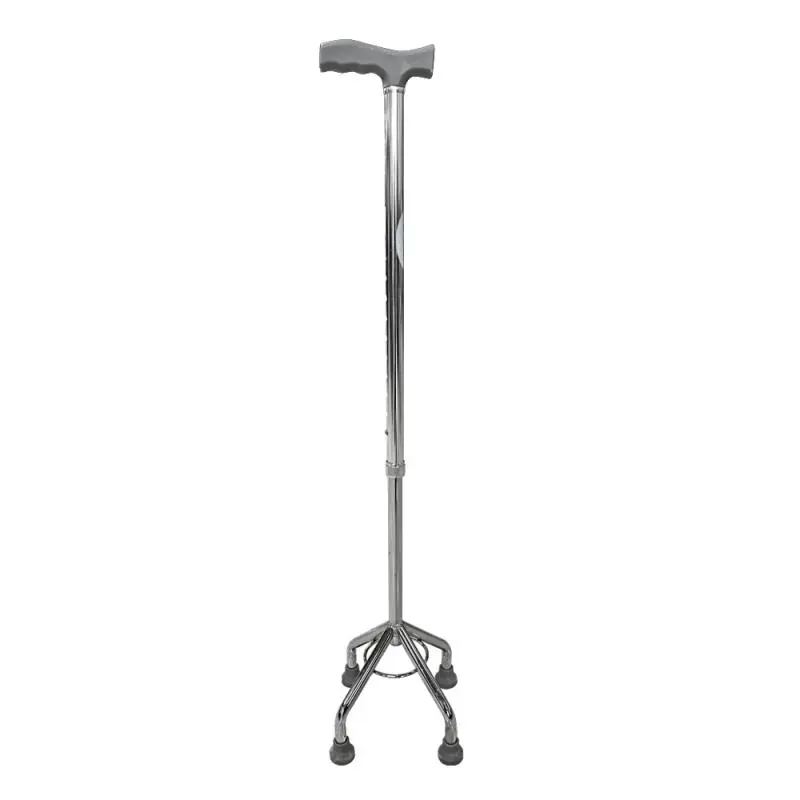
Four-tip walking sticks: Enhanced stability for seniors with reduced balance
Compared to single-tip models, the defining feature of a four-tip walking stick is its four-point base design, which significantly increases the ground contact area and enhances overall stability. Many seniors struggle to maintain their balance when standing up, turning, or pausing briefly; a four-tip walking stick provides reliable support during these movements, effectively minimizing lateral swaying and improving walking safety.
Four-tip walking sticks are generally the better choice for the very elderly, stroke survivors, Parkinson’s patients, and individuals with significantly reduced leg strength. Because the four-legged base allows the stick to stand upright on its own, seniors do not need to constantly search for a wall, table, or chair to lean it against when letting go, making it more convenient to use. Of course, this added stability comes with increased weight; four-tip models are heavier than standard single-tip sticks and offer slightly less maneuverability on narrow staircases, buses, or in crowded areas. Therefore, the choice should be based on the senior's typical range of daily activities.
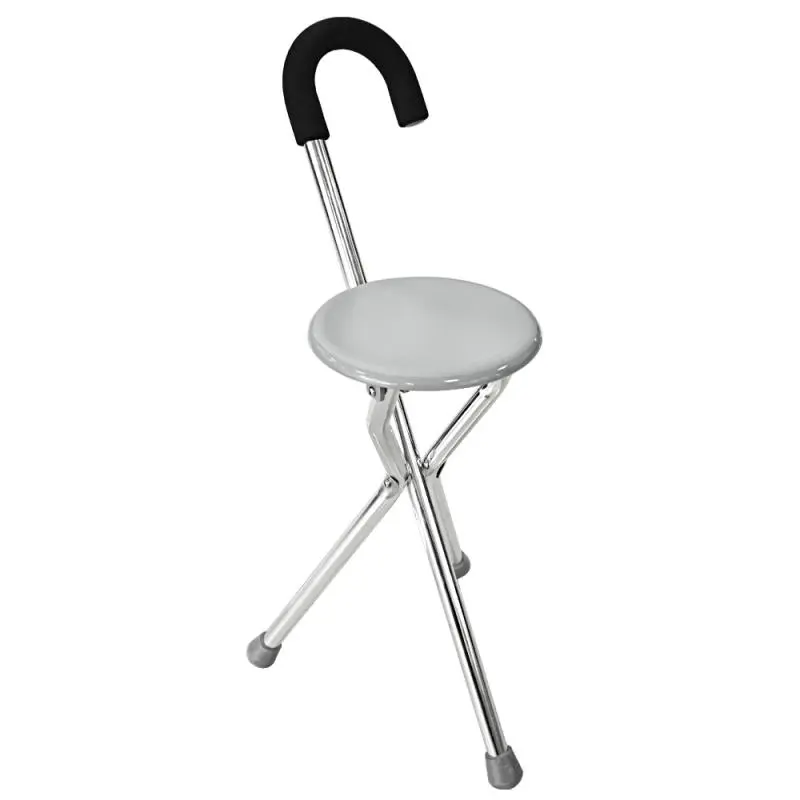
Walking sticks with seats: Combining walking and resting for greater outdoor comfort
In recent years, walking sticks equipped with seats have become increasingly popular among older consumers, particularly those who enjoy walking, traveling, or frequently going out. The standout feature of this type of product is its dual functionality: it serves as a standard walking stick but can also quickly unfold into a simple seat, allowing seniors to rest whenever and wherever they need to.
Many seniors are physically capable of walking but tend to tire after twenty or thirty minutes of continuous movement. Being able to sit and rest for a few minutes at any time can significantly improve their experience while out and about. Whether strolling in the park, queuing for a medical appointment, sightseeing, or waiting for a bus, a walking stick with a built-in seat proves highly useful. It also alleviates the strain that prolonged standing places on the knees and lumbar spine, thereby encouraging seniors to remain active. However, it is worth noting that the addition of a seat mechanism usually makes these sticks heavier than standard single-piece or folding walking sticks; consequently, they are best suited for seniors with relatively good physical strength. Furthermore, when using the seat function, one must ensure the ground is level and the locking mechanism is fully engaged to prevent accidents caused by slippery surfaces or unsecured locks.
Folding walking sticks: Easy to store and ideal for seniors who travel frequently
For seniors who enjoy traveling, visiting relatives, or frequently using public transportation, folding walking sticks offer clear advantages. They feature a multi-section folding design that extends to a standard length for use but collapses quickly for storage in a suitcase, car trunk, or even a large backpack.
Most folding walking sticks on the market today are made from aerospace-grade aluminum alloy, offering a combination of light weight and high load-bearing capacity. Many mid-to-high-end models also come equipped with ergonomic handles, non-slip rubber tips, LED lights, shock-absorption systems, and adjustable height settings, ensuring greater comfort during night walks or extended use. Compared to traditional fixed walking sticks, folding models offer superior portability, making them increasingly popular among elderly travel enthusiasts.
How do you choose the right type of walking stick based on a senior's physical condition?
The most important principle when purchasing a walking stick is to select one based on physical needs, rather than simply chasing after the model with the most features. For seniors in good physical condition, a lightweight, maneuverable single-tip walking stick usually suffices for daily needs; if they only require support occasionally—such as when navigating stairs—a height-adjustable model with good non-slip features is a suitable choice.
However, if a senior is experiencing a noticeable decline in balance (e.g., swaying while standing, unsteady gait, a history of falls, or a neurological condition), a four-tip walking stick offering superior stability is recommended. The four-point base provides a larger support area, making it a safer option for the elderly.
For seniors who enjoy daily walks exceeding an hour or frequently visit places requiring prolonged standing—such as parks, tourist attractions, or hospitals—a walking stick with an integrated seat offers a convenient resting solution and enhances outdoor comfort. Meanwhile, for those who frequently travel by high-speed rail, plane, or car, or visit family, a foldable walking stick that is easy to stow away is undoubtedly more convenient to carry.
In fact, many families now keep two types of walking sticks to suit different scenarios: a stable four-tip model for use at home and a lightweight, foldable one for travel. This approach balances safety with the specific needs of different situations.
What other details should be considered when purchasing a walking stick for seniors?
Many consumers focus solely on whether a walking stick has a single tip or four tips, overlooking details such as height adjustability, handle design, materials, and non-slip capabilities. Yet, these factors directly impact the comfort and safety of long-term use.
First is height. Ideally, when a senior stands naturally with arms relaxed and holds the walking stick, the elbow should remain slightly bent at an angle of about 20° to 30°; therefore, prioritizing products with multi-level height adjustment is recommended. Second is handle design; ergonomic handles distribute pressure across the palm more evenly, preventing soreness during prolonged use and offering significantly better comfort than traditional straight-handle designs.
Regarding materials, aluminum alloy remains the market standard, as it strikes a balance between weight, corrosion resistance, and strength, making it suitable for the vast majority of seniors. Consumers with a higher budget might consider carbon fiber, which is lighter but generally more expensive. Regardless of the material chosen, it is crucial to inspect the connection points for sturdiness; pay particular attention to the reliability of the folding mechanism on foldable walking sticks and the seat locking mechanism on models equipped with a seat.
The rubber tip at the base is another critical component for safety. High-quality tips provide superior traction, ensuring effective slip resistance on various surfaces such as tile, wood flooring, and concrete. For quad-base walking sticks, it is also important to regularly check that the four tips are wearing evenly to avoid compromising overall stability.
What are some common mistakes older adults make when using a walking stick?
In reality, many seniors purchase walking sticks but fail to derive their full benefit due to incorrect usage. Common issues include improper height adjustment, continued use of severely worn tips, suddenly placing one's full body weight on the stick, or purchasing uncertified products solely for convenience.
Additionally, many consumers mistakenly believe that "more features are better," which is not necessarily the case. For instance, an older adult who primarily moves around at home does not necessarily need a heavier model with a built-in seat; conversely, a senior who frequently travels by high-speed rail might find a large, non-foldable quad-base stick burdensome to carry. Therefore, there is no single "best" type of walking stick—whether it is a single-tip, quad-base, seat-equipped, or foldable model; the best choice is the one that truly suits the individual's physical condition and lifestyle.
How can I properly maintain a walking stick to extend its lifespan?
Although walking sticks are durable goods, they still require regular maintenance after prolonged use. It is recommended to check all connection points—especially height-adjustment locks, folding mechanisms, and seat attachments—every one to two weeks for looseness. Rubber tips are consumable parts; they should be replaced promptly if they become significantly worn, cracked, or hardened, or if the anti-slip tread wears away, to ensure continued traction.
For foldable walking sticks, regularly check that the folding joints lock securely. For models with seats, pay special attention to the stability of the seat support frame to prevent issues caused by metal fatigue from long-term use. After use, store the walking stick in a cool, dry place away from prolonged sun exposure or moisture to extend its overall lifespan.
FAQ
Should an elderly person buying a walking stick for the first time choose a single-tip or a four-tip model?
If the senior is in good physical condition and only experiences mild knee degeneration or occasionally needs a little extra support, a single-tip walking stick is generally recommended. However, if there is noticeable instability while standing, impaired balance, or a history of falls, a four-tip walking stick—which offers superior stability—is the better choice.
Are walking sticks with seats actually practical?
For seniors who enjoy walking, traveling, visiting parks, or waiting in long lines, a walking stick with a seat is highly practical. It allows for rest at any time, reduces fatigue, and improves comfort during outdoor activities; however, it is important to choose a product with a reliable weight capacity and a stable locking mechanism.
Does a foldable walking stick compromise safety?
When fully unfolded and locked, foldable walking sticks from reputable brands offer sufficient stability for daily walking support. When purchasing, focus on the quality of the folding lock, weight capacity, and product certifications, and regularly check the folding mechanism for any looseness.
How often should a walking stick be replaced?
There is no fixed lifespan for a walking stick; replacement should be based on actual wear and tear. Promptly repair or replace the unit if you notice shaft deformation, loose connections, severely worn rubber tips, a malfunctioning folding mechanism, or an aging seat support frame.
Can a single walking stick meet all usage needs?
Not necessarily. If an elderly person needs a walking aid for both home use and frequent travel, they can prepare two different types of products suited to these scenarios—such as a highly stable four-footed walking stick for use at home and a lightweight, foldable one for outings—thereby balancing safety and portability.