
Among various walking aids, the Walking Stick is the oldest, simplest in structure, and most widely used. Despite the increasing variety of walking aids available today, the Walking Stick remains widely used in daily life. This inevitably raises the question: with multiple options already available, such as walkers, scooters, and wheelchairs, who still needs a Walking Stick?
To answer this question, we cannot stop at the surface level; we need to analyze it from multiple perspectives, including the human body's balance mechanism, lower limb weight-bearing capacity, walking stability, and daily activity needs.
In fact, the Walking Stick is not an "outdated" aid; rather, it remains an irreplaceable mode of walking support under specific physical conditions and functional needs.
This article will focus on the core question, "Who still needs a Walking Stick?", systematically analyzing its functional positioning, target population, and practical significance in different physical states.
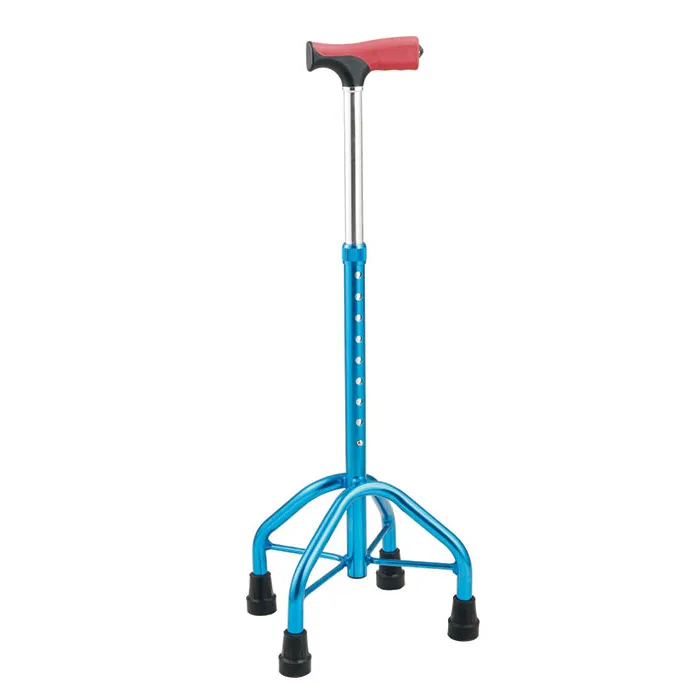
What is the core role of the Walking Stick in walking assistance?
Among all walking aids, the Walking Stick has the simplest structure, but its functional positioning is very clear.
The core function of the Walking Stick is not "complete body support."
Unlike walkers or wheelchairs, the Walking Stick is not a replacement for walking ability, but rather serves to:
• Provide additional balance support
• Distribute some weight-bearing on the lower limbs
• Enhance stability while walking
• Improve awareness of ground changes
In other words, the Walking Stick is an "assistive stability tool," not a "complete mobility aid."
Why is the Walking Stick still irreplaceable?
The Walking Stick's long-standing presence among assistive devices stems from its:
• Does not restrict the user's natural gait
• Does not take up excessive space
• Requires no complex operation
• Provides immediate support during walking
For many, the Walking Stick sits at that crucial level between "completely independent walking" and "requiring large assistive devices."
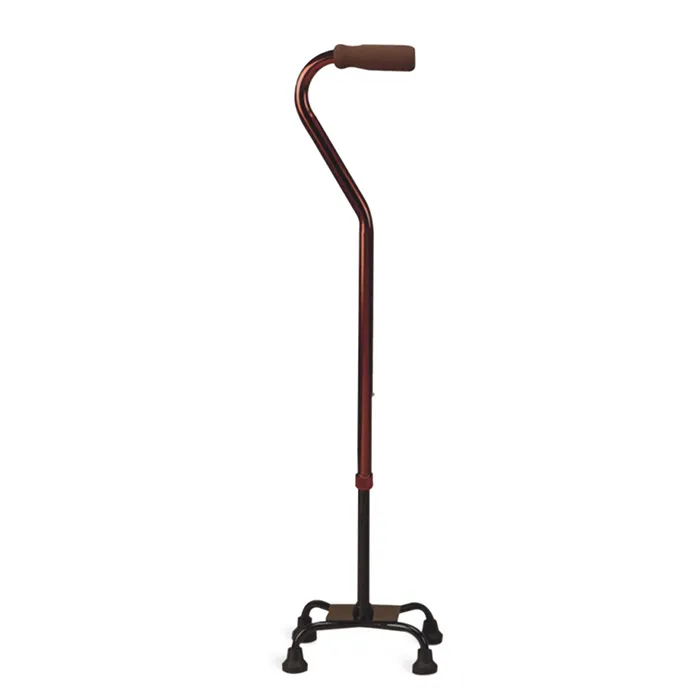
Who still needs a Walking Stick to assist walking?
The Walking Stick is best suited not for those completely unable to walk, but for those who:
• Can walk independently
• Have deficiencies in stability, strength, or endurance
These individuals often don't need walking aids or wheelchairs, but struggle to maintain stability without assistance.
Is a Walking Stick suitable for people with mild balance impairment?
The answer is: Absolutely.
Why is a Walking Stick particularly effective for balance impairment?
When balance declines, the main problem isn't insufficient strength, but rather:
• Decreased ability to control the center of gravity
• Slower reaction to changes in ground conditions
• Insufficient stability during walking
By adding an extra point of contact, a Walking Stick can:
• Increase the body's support surface
• Provide immediate balance feedback
• Reduce body sway
Therefore, for mild to moderate balance problems, a Walking Stick is often the preferred assistive tool.
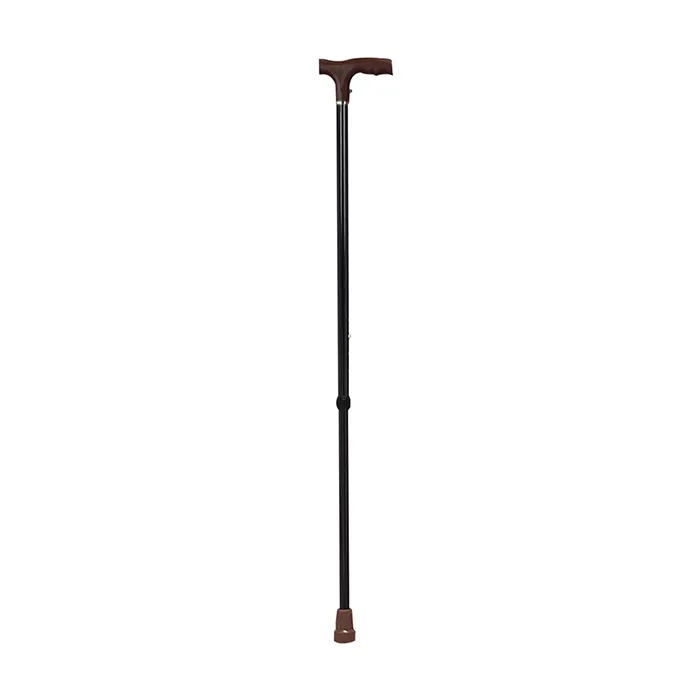
Is a Walking Stick suitable for people with unilateral lower limb weakness or discomfort?
This is one of the most typical and classic use cases for a Walking Stick.
What can a Walking Stick do when unilateral lower limb function is limited?
When one lower limb experiences:
• Weakness
• Pain and discomfort
• Decreased support capacity
A Walking Stick can:
• Share some of the body weight
• Reduce the load on the affected lower limb
• Help maintain body symmetry
In this situation, the Walking Stick's function is not to replace walking, but to redistribute the body's weight-bearing proportions.
Why is a Walking Stick still valuable for people with lower limb weakness?
A Walking Stick is not designed only for "complete disability." Many people mistakenly believe that only those who "cannot walk" need assistive devices, which is a common misconception.
In fact, decreased lower limb strength does not mean complete inability to walk, but it will significantly affect:
• Walking safety
• Walking endurance
• Walking stability
A Walking Stick exists precisely for this state of "remaining ability but not stable."
How does a Walking Stick help people with lower limb weakness?
• Provides fulcrum during stepping
• Increases support during standing transitions
• Reduces continuous load on lower limb muscles
Therefore, the Walking Stick remains a very practical tool even for those with insufficient lower limb strength.
Is the Walking Stick suitable for people who need to maintain independent walking?
This is one of the biggest differences between the Walking Stick and other assistive devices.
The Walking Stick has minimal impact on independence.
Compared to walking bikes, walkers, or wheelchairs, the Walking Stick:
• Does not occupy your hands
• Does not limit walking speed
• Does not change the basic gait pattern
• Is very flexible to use and fold up
For those who want to maintain maximum walking autonomy, the Walking Stick is a minimally interventionist assistive option.
Why do some people not suit direct use of walkers and need a Walking Stick instead?
While walkers or walkers offer greater stability, they are not suitable for everyone.
Walking Sticks are more suitable for the following situations:
• Confined walking environments
• Frequent movement between different spaces during daily activities
• No desire to use large devices
• Only light assistance rather than full support
In these situations, Walking Sticks are more suitable for practical needs.
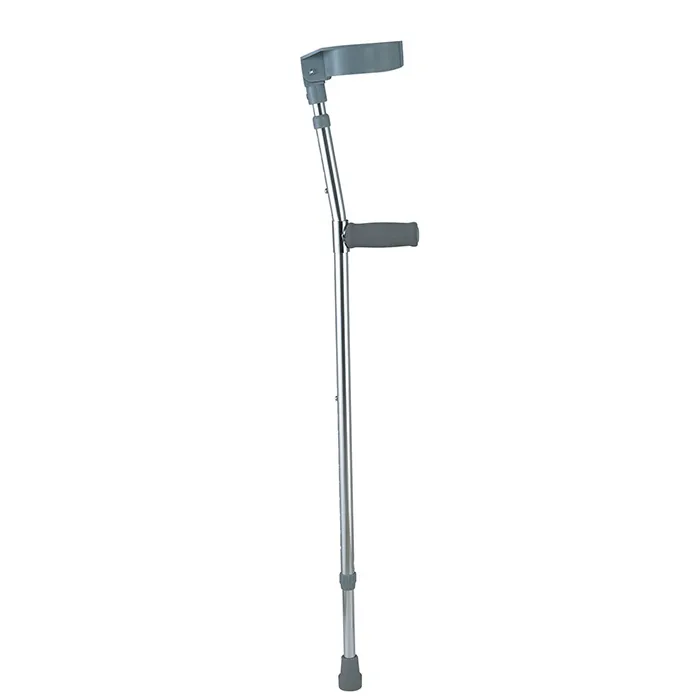
What are the unique advantages of Walking Sticks in daily activities?
Advantages of Walking Sticks in Spatial Adaptability
The small size and high flexibility of Walking Sticks make them particularly advantageous in:
• Indoor walking
• Going up and down stairs
• Turning and narrow spaces
Walking Sticks reduce the psychological burden on users
Compared to large assistive devices, Walking Sticks:
• Feel more natural to use
• Do not significantly alter the appearance
• Are more easily accepted by users
This is very important for long-term use.
Are Walking Sticks suitable for people who need intermittent assistance?
The answer is: Absolutely.
What is "intermittent assistance need"?
This group of people is characterized by:
• Sometimes walking steadily
• Sometimes requiring additional support
• Assistive needs are not continuous throughout the day
The advantages of a Walking Stick are:
• Always available
• Minimal impact on mobility when not in use
• Extremely low barrier to entry
Therefore, a Walking Stick is an ideal choice for dealing with intermittent walking instability.
Why is the Walking Stick still a "basic tool" in walking assistance?
From a professional perspective, the Walking Stick has the following irreplaceable advantages:
• It has the simplest structure of all walking aids
• Lowest learning curve
• Minimal intervention
• Can serve as a transitional option to other assistive devices
The Walking Stick's position in the assistive system is not to be replaced by more complex devices, but rather to always exist as a foundational level.
Is a Walking Stick suitable for long-term use?
Whether a Walking Stick is suitable for long-term use depends not on the duration, but on:
• Whether the user still possesses basic walking ability
• Whether only mild assistance is needed
• Whether the Walking Stick can be used correctly
If these conditions are met, the Walking Stick can serve as a stable long-term walking aid.
Where are the functional boundaries between the Walking Stick and other walking aids?
From a functional perspective:
• Walking Stick: Mild assistance, enhancing stability
• Walking aids/cycling aids: Moderate assistance, increasing support points
• Wheelchairs: Complete replacement of walking
Understanding this clarifies that:
As long as the user retains some degree of walking ability, the Walking Stick still has its place.
What products does Yikang Medical supply?
Yikang Medical is a leading manufacturer and supplier of hospital rehabilitation and nursing equipment in China. Our product range includes hospital beds, nursing beds, electric and manual wheelchairs, toilet chairs, shower chairs, walkers, crutches, and other medical rehabilitation devices.
Established in Foshan in 2010, we initially focused on hardware and mechanical components, then expanded in 2014 to hospital beds and wheelchairs. We are an OEM factory for major brands and support customized orders to match your specifications, including product design, configuration, and color.