
When selecting a wheelchair, many users and their families face a common question: what exactly are the differences between standard wheelchairs, high-back wheelchairs, reclining wheelchairs, and nursing wheelchairs? For individuals who are bedridden for long periods, those with neurological disorders, the elderly, and those requiring long-term care, a wheelchair is more than just a means of transport; it is a piece of care equipment used for extended periods every day. An improper choice can compromise comfort, increase the risk of pressure ulcers, strain the spine, cause breathing difficulties, and even hinder long-term rehabilitation outcomes.
In reality, many families focus primarily on price, foldability, or weight capacity when purchasing a wheelchair, overlooking a crucial factor: whether the patient requires a higher level of postural support. For individuals with limited body control who cannot maintain a seated position for long periods, the low backrest of a standard wheelchair often fails to provide adequate support. Patients may experience issues such as head drooping, leaning forward, and lower back fatigue; prolonged poor posture can lead to muscle tension, joint pain, and postural deformities.
Data from the World Health Organization (WHO) and various rehabilitation research institutions indicate that over 60% of long-term wheelchair users experience postural issues of varying severity, with inadequate postural support being a primary cause of discomfort and complications. For patients requiring intensive care, a proper seating support system is directly linked to respiratory function, blood circulation, and skin health.
Against this backdrop, high-back wheelchairs have become essential products in hospitals, rehabilitation centers, elderly care facilities, and home care settings. Compared to standard wheelchairs, high-back wheelchairs feature taller backrests, comprehensive head and neck support, and superior body stability, meeting the long-term needs of specific patient groups. At the same time, many users are interested in another question: can high-back wheelchairs recline? Do all high-back wheelchairs come with a reclining function?
In fact, "high-back wheelchair" and "reclining wheelchair" are not identical concepts. While some high-back wheelchairs allow the backrest to recline, others simply provide a taller support structure. Understanding the distinction between the two is vital for making the right purchasing decision. This article provides a comprehensive analysis of high-back wheelchairs—covering their definition, structural features, target users, reclining functions, and purchasing advice—to help users truly understand their value and use cases.
What is a high-back wheelchair?
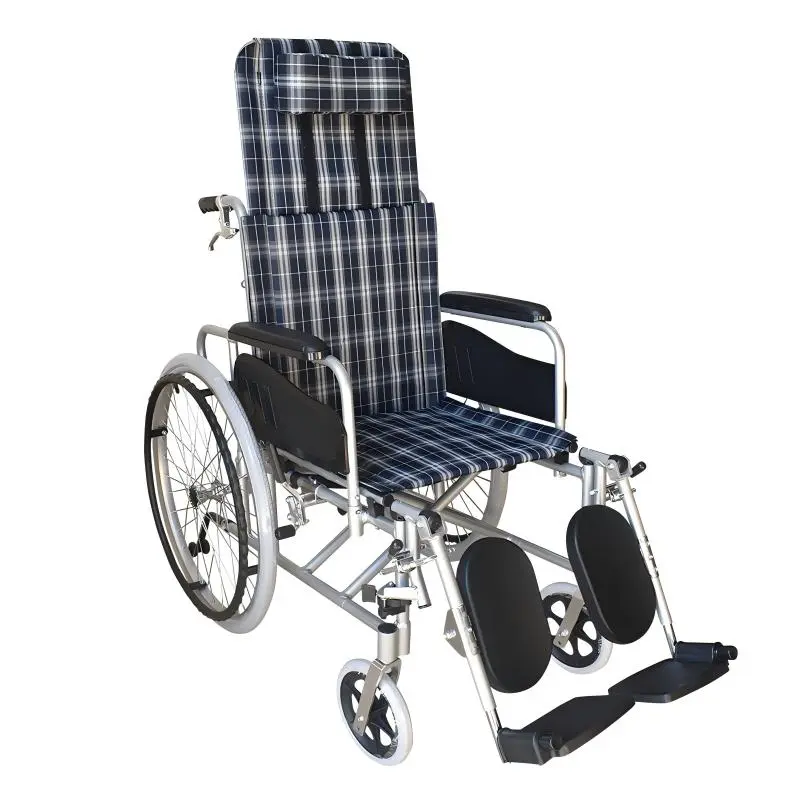
A high-back wheelchair is a type of wheelchair featuring a backrest that is significantly taller than that of a standard model.
While the backrest of a standard wheelchair typically ends below the shoulder blades—providing primarily lumbar and mid-back support—the backrest of a high-back wheelchair extends to the shoulders, neck, or even the head area; some models even include a dedicated headrest system.
Structurally, high-back wheelchairs typically include:
•A high backrest system;
•A head support device;
•A widened seat cushion;
•Adjustable armrests;
•Elevating leg rests;
•A caregiver-operated braking system;
•An anti-tip device.
Their design aims not merely to transport the patient, but to help maintain proper posture during prolonged periods of sitting, thereby reducing physical fatigue and easing the burden of care.
Consequently, high-back wheelchairs are classified more as assistive care equipment than as simple mobility aids.
How do high-back wheelchairs differ from standard wheelchairs?
Upon first glance, many people assume a high-back wheelchair is simply a standard wheelchair with a taller backrest. In reality, however, there are significant differences in their design philosophies.
Standard wheelchairs emphasize:
•Agile mobility;
•Self-propulsion;
•Lightweight design.
High-back wheelchairs focus more on:
•Postural support;
•Comfort during extended use;
•Ease of caregiving;
•Physical stability.
Standard wheelchairs are primarily suited for individuals with some degree of independent mobility.
High-back wheelchairs, by contrast, are designed for:
•Patients with severe mobility impairments;
•Elderly individuals with limited mobility;
•Patients with neurological disorders;
•Individuals requiring long-term care.
In terms of functional purpose, a high-back wheelchair is more akin to a "mobile nursing chair."
Why is the demand for high-back wheelchairs growing?
As the population ages and the need for long-term care rises, the market demand for high-back wheelchairs continues to grow. The reason is that many patients suffer from more than just impaired lower-limb mobility.
They may also experience:
•Reduced head and neck control;
•Insufficient trunk stability;
•Muscle weakness;
•Impaired postural control;
•Difficulty maintaining a seated position for extended periods.
Standard wheelchairs often fail to meet the needs of such patients.
For instance, a patient with the aftereffects of a stroke might be able to sit in a wheelchair but tends to lean to one side after sitting for a long time due to impaired trunk control.
Similarly, a patient with advanced Parkinson's disease might suffer from issues such as forward head tilt and neck fatigue.
These situations require the additional support provided by a high-back wheelchair.
Who specifically needs a high-back wheelchair?
1. Patients transitioning from long-term bed rest to out-of-bed activity
Patients who have been bedridden for a long time often have poor physical tolerance when they first get out of bed.
Common symptoms include:
•Unstable sitting posture;
•Dizziness;
•Significant fatigue;
•Insufficient muscle strength.
High-back wheelchairs provide comprehensive support, helping patients gradually adapt to sitting and being active.
2. Patients with stroke aftereffects
Stroke is a leading cause of disability worldwide.
Many stroke patients experience:
•Hemiplegia (paralysis on one side of the body);
•Balance disorders;
•Reduced trunk control.
High-back wheelchairs help maintain body stability and reduce the risk of falling.
3. Patients with cerebral palsy
Some patients with cerebral palsy cannot maintain a seated position independently.
High-back wheelchairs enhance safety by providing support for the head and trunk.
4. Patients with Parkinson's disease
As the condition progresses, patients may experience:
•Abnormal posture;
•Forward leaning of the body;
•Abnormal muscle tone.
High-back wheelchairs can alleviate the physical strain caused by prolonged sitting.
5. Patients with multiple sclerosis
Patients with multiple sclerosis often struggle with muscle weakness and fatigue.
High-back wheelchairs offer superior support and comfort.
6. Patients with muscular dystrophy
For individuals experiencing a gradual decline in muscle strength, high back reclining wheelchairs help maintain a comfortable sitting posture and reduce energy expenditure.
7. Elderly Individuals with Disabilities
High-back wheelchairs are among the most common pieces of care equipment used in elderly care facilities and home care settings.
They improve caregiving efficiency and enhance the user's comfort.
Can high-back wheelchairs recline?
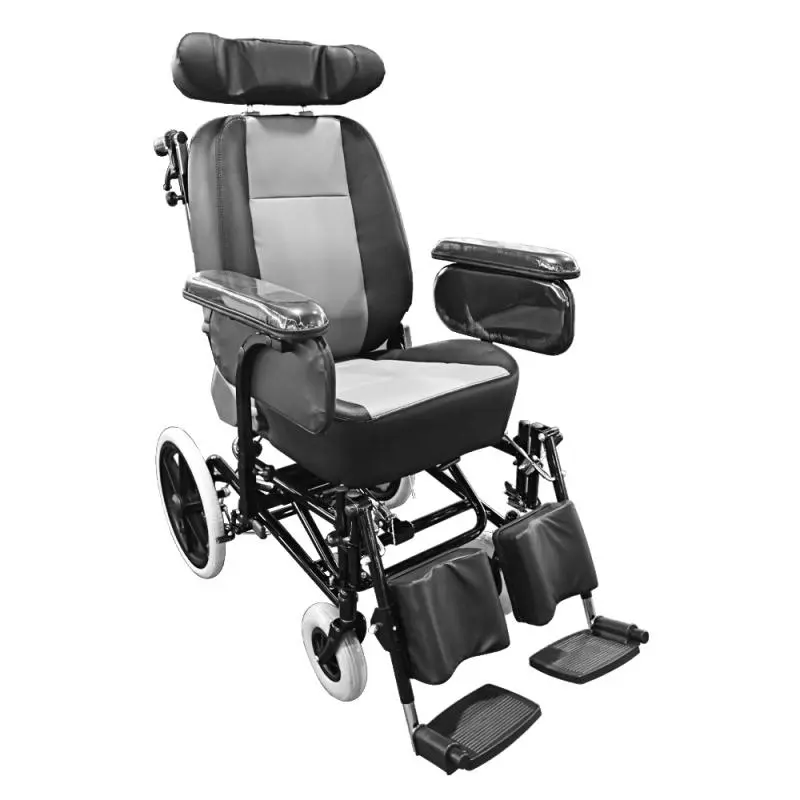
Some high-back wheelchairs can recline, but not all of them possess this feature. "High-back wheelchair" and "reclining wheelchair" are related yet distinct concepts.
High-back wheelchairs emphasize the height of the backrest, whereas reclining wheelchairs emphasize the ability to adjust posture. Some high-back wheelchairs feature a fixed backrest design; while the backrest is tall, its angle cannot be changed.
Conversely, other high-back wheelchairs are equipped with a reclining mechanism that allows for backrest angle adjustment.
Therefore, when purchasing, it is essential to verify whether the product has a reclining function rather than relying solely on the name "high-back wheelchair."
What are the benefits of the reclining function for the user?
For individuals who spend long periods in a wheelchair, the reclining function offers more than just comfort; it serves significant caregiving and medical purposes.
1. Reducing the risk of pressure ulcers
Pressure ulcers are among the most common complications for long-term wheelchair users. Research indicates that regularly changing one's sitting position effectively reduces the accumulation of localized pressure. A high-back wheelchair with a reclining function helps redistribute body pressure.
2. Relieving lower back and back fatigue
Maintaining a 90-degree sitting position for extended periods increases the load on the spine.
Reclining helps by:
•Reducing pressure on the lower back;
•Relaxing back muscles;
•Alleviating fatigue.
3. Improving respiratory function
Some users find it easier to expand their chest cavity when reclined.
This is particularly beneficial for individuals with neurological disorders.
4. Improving caregiving efficiency
Caregivers can utilize the reclining function to:
•Adjust the user's position;
•Assist with feeding;
•Perform caregiving tasks;
...thereby reducing the need for physical transfers.
What is the typical reclining angle for high-back wheelchairs?
It varies depending on the product design.
Common reclining ranges include:
•90° to 120°;
•90° to 135°;
•90° to 160°. Some high-back nursing wheelchairs can even recline to a near-supine position.
However, please note: a greater recline angle is not necessarily better.
The choice should be based on the patient's physical condition and specific care requirements.
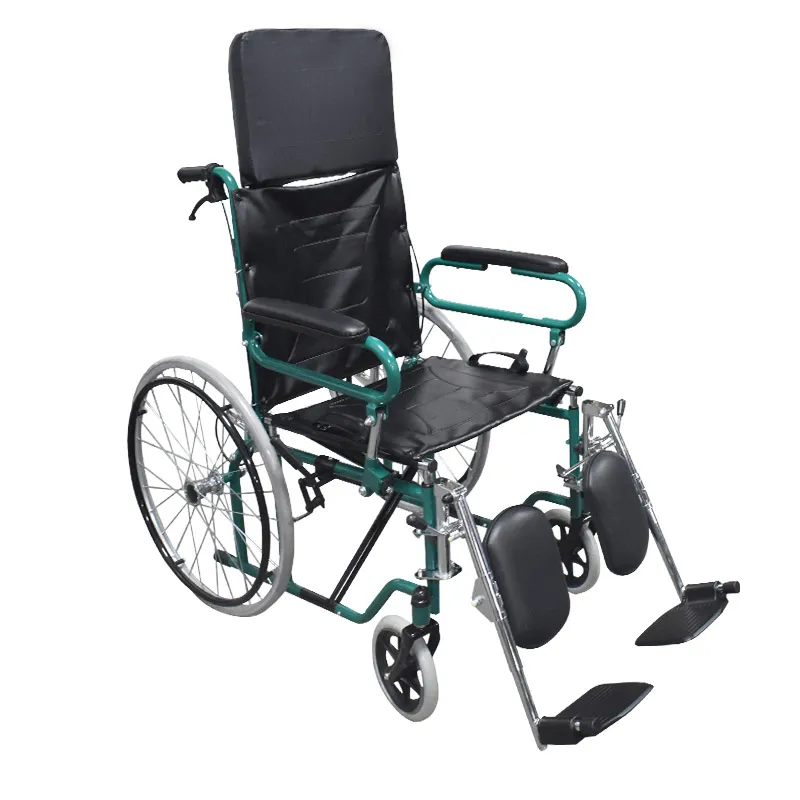
How does Yikang Medical® view the value of high-back wheelchairs in patient care?
With the growing demand for long-term care and rehabilitation services, high back reclining wheelchairs have become essential assistive devices in hospitals, elderly care facilities, and home care settings. As a company dedicated to the R&D and manufacturing of medical care equipment and rehabilitation aids, Yikang Medical® consistently prioritizes patients' actual needs regarding comfort, safety, and the long-term care process.
In our wheelchair designs, we go beyond basic mobility functions to place greater emphasis on ergonomic support, postural management, and ease of care. For users who spend extended periods in a wheelchair, a well-configured high-back model not only improves the user experience but also enhances caregiver efficiency, creating a more comfortable and safe rehabilitation environment for the patient.
FAQ: Common Questions About High-Back Wheelchairs
FAQ 1: What is a high back reclining wheelchair?
A high back reclining wheelchair is a type of nursing wheelchair featuring a backrest that is significantly higher than that of a standard wheelchair, providing support for the head, neck, and torso.
FAQ 2: What is the difference between a high-back wheelchair and a standard wheelchair?
High-back wheelchairs focus more on body support and long-term care needs, whereas standard wheelchairs primarily emphasize mobility and independent movement.
FAQ 3: Can all high-back wheelchairs recline?
No. High-back wheelchairs and reclining wheelchairs are not identical; some high-back models feature a reclining function, while others have a fixed backrest design.
FAQ 4: Which patients are best suited for high back reclining wheelchairs?
Patients with conditions such as stroke, cerebral palsy, multiple sclerosis, Parkinson's disease, or muscular dystrophy, as well as frail elderly individuals with limited mobility, are generally the best candidates for high back reclining wheelchairs.
FAQ 5: What are the benefits of the reclining function on high-back wheelchairs?
The reclining function helps alleviate pressure concentration and fatigue, makes caregiving tasks easier, and reduces the risk of pressure ulcers.
FAQ 6: Are high back reclining wheelchairs suitable for long-term use?
Yes. High back reclining wheelchairs are specifically designed for scenarios involving prolonged sitting and long-term care; they typically offer superior support compared to standard wheelchairs, making them better suited for extended use.