

Wheelchair fencing is a long-standing, rigorously regulated, and highly technical competitive sport. It's not just a sport, but also a highly inclusive and fair competition. With the increasing popularity of accessible sports, the fencing wheelchair, as the core equipment of wheelchair fencing, is gradually being recognized and accepted by more people.
Many people still have questions about wheelchair fencing: Who can participate? Is it necessary to be severely injured? Is special athletic ability required?
This article will comprehensively and systematically answer these questions, ensuring readers clearly understand the qualifications, characteristics, and suitable groups for wheelchair fencing.
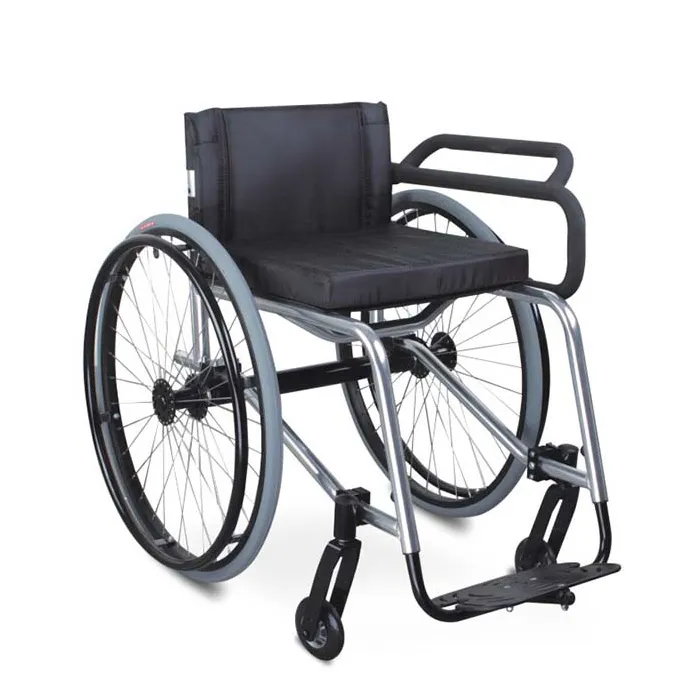
Who is Wheelchair Fencing Designed For?
Wheelchair fencing was originally designed as an international competitive sport for people with lower limb disabilities. Unlike traditional standing fencing, wheelchair fencers compete while seated in specialized fencing wheelchairs. The fencing wheelchair is fixed to a device on the ground, allowing the athlete's upper body to extend freely, but the wheelchair itself does not slide, making the rules of the competition fairer.
So, who are the main participants in wheelchair fencing?
1. Lower Limb Amputees
Whether unilateral or bilateral lower limb amputation, individuals can participate in wheelchair fencing, provided their upper limb mobility is normal and they can perform basic fencing movements.
Fencing wheelchairs are designed with pelvic and thigh area fixation to ensure stability during movements.
2. Individuals with Lower Limb Functional Impairment Due to Spinal Cord Injury
Spinal cord injuries can affect varying degrees of lower limb mobility. As long as the athlete possesses stable trunk control or can improve posture with fixation devices, they can safely participate in the sport using a fencing wheelchair.
3. Patients with Neurological Disorders Affecting Lower Limb Mobility
For example:
• Multiple Sclerosis (MS)
• Cerebral Palsy (CP)
• Neuromuscular Disorders (such as muscular dystrophy)
These diseases may cause lower limb weakness, spasticity, or balance disorders, but do not affect upper limb function. Therefore, fencing wheelchairs allow them to safely enjoy fencing.
4. Patients who have permanently or temporarily lost lower limb stability due to accidents
As long as an athlete is temporarily unable to perform standing fencing, they can participate in training or competition using a fencing wheelchair.
It can be seen that the scope of participation in wheelchair fencing is broader than many people imagine. The key is not whether a wheelchair is used, but whether one possesses the upper limb abilities to stably and safely use a fencing wheelchair in competition.
Can people with insufficient upper body strength use a fencing wheelchair for training?
Many people worry that their lack of strength or back stability will prevent them from using a fencing wheelchair.
In actual sporting practice, the upper limb strength requirements for fencing wheelchairs are not fundamentally different from those for regular fencing—they still require:
• Arm strength
• Wrist dexterity
• Upper body coordination
• Reaction speed
However, this does not mean that people with slightly weaker strength cannot participate.
1. Fencing wheelchairs offer stability and support
Unlike traditional wheelchairs, fencing wheelchairs offer superior stability, including:
• Lumbar support belts
• Thigh stabilization structures
• Pelvic stabilization systems
These designs allow athletes to maintain balance without relying solely on stamina, making it easier for those with weaker upper body strength to gradually adapt.
2. Beginners can start with basic training
Many fencing clubs offer training programs tailored to athletes' abilities at different levels. Examples include:
• Basic arm strength training
• Upper limb flexibility training
• Reaction and rhythm training
The structure of the fencing wheelchair itself is sufficient to support beginners in gradually building muscle memory.
3. A tiered competition system ensures fairness
International wheelchair fencing competitions tier athletes based on their functional abilities, for example:
• Grade A: Good upper limb strength and trunk control
• Grade B: Weaker trunk stability
• Grade C: Higher degree of upper limb dysfunction
Therefore, even athletes with limited strength can find a suitable competition group.
In summary: Insufficient upper body strength is not a limitation; anyone who can safely use a fencing wheelchair can participate in wheelchair fencing.

Can people with no daily wheelchair experience participate in wheelchair fencing?
Many potential participants believe that wheelchair fencing is only suitable for long-term wheelchair users, but this is a common misconception.
1. Wheelchair fencing does not require athletes to use a wheelchair regularly
The rules of wheelchair fencing emphasize fair competition between competitors in a seated position. Therefore, even if someone does not use a wheelchair regularly, they can participate if they are unable to perform standing fencing.
For example:
• Severe knee injury
• Recovery period from a lower limb fracture
• Balance disorder
• Limping preventing prolonged standing
These conditions do not necessarily mean dependence on a wheelchair, but they do affect standing fencing, and fencing wheelchairs provide them with a balanced and safe way to participate.
2. Using a fencing wheelchair is not complicated
A fencing wheelchair is fixed to the ground and does not require pushing or moving like a regular wheelchair. Therefore, it does not require complex skills; you only need to master:
• Postural stability
• Upper body dodging techniques
• Arm attack and defense movements
Therefore, even without prior wheelchair experience, one can quickly adapt to a fencing wheelchair.
What physical conditions are explicitly required for wheelchair fencing?
To ensure safety, wheelchair fencing does have some basic requirements, primarily revolving around upper body function.
The following abilities are essential:
1. Upper limb mobility
Able to:
• Grip the sword
• Swing the sword
• Raise the arm
• Perform blocking movements
This is the most crucial and essential condition for wheelchair fencing.
2. Stable postural control (naturally or with the aid of a restraint device)
While a fencing wheelchair helps stabilize the athlete's body, the athlete still needs to possess certain:
• Trunk control
• Upper body balance
To ensure no injury during intense movements.
3. Ability to understand the rules and perform hand movements independently
Fencing involves:
• Offense
• Defense
• Dodge
• Counterattack
These movements require athletes to independently control their upper body.
Less strict requirements for:
• Lower limb mobility
• Lower limb strength
• Walking ability
• Standing ability
Therefore, wheelchair fencing focuses more on upper body function than on everyday wheelchair use experience.
Why are fencing wheelchairs crucial for participants?
Fencing wheelchairs are not just a seating device, but also essential equipment to ensure fair, safe, and standardized competition.
1. Fencing wheelchairs ensure athletes are at the same attacking distance
Since athletes cannot move their feet in wheelchair fencing, the wheelchair fixes the distance between athletes, ensuring that both sides maintain consistent:
• Range of contact
• Attack distance
• Defense distance
2. Fencing wheelchairs prevent accidental slippage, ensuring safety
The wheelchair must never be moved during a match, as this would disrupt the rules of the competition. Therefore, fencing wheelchairs must be secured to a track system to allow athletes to safely use their upper limbs for power, preventing them from tipping over or sliding out of position.
3. Fencing wheelchairs allow athletes to utilize their upper body advantage
While athletes cannot control distance through footwork, they can use:
• Leaning forward
• Leaning back
• Extending their arms
to attack or dodge. Therefore, the stability of the fencing wheelchair is crucial.
Can people of any age participate in wheelchair fencing?
Wheelchair fencing is inclusive in terms of age.
1. Teenagers
Teenagers can participate in basic training in fencing wheelchairs, provided they meet sports safety standards. This helps develop:
• Concentration
• Reaction speed
• Motor coordination
2. Adults
Adults are the primary participant group in wheelchair fencing, especially those with lower limb limitations due to accidents or illnesses.
3. Seniors
Many seniors are unable to perform standing fencing due to joint problems or balance disorders, and the seated posture of wheelchair fencing provides a safer way to participate.
Therefore, the age restrictions for wheelchair fencing are very lenient.
Who can participate in wheelchair fencing?
As long as your upper limbs are functionally normal and you can safely use a fencing wheelchair, you can participate in wheelchair fencing.
Instead of asking "Am I eligible?", ask, "Do I have the upper limb mobility and the willingness to try?"
Wheelchair fencing is an exciting, technically demanding, highly challenging, yet very inclusive and fair sport. Whether you have a lower limb disability, are an amputee, have a neurological disorder, or are unable to stand to fencing due to injury, as long as you wish to participate, a fencing wheelchair will open the door to the competitive world for you.
Can Yikang Medical supply toilet chairs for hospitals?
Yes, Yikang Medical manufactures toilet chairs designed for hospital, nursing home, and home care use. Our factory in Foshan, China, started producing hospital beds and wheelchairs in 2014, building on our experience since 2010 in hardware and mechanical components. Our toilet chairs are designed for comfort, hygiene, and safety, with customizable features including height, armrests, and color.