
In the field of wheelchair manufacturing, the choice of material is the core factor determining a product's quality, durability, load-bearing capacity, and overall structural performance. Currently, the dominant materials include aluminum alloy and carbon fiber; these are used to manufacture aluminum wheelchairs and carbon fiber wheelchairs, respectively, representing the two most common categories found on the market today.
Consequently, the question of greatest concern to many users and caregivers is: Which is stronger—an aluminum wheelchair or a carbon fiber wheelchair?
To answer this question, we must conduct an in-depth comparison across multiple dimensions, including material properties, structural strength, load-bearing capacity, impact resistance, resistance to deformation, and long-term performance.
This article will comprehensively analyze the strength differences between these two materials, providing you with a clear understanding of which material is stronger, where its specific advantages lie, and why they exhibit distinct structural characteristics.
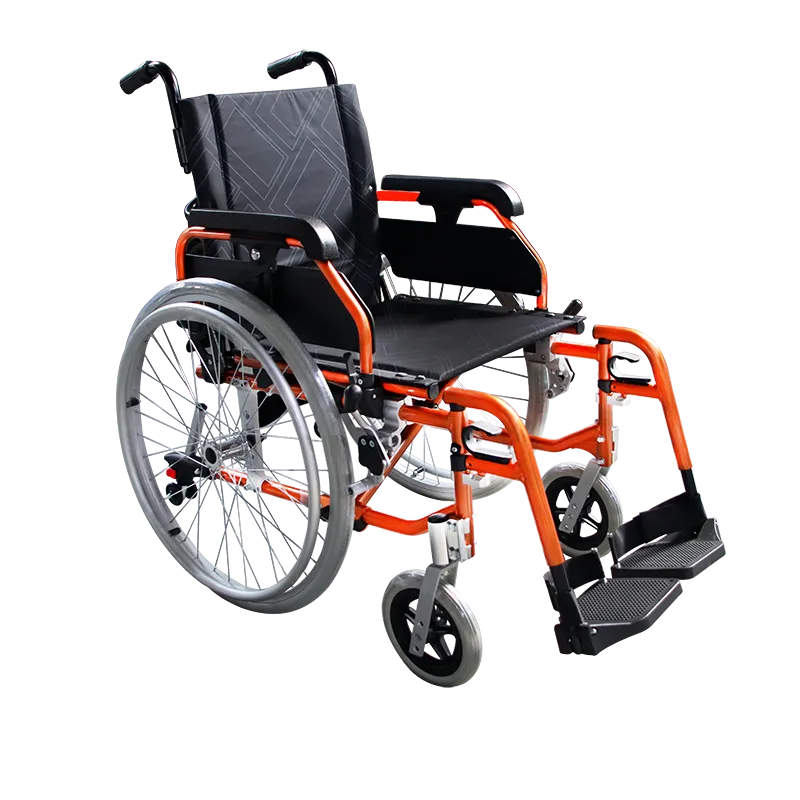
Do the Material Properties of Aluminum Wheelchairs Sufficiently Guarantee Their Robustness?
First, we must understand why aluminum wheelchairs are widely regarded as the epitome of strength and durability. As a structural material, aluminum alloy is extensively utilized in industries ranging from manufacturing to aerospace; when applied to wheelchairs, it demonstrates an equally high level of reliability.
1. Aluminum Possesses Excellent Compressive and Flexural Strength
The mechanical properties of aluminum alloy are remarkably stable:
•High flexural strength (resistance to bending)
•Strong compressive strength (resistance to crushing)
•Suitable for extensive welded structures
•Resistant to brittle fracture
•Possesses a certain degree of ductility
These characteristics mean that the frame of an aluminum wheelchair is unlikely to fracture or lose its structural stability, even when subjected to prolonged stress.
2. The Welded Structure of Aluminum Wheelchairs Enhances Overall Rigidity
Most aluminum wheelchairs feature a design that combines welded joints with tubular structures; internal reinforcement beams are often added to the frame to significantly enhance its overall torsional rigidity (resistance to twisting).
The advantages of this welded structure include:
•The ability to withstand continuous loads
•Resistance to localized stress concentration
•Enhanced overall structural rigidity of the wheelchair
Therefore, the inherent strength of an aluminum wheelchair stems primarily from its fully welded skeletal frame.
3. Aluminum Exhibits Stable Impact Resistance
Aluminum alloy possesses a certain degree of toughness, enabling aluminum wheelchairs to maintain their structural stability even when subjected to impacts, collisions, or prolonged vibration. Structural toughness helps reduce the risk of fracture and extends service life.
In summary, aluminum wheelchairs demonstrate excellent performance in terms of inherent strength, making aluminum one of the most robust materials available for wheelchairs in many daily-use scenarios.
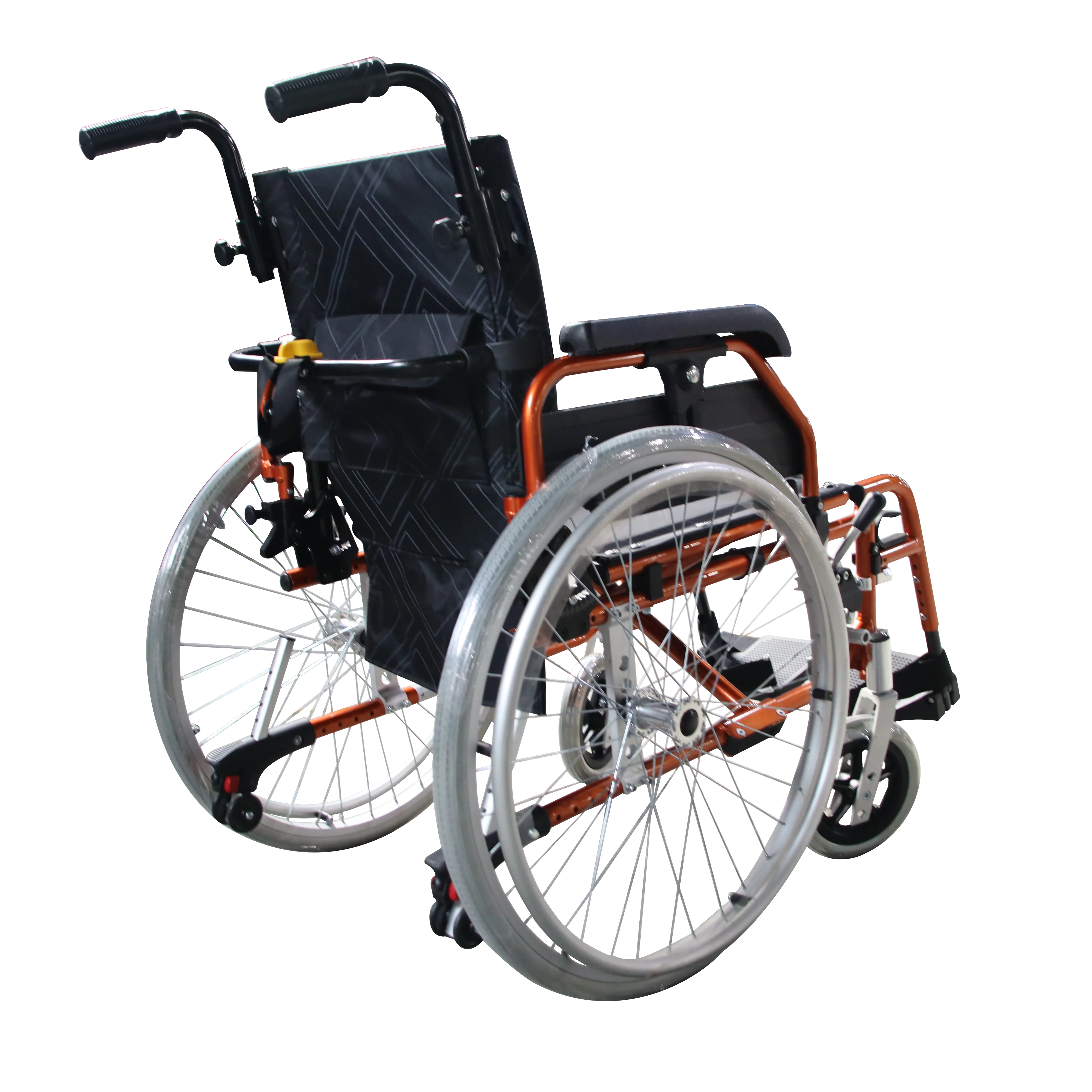
Why are carbon fiber wheelchairs considered to possess superior strength?
Compared to aluminum, carbon fiber is a more advanced, high-performance composite material; consequently, carbon fiber wheelchairs typically offer distinct advantages in terms of structural strength.
1. Carbon fiber’s tensile strength far exceeds that of aluminum
The tensile strength of carbon fiber can be 4 to 10 times greater than that of high-grade steel, whereas aluminum possesses only about one-quarter to one-sixth of carbon fiber's tensile strength.
This means that when subjected to tensile stress, carbon fiber wheelchairs:
•Are less prone to fracture
•Are less susceptible to fatigue
•Possess a higher safety margin
The core of a carbon fiber wheelchair's robustness lies in its exceptional tensile strength.
2. Carbon fiber exhibits extremely high structural rigidity
Carbon fiber panels or frame structures demonstrate far greater overall rigidity than aluminum, manifesting as:
•Resistance to deformation
•More direct power transfer during propulsion
•Enhanced frame stability
High rigidity ensures that a carbon fiber wheelchair maintains a stable structural integrity over time, minimizing the loosening of components.
3. Carbon fiber does not rely on weld points; its integral molding ensures greater stability
Unlike aluminum wheelchairs, which rely on welded structures, carbon fiber wheelchairs typically utilize:
•Integral molding
•Lamination and curing processes
•One-piece carbon fiber frames
This structural approach minimizes load-bearing weak points, ensuring that stress is distributed more evenly across all parts of the frame, thereby enhancing overall robustness.
Overall, carbon fiber wheelchairs generally outperform aluminum wheelchairs in terms of structural strength, demonstrating distinct advantages—particularly regarding tensile strength and resistance to deformation.
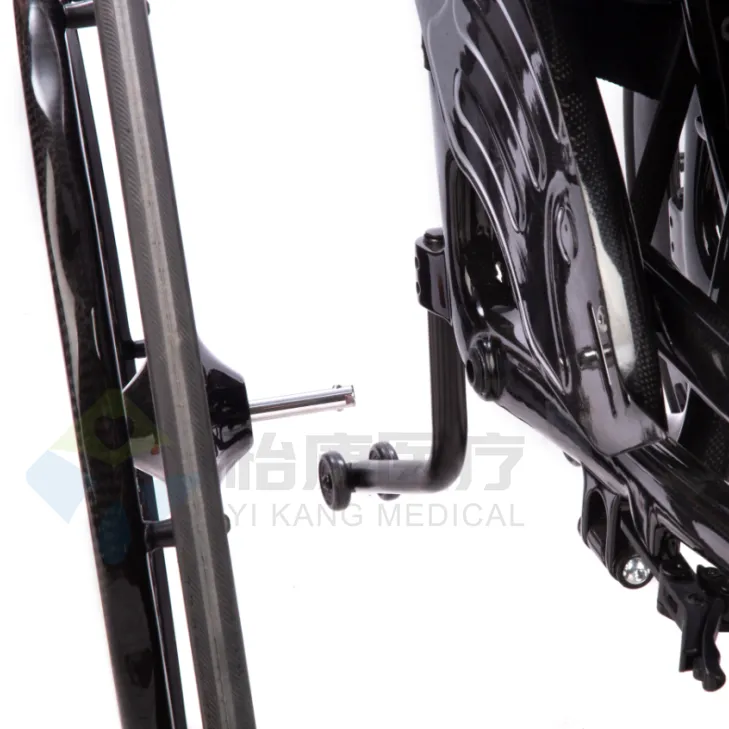
In terms of resistance to deformation, are carbon fiber wheelchairs truly more robust?
Many users assess a wheelchair's "robustness" not by its load-bearing specifications, but rather by whether it feels "wobbly," "flimsy," or "loose" during use. This criterion for judgment is closely tied to the wheelchair's resistance to deformation.
Deformation Resistance of Aluminum Wheelchairs
Aluminum is a ductile material; therefore:
•It may bend when subjected to extreme force.
•Once bent, it does not easily return to its original shape.
•While it is unlikely to fracture, it is prone to deformation.
This type of deformation can compromise the frame's overall stability and affect the experience of propelling the wheelchair in a straight line.
Deformation Resistance of Carbon Fiber Wheelchairs
Carbon fiber possesses extremely high structural rigidity; therefore:
•It is highly resistant to bending.
•It is difficult to deform, even under extreme stress.
•It offers a more stable seating experience, free from any sensation of looseness.
•It provides for smoother propulsion.
Consequently, in terms of deformation resistance, carbon fiber wheelchairs are clearly superior to their aluminum counterparts.
Which Material Offers Higher Load-Bearing Capacity?
Load-bearing capacity is one of the key metrics used to evaluate a wheelchair's overall robustness.
Load-Bearing Capacity of Aluminum Wheelchairs
Typically, the weight capacity of an aluminum wheelchair ranges from:
100 kg to 120 kg
Certain reinforced models can accommodate loads of up to:
130 kg to 150 kg
The inherent strength of aluminum is sufficient to meet the needs of the vast majority of users while maintaining excellent durability.
Load-Bearing Capacity of Carbon Fiber Wheelchairs
Due to carbon fiber's high-strength characteristics, most carbon fiber wheelchairs offer a weight capacity ranging from:
120 kg to 150 kg
Some models featuring high-density carbon fiber structures can support loads of:
160 kg or even higher
In other words, when compared at the same weight:
•Carbon fiber wheelchairs offer a higher load-bearing capacity than aluminum wheelchairs.
•When designed to meet the same load-bearing standards, carbon fiber wheelchairs are lighter in weight.
This demonstrates the inherent superiority of carbon fiber's performance capabilities.
Which Performs Better in Terms of Impact Resistance: Aluminum or Carbon Fiber Wheelchairs?
Robustness is not solely defined by static strength; it is also reflected in a wheelchair's performance under dynamic impact conditions.
Impact Resistance of Aluminum Wheelchairs
Aluminum is characterized by the following traits:
•It possesses excellent toughness.
•It is capable of absorbing a portion of impact energy.
•It is unlikely to fracture instantly when subjected to a collision.
As a result, aluminum wheelchairs demonstrate stable performance in situations involving collisions or similar impacts.
Impact Resistance of Carbon Fiber Wheelchairs
Carbon fiber possesses extremely high tensile strength; however, as a composite structure, it exhibits the following characteristics:
•High tensile strength
•High resistance to deformation
•However, under sudden, sharp impacts, delamination or cracks may occur (in extreme situations).
Nevertheless, the following points regarding this matter should be clarified:
•High-end carbon fiber wheelchairs utilize a multi-layered laminate structure.
•Impact protection is incorporated into the design process.
•Cracking is not a common occurrence during normal daily use.
However, strictly in terms of inherent material properties—specifically impact toughness—aluminum holds an advantage.
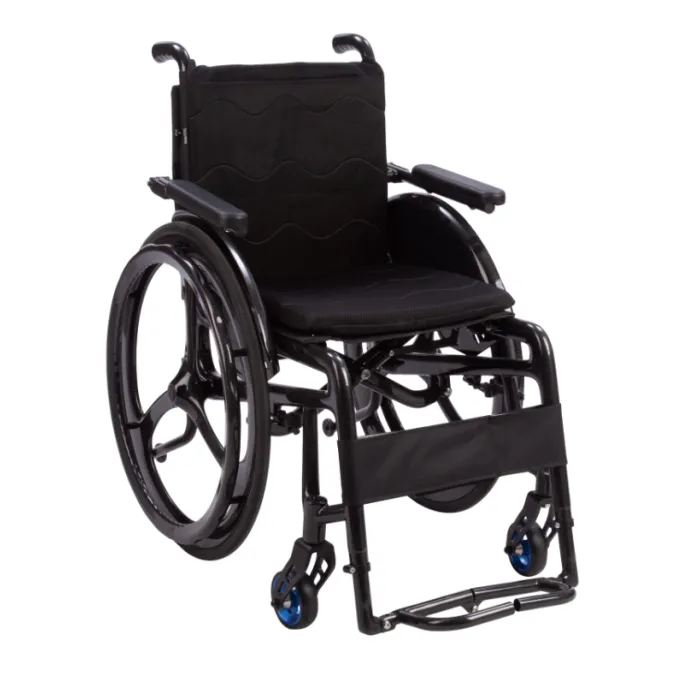
Are Carbon Fiber Wheelchairs More Durable Than Aluminum Wheelchairs?
Durability is one of the key criteria used to assess the sturdiness of a wheelchair.
Durability of Aluminum Wheelchairs
Aluminum possesses strong resistance to oxidation; however, prolonged use may lead to:
•Fatigue at weld points
•Loosening of the frame
•Surface abrasion
•Wear and tear at certain connection points
These issues can compromise long-term structural stability.
Durability of Carbon Fiber Wheelchairs
Carbon fiber offers the following advantages:
•Does not oxidize
•Does not corrode
•Does not rust
•Does not suffer from metal fatigue
•Does not develop a noticeable sense of looseness or instability after prolonged use
Consequently, in terms of long-term durability, carbon fiber wheelchairs outperform aluminum wheelchairs.
Are Carbon Fiber Wheelchairs Necessarily Stronger Than Aluminum Wheelchairs?
In terms of Tensile Strength: Carbon fiber is stronger.
Carbon fiber's strength significantly surpasses that of aluminum.
In terms of Resistance to Deformation: Carbon fiber is stronger.
Carbon fiber structures possess higher rigidity and superior stability.
In terms of Long-Term Durability: Carbon fiber is superior.
Carbon fiber does not loosen and is highly resistant to fatigue.
In terms of Impact Resistance: Aluminum is stronger.
The inherent toughness of aluminum allows it to absorb impact energy.
In terms of Load-Bearing Capacity: Carbon fiber is higher.
For a given weight, carbon fiber offers greater load-bearing capacity.
Comprehensive Conclusion
If criteria such as "structural strength," "resistance to deformation," "overall stability," and "long-term durability" are used as the basis for judgment, carbon fiber wheelchairs are, overall, sturdier than aluminum wheelchairs.
However, this does not imply that aluminum wheelchairs lack durability; aluminum remains:
•Stable in performance
•Cost-effective
•Entirely sufficient for standard requirements
It is simply that, when compared from a professional standpoint, there are indeed distinct differences between the two.
What products does Yikang Medical manufacture and supply globally?
Yikang Medical is a China-based manufacturer focused on producing a wide range of hospital and rehabilitation equipment. Our product line includes manual and electric hospital beds, nursing beds, electric wheelchairs, manual wheelchairs, sports rehabilitation products, commode chairs, walkers, and crutches.
As a professional factory and supplier, we provide high-quality products suitable for hospitals, care centers, and home use. Our company supports bulk purchasing, wholesale distribution, and OEM customization for global brands.