

When selecting a manual or basic-model wheelchair, the choice of material is often one of the first factors to be considered. Among the various options available, aluminum and steel wheelchairs represent the two most widely used and iconic categories currently on the market. They exhibit distinct differences in terms of structural design, user experience, weight, strength, and price; consequently, many people frequently ask the following question:
Which is better—an aluminum wheelchair or a steel wheelchair?
To answer this question scientifically and rationally, one cannot simply offer a blanket judgment of "good" or "bad." Instead, a systematic analysis is required, examining multiple dimensions such as material properties, mechanical performance, durability, weight characteristics, ease of transport, and overall functional features.
This article will delve deeply into this core question, helping you gain a clear understanding of the respective advantages and ideal applications for each of these two wheelchair materials.
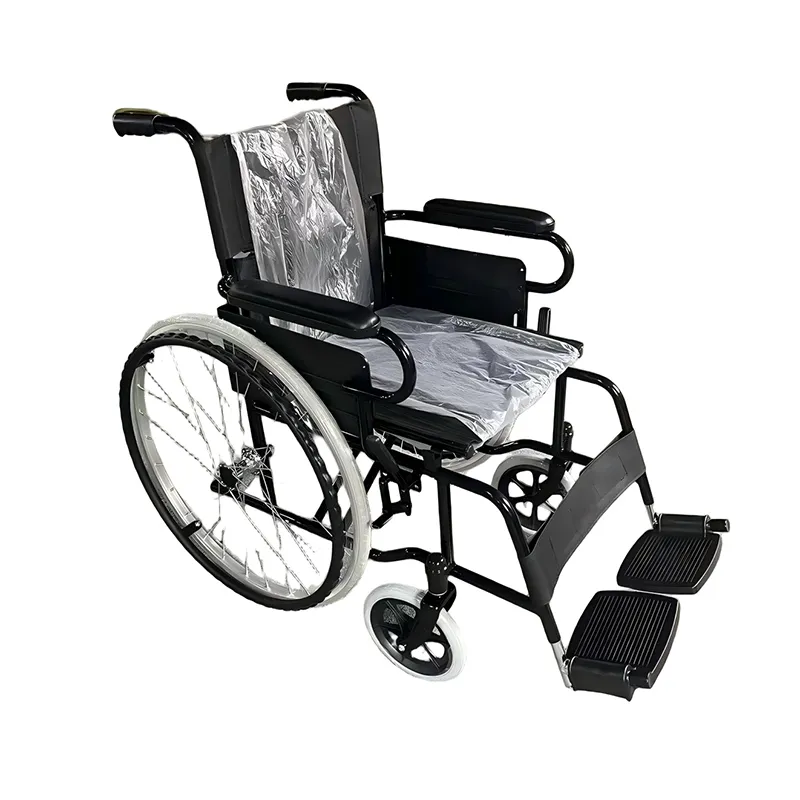
What Are the Fundamental Differences Between Aluminum and Steel Wheelchairs?
To compare aluminum and steel wheelchairs, one must first clarify their fundamental distinction: the difference in material composition dictates their differing performance characteristics.
1. The Material Basis of Aluminum Wheelchairs
Aluminum wheelchairs typically utilize aluminum alloy materials, characterized by the following properties:
•Low density
•High strength-to-weight ratio
•Resistance to rust and corrosion
•Ease of fabrication into lightweight structures
The core design objective of aluminum wheelchairs is to minimize the overall weight of the device while simultaneously ensuring adequate structural strength.
2. The Material Basis of Steel Wheelchairs
Steel wheelchairs generally employ carbon steel or alloy steel, characterized by the following properties:
•High material strength
•Strong impact resistance
•Structural stability
•Relatively low cost
The design focus of steel wheelchairs lies in ensuring structural robustness, stable load-bearing capacity, and long-term durability.
How Do Aluminum and Steel Wheelchairs Differ in Terms of Weight?
Weight is arguably the most intuitive—and certainly the most easily perceived—difference distinguishing aluminum wheelchairs from their steel counterparts.
1. Why Are Aluminum Wheelchairs Lighter?
The density of aluminum is approximately one-third that of steel. This inherent material property directly dictates that:
•Given an identical structural design,
•The overall weight of an aluminum wheelchair is significantly lower.
Typically, an aluminum wheelchair is about 30% to 40% lighter than a steel wheelchair.
2. Weight Characteristics of Steel Wheelchairs
Due to the high density of steel and the thicker walls of its structural tubing, steel wheelchairs tend to be heavier overall. The implications of this weight include:
•Greater physical effort required to push the chair;
•Increased difficulty in handling and lifting;
•Reduced convenience regarding transportation and storage.
However, this weight also endows steel wheelchairs with a stronger sense of "grounded stability."
3. The Impact of Weight Differences on User Experience
•Aluminum Wheelchairs: Easier to push and more agile to maneuver.
•Steel Wheelchairs: Generally more stable, offering superior static stability.
Therefore, weight is not an absolute measure of superiority or inferiority, but rather a critical variable that influences the overall user experience.
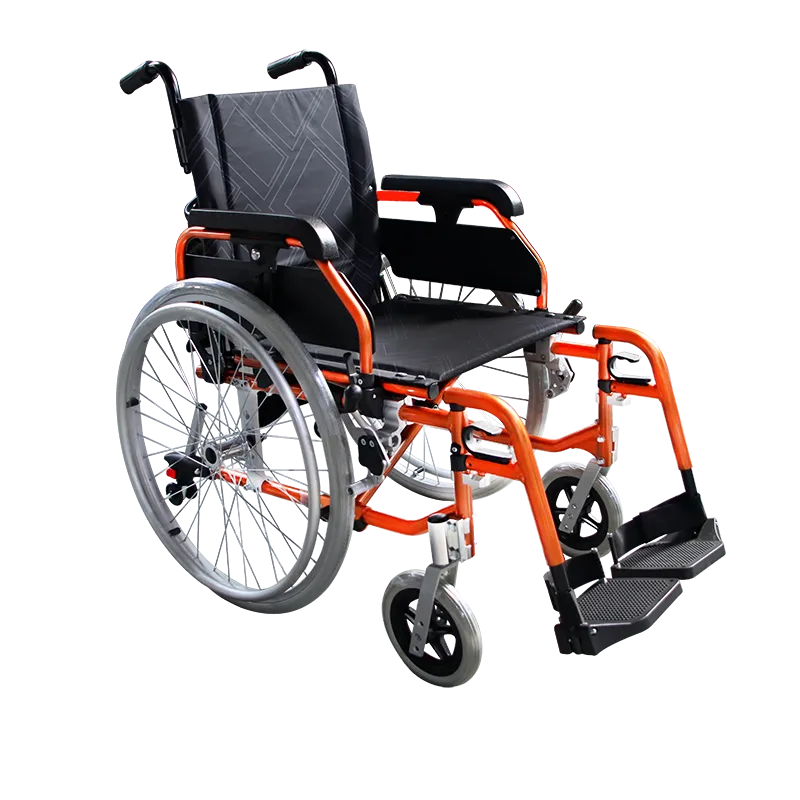
Which is Stronger: Aluminum or Steel Wheelchairs?
Many people instinctively assume that "heavier means sturdier." However, in the field of materials engineering, structural strength is not determined solely by weight.
1. The Strength Advantages of Steel Wheelchairs
From the perspective of the material itself:
•Steel possesses high tensile strength;
•It exhibits strong resistance to impact;
•It is less prone to fracture under heavy loads.
Consequently, given an identical structural thickness, steel wheelchairs typically offer higher ultimate strength and superior impact resistance.
2. The Strength Performance of Aluminum Wheelchairs
Although aluminum alloys are lighter than steel, proper structural design ensures they meet the strength requirements necessary for daily use. The key characteristics of aluminum wheelchairs include:
•Sufficient strength to support standard load-bearing requirements;
•The ability to maintain structural integrity while minimizing weight.
However, it is worth noting that under conditions of extreme impact or prolonged heavy loads, the structural safety margin of an aluminum wheelchair is typically lower than that of a steel wheelchair.
How Do Aluminum and Steel Wheelchairs Differ in Terms of Stability?
Stability is a crucial metric for assessing the sense of safety experienced by a wheelchair user.
1. Why Are Steel Wheelchairs More Stable?
Due to the following characteristics:
•Greater inherent weight
•High structural rigidity
Steel wheelchairs excel in the following areas:
•Static seating stability
•Resistance to wobbling
•Lower sensitivity to variations in ground surfaces
Consequently, steel wheelchairs typically convey a sense of being "solid and steady" during use.
2. Stability Characteristics of Aluminum Wheelchairs
In terms of stability, aluminum wheelchairs:
•Rely on intelligent center-of-gravity design
•Place greater emphasis on dynamic balance
Although generally lighter in weight, structural optimization allows them to achieve excellent operational stability; however, subjectively, they may not feel as "substantial" or "heavy-duty" as steel wheelchairs.
Is there a significant difference in corrosion resistance between aluminum and steel wheelchairs?
This is a crucial—yet often overlooked—distinction between these two materials.
1. The Corrosion Resistance Advantage of Aluminum Wheelchairs
Aluminum alloys possess a natural protective oxide layer; therefore:
•They are highly resistant to rust
•They adapt well to humid environments
•They require minimal surface maintenance
This makes it easier to keep aluminum wheelchairs in excellent condition during both daily use and long-term storage.
2. Rust Prevention Characteristics of Steel Wheelchairs
Steel wheelchairs typically require:
•Surface painting
•Protective plating or coating treatments
to prevent rust. If this protective coating becomes damaged, corrosion issues may arise in humid environments. Consequently, in terms of corrosion resistance, steel wheelchairs generally perform less favorably than their aluminum counterparts.
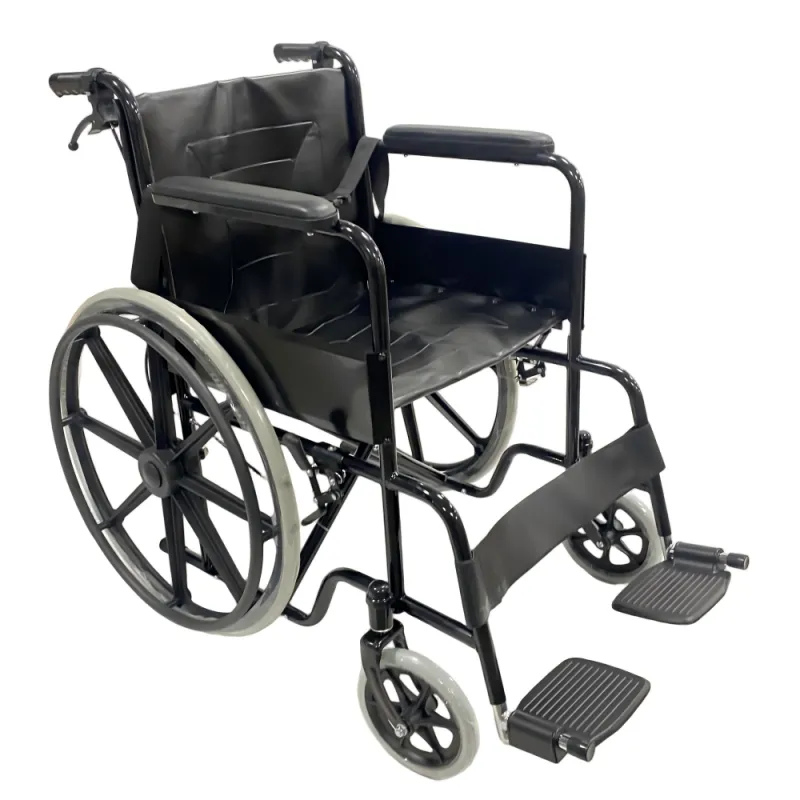
Which type of wheelchair is more convenient for transport and storage?
1. The Transport Advantages of Aluminum Wheelchairs
Due to their lighter weight, aluminum wheelchairs offer superior performance in the following areas:
•Easier to lift
•Better suited for loading into a car trunk
•Require less physical effort to carry once folded
If you frequently need to move the wheelchair or take it out for excursions, the practical convenience of an aluminum wheelchair is undeniable.
2. Transport Characteristics of Steel Wheelchairs
Due to their heavier weight:
•Steel wheelchairs require more physical effort to handle
•They create a greater reliance on assistance from others
However, when used within a fixed location, this drawback is generally not a significant issue.
Where do the price differences between aluminum and steel wheelchairs lie?
Price is a major consideration for many people when choosing a wheelchair.
1. Why are steel wheelchairs more affordable?
Steel features lower material costs and established manufacturing processes; consequently:
•The overall price of steel wheelchairs is typically lower.
•They offer outstanding value for money.
•They are better suited for those with limited budgets.
2. The Cost Structure of Aluminum Wheelchairs
Aluminum alloy materials are more expensive, and lightweight designs impose stricter requirements on manufacturing processes; therefore:
•Aluminum wheelchairs typically cost more than steel wheelchairs.
•Their higher cost is primarily reflected in their lightweight nature and corrosion resistance.
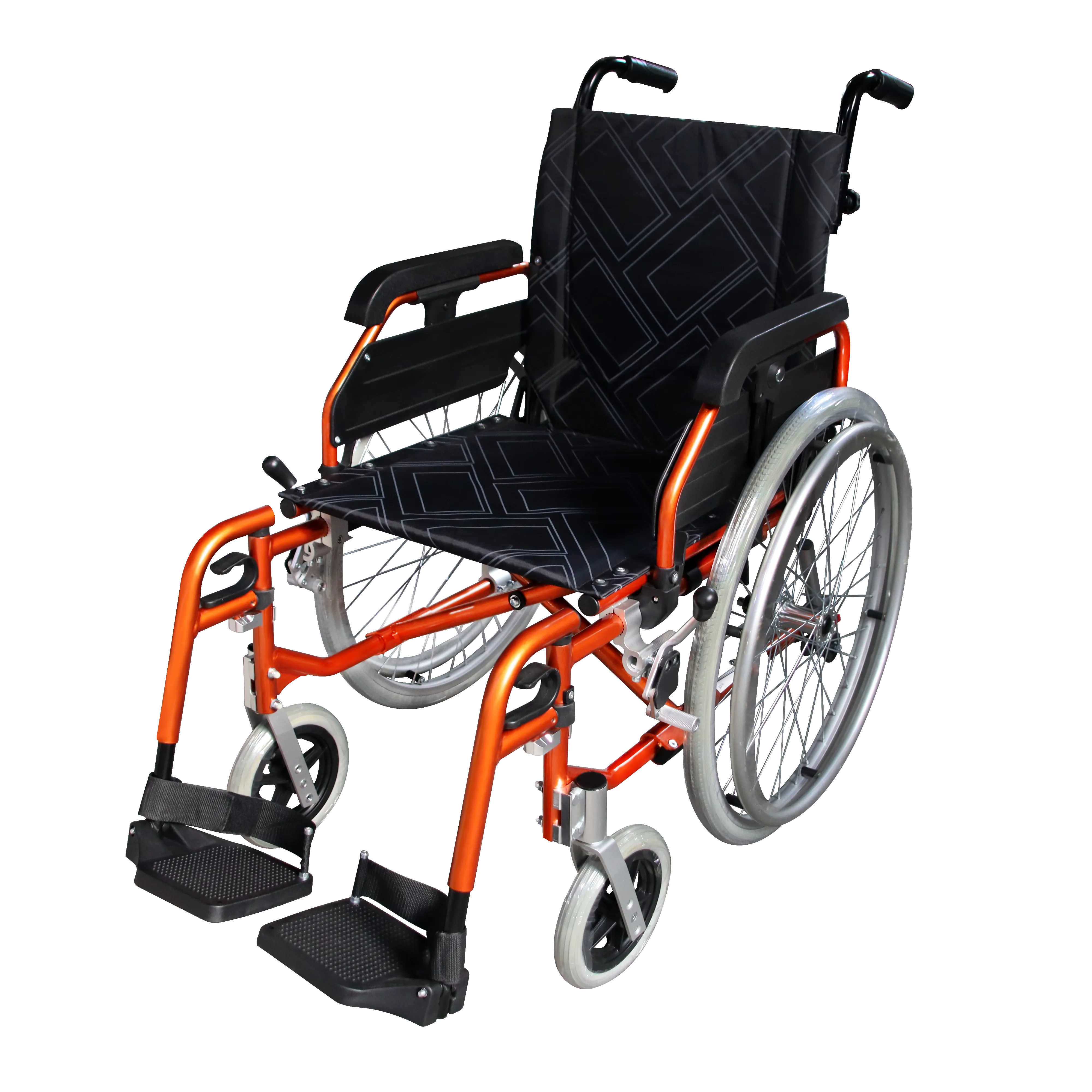
Are aluminum wheelchairs necessarily better than steel wheelchairs?
From a professional standpoint, "better" is not an absolute concept; rather, it depends on your specific priorities.
1. If you prioritize lightness and ease of transport:
•Aluminum wheelchairs are generally lighter in weight.
•They require less effort to push.
•They are easier to lift, carry, and store.
•They offer superior corrosion resistance.
Given these requirements, an aluminum wheelchair is the more suitable choice.
2. If you prioritize strength, stability, and affordability:
•Steel wheelchairs feature a more robust structure.
•They offer greater stability.
•They possess superior impact resistance.
•They are more affordable.
In this scenario, a steel wheelchair may be the better option.