

In the mobility aid market, rollator walkers(walking aids) are essential tools for many seniors, rehabilitation patients, and people with limited mobility. Among them, 3-wheeled and 4-wheeled rollator walkers are the two most common structural types.
Many people struggle with the choice when purchasing: which is better, a 3-wheeled or 4-wheeled walking aid? While their appearances may seem similar, their internal designs and user experience differ significantly.
This article will provide an in-depth comparison from multiple dimensions, including structure, stability, convenience, operability, and target audience, to help you clarify: "Which is better, a 3-wheeled or 4-wheeled rollator walker?" and why more and more users are choosing 4-wheeled rollator walkers.
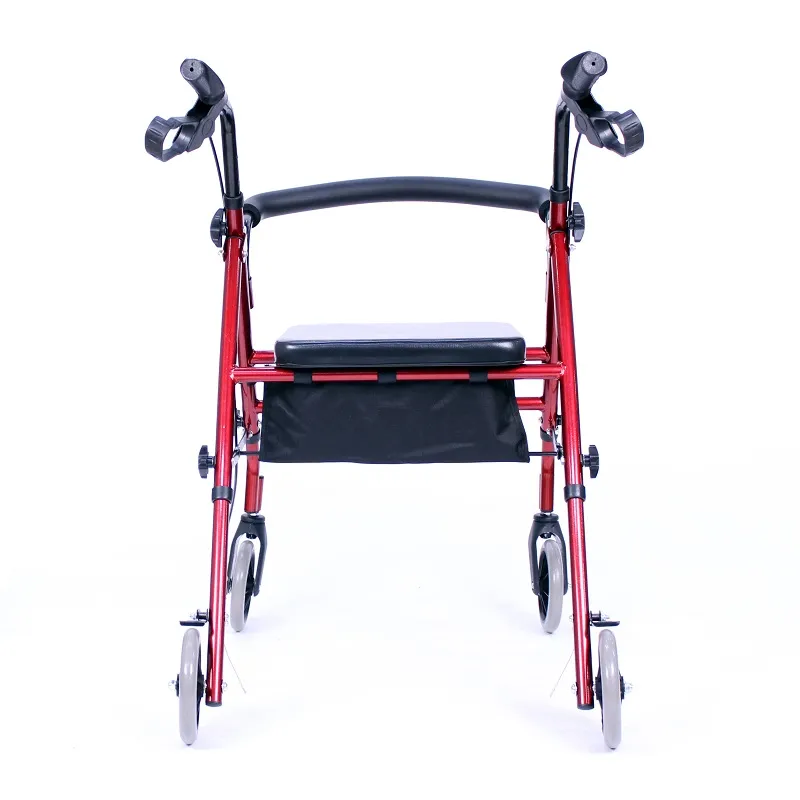
3-wheeled vs. 4-wheeled rollator walkers: Are there significant structural differences?
To determine which one is more suitable for you, you must first understand the fundamental structural differences between the two.
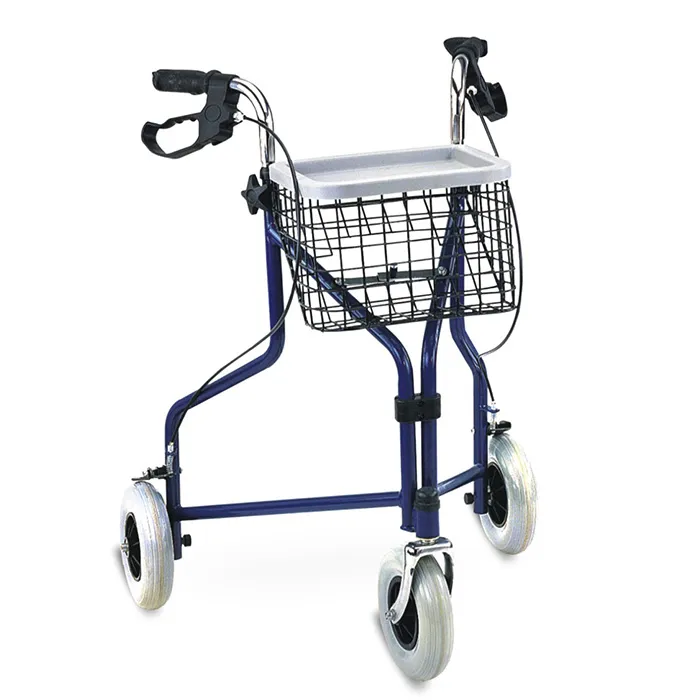
1. 3-Wheel Roller Walker Structural Characteristics
• Single front wheel, two rear wheels
• Larger turning angle
• Sharper front for high maneuverability
• Generally lightweight
The core advantage of a 3-wheel roller walker is its maneuverability, especially when turning in tight spaces.
2. 4-Wheel Roller Walker Structural Characteristics
• Evenly distributed wheels
• More stable structure
• Better overall balance
• Usually features a wider seat and storage space
The biggest advantage of a 4-wheel roller walker is its stability and safety, and it maintains balance even on uneven surfaces. Therefore, in most usage scenarios, a 4-wheel roller walker performs better than a 3-wheel model.
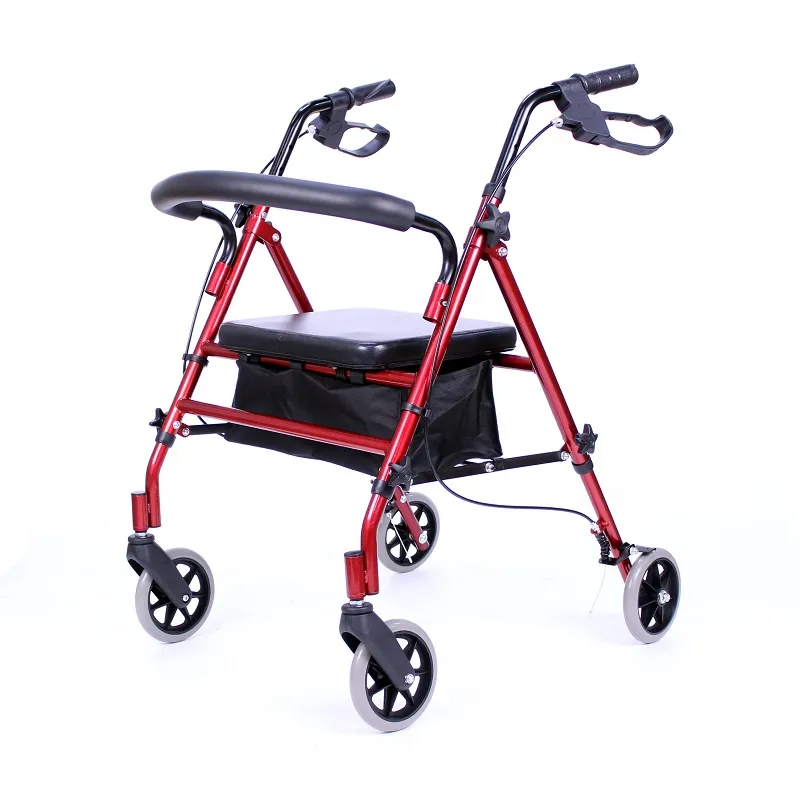
Why do many people think a 4-wheel roller walker is better?
Before discussing "which is better," it's necessary to clarify a premise: different users have different abilities and needs, and therefore, different types of roller walkers are suitable for different users. However, in most usage scenarios, 4-wheeled rollator walkers generally perform better overall, primarily for the following reasons:
1. 4-wheeled rollator walkers offer significantly higher stability
The four-point support system gives 4-wheeled walking aids greater resistance to tipping over. Whether moving on flat ground or crossing small steps, carpet edges, or outdoor brick seams, 4-wheeled rollator walkers maintain better balance.
For those with poor balance, unsteady gait, or who are concerned about falling, 4-wheeled rollator walkers are a safer choice.
2. 4-wheeled rollator walkers provide more comfortable resting facilities
Many 4-wheeled rollator walkers come with a large seat, allowing users to sit and rest between walks. 3-wheeled rollator walkers, due to structural limitations, typically lack a comfortable seat design.
Therefore, if the user is outdoors for extended periods, has low stamina, or needs frequent rest breaks, a 4-wheeled rollator walker is more advantageous.
3. Four-wheeled rollator walkers are better suited for outdoor and long-distance use
The four-wheeled chassis offers better maneuverability, especially excelling in the following scenarios:
• Park paths
• Community streets
• Inside large buildings such as shopping malls and hospitals
• Various surface combinations (e.g., grass, concrete, paved roads)
Three-wheeled walking aids are more susceptible to instability on uneven outdoor surfaces, while four-wheeled rollator walkers maintain smooth movement.
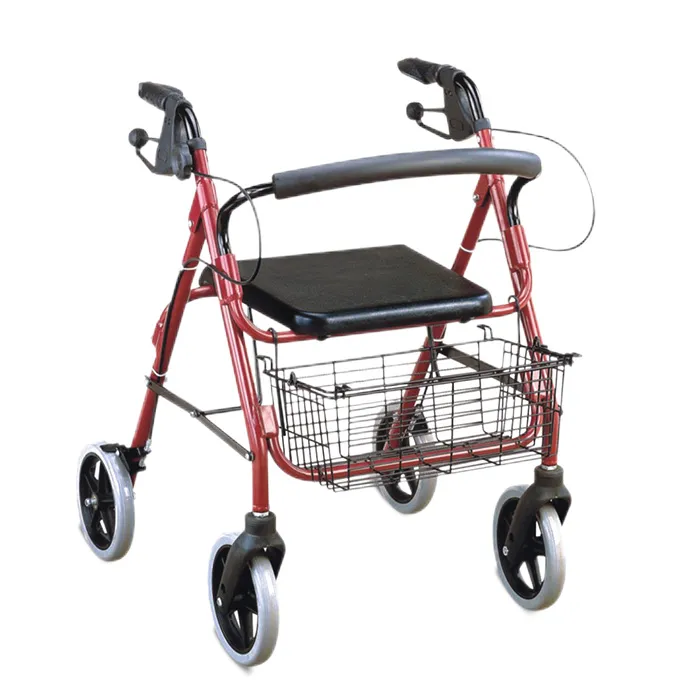
4. Four-wheeled rollator walkers offer more storage space
Most four-wheeled rollator walkers are equipped with:
• Large-capacity shopping basket
• Under-seat storage bag
• Handrail hanging bag
Suitable for people who frequently go shopping, carry personal belongings, or need to transport medical supplies.
5. Four-wheeled rollator walkers have a higher load-bearing capacity
Due to their robust structure, four-wheeled rollator walkers can typically support a greater user weight, and the device itself is also more durable.
What are the advantages of three-wheeled rollator walkers?
Why do some people still choose them?
While 4-wheeled rollator walkers offer a more balanced overall performance, 3-wheeled rollator walkers still have their market. Their main advantages include:
1. More flexible turning radius
Suitable for use in narrow living spaces, hallways, and small kitchens.
2. Lighter weight
3-wheeled rollator walkers are lighter than 4-wheeled ones, making them easier to move, fold, and load into a car.
3. Smaller size: Easier to store and saves space
However, it's important to note that these advantages primarily focus on "portability" and "flexibility." In terms of "safety," "load capacity," and "comfort," 3-wheeled rollator walkers generally cannot compare to 4-wheeled ones.
Are 4-wheeled rollator walkers safer than 3-wheeled ones?
This is one of the most frequently asked questions: Which one is safer?
The answer is clear: In most usage scenarios, 4-wheeled rollator walkers are safer.
The reasons are as follows:
1. Reliable four-point landing
Compared to three-point landing, a four-point distribution creates a more complete mechanical structure, making it less prone to tipping over.
2. Better center of gravity stability
Whether the user exerts force forward, backward, or laterally, the center of gravity of the 4-wheel rollator walker is more balanced, reducing the risk of falls.
3. More suitable for users with weaker stamina or poor balance
When a user cannot maintain a stable gait, the 4-wheel rollator walker provides more reliable support.
If your goal is to maximize safety, the 4-wheel rollator walker is undoubtedly more advantageous.
Who is a better candidate for a 4-wheel rollator walker?
A 4-wheeled rollator walker is generally a better fit than a 3-wheeled one if you meet any of the following criteria:
• Poor balance while walking
• Need to sit down and rest frequently
• Want to use it outdoors for extended periods
• Need better support
• Want more storage space
• Heavier build, requiring higher load-bearing capacity
• Worried about the rollator walker tipping over
For most people who need to use a walking aid for extended periods, a 4-wheeled rollator walker is a more stable and reliable choice.
Who might prefer a 3-wheeled rollator walker?
However, 3-wheeled rollator walkers aren't entirely without suitors. A 3-wheeled model might be more convenient if you:
• Have limited living space and need high flexibility
• Need a lightweight and portable rollator walker
• Have good physical strength and balance
• Need to frequently load it into a vehicle or take it out for walks
In short, a 3-wheeled rollator walker is more like a "lightweight version of the rollator walker," but it doesn't offer the stability and safety of a 4-wheeled rollator walker.
Which performs better on uneven terrain: a 3-wheel or 4-wheel rollator walker?
If your environment includes:
• Uneven brick surfaces
• Gravel surfaces
• Lawns
• Slopes
• Indoor spaces with thresholds
Then, a 4-wheel rollator walker generally performs better. A four-wheeled design allows for smoother traversal of small obstacles, while a three-wheeled design is more prone to losing balance when crossing elevation differences.
What factors should you consider when buying a rollator walker?
Regardless of whether you choose a 3-wheel or 4-wheel walking aid, the following points are crucial:
• Stability (4-wheel rollator walkers are superior)
• User's physical strength and balance
• Usage environment (indoor, outdoor, road type)
• Need for a seat (4-wheel rollator walker is superior)
• Need for storage space
• Portability and folding requirements
• Budget
Comparing these factors will make it easier to find the most suitable type of walking aid.
How Long Has Yikang Been in the Medical Equipment Industry?
Yikang Medical began producing mechanical parts in 2010 and officially started manufacturing wheelchairs and hospital beds in 2014. Our brand “Yikang” was launched in 2016, and since then, we've gained a strong reputation both in China and abroad. With over a decade of industry experience, we offer dependable medical solutions backed by years of innovation and client trust.