
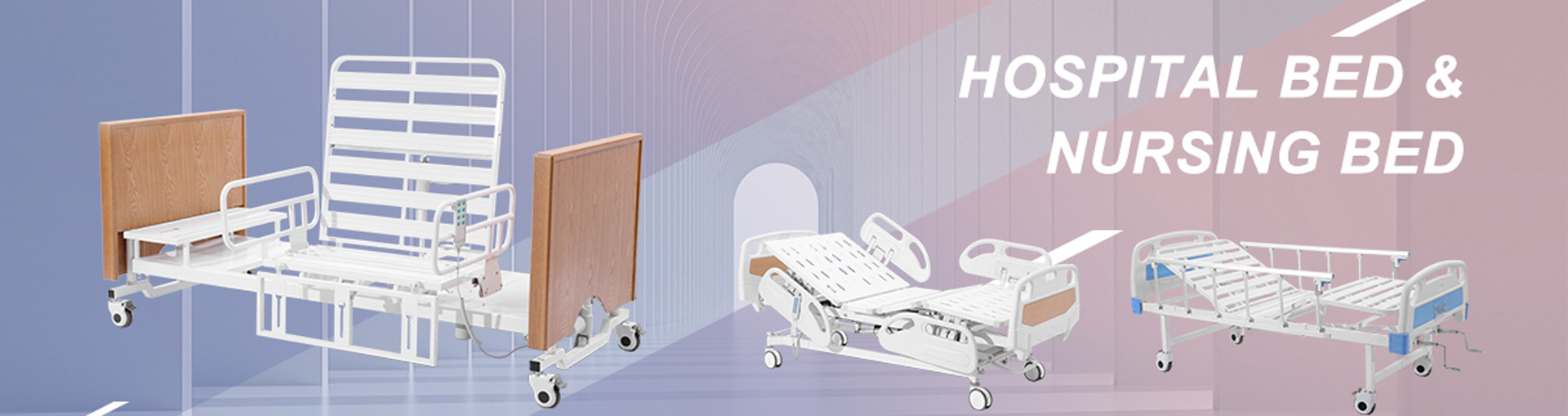
The Intensive Care Unit (ICU) is one of the departments in a hospital with the highest level of comprehensive monitoring, the highest nursing density, and the most stringent technical requirements. For patients with unstable vital signs, requiring continuous monitoring and frequent nursing procedures, every piece of equipment in the medical environment is crucial, and one of the most core and frequently used pieces of equipment is the electric ICU bed.
ICU nursing work is fast-paced, complex, and extremely risky. Therefore, the beds used in the ICU are not merely "resting platforms" for patients, but rather a support system throughout the entire treatment process.
ICU beds must meet multiple work requirements, including positioning management, nursing assistance, integration of life support equipment, and emergency treatment. In modern medical systems, electric ICU hospital beds have almost become standard equipment in ICUs.
This article will systematically and deeply elaborate on the types of beds used in ICUs, and provide a professional analysis from the perspectives of function, structure, safety, and clinical needs.
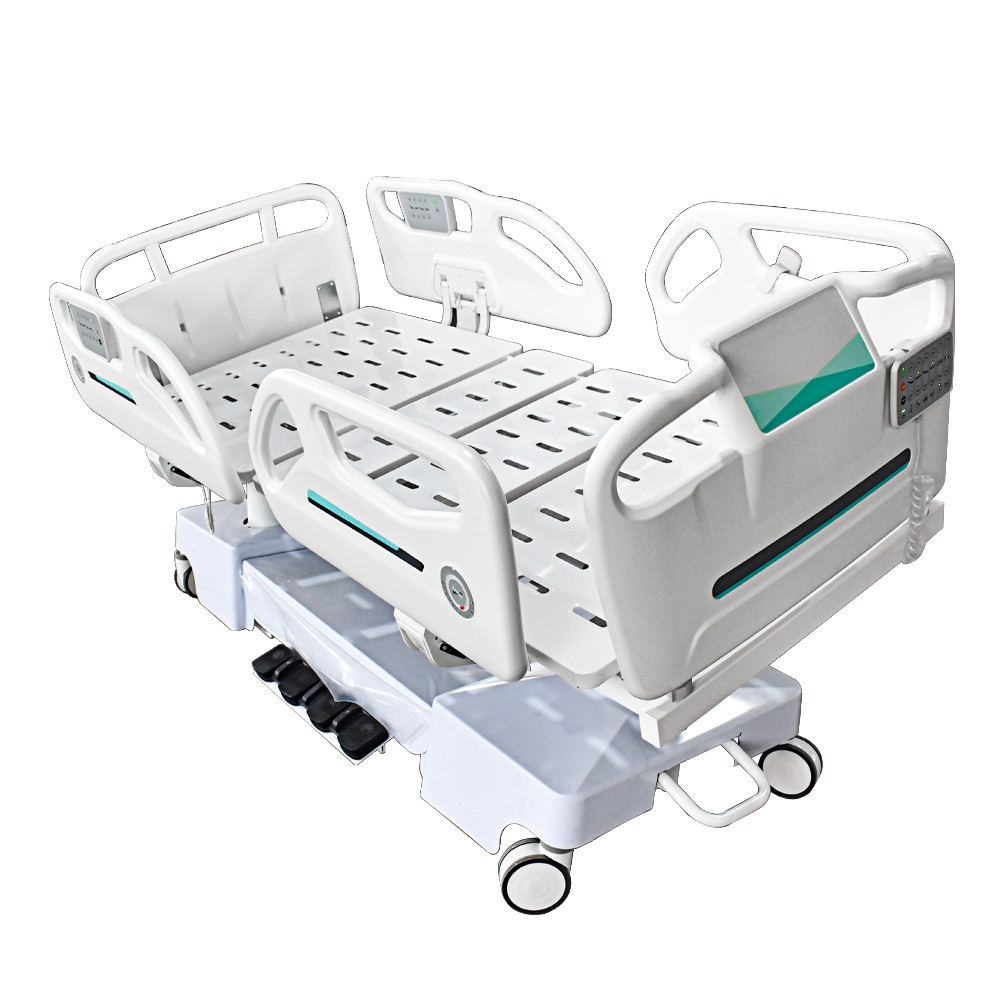
Why can't ordinary hospital beds be used in the ICU?
The beds used in ordinary wards cannot meet the requirements of the ICU.
Reasons include:
1. Critically ill patients require frequent repositioning
Standard hospital beds cannot provide:
• Electric backrest adjustment
• Electric legrest adjustment
• Tilt (turning over) function
• Trend and counter-trend positions
These are all basic capabilities of electric ICU hospital beds.
2. Critically ill patients rely on multiple life support devices
Including ventilators, ECG monitors, infusion pumps, syringe pumps, drainage systems, etc.
Standard beds lack wiring management, equipment mounting, and safety locking mechanisms.
3. Emergency procedures require higher stability
Electric ICU beds typically have a one-button CPR reset function, flattening the bed surface within seconds for immediate emergency treatment.
4. Critical care requires reduced nursing staff workload
ICU care is intensive, and standard hospital beds require frequent manual intervention, increasing the risk of injury to nursing staff.
In summary, standard hospital beds fall far short of the needs of ICU patients, and electric ICU hospital beds are designed to meet these needs.
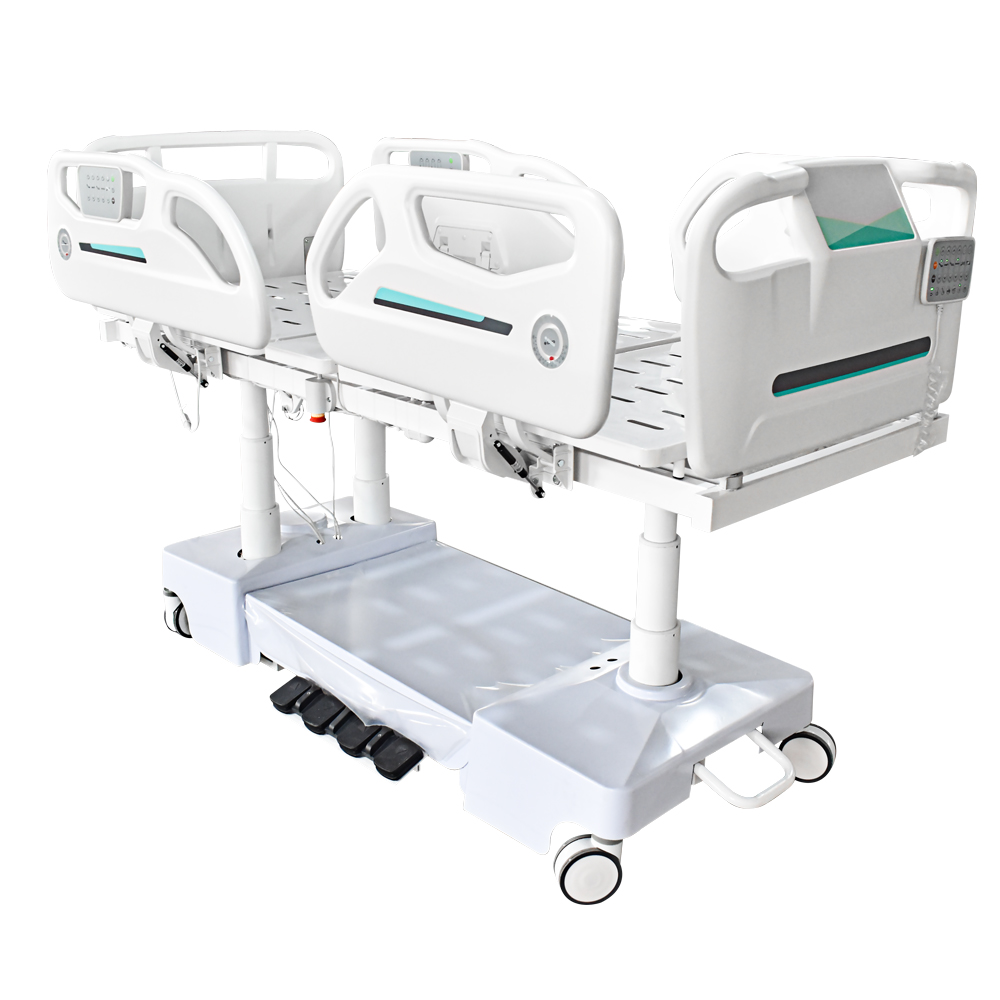
What is the most commonly used bed type in intensive care units (ICUs)?
Most hospitals' ICUs are equipped with a high-end medical bed specifically designed for critical care: the Electric ICU Bed.
It boasts extensive motion adjustment, intelligent control, safety protection, and integrated instrument functions, making it one of the most important nursing devices in the ICU.
What are the essential core functions of an Electric ICU Bed?
The design standards of Electric ICU Beds are higher than those of ordinary Electric ICU Beds; they must possess several functions closely related to critical care.
The following will analyze the core structure and functional requirements of Electric ICU Beds in detail.
What position adjustment capabilities does an Electric ICU Bed need?
Position management is the most frequently used function in ICU nursing and is the foundation of Electric ICU Beds.
Electric ICU Beds typically need to have:
1. Backrest Adjustment
Used for:
• Improving breathing
• Reducing the risk of aspiration
• Performing daily care and assessment
Critically ill patients usually need to be in a semi-recumbent position of 30°–45°, therefore backrest adjustment is indispensable.
2. Legrest Adjustment
Used for:
• Improving lower limb circulation
• Preventing deep vein thrombosis
• Relieving edema
Adjusting the leg angle significantly improves patient comfort.
3. Bed Height Adjustment
Nursing staff must adjust the bed height according to operational needs to reduce occupational injuries.
Electric ICU hospital beds typically have a large height adjustment range to accommodate:
• Nursing procedures
• Doctor rounds
• Bedside examinations
• Emergency procedures
4. Lateral Tilt (Turning Function)
This is an advanced function not typically found in ordinary electric hospital beds.
The tilting function in the ICU is used for:
• Assisting with turning
• Preventing pressure sores
• Sputum clearance and improving lung ventilation
• Reducing the risk of manual turning
Lateral tilt is one of the core features of electric ICU beds.
5. Bed-to-Flat Position / Counter-Flat Position
Used for:
• Intracranial pressure management
• Blood circulation adjustment
• Clinical procedure requirements (e.g., intubation)
The flat position is also a standard procedure in critical care.
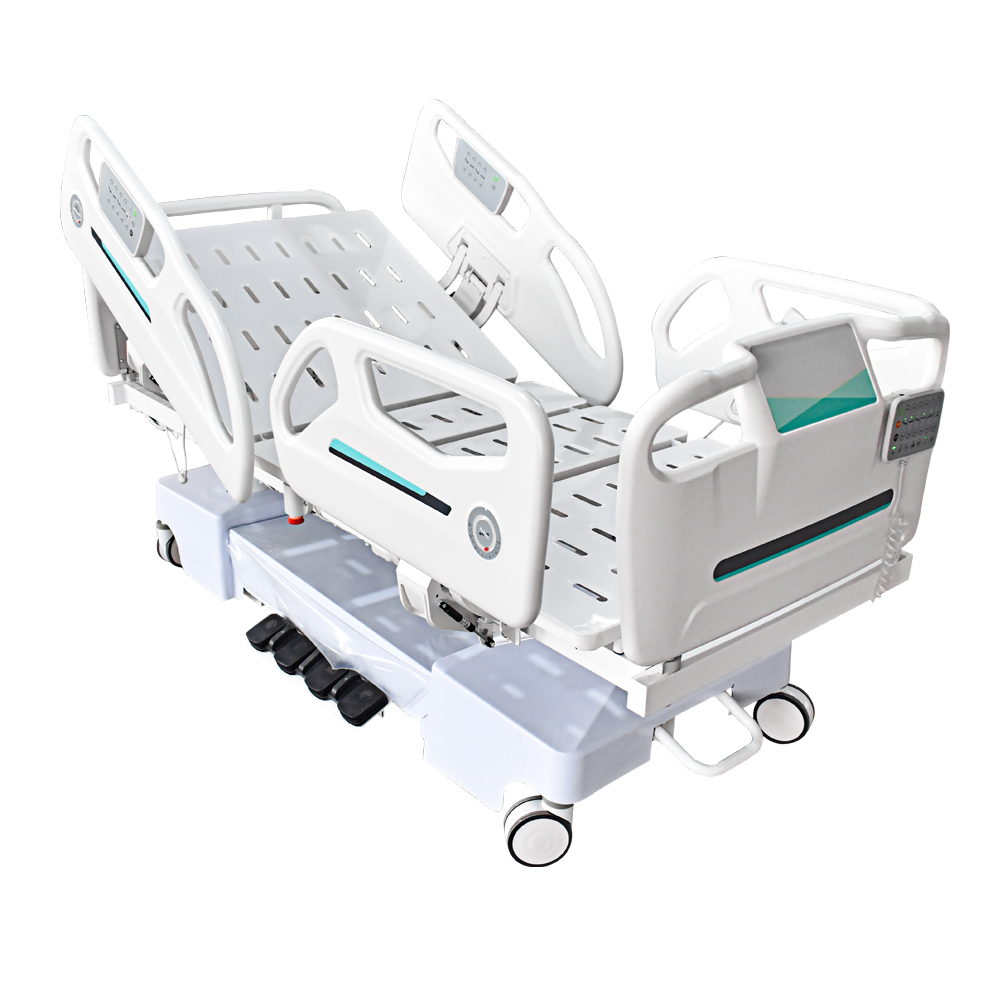
What emergency functions does an electric ICU bed have?
Emergency situations can occur at any time in the ICU environment, such as respiratory failure, cardiac arrest, and hypotensive shock. Therefore, electric ICU hospital beds must have a rapid-response emergency mechanism.
Common emergency-related designs include:
1. One-button CPR leveling function
Capable of quickly restoring the bed to a flat position within seconds, facilitating:
• Cardiopulmonary resuscitation
• Airway management
• Emergency team operations
2. Full bed locking system
Prevents bed movement during emergency treatment.
3. Emergency lowering mechanism for guardrails
Helps quickly access the patient.
These emergency functions significantly improve the efficiency of ICU emergency care.
What are the safety design features of electric ICU beds?
Because ICU patients are frail, unconscious, and have limited mobility, electric ICU beds must possess high-standard safety protection mechanisms.
Common safety designs for electric ICU beds include:
1. Fall Protection Guardrails
Higher guardrails with longer coverage prevent patients from falling.
2. Stable Bed Frame and High Load-Bearing Capacity
Enabling it to accommodate:
• Multiple devices mounted
• CPR presses
• Long-term use requirements
3. Anti-Pinch System
Reduces safety hazards from guardrails, bed boards, and electric actuators.
4. One-Button Full-Lock Casters
Ensuring complete stability of the bed during operation.
Safety is a crucial criterion for determining whether a bed is suitable for ICU use.
What intelligent functions do electric ICU beds possess?
Modern electric ICU hospital beds are not only mechanical devices but also possess a certain level of intelligent control system.
Common intelligent functions of electric ICU beds include:
1. Multi-position control panel
Including:
• Bedside control
• Nursing panel
• External controller
Facilitating use in different operating scenarios.
2. Angle display system
Such as displaying the bed tilt angle, facilitating scientific adjustment of patient position.
3. Bed weighing system (some models)
Critically ill patients are often not suitable for movement, therefore bed weighing can help monitor:
• Fluid changes
• Nutritional status
• Treatment response
4. Preset position programs
Can be completed with one click:
• Semi-sitting position
• Cardiac chair position
• Trend position
• Nursing position
• CPR position
These make electric ICU beds a "smart platform" for intensive care centers.
What nursing support can electric ICU beds provide for critically ill patients?
Electric ICU hospital beds are an important carrier in critical care, and their role is not only to allow patients to lie down, but also includes:
1. Supporting respiratory therapy
Improving lung ventilation through position adjustment.
2. Reduced Complication Rate
For example, pressure ulcers, lung infections, and thrombosis.
3. Improved Nursing Efficiency
Electrically adjustable beds reduce nurses' workload.
4. Enhanced Life Support Equipment Management
Making equipment wiring neater and safer, reducing the risk of accidental dislodgement.
5. Improved Patient Comfort
Especially important for long-term bedridden patients.
Therefore, electric ICU beds are an essential infrastructure for critical care.
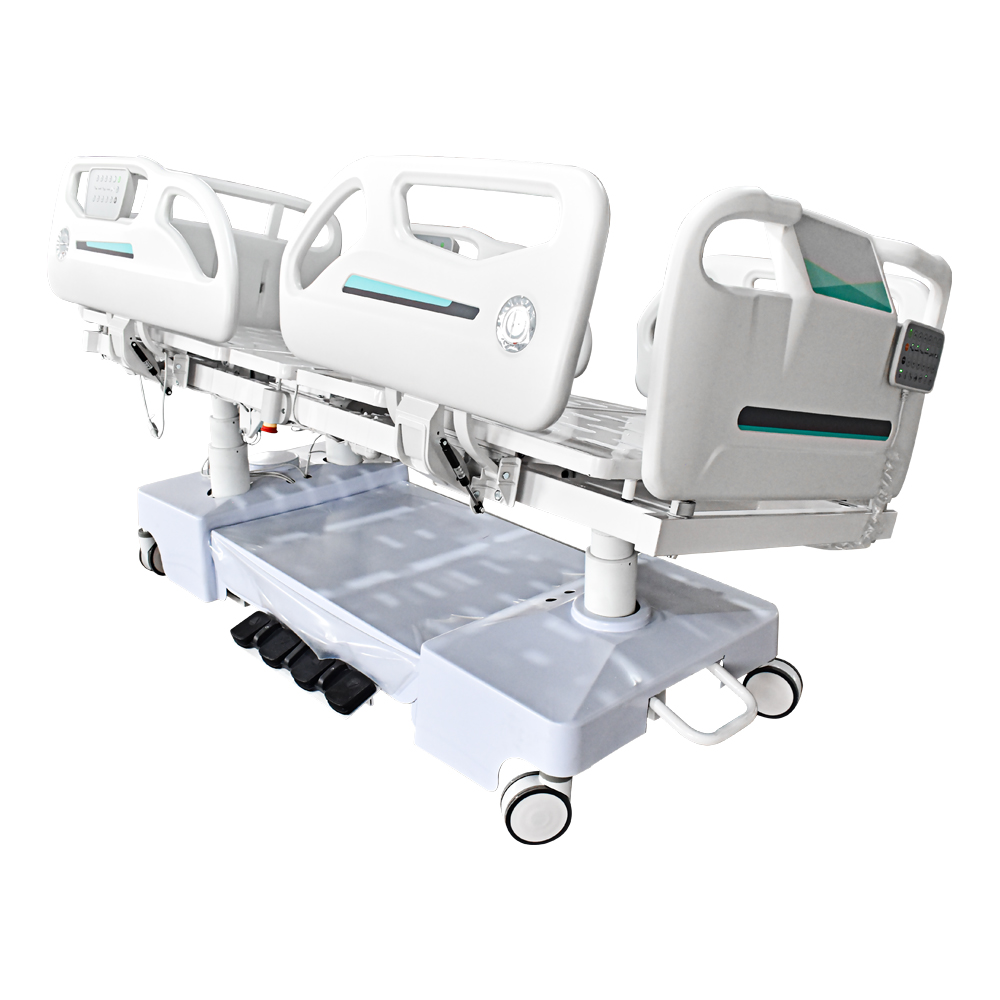
Why are multi-functional electric ICU beds considered standard equipment in ICUs?
Reasons are summarized as follows:
• Meets complex nursing needs
• Adapts to multi-instrument integration
• Enhances emergency response efficiency
• Protects nurses' safety
• Improves overall nursing quality
• Supports the stability of long-term bedridden patients
The intensive care unit (ICU) involves a high volume of procedures and high nursing density; without specialized electric ICU hospital beds, the high-intensity nursing processes cannot be supported.
What products are included in Yikang Medical’s healthcare equipment line?
Yikang Medical provides a wide range of hospital and rehabilitation products, including hospital beds, nursing beds, electric and manual wheelchairs, bath chairs, toilet chairs, walkers, and canes. As a professional manufacturer and supplier from China, we focus on high-quality production and OEM solutions for international brands.
With ISO13485, ISO9001, CE, and FDA certifications, Yikang Medical is a trusted partner for purchasing reliable, durable, and internationally compliant medical equipment.