

For many parents, when a child requires long-term wheelchair use due to conditions such as cerebral palsy, spinal cord injury, muscular dystrophy, scoliosis, spina bifida, neuromuscular disorders, congenital conditions, or other issues, the first question that comes to mind is often neither the brand nor the price, but rather: "What size wheelchair should a child use?"
While this question may seem simple, it actually encompasses multiple professional fields, including ergonomics, rehabilitation medicine, child growth and development, postural management, safety, and the long-term user experience. Many parents believe that if a child can fit into the seat, the size is appropriate; others, aiming to save money, may opt to purchase a larger manual or electric wheelchair in the hope that it will last for many years. In reality, such approaches can negatively affect a child's postural stability, spinal development, joint health, and ability to perform daily activities.
In recent years, as concepts regarding pediatric rehabilitation have evolved, an increasing number of rehabilitation physicians, physical therapists, and occupational therapists have emphasized that a pediatric wheelchair is not merely a means of transport, but a vital piece of rehabilitation equipment. Whether manual or electric, the wheelchair must be selected scientifically based on the child's current body measurements, motor abilities, and developmental stage, rather than simply being purchased according to age or height.
According to data from the World Health Organization (WHO) and various international rehabilitation organizations, millions of children worldwide require assistive mobility devices for long-term or intermittent use. Meanwhile, as technology for pediatric electric wheelchairs matures, more children with limited mobility are able to expand their range of movement and increase their participation in learning, social interactions, and family life through the use of these devices. Consequently, the proper selection of manual and electric wheelchairs for children has become a topic of great interest to many families.
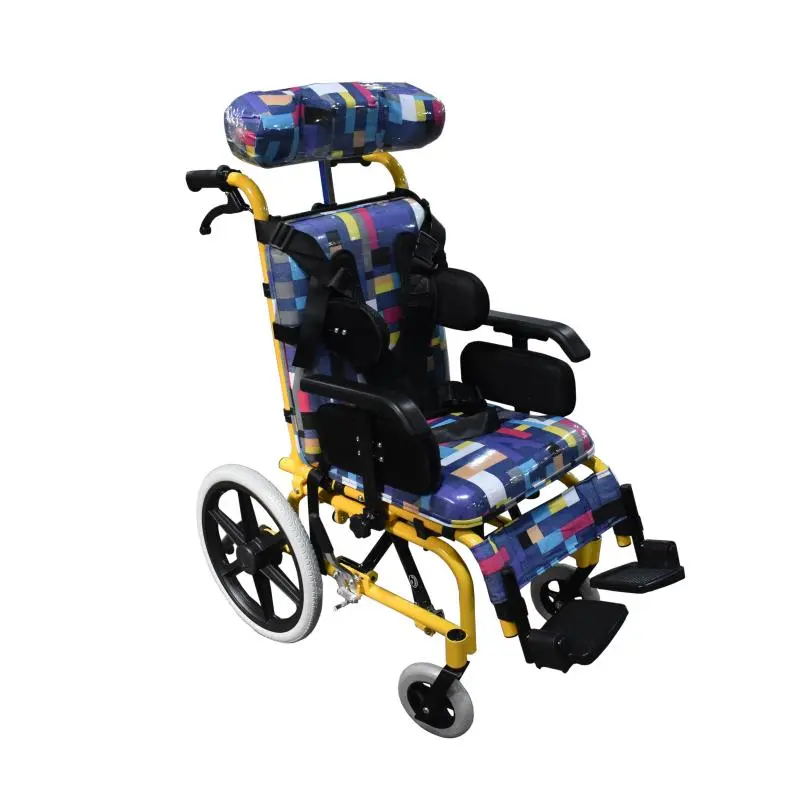
Why Is Wheelchair Size So Important for Children?
While many adults prioritize factors such as weight capacity, folding mechanisms, or battery range when choosing a wheelchair, size is often more critical than specifications for children. Children are in a stage of rapid growth and development, meaning their bones, muscles, and joints are highly malleable. Long-term use of an improperly sized manual or electric wheelchair can lead to abnormal posture, uneven pressure distribution, pelvic tilt, and worsening scoliosis, and may even impair respiratory function and the ability to perform daily activities. First, the right size helps a child maintain a stable sitting posture. A stable posture not only facilitates activities such as studying, eating, reading, and drawing but also reduces the energy expended on constant postural adjustments, thereby improving concentration and comfort.
Second, the correct size reduces the risk of pressure sores. Children have delicate skin; if the seat is too narrow, it causes continuous pressure on the hips; if it is too wide, the child may lean to one side, which also increases localized pressure. Prolonged, concentrated pressure not only compromises comfort but can also lead to skin damage.
Additionally, a properly sized wheelchair helps maintain correct joint alignment. For instance, if the footrests are too high, the knee joints remain in a flexed position for extended periods; if they are too low, the feet may dangle or the heels may drag on the ground, compromising postural stability and increasing the risk of collisions. For children who use manual or electric wheelchairs long-term, these details can impact their physical development.
What dimensions are involved in a child's wheelchair?
Many parents assume that wheelchair size refers simply to "width," but there are actually several parameters that require attention. Professional manual and electric wheelchairs for children involve multiple key dimensions, each of which directly affects the user experience.
1. Seat Width
Seat width is one of the most critical parameters when purchasing a wheelchair for a child, and it is also the dimension parents most easily understand. It refers to the effective width between the left and right armrests—the space where the child's hips actually sit.
Generally, the seat width should be about 2 to 4 centimeters wider than the child's hips at their widest point; this ensures comfort without allowing the body to sway from side to side due to excessive space. If the seat is too narrow, it compresses the hips and outer thighs; if it is too wide, it hinders the efficiency of propelling a manual wheelchair and may cause the child to lean consistently to one side.
2. Seat Depth
Seat depth refers to the distance from the backrest to the front edge of the seat; it determines the amount of support provided to the thighs.
The correct seat depth should generally correspond to the length from the child's hips to the back of the knee (popliteal fossa), though the front edge of the seat should remain about 3 to 5 centimeters away from the back of the knee to avoid compressing blood vessels and nerves. If the seat depth is too shallow, the thighs lack support, causing the body to slide forward; if it is too deep, it compresses the area behind the knees (popliteal fossa), impeding blood circulation.
Adjustable seat depth is increasingly popular for rapidly growing children; many pediatric electric and high-end manual wheelchairs offer this feature to accommodate physical changes over time.
3. Backrest Height
Backrest height directly affects the stability of the child's trunk.
If a child has good trunk control, a relatively low backrest may be chosen to increase shoulder range of motion, making it easier to propel a manual wheelchair. Conversely, if a child has significant trunk weakness, cerebral palsy, or abnormal muscle tone, a higher backrest—or even lateral supports—is usually required to enhance sitting stability.
Since electric wheelchairs rely primarily on motor power and place fewer demands on upper-limb movement, some models feature higher backrests to improve comfort and support.
4. Seat Height
Seat height determines the positioning of the child's feet relative to the footrests.
Properly adjusted footrests allow for even weight distribution across the thighs and stable foot placement, helping to improve overall posture. An incorrect seat height can increase pressure on the buttocks and even affect pelvic alignment.
Most modern pediatric manual and electric wheelchairs allow for footrest adjustments within a certain range to meet the needs of children at different ages.
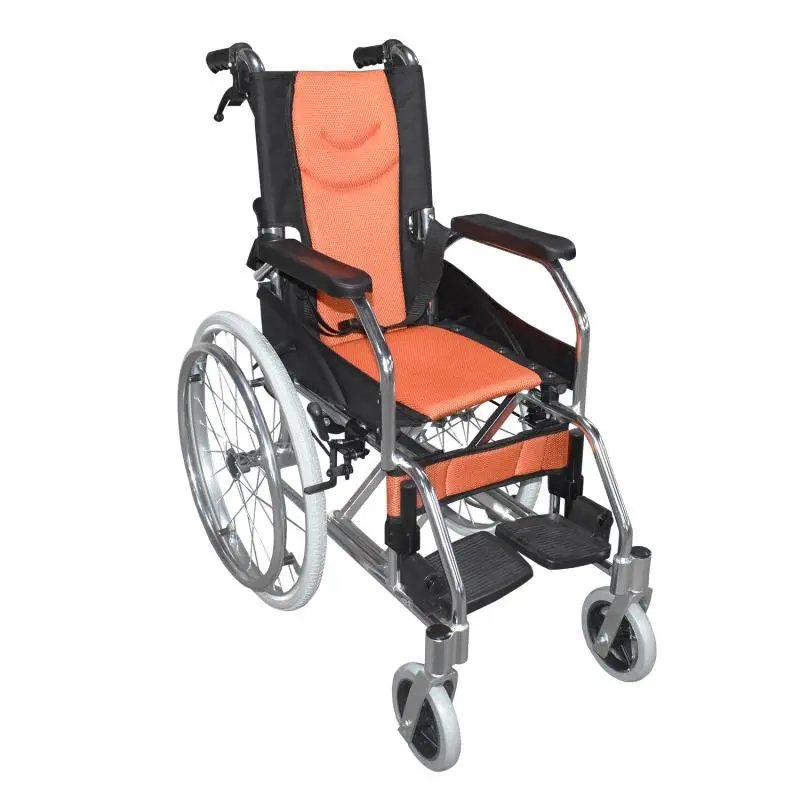
How do you accurately measure a child's body dimensions before purchasing a wheelchair?
Relying solely on age when purchasing a wheelchair is not advisable; a more scientific approach involves taking basic body measurements.
First, have the child sit on a sturdy, flat chair in a natural position, with feet flat on the floor and the pelvis kept as level as possible.
Next, measure the widest part of the hips to determine the appropriate seat width. Measure the distance from the back of the hips to the back of the knee to determine seat depth. Finally, measuring shoulder height, elbow height, and lower leg length helps determine the correct backrest height, armrest height, and footrest position. If a child already exhibits conditions such as significant scoliosis, hip dislocation, or pelvic tilt, it is highly recommended to perform measurements under the guidance of a rehabilitation physician or therapist; such children often require personalized postural support rather than just standard sizing.
Can wheelchair sizes be directly matched to a child's age?
Many product descriptions categorize wheelchairs by age groups—such as 3–5, 6–8, or 9–12 years old—but in reality, age serves only as a rough guide and cannot replace actual measurements.
Because children develop at different rates, two eight-year-olds can vary significantly in height, weight, hip width, and leg length. One child might require a manual wheelchair with a narrow seat, while another might need a pediatric power wheelchair with dimensions approaching those of an adult model.
Therefore, professional rehabilitation centers emphasize selecting wheelchairs based on body measurements rather than age. It is also crucial to re-evaluate wheelchair sizing regularly as the child grows. A review every 6 to 12 months is generally recommended; if the child experiences rapid growth in height or weight, or if their sitting posture changes, the manual or power wheelchair should be adjusted or replaced promptly to ensure continued proper support and comfort.
How do size considerations differ between manual and power wheelchairs?
Many parents believe that as long as the seat width and depth are correct, there is little difference between manual and power wheelchairs. In fact, while both must adhere to ergonomic principles, there are significant differences in sizing requirements due to variations in usage, propulsion methods, and target user groups.
For pediatric manual wheelchairs, propulsion efficiency is a key consideration alongside basic parameters like seat width, seat depth, and backrest height. If the wheelchair is too wide, the child must overextend their arms to reach the handrims, which not only reduces propulsion efficiency but also places strain on the shoulder and wrist joints. If the seat is too high, the child may struggle to reach the handrims effectively, potentially leading to poor propulsion mechanics over time. Consequently, for children who propel their own wheelchairs, the chair must not only be comfortable to sit in but also easy to propel. In contrast, pediatric power wheelchairs rely primarily on electric motors and require less upper-body strength; consequently, their design focuses more on postural support, comfort, and the experience of prolonged use. Many high-end models feature adjustable seating systems, headrests, lateral supports, pelvic belts, and adjustable armrests, helping children maintain a stable seated posture and reducing fatigue associated with extended use. Additionally, given the significant weight of power wheelchairs, practical considerations—such as home layout, elevator dimensions, car trunk space, and daily storage—are essential to ensure the chair is truly convenient for the child to use.
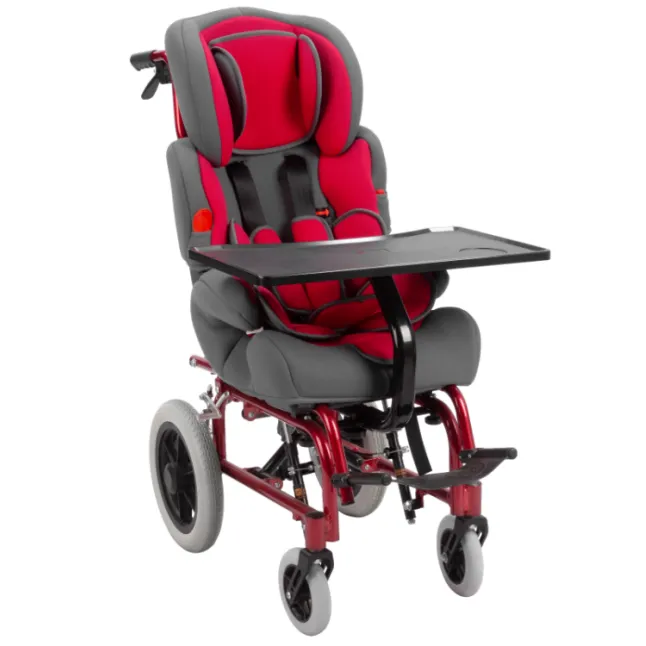
How do you select the right wheelchair size based on a child's motor abilities?
Children present with a wide range of medical conditions and motor capabilities; therefore, even among children of similar age and height, the appropriate wheelchair size and configuration can vary significantly.
1. Children with Cerebral Palsy
Children with cerebral palsy often experience varying degrees of abnormal muscle tone, impaired postural control, or reduced trunk stability. When selecting a manual or power wheelchair for them, the postural support system is just as important as the basic dimensions.
For instance, some children require a high backrest to maintain trunk stability, while others need pelvic belts, abduction supports, head supports, or lateral supports to prevent leaning to the side. For these children, the wheelchair serves not only as a mobility aid but also as a crucial component of daily postural management.
2. Children with Spinal Cord Injuries
A child's motor capabilities following a spinal cord injury depend largely on the location and severity of the injury. If upper-body strength is sufficient, many children can skillfully operate a manual wheelchair and achieve a high level of independence with the correct size. If upper-body strength is limited, a power wheelchair—controlled via a joystick—may be a better option, enabling greater engagement in learning, daily activities, and social interactions.
These children often require precise seat depth and backrest designs to minimize pressure concentration from prolonged sitting, along with pressure-relieving cushions to reduce the risk of pressure ulcers.
3. Children with Muscular Dystrophy and Neuromuscular Disorders
As these conditions progress, a child's muscle strength may gradually decline, necessitating changes in their wheelchair requirements. Many children can initially use a manual wheelchair but may need to transition to a power wheelchair later as their upper-body strength diminishes. Therefore, many rehabilitation specialists recommend that, if the budget allows, one should choose an electric wheelchair with adjustability features. This enables adjustments based on future physical changes, thereby reducing the financial burden associated with frequently replacing equipment.
Why should you avoid buying a wheelchair that is too large for a child?
In reality, many parents share a common mindset: "Children grow quickly, so it is better to just buy a larger one that can be used for several more years."
While this approach is understandable from a cost-saving perspective, it is not recommended from a rehabilitation standpoint.
First, an oversized manual wheelchair makes it difficult for the child to maintain a centered posture; they are prone to leaning to one side, and propelling the handrims becomes more difficult. Maintaining an incorrect posture over the long term can exacerbate conditions such as scoliosis or pelvic tilt.
Second, while an oversized electric wheelchair can still be driven, the lack of adequate body support makes the child prone to sliding during turns, acceleration, and braking. This not only compromises comfort but also increases safety risks.
Furthermore, oversized wheelchairs often have a greater overall weight and footprint, which can cause inconvenience when used at school, at home, in elevators, or in vehicles. Therefore, rather than simply choosing a "larger" model, it is better to select a manual or electric wheelchair with adjustable features that allow the chair to be modified as the child grows.
How often should a child's wheelchair size be re-evaluated?
Children's bodies develop much faster than adults', so wheelchair sizing is not a "one-time" decision.
Generally, a basic assessment every six months is recommended for children in a rapid growth phase; for children with a relatively stable growth rate, it is recommended to re-measure body dimensions at least every 12 months.
Parents should promptly re-evaluate the wheelchair's fit if they observe the following situations:
The child appears visibly cramped in the wheelchair, with compression on both sides of the hips; the footrests cannot be adjusted to the correct height as the child's legs grow longer; the shoulders extend too far above the backrest, resulting in insufficient trunk support; propelling the manual wheelchair becomes noticeably difficult; the child tends to slide to one side while using an electric wheelchair; or the child complains of lower back or hip pain after prolonged use.
These signs indicate that the wheelchair size may no longer meet the child's current physical needs.
What international standards can be referenced when selecting a child's wheelchair size?
With the global advancement of rehabilitation medicine, the design of pediatric wheelchairs has become increasingly standardized. Although dimensions vary slightly across brands, most professional manual and electric pediatric wheelchairs are developed based on ergonomic principles and international standards for assistive device design.
For instance, the International Organization for Standardization (ISO) has established a series of testing methods for wheelchairs covering safety, stability, durability, and dimensions. Concurrently, the field of rehabilitation medicine generally adheres to anthropometric principles, determining key wheelchair dimensions based on data such as a child's hip width, thigh and lower leg lengths, shoulder width, and seated height.
In clinical practice, rehabilitation therapists typically do not make recommendations based solely on product labels—such as "suitable for ages 3–6" or "6–10"—but rather match the wheelchair to the child's actual physical measurements. For children requiring long-term wheelchair use, this personalized assessment effectively reduces the risk of postural abnormalities and secondary injuries caused by improper sizing.
Furthermore, an increasing number of international brands have introduced the concept of "growth wheelchairs." These manual or electric wheelchairs allow for the adjustment of multiple parameters—including seat width, seat depth, backrest height, and footrest height—enabling modifications as the child grows. This extends the product's lifespan while maintaining optimal postural support.
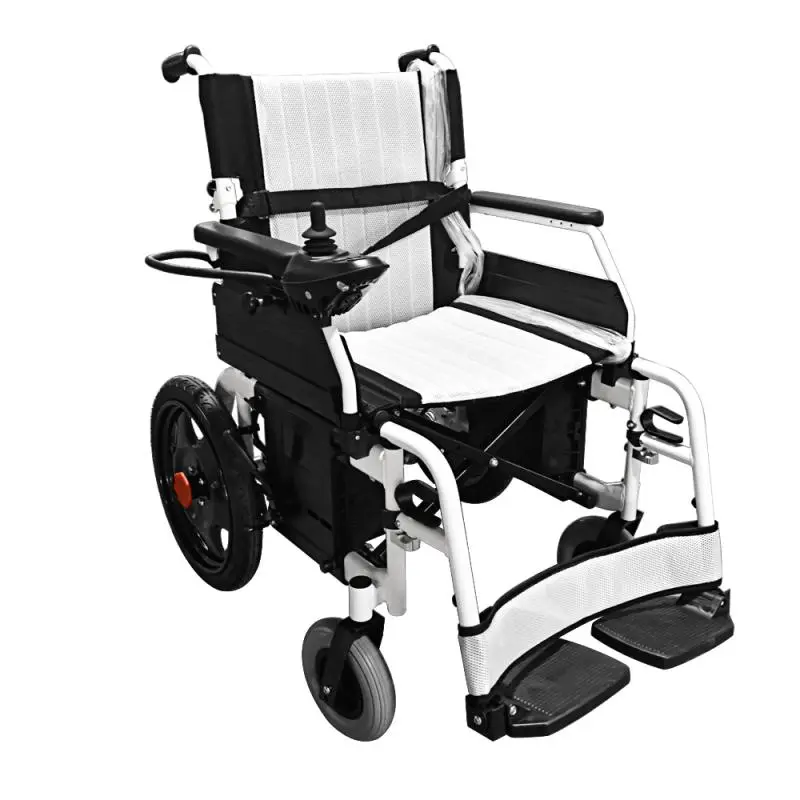
FAQ: Common Questions About Choosing Pediatric Wheelchair Sizes
FAQ 1: Is it more cost-effective to buy a slightly larger wheelchair for a child?
Generally, this is not recommended. An oversized manual or electric wheelchair reduces body support and compromises postural stability; it may also increase the risk of spinal and pelvic abnormalities. It is advisable to choose a product that fits the child's current body size while offering some adjustability.
FAQ 2: How often should a child's wheelchair size be re-evaluated?
An assessment is usually recommended every 6 to 12 months. However, if the child experiences a rapid growth spurt or significant weight gain, or if issues arise—such as discomfort while seated or an inability to position their feet naturally—the wheelchair size should be re-measured and adjusted sooner.
FAQ 3: At what age can a child use an electric wheelchair?
A pediatric electric wheelchair can be considered once the child possesses the necessary cognitive ability to understand basic operating rules and has been confirmed suitable through a professional assessment. There is no absolute age standard; the decision should be based on a comprehensive evaluation of physical function and rehabilitation goals.
FAQ 4: Can a child use both a manual and an electric wheelchair?
Yes. Many families own both types. Manual wheelchairs are suitable for short distances, hospital follow-ups, and transport in vehicles, whereas electric wheelchairs are better suited for school life, community activities, and longer-distance travel; using both offers greater flexibility.
FAQ 5: Must the wheelchair be replaced when the child grows taller?
Not necessarily. If the wheelchair features adjustable seat width, seat depth, footrests, and backrest height, and continues to meet ergonomic requirements after professional adjustment, it can remain in use. However, if the adjustment limits have been reached, a new manual or electric wheelchair should be obtained promptly.
FAQ 6: What are the most important specifications when buying a pediatric wheelchair?
Key specifications include seat width, seat depth, backrest height, seat height, footrest height, and the overall postural support system. Decisions should also take into account the child's specific medical condition, motor abilities, home environment, and future growth needs.
FAQ 7: Will long-term wheelchair use affect a child's development?
If the wheelchair is properly sized, the child maintains correct posture, and rehabilitation exercises are consistently performed, appropriate wheelchair use generally does not hinder development. Conversely, an ill-fitting wheelchair and incorrect sitting posture are far more likely to adversely affect the development of the skeletal system, joints, and spine.
FAQ 8: How can I tell if the current wheelchair is no longer suitable?
Signs that the current manual or electric wheelchair should be re-evaluated for proper fit include compression of the buttocks, the body leaning to one side, an inability to position the feet naturally, difficulty propelling the chair, pain after prolonged use, or noticeable growth in the child's height or weight.