

A rollator walker is an important assistive device that helps users improve stability, boost walking confidence, and reduce the risk of falls. As the user base grows—and with the increasing popularity of versatile, feature-rich equipment like four-wheeled rollator walkers—knowing how to use them correctly and safely has become a common concern.
However, a rollator is not a cure-all; using one requires adhering to strict guidelines to avoid improper actions and dangerous behaviors. Improper use not only fails to provide the intended safety support but can actually increase the risk of falls or lead to other physical injuries.
This article provides a professional analysis of what not to do when using a rollator walker. We will explore the contraindications and risks from multiple angles, helping you use your rollator safely and improve your quality of life.
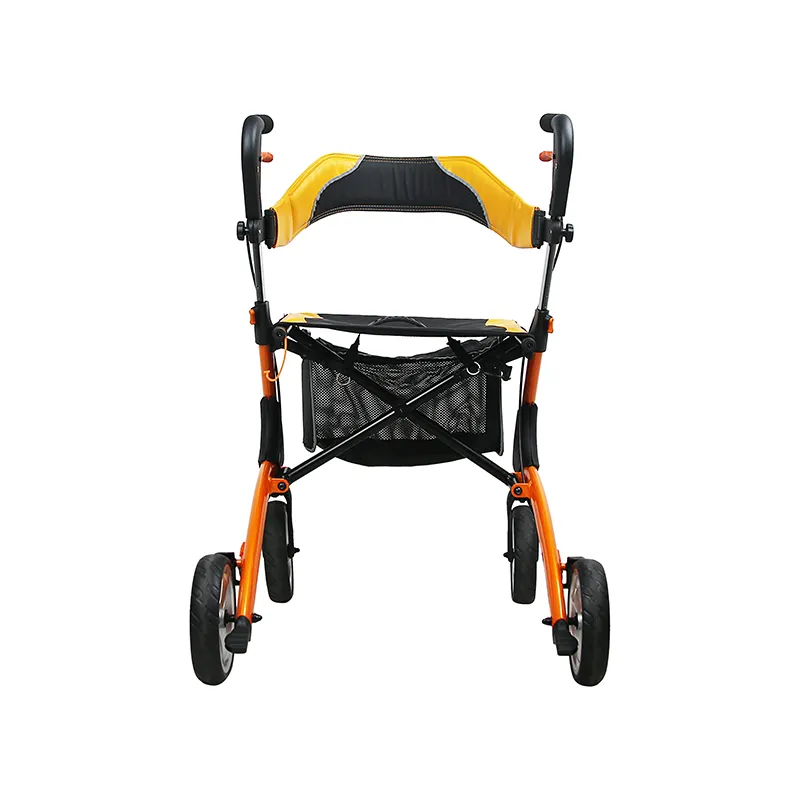
Why is it important to know what not to do when using a rollator?
Many users know that a rollator "assists with walking" but overlook its limitations. Whether it is a standard walker or a four-wheeled rollator walker, there are clear parameters for use and safety standards.
Understanding what to avoid serves three purposes:
1. Preventing falls or accidental injuries caused by misuse
The primary function of a rollator walker is to provide support and balance; improper use can compromise its stability.
2. Extending the lifespan of the rollator walker
Many incorrect handling practices can damage the frame, braking system, or wheels.
3. Enhancing user safety awareness
It helps users understand the boundaries of safe operation during daily use, thereby reducing risk.
Therefore, keeping these "don'ts" in mind is crucial for both safety and physical well-being.
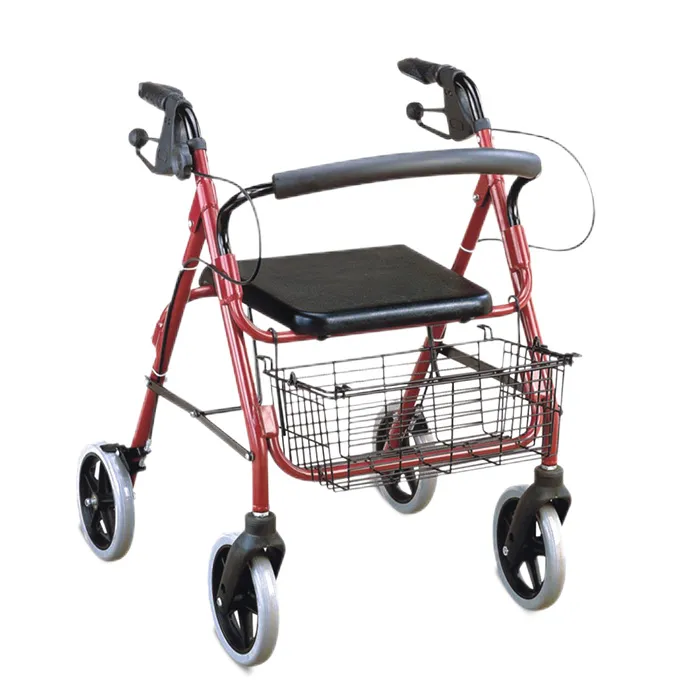
What should you avoid doing when using a rollator walker?
The following section details specific actions to avoid when using a rollator walker—particularly a four-wheeled model. Each point is critical for safe operation.
1. Can I use the rollator to carry heavy loads? — No
The rollator's structure is designed to assist with balance, not to bear heavy loads or support the user's full body weight.
The following actions are considered dangerous:
•Leaning your full body weight onto the rollator walker
•Using the rollator walker to pull yourself up to a standing position
•Attempting to use the rollator walker as a tool to hoist yourself up
•Forcefully pushing or pulling the rollator walker to use it as a "lever"
Doing so can result in:
•The rollator walker losing its balance
•Deformation of the frame
•The user falling
Four-wheeled rollator walkers have highly mobile wheels; treating one as a "fixed support point" creates even greater danger. It is an aid for walking, not a crutch for bearing your full body weight.
2. Can I use the rollator walker to glide or scoot around? — No
To save effort, many users try to make the rollator walker "glide"—especially four-wheeled models, as their larger wheels slide more easily.
The following actions are strictly prohibited:
•Using the walker to glide or scoot as a means of transport
•Forcefully pushing the rollator walker to propel yourself forward
•Sitting on the walker and scooting along
These actions can cause the walker to spin completely out of control, leading to:
•Collisions with furniture
•The rollator walker tipping over
•Falls and injuries
A rollator walker should never be used like a kick scooter.
3. Can I load too many items onto the walker? — No
Many people like to hang shopping bags, drinks, or various packages on the rollator walker, but this creates an unbalanced load and can even cause it to tip over.
Common mistakes include:
•Hanging heavy objects on the handlebars
•Hanging bags on the back of the seat
•Placing heavy items in the storage basket
•Hanging items unevenly on one side
These actions significantly increase:
•The risk of the rollator walker tipping forward or sideways
•The difficulty of controlling the unit
•The strain on the wheels
This is especially true for four-wheeled rollator walkers; due to their high maneuverability, they lose directional control more easily when the load is unbalanced.
Correct practice: Carry only small, lightweight items, distribute the weight evenly, and do not exceed the walker's structural weight limit.
4. Can I use the walker in reverse? — No
Some users turn the rollator walker around to stand on the seat side or move "backwards"; this is extremely dangerous behavior.
Incorrect usage includes:
•Pulling the rollator backwards while facing away from the handles
•Using the rollator while facing the seat
•Walking backwards while pushing the rollator walker
These actions shift the rollator walker's center of gravity and can easily lead to falls.
Rollator walkers are designed for stability only when pushed forward while facing the handles; they must not be used in reverse.
5. Can I use the rollator walker on stairs or slopes? — No
Many people are unaware that rollators must absolutely not be used in the following two scenarios:
1). Stairs
Rollators cannot be securely positioned on stair steps; any movement or pressure could cause the unit to slide, leading to a fall.
2). Steep slopes
Even professional 4-wheel rollator walkers are unsuitable for steep slopes because:
•The center of gravity shifts downwards
•Brakes may be insufficient to control speed
•It is difficult for the user to maintain balance
Rollator walkers are intended only for use on flat, dry, and obstacle-free surfaces.
6. Can I use the rollator walker on wet or slippery surfaces? — No
Slippery surfaces can cause:
•Reduced tire traction
•Compromised braking performance
•An increased risk of the rollator sliding sideways
Using a rollator in environments such as kitchens, bathrooms, or on wet outdoor surfaces poses significant risks.
Even though 4-wheel rollators offer good maneuverability, they cannot handle slippery surfaces safely; therefore, such use must be avoided.
7. Can I lean back while sitting on the rollator walker? — No
The rollator seat is designed only for brief rests; one should not lean against it or tilt backwards.
Dangerous actions include:
•Leaning back against the rollator handles or backstrap
•Twisting your body while seated
•Sitting on the seat while the rollator walker is in motion
If the center of gravity shifts backwards, the rollator walker may:
•Tip over backwards
•Lose balance
•Cause the user to fall
Notably, the seats on 4-wheel rollators are not fixed chairs and should not be used as standard seating.
8. Can I sit down without locking the brakes? — No
Many fall-related accidents stem from this mistake. Before sitting down, you must:
•Engage the brakes firmly.
•Ensure the rollator walker is completely stationary.
•Stand securely before slowly sitting down.
If the brakes are not locked:
•The rollator walker may slide away.
•You could lose your balance.
•You might fall backward.
4-wheel rollators are equipped with handbrakes to ensure safe, stable parking; failing to use the brakes is extremely dangerous.
9. Can I use the rollator walker with one hand? — No.
You must hold the rollator walker with both hands to maintain stability; using it with one hand can lead to:
•Imbalance (left-right).
•Loss of control when turning.
•Leaning to one side.
•An increased risk of falling.
Even with the most maneuverable 4-wheel rollator walkers, you must keep both hands on the handles.
Exceptions should only be made under professional guidance; do not operate the device with one hand during daily use.
10. Can I move quickly while using the rollator walker? — No.
A rollator walker is not a "walking accelerator." Incorrect actions include:
•Walking briskly.
•Jogging.
•Running while pushing the rollator walker.
•Using the rollator walker to gain speed.
Doing so can lead to a loss of control; 4-wheel rollator walkers, in particular, accelerate easily due to their smooth-rolling wheels.
The rule for proper use is always: walk slowly, steadily, and in a controlled manner.
11. Can I have someone else push me while I am on the rollator? — No.
A rollator walker is not a wheelchair; it is not designed to transport a seated person.
Having someone else push the rollator walker can result in:
•The user falling.
•Damage to the frame.
•Uncontrolled acceleration.
•Abnormal strain on the spine.
The rollator walker should only be used when the user's feet are on the ground.
12. Can I use the rollator walker at night or in low-light conditions? — No.
Unless the lighting is sufficiently bright, the rollator walker cannot help you navigate hidden obstacles, such as:
•Small steps.
•Carpet edges.
•Protrusions.
•Cracks in the pavement.
Poor lighting can lead to errors in visual judgment; therefore, using the rollator walker in dim environments is not recommended.
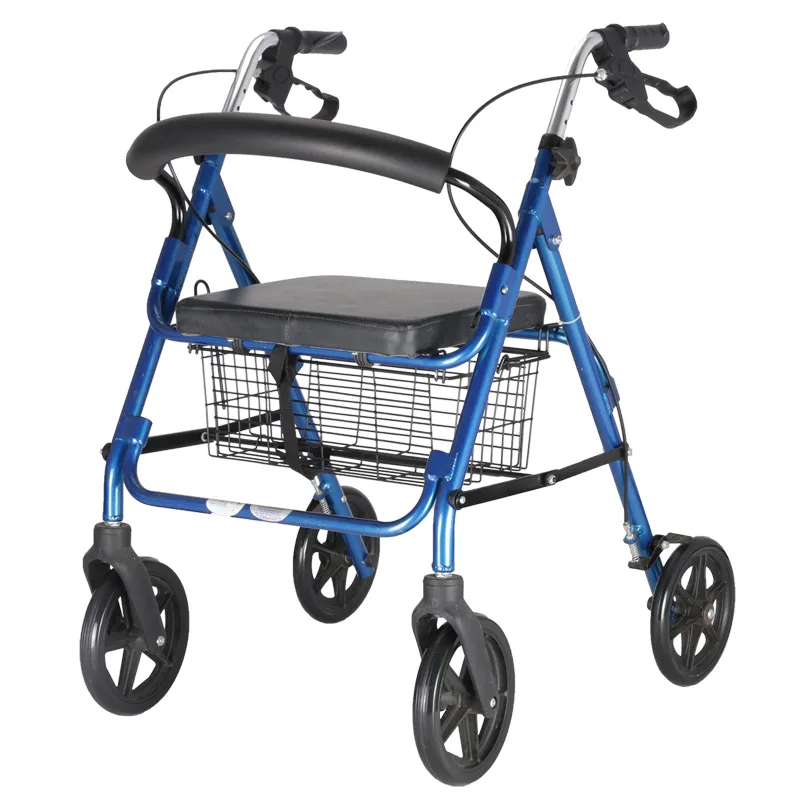
What other high-risk actions should be avoided when using a 4-wheel rollator walker?
To ensure greater safety, strictly avoid the following behaviors:
•Using the rollator walker without checking the condition of the tires
•Forcing the rollator walker over carpets or changes in floor level
•Turning while the walker is fully loaded
•Using the rollator walker to help carry heavy objects
•Walking with your head down instead of looking ahead
•Moving quickly through crowded areas
•Being pulled or towed while sitting on the rollator walker
•Continuing to use a damaged rollator walker
Engaging in these behaviors increases the risk of accidents.
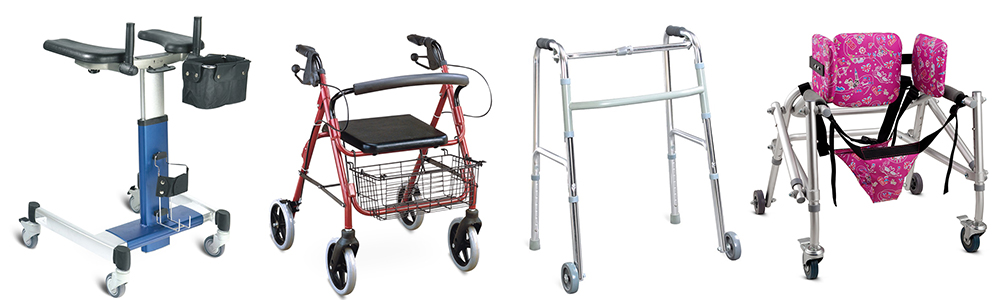
Why is it especially important to heed safety precautions with highly maneuverable 4-wheel walkers?
Many people let their guard down because 4-wheel rollator walkers are maneuverable, smooth-rolling, and safe.
In reality, precisely because these rollator walkers feature:
•Larger wheels
•Easier propulsion
•Greater maneuverability
•A tighter turning radius
...they are more prone to causing accidents if used incorrectly.
Therefore, using a 4-wheel rollator walker requires a heightened sense of safety awareness.