
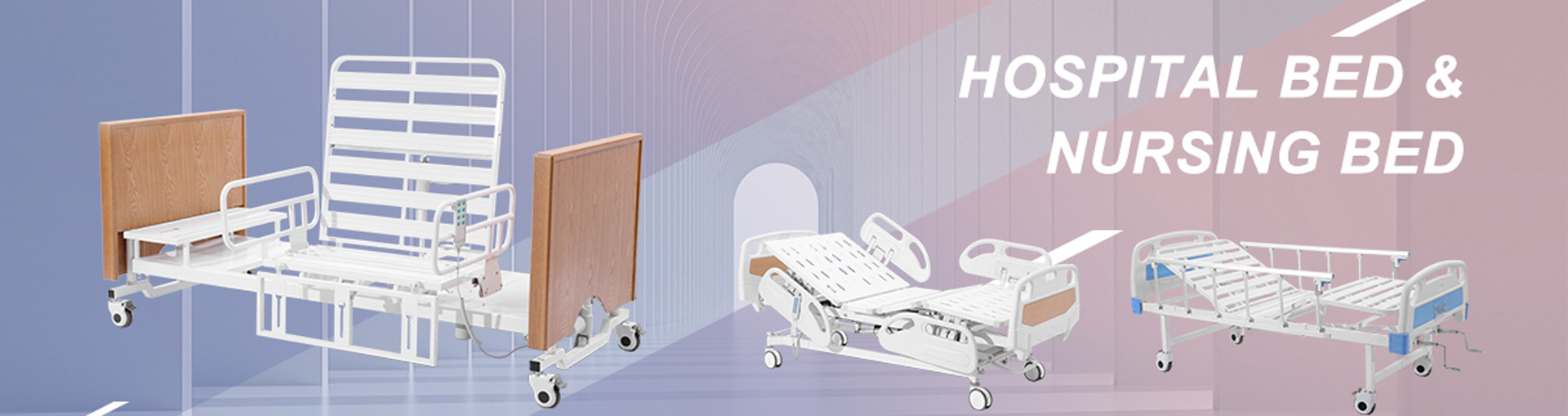
In modern healthcare settings, the "adjustable hospital bed" has become an essential and ubiquitous piece of equipment in hospitals, rehabilitation centers, and home-based long-term care environments. Unlike traditional fixed-frame beds, adjustable hospital beds utilize electric systems to modify the height of the bed surface, the angle of the backrest, and the position of the leg section, thereby helping patients enjoy a more comfortable and safe experience while confined to bed.
Among the many features offered, "height adjustment" is often one of the primary concerns for many consumers.
Particularly when shopping for an electric nursing bed or a standard hospital bed, many people frequently ask:
"What is the typical height range—in inches—for an adjustable hospital bed?"
On the surface, this might appear to be merely a question of physical dimensions.
In reality, however, the adjustable height range of a hospital bed directly impacts patient safety during transfers (getting in and out of bed), nursing efficiency, physical support, and long-term user comfort.
Consequently, "height adjustment" is not merely an auxiliary feature; it represents one of the most fundamental structural capabilities of an adjustable hospital bed.
What exactly constitutes "height adjustment" in an adjustable hospital bed?
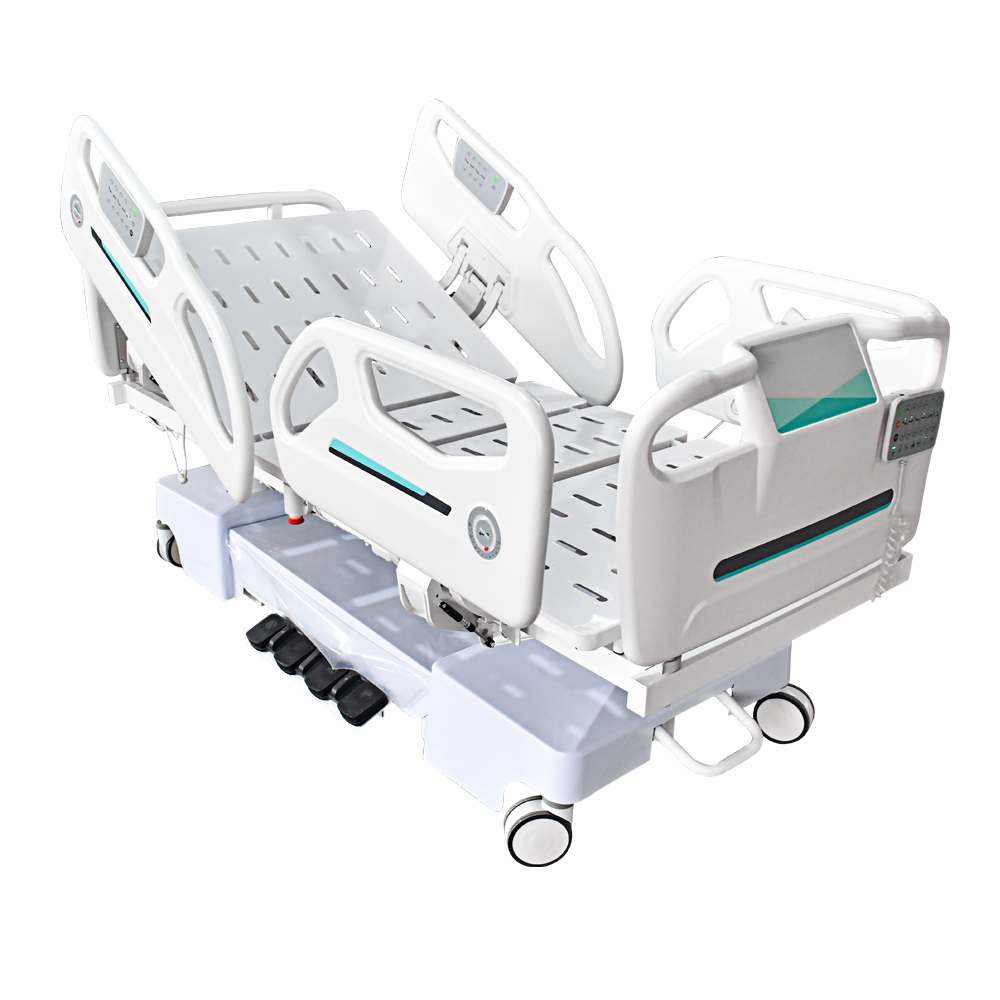
When first encountering an adjustable hospital bed, many consumers interpret "height adjustment" simply as a basic up-and-down movement. In practice, however, the bed's height adjustment system involves altering the vertical position of the entire bed frame.
Simply put, it utilizes an electric mechanism to raise or lower the entire sleeping surface.
This capability is not included merely to make the bed "look sophisticated"; its true significance lies in its ability to adapt to a diverse range of care requirements.
Why is it necessary for an adjustable hospital bed to be raised and lowered?
One of the most significant limitations of traditional fixed-height hospital beds is their inability to change elevation. However, in real-world healthcare environments, the optimal bed height varies dramatically depending on the specific scenario.
For instance, height adjustment is critical for:
•Patients getting in and out of bed;
•Caregivers performing dressing changes or medical procedures;
•Assisting patients with turning or repositioning;
•Changing bed linens;
•Transferring patients to or from a wheelchair;
•Rehabilitation exercises;
•Adjusting physical support and comfort levels.
All of these activities are directly influenced by the height of the bed surface.
Therefore, by offering variable height settings, an adjustable hospital bed can effectively accommodate a wide variety of operational scenarios.
So, what is the typical height range—in inches—for an adjustable hospital bed?
This remains the question of greatest interest to many consumers.
In fact, the specific height range varies somewhat depending on the particular type and model of the adjustable hospital bed in question. However, when examining both hospital-grade nursing beds and home-use electric hospital beds, the typical height range for the mattress surface of a standard adjustable hospital bed generally falls within the following parameters:
1. Low Position: Typically ranges from approximately 7 to 15 inches.
For certain "low-bed" models of adjustable hospital beds, the mattress surface may sit only about 7 to 15 inches above the floor when set to its lowest position. This low-profile design is primarily intended to enhance safety.
This is particularly beneficial for:
•Elderly patients;
•Individuals with poor balance;
•Those prone to falling;
•Patients requiring long-term bed rest.
A lower bed surface reduces the risks associated with getting in and out of bed. Furthermore, should an accidental slip or fall occur, the low-position setting helps minimize the risk of injury from impact.
Consequently, many caregiving environments place a strong emphasis on the availability of a low-position setting.
2. High Position: Typically ranges from approximately 24 to 36 inches.
Conversely, when raised to its highest setting, an adjustable hospital bed typically reaches a height of approximately 24 to 36 inches.
Some specialized nursing beds may reach even greater heights. This elevated height is primarily designed to facilitate caregiving procedures.
For example:
•Dressing changes performed by medical staff;
•Physical examinations;
•Assisting the patient with turning over;
•Hygiene and cleaning care;
•Changing the mattress.
If the bed surface is positioned too low, caregivers are forced to bend over for extended periods.
Prolonged bending places significant physical strain on the caregiver's body.
Therefore, raising the adjustable hospital bed to a higher position helps improve the efficiency and ergonomics of caregiving.
Why do the heights of different adjustable hospital beds vary so significantly?
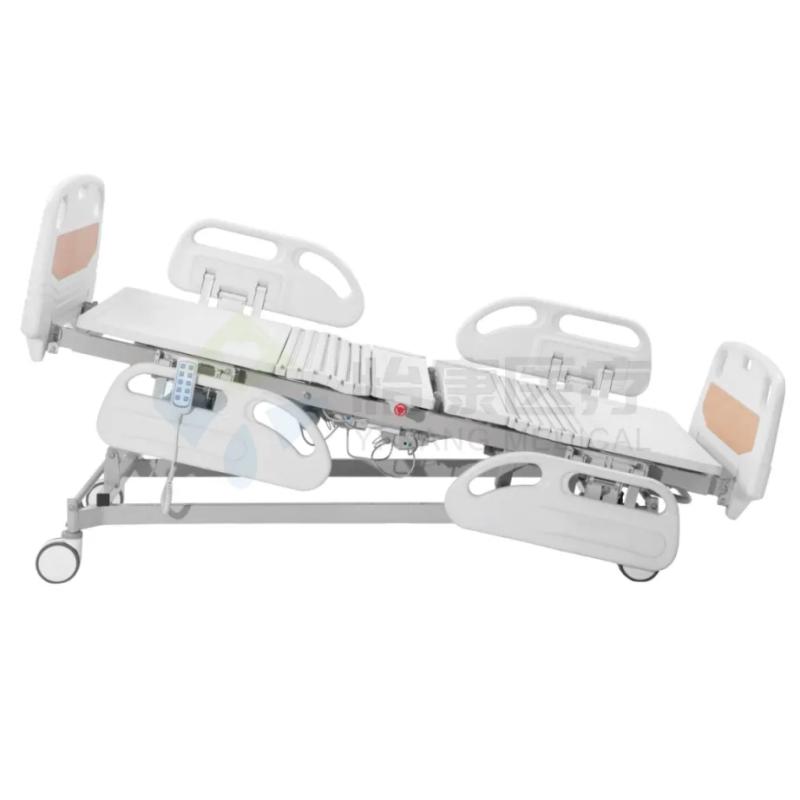
Many consumers notice that the height ranges of different hospital beds differ markedly. The reason for this lies in the fact that there are numerous distinct types of adjustable hospital beds available.
For example:
•Hospital-grade nursing beds;
•ICU beds;
•Home care beds;
•Rehabilitation beds;
•Geriatric care beds;
•Low-profile safety beds.
Naturally, different intended uses necessitate different height requirements.
Consequently, there is no single, universally standardized height that applies to all hospital beds.
Why are low-profile adjustable hospital beds becoming increasingly common?
In recent years, many caregiving environments have placed growing emphasis on low-profile designs.
The rationale behind this is quite practical:
Patient falls have long been identified as one of the most significant risks inherent in the caregiving process.
1. A Low Height Setting Reduces the Risk of Falls
If a standard bed surface is positioned too high, and a patient loses their balance, the risk of sustaining an injury from the subsequent fall increases significantly. When an adjustable hospital bed is set to its lowest position, it sits closer to the floor.
This ensures that, even if a patient were to slip or fall, the resulting impact would be relatively mitigated.
Low-position hospital beds are generally safer, particularly when patients need to get out of bed during the night.
2. Why do caregivers prefer working at a higher bed height?
For caregivers, a bed surface that is too low significantly increases physical strain. Especially in long-term care settings, frequent bending over can easily lead to lower back fatigue.
Therefore, by raising the adjustable hospital bed, caregivers can perform their tasks at a more natural and ergonomic height.
For example:
•Turning the patient;
•Changing clothing;
•Managing catheters;
•Personal hygiene/bathing;
•Wound inspection.
If the bed surface is too low, the difficulty of performing these tasks increases significantly.
Consequently, the "high-position" feature is not merely a matter of comfort; it serves as a crucial aid for caregiving.
Why is bed height particularly important when patients are getting in or out of bed?
Many consumers tend to overlook a critical issue.
The height of a hospital bed directly impacts how easily a patient can get into or out of it.
1. A bed that is too high increases the risk of falls.
If the bed surface sits significantly higher than the patient's knees, getting in or out of bed becomes much more difficult.
This is especially true for:
•The elderly;
•Individuals with lower-limb weakness;
•Patients recovering from surgery;
•Individuals with poor balance.
These groups are more prone to losing their balance while attempting to get in or out of bed.
Therefore, adjustable hospital beds are typically lowered before a patient attempts to get in or out.
2. A bed that is too low can also hinder the ability to stand up.
Conversely, a bed that is too low is not necessarily comfortable either. This is because patients require greater leg strength to push themselves up from a very low position.
Therefore, the true value of an adjustable hospital bed lies not in simply being "as low as possible," but rather in its ability to be flexibly adjusted to suit the patient's specific needs at different stages of care.
3. Why is it necessary to adjust the hospital bed height during wheelchair transfers?
Many patients requiring long-term care need to be transferred between:
•A wheelchair;
•A hospital bed;
•A care chair.
During these transfers, the height of the hospital bed directly impacts safety. If there is a significant height discrepancy between the surfaces, the difficulty and risk associated with the transfer increase substantially.
Consequently, adjustable hospital beds are typically adjusted to match the height of the wheelchair.
How is the height adjustment function on an adjustable hospital bed achieved?
Most modern adjustable hospital beds utilize an electric system. An electric motor drives the lifting mechanism, enabling the entire bed frame to be raised or lowered.
Some hospital beds also incorporate:
•Scissor-style support structures;
•Hydraulic systems;
•Multi-point lifting systems.
These features ensure stability during the lifting process.
Why must an adjustable hospital bed remain stable even when raised?
Many consumers worry:
"Will the hospital bed wobble after it is raised?" In reality, reputable adjustable hospital beds are designed with a strong emphasis on stability. This is because the bed's center of gravity shifts as the sleeping surface is elevated.
If the structure lacks stability, patients may experience a sensation of wobbling or unsteadiness when turning over or shifting their position.
Consequently, adjustable hospital beds typically feature reinforced base supports.
Why shouldn't the height adjustment of an adjustable hospital bed be too rapid?
Some consumers believe that a faster lifting speed equates to greater convenience.
However, in practice, rapid height adjustment on a hospital bed is not necessarily safe.
Particularly for patients with limited mobility, sudden changes in elevation can lead to:
•Loss of balance;
•Feelings of anxiety or apprehension;
•Postural instability;
•Dizziness or discomfort.
Therefore, most adjustable hospital beds are designed to operate at a relatively smooth and steady lifting speed.
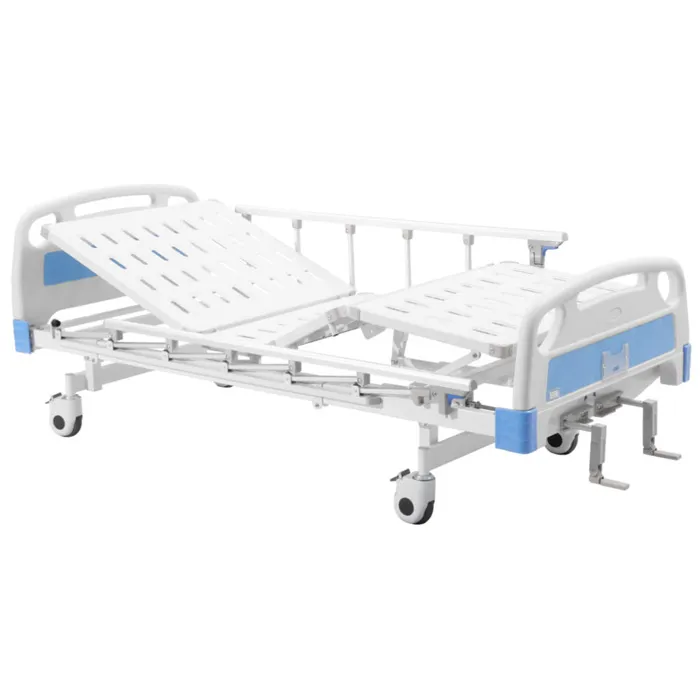
Why do adjustable hospital beds in the ICU typically offer a wider range of height adjustment?
ICU hospital beds often need to accommodate a broader spectrum of care scenarios.
For instance:
•Resuscitation procedures;
•Respiratory support;
•Physiological monitoring;
•Patient transfer and transport.
Consequently, adjustable ICU beds typically feature a significantly wider range of height adjustment capabilities.
This versatility allows them to adapt effectively to diverse medical requirements.
Why do adjustable hospital beds designed for home use place greater emphasis on a low-position setting?
Compared to a hospital environment, home care settings place a greater focus on mitigating the risk of falls.
Specifically, when patients attempt to get out of bed independently—particularly during the night—a low-position bed setting helps minimize potential hazards.
As a result, many home-use adjustable beds specifically prioritize:
•A low bed-surface height;
•Gradual and gentle lifting mechanisms;
•Simplified structural designs.
These features collectively enhance safety during daily use.
Why does the height of an adjustable hospital bed impact caregiving efficiency?
Caregiving tasks are often not brief, momentary actions. This is especially true for bedridden patients who require frequent and ongoing care.
If a hospital bed remains at a fixed height, the physical strain on caregivers increases significantly. Conversely, an adjustable hospital bed allows caregivers to quickly modify the bed's height to suit the specific task at hand. This capability directly contributes to a more comfortable and ergonomic caregiving experience. Why do different patients require different bed heights?
There is no such thing as a "one-size-fits-all height," because every patient has unique physical conditions.
For example:
•Varying heights;
•Differing lower-limb strength;
•Different levels of balance;
•Varying degrees of mobility.
Therefore, the truly essential feature of an adjustable hospital bed is its flexibility to adapt—rather than remaining fixed at a single, static height.
Why is an adjustable hospital bed more than just "a bed that goes up and down"?
When encountering one for the first time, many consumers simply view an adjustable hospital bed as a standard bed with a motor attached.
In reality, however, the true value of an adjustable hospital bed lies in its comprehensive caregiving logic.
Height adjustment is merely one component of this system.
It also encompasses:
•Backrest adjustment;
•Leg support;
•Posture management;
•Caregiving assistance;
•Safe patient transfer.
Consequently, an adjustable hospital bed is, in essence, a specialized piece of assistive care equipment.
Why are hospitals increasingly relying on adjustable hospital beds?
The reasons are actually quite practical.
Compared to fixed-height hospital beds, adjustable models simultaneously enhance:
•Patient comfort;
•Caregiving efficiency;
•Safety during bed entry and exit;
•Physical support;
•Ease of patient transfer.
The importance of adjustable hospital beds becomes particularly evident within long-term care environments.
Why is the adjustable height range a critical factor when choosing a hospital bed?
When making a selection, many consumers focus solely on:
•Whether it is motorized;
•Whether the backrest can be raised;
•Whether it features side rails.
However, the range of height adjustment is equally—if not more—important.
This is because it has a long-term impact on:
•The patient's ability to get in and out of bed;
•The convenience of caregiving;
•Overall safety;
•Physical support.
Therefore, height adjustability stands as one of the most fundamental and critical metrics of an adjustable hospital bed.
What is the primary difference between an adjustable hospital bed and a standard hospital bed?
A standard hospital bed typically offers only a fixed, static lying surface.
An adjustable hospital bed, conversely, prioritizes:
•Dynamic body support;
•Posture management;
•Caregiving assistance;
•Height adaptability.
This fundamental difference directly influences the quality of the long-term care experience.
Thus, an adjustable hospital bed is not merely "a more expensive bed"; it is, at its core, an integral component of a comprehensive caregiving system.