

Among nursing equipment and assistive mobility tools, "wheelchairs with toilets" are a very practical product, suitable for people with limited mobility, those who are bedridden for extended periods, or those who need assistance with toileting. Many users have a fundamental question when purchasing this type of product: what is a wheelchair with a toilet called?
The standard answer is: a toilet wheelchair.
A toilet wheelchair is a nursing device that integrates mobility assistance and toileting functions, helping users to use the toilet more conveniently in different environments, while also making the work of caregivers easier.
Among many nursing tools, toilet commode wheelchairs are widely used in homes, nursing homes, and hospitals due to their practicality, reasonable structural design, and ease of use.
This article will provide an in-depth analysis from a professional perspective on the definition, characteristics, structure, usage, safety points, applicable groups, and selection methods of toilet commode wheelchairs to help you fully understand this nursing equipment.
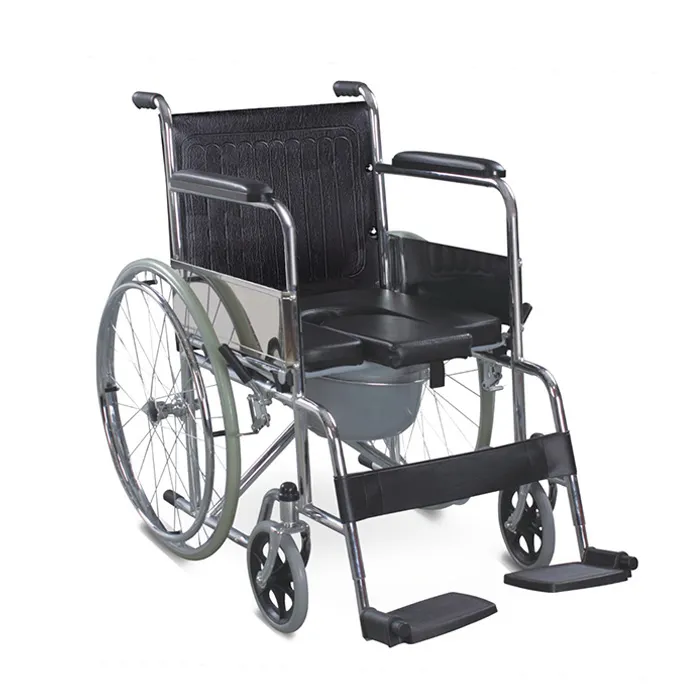
Why is a wheelchair with a toilet called a "toilet wheelchair"?
Wheelchairs with built-in toilets are commonly called "toilet wheelchairs" primarily because they possess two core functions:
1. Wheelchair: Used for mobility and assistance.
2. Toilet: Used for excretion, with an internal removable commode or direct connection to a toilet.
This device combines mobility and toileting functions into one, hence the industry and user-standard term "toilet commode wheelchair." This naming convention has become a fixed standard in the nursing care products industry.
What types of toilet wheelchairs are there?
What are the differences between different types?
Toilet wheelchairs can be categorized into several types based on configuration, structure, materials, and applicable scenarios. The following are some common classification methods:
1. By Material: Aluminum Alloy Toilet Wheelchair vs. Steel Toilet Wheelchair
• Aluminum Alloy Toilet Wheelchair
Lightweight, rust-resistant, and highly mobile, suitable for daily home use.
• Steel Toilet Wheelchair
Stable structure, high load-bearing capacity, and lower price, more suitable for heavier users or those requiring frequent care.
2. By Function: Basic vs. Multi-functional
• Basic Toilet Wheelchair
Equipped with a bedpan, footrest, and armrests; basic yet practical.
• Multi-functional Toilet Wheelchair
Foldable, height-adjustable, can be used as a shower chair, can be pushed over the toilet, and may even have a padded seat.
3. By Structure: With Backrest, With Armrests, Foldable, With Brakes, etc.
Different designs affect the user experience and care efficiency; the choice should be based on the user's physical condition and usage scenario.
What are the structural components of a toilet wheelchair?
Why are these structures important?
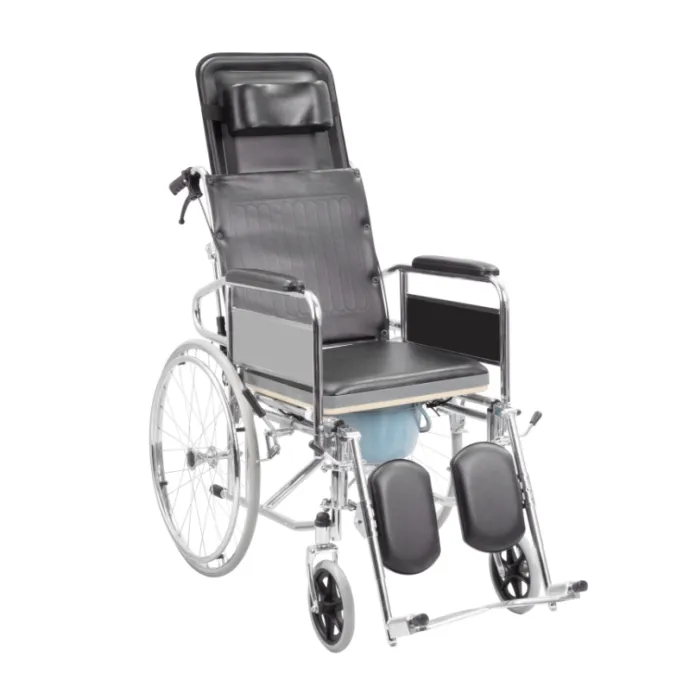
To achieve the dual functions of "mobility + toileting," toilet wheelchairs have a specific structural design. The main components are as follows:
1. Seat and Toilet Opening
An opening in the middle of the seat facilitates defecation; a bedpan is provided underneath, or an opening is provided for direct connection to a traditional toilet.
2. Bedpan Assembly
A removable bedpan is one of the core components of a toilet commode wheelchair, used to collect excrement for easy cleaning by caregivers.
3. Armrests and Backrest
Provide good support for the user, making the sitting posture more stable and reducing the risk of falls.
4. Braking System
The brakes are used to fix the position of the toilet commode wheelchair, which is crucial for stability, especially when using the toilet.
5. Footrest
Allow the user to sit more naturally, preventing the feet from dangling in the air and causing safety issues.
Why do many people need toilet wheelchairs? Who are they suitable for?
Toilet wheelchairs are designed to help people with limited mobility safely and conveniently complete toilet activities. The following are common groups who need to use toilet wheelchairs:
• Elderly people with limited mobility
• Patients who are bedridden for extended periods or recovering from surgery
• Users with insufficient lower limb strength and difficulty walking independently
• Patients with stroke, spinal cord injury, or neurological diseases
• People with disabilities
The purpose of toilet commode wheelchairs is to improve the self-care ability of these users safely, while significantly reducing the burden of care.
How does the design of toilet wheelchairs improve care efficiency?
Toilet wheelchairs are not only assistive tools for users but also important helpers for caregivers, offering multiple advantages in caregiving:
1. Reduced Transfers
Users don't need to frequently move between bed, wheelchair, and toilet, reducing risks.
2. Improved Toileting Posture
The ergonomically designed seat opening enhances stability and comfort during use.
3. Increased Care Efficiency
The bedpan can be quickly disassembled and cleaned, saving caregiving time.
4. Versatile Applications
Suitable for various settings, including bedrooms, toilets, and bathrooms, increasing overall care flexibility.
Can a toilet wheelchair be used in the bathroom? Is it too big?
Generally, most toilet wheelchairs are of moderate size and can be pushed into a typical family bathroom, even directly onto the toilet. Manufacturers strive to balance stability and space utilization in their designs, making toilet commode wheelchairs suitable for a wider range of home situations.
For particularly small bathrooms, options include:
• Foldable toilet wheelchairs
• Narrow-body toilet wheelchairs
• Adjustable height toilet wheelchairs
Therefore, choosing a model that suits your home's space is crucial.
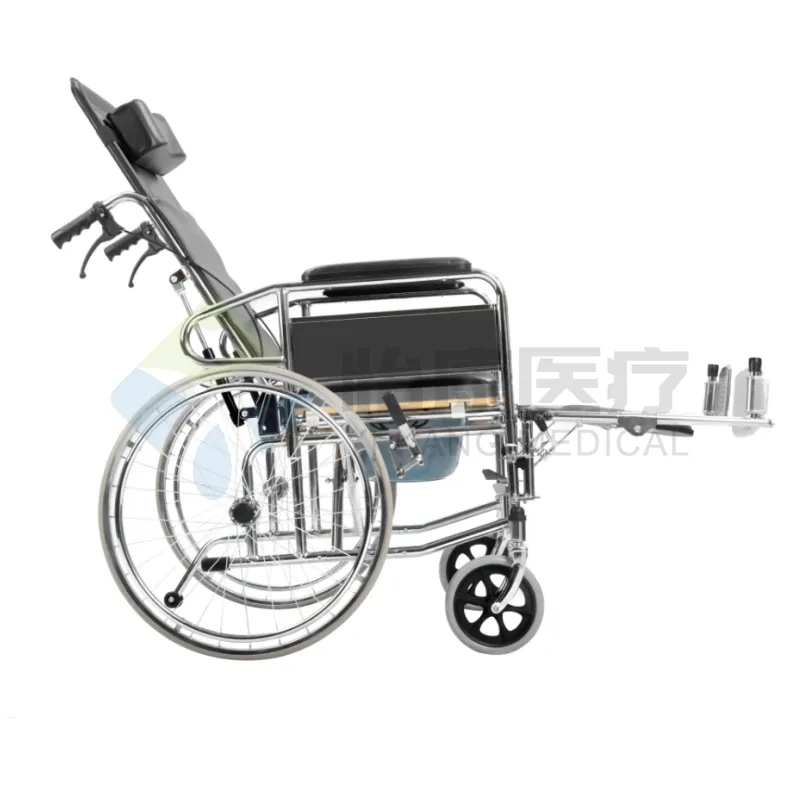
Can a toilet wheelchair be used as a shower chair?
Many users ask:
"Can a toilet commode wheelchair be used directly as a shower chair?"
The answer is: partially yes, but it depends on whether it's waterproof.
Features of toilet wheelchairs suitable for showering:
• Made entirely of waterproof materials (such as aluminum alloy, plastic, rubber wheels)
• No rust-prone steel structures
• Seat material is water-resistant and does not easily age
• Wheels are suitable for wet surfaces
Toilet wheelchairs not suitable for showering:
If the product materials are not waterproof, prolonged showering will lead to:
• Rusting
• Structural damage
• Increased cleaning difficulty
• Shortened lifespan
Therefore, it's essential to clarify whether it's suitable for showering when purchasing.
What safety precautions should be taken when using a toilet wheelchair?
To ensure safe use of a toilet commode wheelchair, please note the following:
1. Always lock the brakes
The brakes must be locked whether moving, using the toilet, or getting up.
2. Ensure the floor is dry
Especially when using it in the shower, pay attention to preventing slipping.
3. Adjust the footrests and armrests
Maintain a stable sitting posture to avoid falls.
4. Clean the bedpan promptly
Maintain hygiene and reduce odor residue.
5. Push the wheelchair correctly
Caregivers should avoid steps and areas with steep slopes when pushing the wheelchair to prevent tipping.
6. Regularly check the structure
Including whether screws, wheels, brakes, and armrests are loose.
How to choose a suitable toilet wheelchair? What key points should be considered?
When choosing a toilet commode wheelchair, evaluate the following aspects:
1. Is the weight-bearing capacity sufficient?
Different models have different weight-bearing ranges, generally from 100kg to 150kg or even higher.
2. Do you need a folding function?
Folding toilet commode wheelchairs are easy to store and carry, suitable for families with limited space.
3. Do you need a backrest, armrests, and cushions?
Comfort is very important for long-term users.
4. Is a toilet-accessible design necessary?
Toilet wheelchairs that can connect to a traditional toilet are more convenient to use.
5. Is a shower function necessary?
If showering is required, be sure to choose waterproof materials.
6. Wheel size and braking system
Larger wheels are better for mobility, while smaller wheels are better for indoor use.

What are the maintenance methods for toilet wheelchairs?
How to make them more durable?
To extend the lifespan of a toilet commode wheelchair, the following maintenance is recommended:
• Clean the seat, armrests, and potty after use.
• Regularly check the brakes for responsiveness.
• If used for showering, dry the wheelchair thoroughly.
• Check the tightness of screws and connections.
• Clean the wheels to prevent hair and dust from getting tangled.
• Avoid leaving it unused in a damp environment for extended periods.
Proper maintenance will keep your toilet wheelchair stable and hygienic for a long time.