
Among the many types of wheelchairs available, the "tilt-in-space" wheelchair is a specialized category that is frequently mentioned yet often misunderstood. Many people know only that it allows the user to "lean back," but they do not truly understand its structural principles, its intended purpose, or its physiological effects on the human body.
At the same time, a common question arises:
Can a tilt-in-space wheelchair aid digestion?
To answer this question, we must look beyond a superficial understanding. Instead, we require a systematic analysis spanning multiple levels: defining what a tilt-in-space wheelchair is, examining how its tilting mechanism alters body posture, and exploring how these postural changes influence internal organ function.
This article will address these two core questions, helping you build a clear conceptual framework grounded in ergonomics and physiological logic.
What Is a Tilt-in-Space Wheelchair?
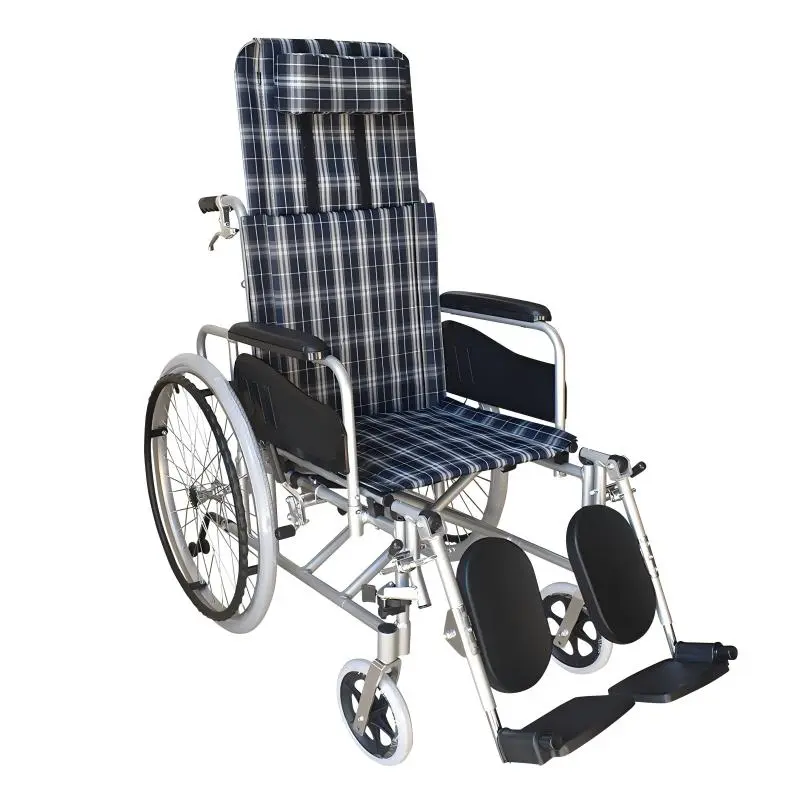
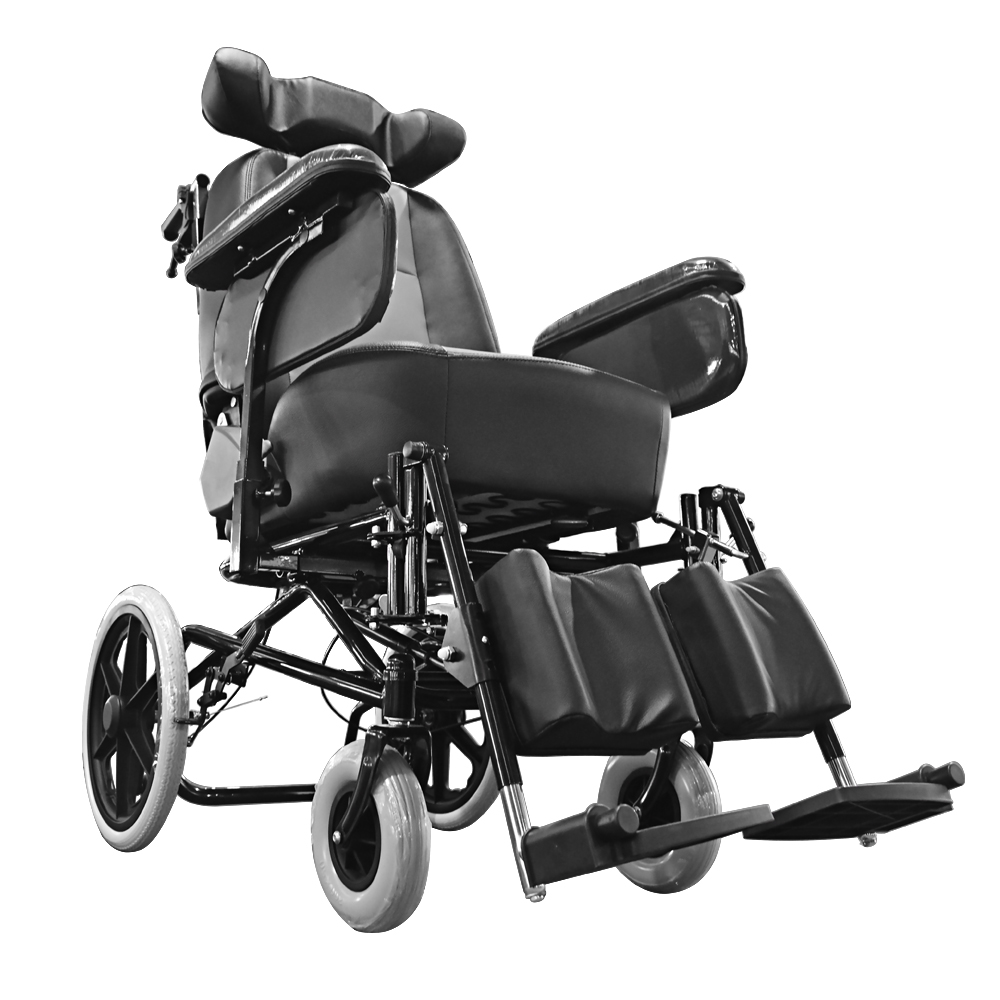
A tilt-in-space wheelchair refers to a type of wheelchair in which the entire seating system can tilt backward or forward as a single unit.
It is crucial to emphasize that this "tilting" is not merely a simple reclining of the backrest; rather, the seat, backrest, and leg supports move simultaneously, changing their angles in unison as a single, integrated unit.
In other words:
•The position of the pelvis remains fixed relative to the seat.
•The angle of the seat changes as a whole.
•The relative postural relationship between the user and the wheelchair remains constant.
This is precisely what distinguishes a tilt-in-space wheelchair from a standard reclining wheelchair.
What Is the Fundamental Difference Between a Tilt-in-Space Wheelchair and a Standard Wheelchair?
Characteristics of a Standard Wheelchair:
•Fixed seat angle.
•Backrest typically remains upright.
•Limited scope for postural adjustment.
Characteristics of a Reclining Wheelchair:
•Backrest can be tilted backward.
•The seat itself remains stationary.
•Prone to causing the body to slide forward.
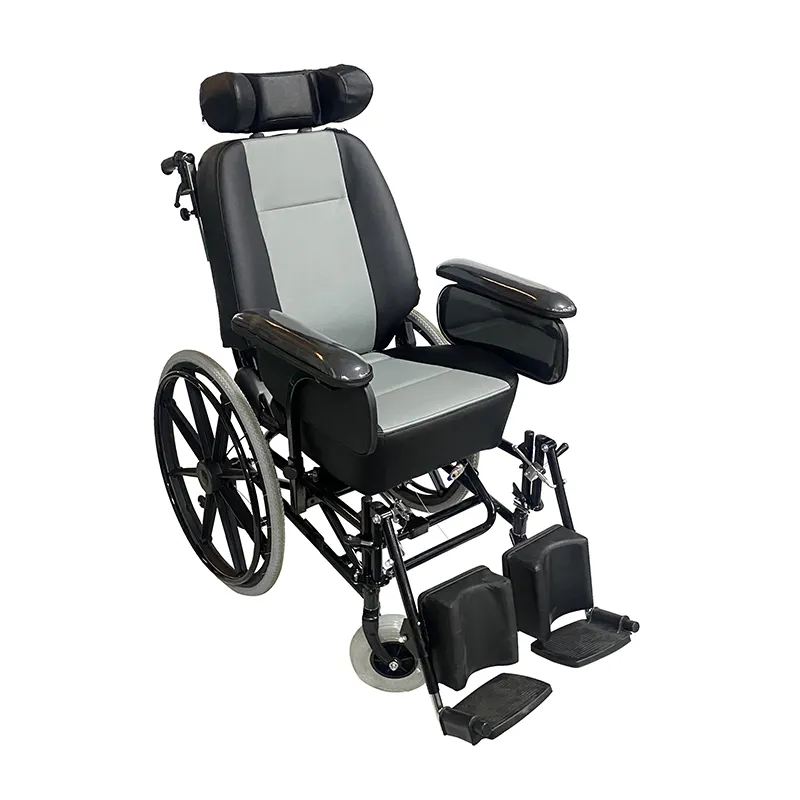
Core Features of a Tilt-in-Space Wheelchair:
•The entire seating system tilts as a unit.
•Pelvic stability is maintained.
•Reduces shear forces and sliding.
•Postural changes are safer and more controllable.
It is precisely because of these structural differences that the tilt-in-space wheelchair offers unique advantages in terms of postural management and body support.
How Does a Tilt-in-Space Wheelchair Achieve This Integrated Tilting Motion?
From a structural perspective, tilt-in-space wheelchairs typically achieve angle adjustments through the following mechanisms:
•Mechanical linkages between the frame and the seating system
•Manual or hydraulic adjustment mechanisms
•Gradual tilting within a pre-set range of angles
Regardless of the specific method employed, the core objective remains constant:
To adjust the angle of the body relative to the ground without altering the relative position of the pelvis within the seat.
This point is crucial for understanding the impact of tilt-in-space wheelchairs on physical function.
Why do tilt-in-space wheelchairs emphasize "pelvic stability"?
In the human sitting posture, the pelvis serves as the foundation for all postural control.
If the pelvis is unstable, the following issues are likely to arise:
•Forward sliding of the body
•Spinal collapse
•Compression of internal organs
•Compromised respiratory and digestive function
By tilting the entire seating system, tilt-in-space wheelchairs alter the direction of gravity, thereby:
•Reducing the tendency for the pelvis to slide forward
•Maintaining a relatively neutral pelvic alignment
•Improving trunk alignment
This is a primary reason why tilt-in-space wheelchairs are widely utilized for individuals requiring long-term postural support while seated.
How do tilt-in-space wheelchairs alter body posture?
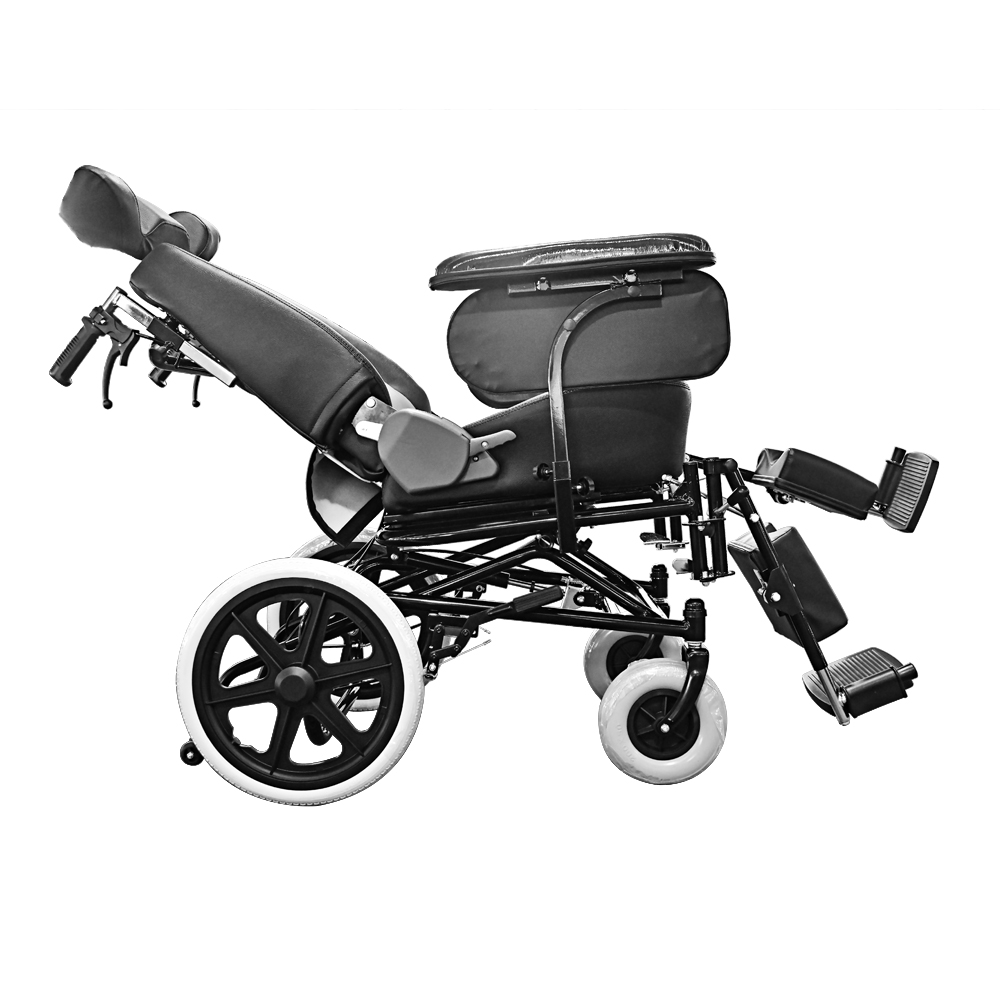
When a user is seated in a tilt-in-space wheelchair and the angle is adjusted, a series of physiological changes occur within the body:
•The angle between the upper body and the ground changes
•Gravitational forces are redistributed
•Pressure exerted on the abdomen and thoracic cavity shifts
•The relative positioning of internal organs undergoes slight adjustments
These changes do not constitute drastic structural displacements, but rather a postural realignment occurring safely within physiological limits.
It is precisely these changes that give rise to a critical question:
Do tilt-in-space wheelchairs affect digestive function?
Can tilt-in-space wheelchairs truly aid digestion?
This is a central question of concern to many people.
First, one point must be clarified:
A tilt-in-space wheelchair is not a therapeutic tool for digestive disorders, nor is it a device designed to directly "promote digestion."
However, from the perspective of human physiology and postural mechanics, tilt-in-space wheelchairs can—in certain circumstances—indirectly facilitate smoother digestive processes by improving overall body posture.
What is the relationship between digestive function and sitting posture?
The digestive process does not occur solely within the stomach; it involves:
•The esophagus
•The stomach
•The intestines
•The entire abdominal cavity
When sitting posture is poor, common issues include:
•Compression of the abdomen
•Restricted space for internal organs
•Uneven distribution of intra-abdominal pressure
•Impaired gastrointestinal peristalsis
Therefore, whether one's posture is appropriate significantly influences the comfort and efficiency of digestion.
How do tilt-in-space wheelchairs affect digestion from a postural perspective?
When a tilt-in-space wheelchair is tilted backward to a moderate degree, the following indirect effects may occur:
1. Alleviation of abdominal compression
With the torso tilted backward, the abdomen no longer bears the full force of vertical downward pressure, which helps reduce the sensation of abdominal squeezing.
2. Improved torso alignment
A stable torso posture facilitates the functioning of internal organs within a relatively natural position.
3. Reduced organ compression caused by forward sliding
Forward sliding—a common occurrence in standard wheelchairs—can cause the abdomen to "fold" or buckle; tilt-in-space wheelchairs help minimize this issue.
From this perspective, tilt-in-space wheelchairs do not "promote digestion" directly, but rather "mitigate postural factors that hinder digestion."
Does a greater tilt angle provide greater digestive benefits?
This is a very important question, yet one that is frequently misunderstood.
The answer is: No.
•An insufficient tilt angle offers only limited postural improvement.
•An excessive tilt angle may compromise swallowing function or disrupt intra-abdominal pressure balance.
The primary function of a tilt-in-space wheelchair emphasizes "moderate adjustment" rather than extreme reclining.
Improvements in digestive comfort stem from an appropriate torso angle and stable pelvic support—not from extreme postures.
Are manual tilt wheelchairs suitable for everyone seeking to improve digestion?
It is important to clarify the following points:
•Tilt-in-space wheelchairs were not designed specifically for the purpose of "improving digestion."
•Not everyone will experience increased comfort through the use of a tilted sitting posture.
Whether or not one experiences greater digestive comfort while using a manual tilt wheelchair depends on:
•The individual's postural control capabilities
•Torso stability
•Abdominal sensitivity
•The specific tilt angle utilized during use
Consequently, the impact of a manual tilt wheelchair on digestion is indirect and varies from person to person.
What postural principles should be observed when using a manual tilt wheelchair?
To avoid misunderstanding the function of a manual tilt wheelchair, the following points should be kept in mind during use:
•Do not mistake the tilted position for a fully supine (lying flat) position.
•Ensure the pelvis remains in close contact with the backrest.
•Avoid improper head and neck positioning resulting from the tilt.
•Adjust the tilt angle based on the body's feedback and comfort levels.
Only when used correctly can a manual tilt wheelchair fully realize its value in providing postural support.
How should the relationship between a manual tilt wheelchair and "aiding digestion" be correctly understood?
From a professional perspective:
•A manual tilt wheelchair is not a digestive aid tool.
•It cannot directly stimulate or accelerate the digestive process.
•However, by improving sitting posture and reducing abdominal compression,
it can create a more comfortable postural environment for the digestive process.
This form of assistance is structural, indirect, and postural in nature—not a physiological intervention.
Why do many people mistakenly believe that manual tilt wheelchairs "promote digestion"?
The primary reasons include:
•A sensation of greater abdominal relaxation after tilting.
•The elimination of abdominal compression caused by sliding forward in the seat.
•An overall improvement in the user's subjective sense of comfort.
These sensations are easily interpreted as "improved digestion"; however, from a professional standpoint, a more accurate description is:
The manual tilt wheelchair mitigates the interference that poor sitting posture can have on digestion.
What, fundamentally, is the core value of a manual tilt wheelchair?
Among all its features, the core value of a manual tilt wheelchair lies in:
•Postural management
•Stable support
•Reduction of shear forces
•Enhancement of long-term sitting comfort
Its impact on digestion is merely one potential secondary benefit resulting from improved posture, rather than its primary design objective.