

Among various assistive devices, sports wheelchairs are a type of wheelchair with a special structure, outstanding performance, and specifically designed for sports activities. Unlike traditional everyday wheelchairs, sports wheelchairs prioritize stability, speed, flexibility, and athletic performance, enabling users to achieve efficient mobility and professional support in various sports.
Many people only know that sports wheelchairs are used in competitive sports, but they are unaware of the underlying design logic, key construction points, classification methods, and differences from ordinary wheelchairs.
This article will delve into the concept and technical characteristics of sports wheelchairs to facilitate readers' research and understanding.
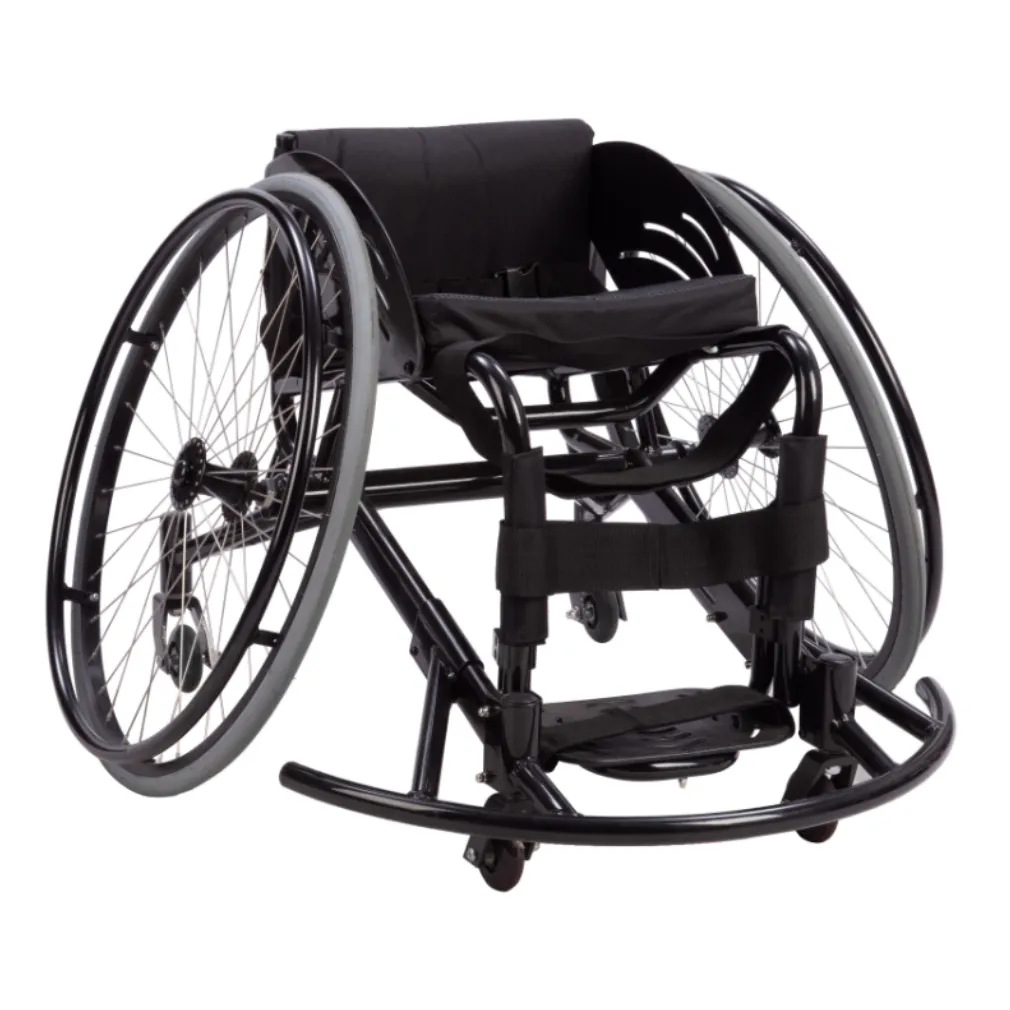
What is a sports wheelchair?
A sports wheelchair is a professional wheelchair designed specifically for sports, competitive events, and high-intensity training.
Its core objectives are:
• Increased speed
• Enhanced explosive power
• Increased steering agility
• Provided more stable movement posture
• Improved control precision during competition
Compared to ordinary everyday wheelchairs, sports wheelchairs emphasize:
• Lightweight frame
• Tilt-type wheels
• Low center of gravity structure
• Rigid fixed frame (mostly non-folding structure)
• High-strength materials
Therefore, sports wheelchairs are not only a means of transportation, but also a type of professional sports equipment.
Common sports include:
• Basketball
• Tennis
• Racing
• Rugby
• Handball
• Cross-country
• Indoor sports
Each sports wheelchair has a different structure depending on the characteristics of the sport to ensure maximum performance during exercise.
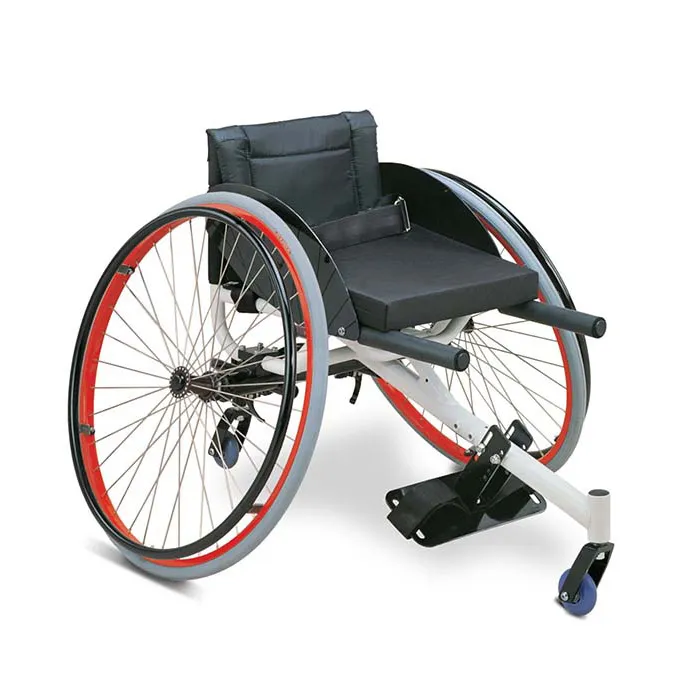
What is the difference between a sports wheelchair and an ordinary wheelchair?
To truly understand "what is a sports wheelchair," one must first understand its differences from ordinary wheelchairs.
The following is a systematic analysis from multiple professional dimensions.
1. Completely Different Design Purposes
Purpose of a Standard Wheelchair:
• Daily Mobility
• Providing Comfort
• Meeting Basic Mobility Needs
Purpose of a Sports Wheelchair:
• Improving Athletic Performance
• Increasing Speed and Agility
• Enhancing Competitive Stability
2. Lower Center of Gravity in Sports Wheelchairs
Rapid acceleration, quick turns, and maintaining balance are required during sports activities, making a low center of gravity design crucial.
A low center of gravity results in:
• Greater Stability
• Less Prone to Tipping Over
• A Seating Posture More Suitable for High-Intensity Movements
3. Greater Wheel Camber Angle
One of the most distinctive features of sports wheelchairs is their wheel camber angle.
Advantages include:
• Improved Lateral Stability
• Increased Steering Flexibility
• Enhanced Grip
• Easier Hands to Push the Wheels
Standard wheelchairs typically have vertical wheels, making them unsuitable for sharp turns.
4. Lighter and More Stable Frame
Sports wheelchairs typically use:
• Aerospace-grade aluminum alloy
• Titanium alloy
• Carbon fiber
These materials make sports wheelchairs:
• Lighter
• Stiffer
• More impact-resistant
• Better suited for high-speed activities
A fixed frame (non-folding) increases overall rigidity and provides more stable steering.
5. Stronger Anti-Tilt Structure
Sports activities involve intense movements, so sports wheelchairs are designed with:
• Anti-tipping wheels
• Lateral support
• Reinforced welded structure
Ensuring the user does not tip over during excessive speed or sharp turns.
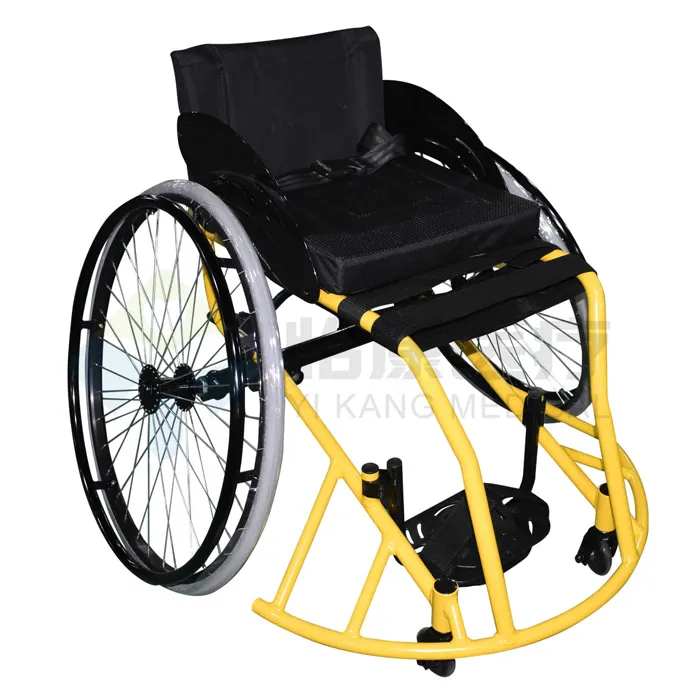
What are the special structural design features of sports wheelchairs?
Sports wheelchairs have significantly different structures, which is the core reason for their improved performance.
1. Cambered Wheels
This is one of the most important structural features of sports wheelchairs.
Different sports require different wheelchair tilt angles:
• Tennis: Larger tilt angle for quick turns
• Basketball: Moderate tilt angle, balancing speed and stability
• Racing wheelchairs: Smaller tilt angle to ensure straight-line speed
2. Lightweight Rigid Frame
Sports wheelchair frames are typically welded as a single piece and cannot be folded.
This offers several advantages:
• Greater structural stability
• No loosening during movement
• More direct power transmission
• Higher pushing efficiency
3. Protective and Stabilizing Structure
Includes:
• Front impact protection structure
• Side guards
• Anti-rollover wheels
• Reinforced footrests
Their function is to protect the body and improve stability during movement.
4. Adjustable Components for Different Sports
For example:
• Seat depth
• Seat angle
• Wheel spacing
• Axle position
• Tire width
These adjustments directly affect athletic performance, such as acceleration, cornering, explosive power, and stability.
Why are the frames of sports wheelchairs different from those of regular wheelchairs?
Sports wheelchair frames are typically streamlined or compact for reasons including:
• Reducing air resistance
• Increasing frame rigidity
• Positioning the body closer to the center line
• Improving acceleration and explosive power
A compact frame allows the athlete and wheelchair to feel more integrated, which is crucial for enhancing athletic performance.
Why are sports wheelchairs made of lighter materials?
Every gram of weight during exercise affects speed and control.
Therefore, sports wheelchairs are typically made of lightweight, high-strength materials:
• Aluminum alloy: High strength, lightweight, and moderately priced
• Titanium alloy: Good elasticity, strong shock absorption, and corrosion resistance, but more expensive
• Carbon fiber: Extremely lightweight but expensive to manufacture, used in racing wheelchairs
Lightweight design means:
• Reduced propulsion force
• Lower energy consumption
• Faster reaction time
• Better suited for extended training sessions
Therefore, materials are one of the key factors in the professional performance of sports wheelchairs.
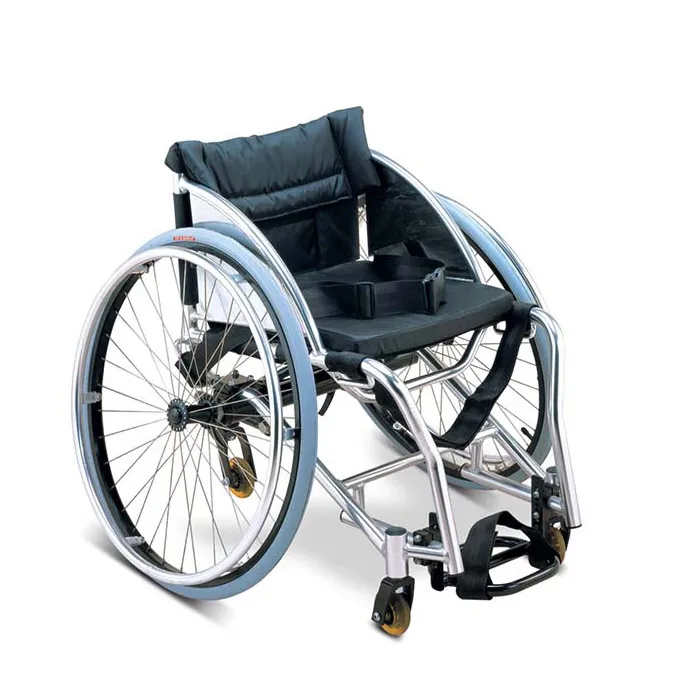
What are the differences between sports wheelchairs used in different sports?
Although all are sports wheelchairs, their structures differ significantly across sports.
Below are some common types from a professional perspective:
1. Basketball Wheelchair
Features:
• Moderate lean angle
• Wider frame
• Requires both stability and agility
• Wheels can turn quickly
2. Tennis Wheelchair
Features:
• Larger lean angle
• High turning agility
• Requires quick changes of direction
Due to the large area of movement on the court, the wheelchair needs extremely high agility.
3. Rugby Wheelchair
Features:
• More robust frame
• Thicker protective structure
• Enhanced impact protection design
This type of wheelchair is highly competitive, so protection is crucial.
4. Racing Wheelchair
Features:
• Three-wheel structure (one in front, two in the back)
• Ultra-lightweight frame
• More streamlined
• Better suited for high-speed straight-line movement
This type of wheelchair emphasizes speed.
What aspects contribute to the safety of sports wheelchairs?
While sports wheelchairs are designed for high-speed movement, safety is still a core element.
1. Anti-tipping Structure
Low center of gravity + anti-tipping wheels
Prevent tipping over during high-speed turns.
2. Protective Devices
Includes:
• Side panels
• Guard panels
• Front impact protection structure
Protects the body from external impacts.
3. High-strength welded frame
Sports wheelchairs are welded more robustly than ordinary wheelchairs to withstand:
• Impacts
• Acceleration pressure
• Lateral forces
Ensuring they do not deform or loosen during use.
How to determine which type of sports wheelchair you need?
When choosing a sports wheelchair, evaluate the following factors:
1. Type of sport
Different sports have different requirements for wheelchair structure.
2. Propulsion Method and Strength Requirements
For example:
• Long-distance running requires lightweight design
• Competitive sports require strength
• Racing sports require aerodynamic design
3. Physical Condition and Posture Requirements
Including:
• Leg function
• Core strength
• Balance control
These all affect seat angle and frame shape.
4. Frequency of Exercise and Training Intensity
High-frequency training requires higher-strength materials.
5. Need for Personalization
Many professional sports wheelchairs support:
• Customized frames
• Personalized sizes
• Adjustable foot control components
To achieve optimal performance.
A Sports Wheelchair is a Specialized Piece of Sports Equipment, Not Just a Means of Transportation
This article clearly demonstrates the following:
✔ Sports wheelchairs are specifically designed for sports activities.
✔ They are lightweight, maneuverable, and highly stable.
✔ They differ completely from ordinary wheelchairs in design purpose and performance.
✔ They are specifically classified according to different sports.
✔ Their frames, wheelbases, tilt angles, and materials are all optimized for athletic performance.
Therefore, a "sports wheelchair" is not only an assistive device but also an important component of competitive sports, enabling users to maximize their abilities on the field.