
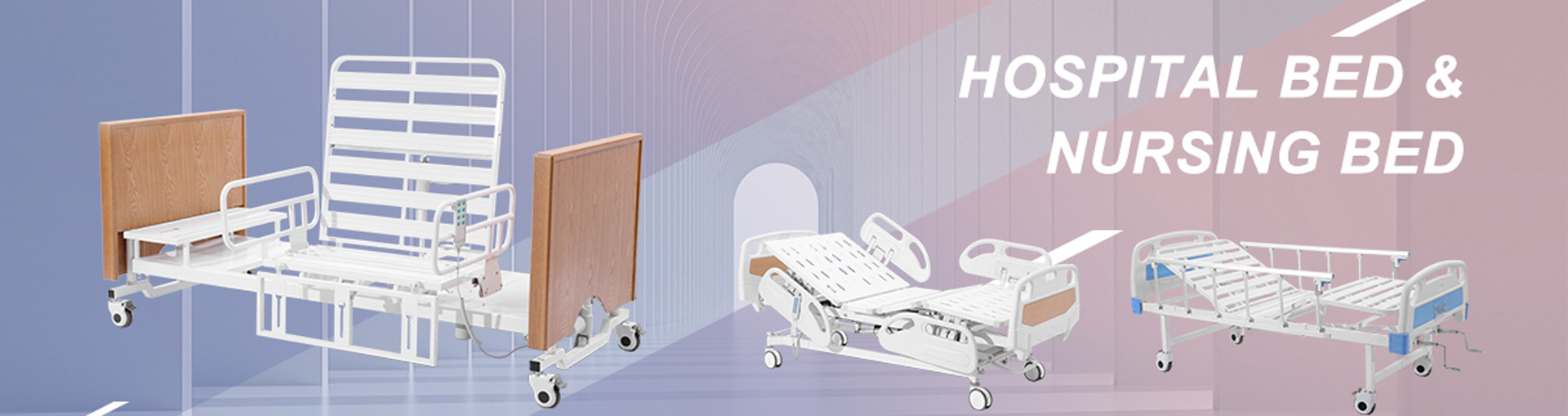
In the Intensive Care Unit (ICU) environment, the specialization of medical equipment directly impacts patient treatment efficiency and nursing quality. The ICU bed is the core component of all life support and daily care.
To meet highly complex nursing needs, modern critical care nursing has gradually developed multifunctional and highly intelligent beds, with the "seven-function ICU hospital bed" being one of the most representative types.
The seven-function ICU bed is specifically designed for critically ill patients, integrating positioning management, nursing assistance, patient safety, medical-nursing collaboration, and monitoring equipment support through seven core functions.
For high-intensity, fast-paced, and detail-oriented medical settings like the ICU, a scientifically designed and flexibly adjustable ICU bed not only improves nursing efficiency but also effectively reduces the risk of complications, providing patients with greater safety during stabilization and recovery.
The following will comprehensively analyze what a seven-function ICU hospital bed is from multiple perspectives, including definition, functional components, technical characteristics, and usage value.
What exactly does a seven-function ICU bed refer to?
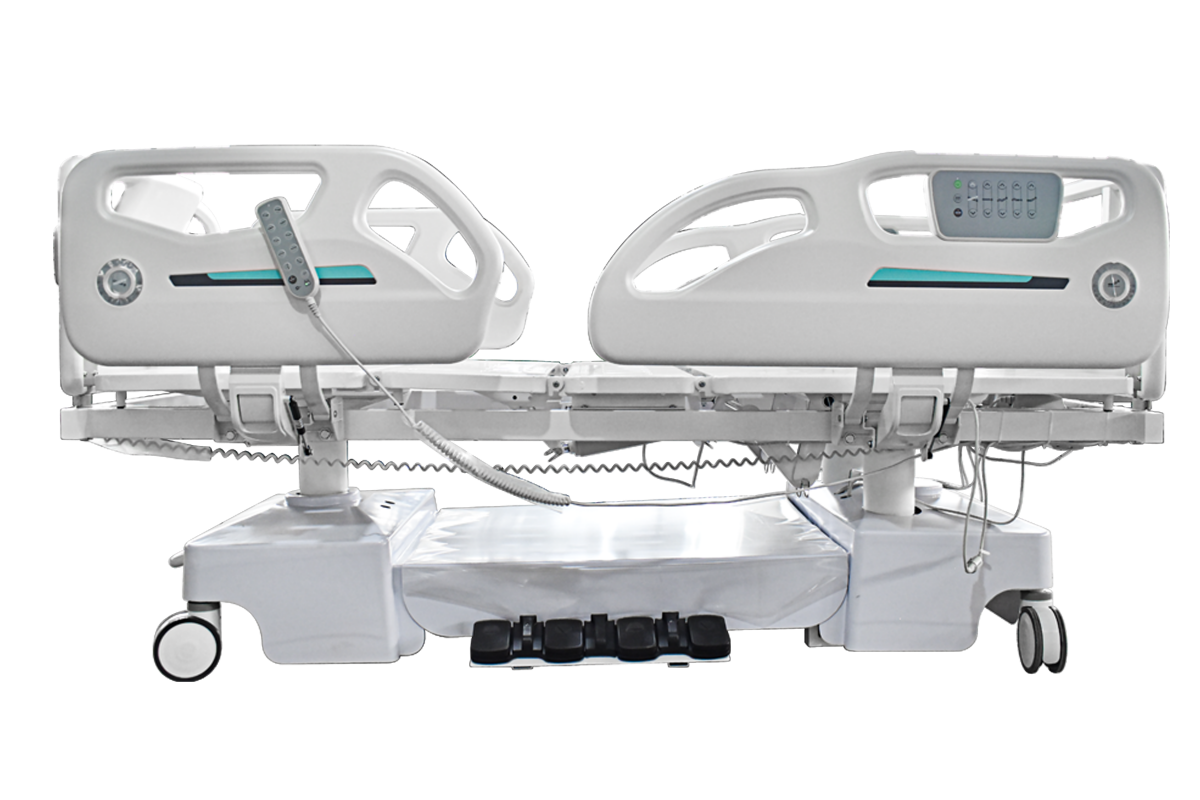
A seven-function ICU hospital bed is a medical bed with seven independently adjustable functions, designed for critical care settings. It differs from ordinary hospital beds and general electric beds, being specifically designed for patients with unstable vital signs, requiring continuous monitoring and frequent nursing interventions.
These seven core functions typically include:
1. Backrest height adjustment
2. Legrest height adjustment
3. Overall bed height adjustment
4. Lateral tilt function
5. Backrest-knee linkage function (Cavler position/Cardiac chair position)
6. Bed leveling adjustment (trending position/counter-trending position)
7. Manual CPR one-button reset function or electric quick reset function
While many manufacturers may use slightly different names, they are essentially based on these seven core adjustment functions suitable for ICU nursing needs.
Why does an ICU need a specially configured seven-function ICU bed?
Critically ill patients often experience respiratory distress, oxygen dependence, altered consciousness, and unstable vital signs, requiring frequent repositioning, suctioning, nebulization therapy, turning and back percussion, skin care, and multi-instrument monitoring. ICU beds play a crucial support role in these procedures.
Reasons for configuring seven-function ICU beds include:
1. Reducing the incidence of complications
• Pressure sores
• Lung infections
• Medical-related injuries
• Limb stiffness and joint contractures
Seven-function ICU hospital beds, with their tilting, height adjustment, and backrest adjustment functions, help patients reduce pressure, improve blood circulation, and reduce the harm caused by prolonged bed rest.
2. Improving nursing efficiency
ICU nurses have high workloads. If only ordinary beds are available, many procedures require multiple people working together, which is time-consuming and increases manpower pressure.
Seven-function ICU beds can complete most procedures through electric adjustment, improving process efficiency.
3. Meeting medical orders and treatment needs
Complex critical care treatment plans, such as sedation, extubation, ventilator weaning training, and early rehabilitation intervention, all require multiple positioning support. Seven-function ICU beds can meet these requirements.
4. Enhancing Patient Safety
ICU beds must be stable and safe, with designs to prevent falls, accidental movement, and emergency situations, adapting to the high-risk nature of critical care.
What are the seven functions of a seven-function ICU bed? What is the role of each function?
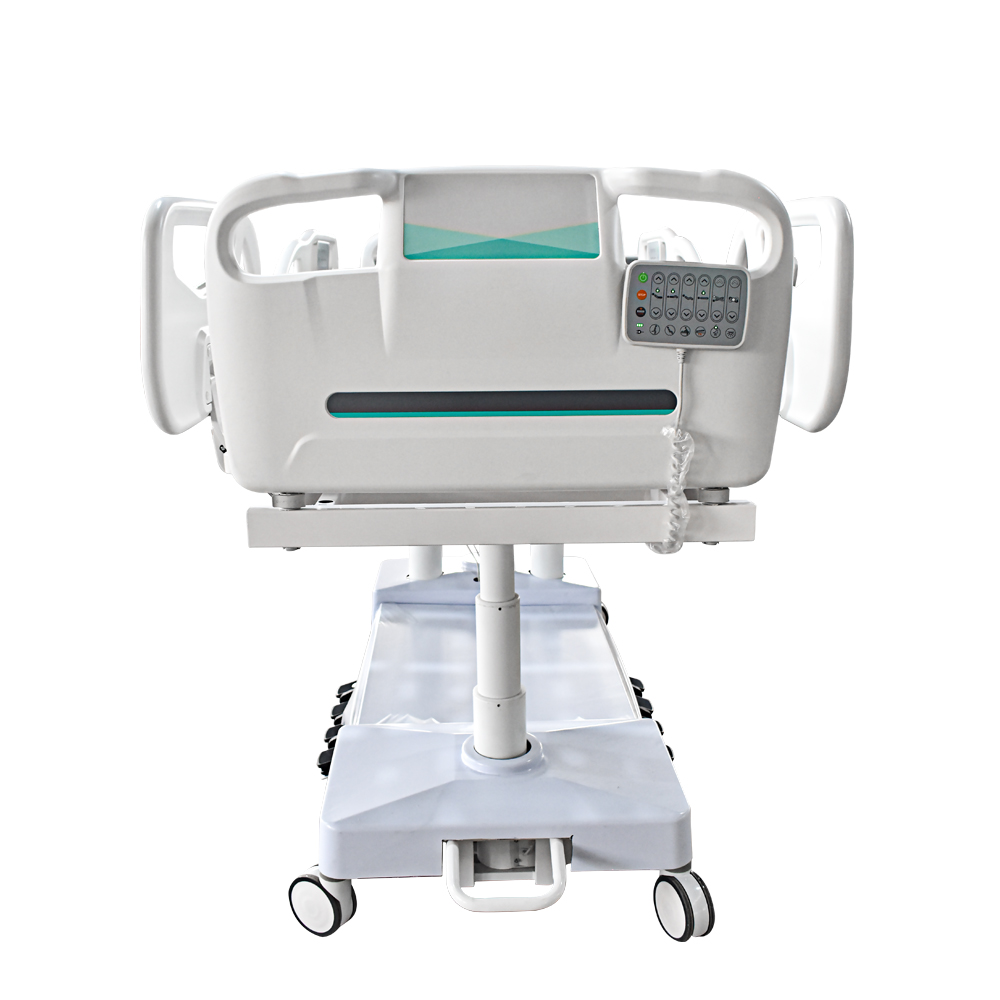
The following will analyze in detail the seven main functions of a seven-function ICU hospital bed and their corresponding value.
1. What is the significance of the backrest adjustment function for critically ill patients?
Backrest adjustment is one of the most commonly used functions of an ICU bed. Medical staff can adjust the specific angle according to ventilator settings, the patient's chest condition, and expectoration needs.
Key functions include:
• Helping patients with breathing difficulties to receive oxygen more easily
• Reducing the risk of aspiration
• Making it easier for patients to communicate and eat
• Facilitating respiratory therapy
• Reducing back pressure and improving comfort
In the ICU environment, even slight angle adjustments can affect a patient's oxygenation level; therefore, backrest adjustment is crucial to the quality of care.
2. How does legrest adjustment help patients?
Leg rests are primarily used to improve blood circulation and reduce the burden on the lower limbs.
Functional benefits include:
• Relieving lower limb swelling
• Reducing the risk of deep vein thrombosis
• Promoting blood return
• Alleviating joint discomfort caused by prolonged bed rest
For ICU patients with limited mobility, leg function adjustment helps them maintain a more natural blood circulation.
3. What is the special significance of full-bed height adjustment in ICU beds?
Full-bed height adjustment is not only for the convenience of nursing staff, but also an essential support in hospital medical procedures.
Purposes of full-bed height adjustment:
• Nursing staff can adjust the bed height according to their height and work habits, reducing back injuries
• Doctors can get closer to patients during rounds and procedures
• Facilitating the use of transport equipment or diagnostic instruments
• Enhancing patient safety and reducing the risk of falls
ICU beds typically have a greater range of height adjustment and a more stable structure.
4. Why must a seven-function ICU bed have lateral tilting?
The tilting function is usually one of the most important differentiating features of a seven-function ICU hospital bed.
The key benefits of lateral tilting include:
• Assisted turning
• Reduced nurse workload
• Reduced atelectasis and lung infections
• Increased sputum drainage
• Reduced body contact area, preventing pressure sores
• Assistance with cardiopulmonary rehabilitation training
ICU beds typically have a lateral tilt angle of ±12° or greater, precisely controllable to accommodate different patient needs.
5. Why is the Cardiac Chair suitable for ICU patients?
The Cardiac Chair, also known as the cardiac chair function, positions the patient in a semi-sitting position with bent knees.
Benefits:
• Stabilizes the chest, making breathing easier
• Reduces cardiac preload
• Improves lung ventilation
• Facilitates early mobilization for conscious patients
• Reduces back pressure from bed rest
This function is frequently used in patients with respiratory failure, heart disease, and postoperative recovery.
6. What are trend and counter-trend positions? Why are they essential for ICU beds?
The trend position is head-down, feet-up; the counter-trend position is head-up, feet-down.
A standard seven-function ICU hospital bed allows medical staff to precisely adjust these positions.
The trend position is primarily used for:
• Patients with poor venous return
• Some minimally invasive procedures require blood flow adjustment
• Assisting to improve perfusion when blood pressure is low
The counter-trend position is primarily used for:
• Traumatic brain injury, intracranial pressure management
• Postoperative recovery, respiratory therapy
• Reducing the risk of secondary brain injury
• Meeting cleaning and operating space requirements
This function is particularly crucial because ICU patients are often in unstable vital signs.
7. Why is the one-button CPR repositioning function indispensable in the ICU?
The CPR repositioning function is a critical function in a seven-function ICU bed directly related to life-saving emergency care.
When a patient suddenly experiences cardiac arrest, medical staff need to quickly level the bed surface to immediately begin cardiopulmonary resuscitation.
The value of this feature includes:
• Ensuring the bed surface returns to the optimal emergency angle within seconds
• Ensuring bed stability without affecting compression depth
• Improving emergency response efficiency
During the golden time for resuscitation, electric rapid reset can significantly increase the success rate.
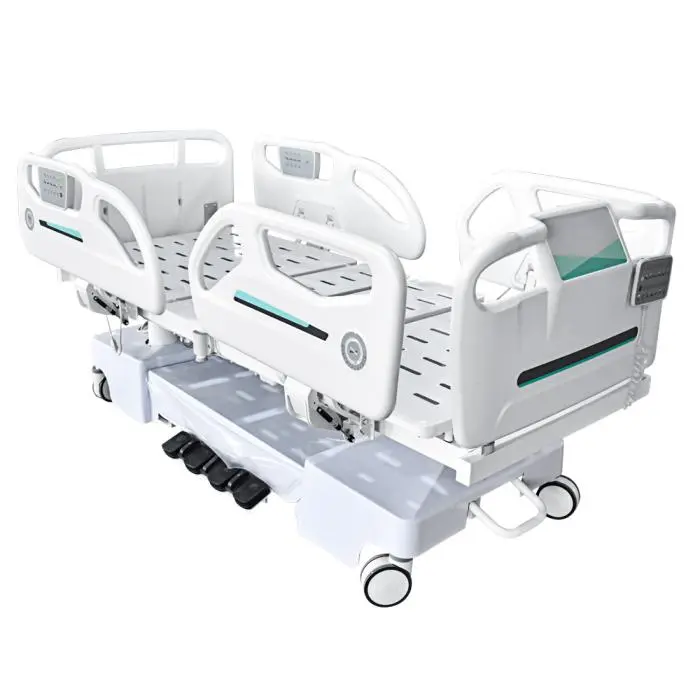
What are the technical features of a seven-function ICU bed?
In addition to the seven core functions, the seven-function ICU hospital bed also possesses a series of technical designs to adapt to the stringent requirements of the intensive care environment.
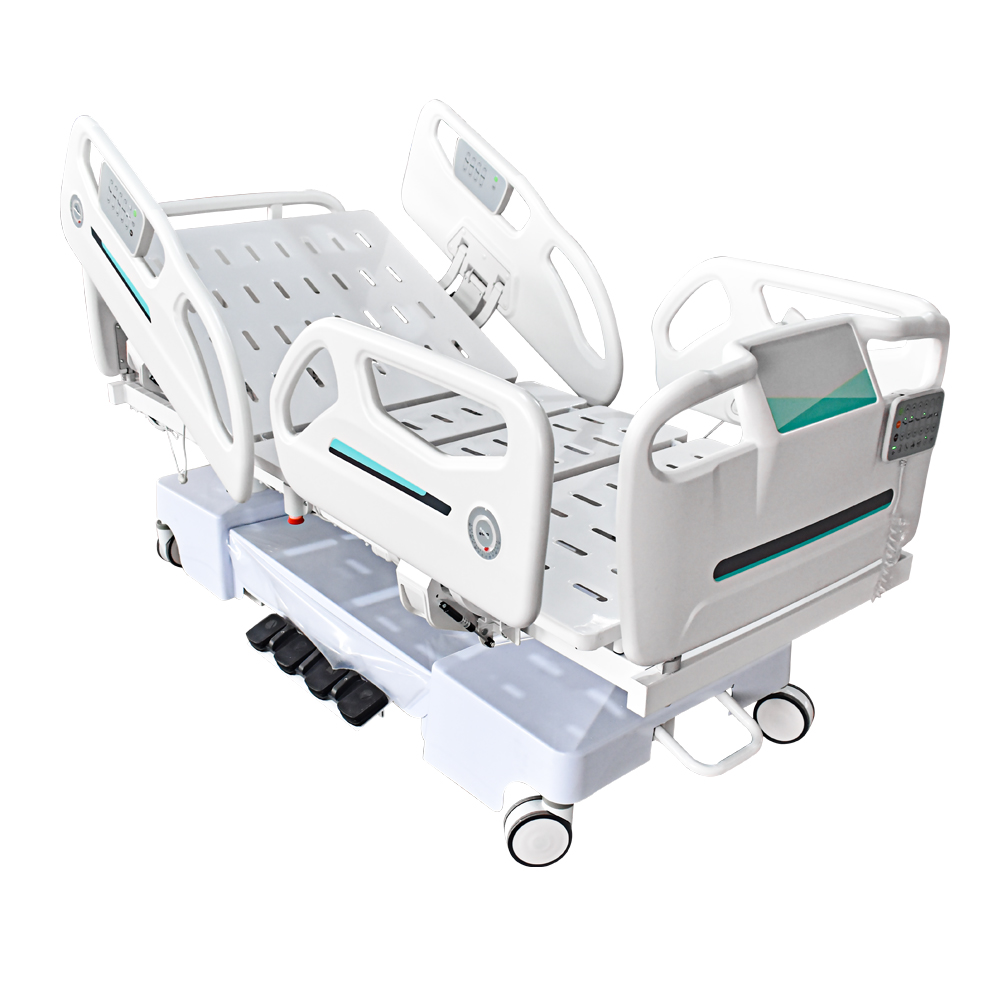
What are some common intelligent configurations of ICU beds?
• Electric control system
• Touch panel and dual bedside controls
• One-button position setting for caregivers
• Electronic screen displaying bed angle
• Bed weighing system (some models)
• Anti-pinch and anti-accidental touch protection mechanisms
• Wired or wireless alarm system
These intelligent designs make the ICU bed a "central hub" in the nursing process.
What are the special safety requirements for hospital beds in the ICU environment?
Seven-function ICU beds typically feature the following structural characteristics for safety:
• High-strength antibacterial bed frame
• Stable caster locking system
• Fall protection rails
• Multi-segment bed board design
• Waterproof and antibacterial bed surface
• Concealed electric push rod
• Wide range of stable load-bearing capacity
These features ensure the bed can withstand various instrument connections, assisted operations, and prolonged high-intensity use.
What role does a seven-function ICU bed play in daily care?
A professional seven-function ICU hospital bed is not simply an "adjustable bed," but a core platform participating in the patient's recovery process.
In daily care, it primarily plays the following roles:
1. Positioning Management Center
Providing appropriate positions for different conditions, including:
• Semi-sitting position
• Supine position
• Trending/counter-trending position
• Cardiac chair position
• Lateral tilt position
Positioning adjustment is one of the fundamental medical aspects of ICU care.
2. Nursing Assistance Platform
Reducing nurses' workload, improving nursing efficiency, and enhancing patient experience.
3. Medical Operation Support Platform
Examples:
• Endotracheal intubation
• Suctioning
• Vascular puncture
• Rehabilitation training
• Dressing changes, assessment
4. Monitoring Equipment Integration Platform
ICU beds are typically equipped with multiple interfaces for mounting:
• Ventilators
• Infusion stands
• ECG monitors
• Drainage bottles
• Infusion pumps/syringe pumps
This helps medical staff manage equipment wiring, avoiding tangles and accidents.
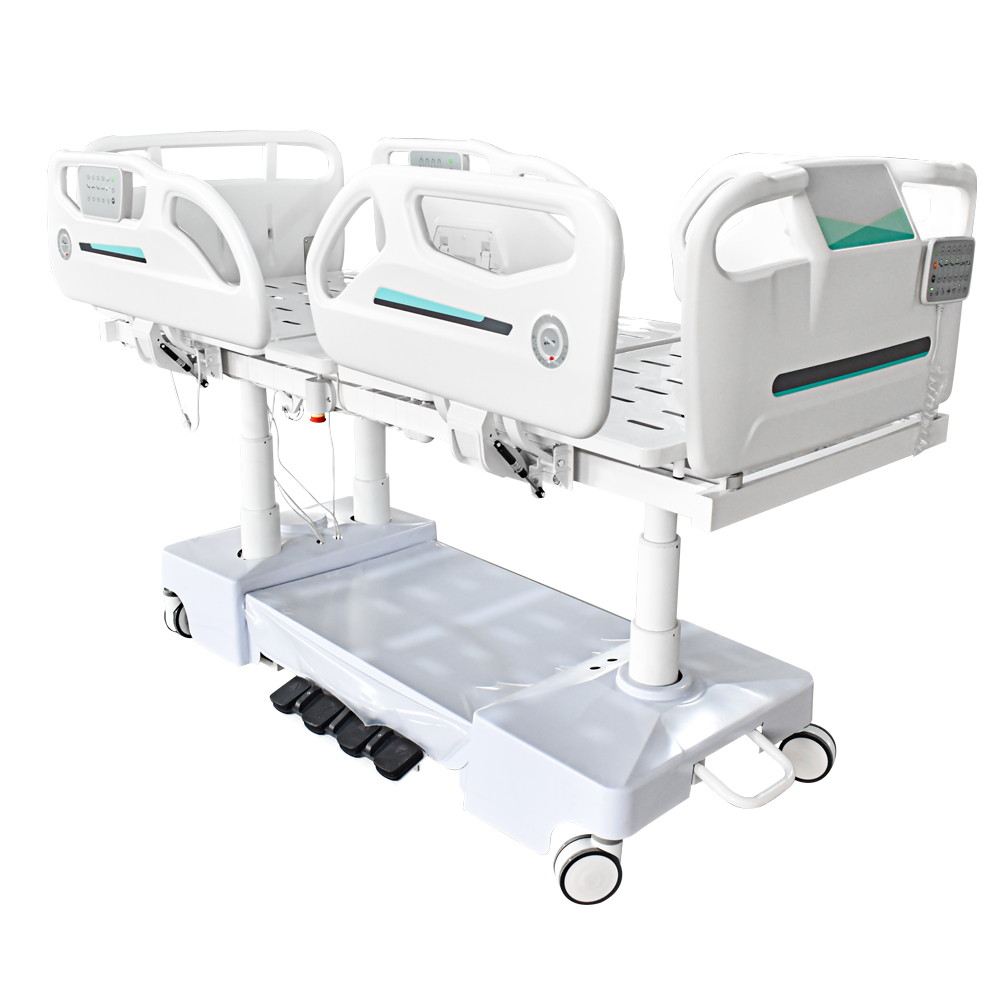
What are the differences between a seven-function ICU bed and a regular electric ICU bed?
Project Comparison | Seven-Function ICU Bed | Standard electric hospital bed |
| Usage Scenarios | Intensive Care Unit (ICU) | General ward |
| Number of Functions | 7 or More Core Functions | 3-5 basic functions |
| Tilt-over Function | Standard Configuration | Rarely equipped |
Level of Intelligence | High-End | Medium-level |
| Emergency Medical Services | One-Button CPR, Rapid Resuscitation | Generally without this function |
| Load Capacity | Even Higher | Medium-level |
Safety Structure | Reinforced Design | Standard structure |
| Suitable Patients | Critical Care | Generally for inpatients |
The differences are significant, therefore they are not interchangeable.
What is the value of a seven-function ICU bed in hospital operations?
From a hospital management perspective, the value of a seven-function ICU hospital bed lies in:
1. Improved nursing efficiency and reduced labor costs. Electrification reduces nurses' physical exertion, improving nursing efficiency.
2. Enhanced safety in the ICU environment. Reduces the risk of medical events.
3. Improve patient treatment outcomes and comfort
4. Standardize ICU management procedures
Positioning management is more controllable and stable.
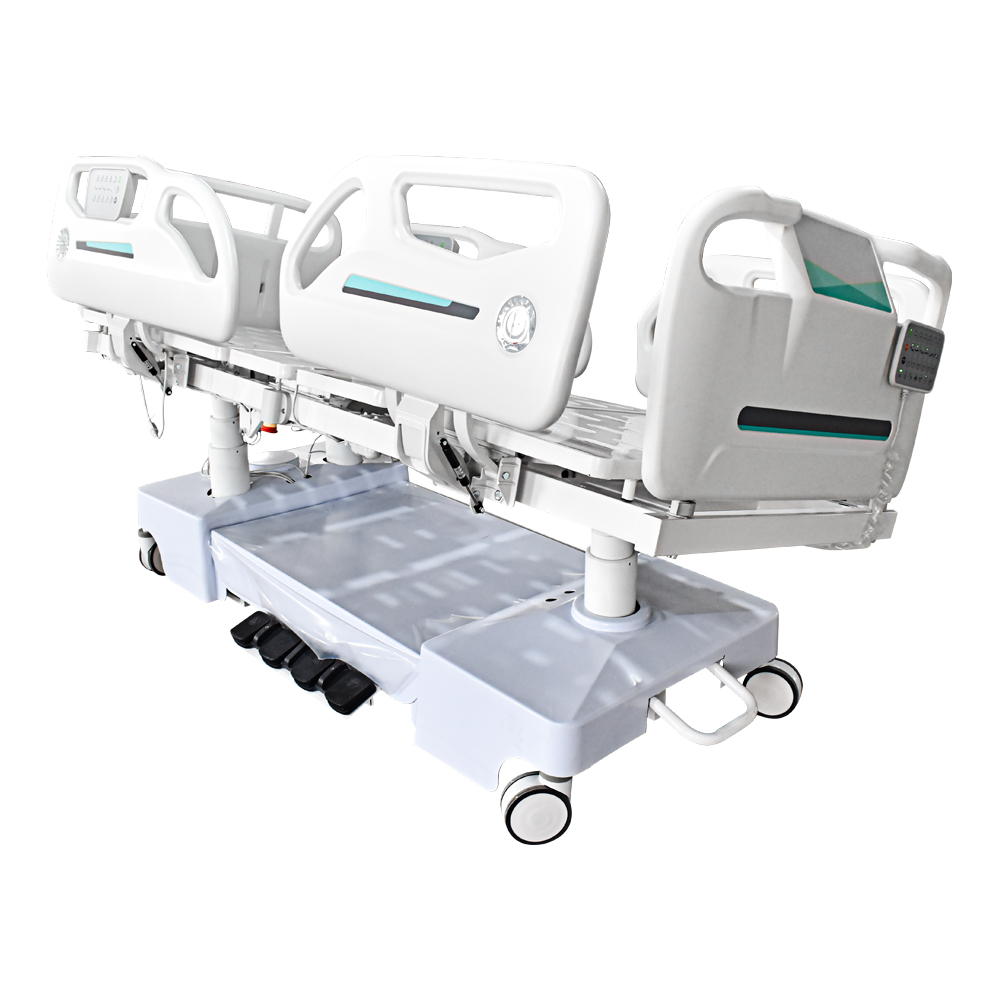
How to determine if an ICU bed is a "seven-function" type?
You can judge from the following points:
1. Does it have a tilt function?
2. Does it have trend/counter-trend position adjustment?
3. Are the backrest and legrests independently electrically adjustable?
4. Does it have a cardiac chair position (back and knee linkage)?
5. Does it have overall bed height adjustment?
6. Does it have a one-button CPR reset function?
7. Does it have seven or more functional actions?
Usually, the product manual will clearly indicate "seven-function ICU hospital bed".
Which patients are suitable for a seven-function ICU bed?
Including but not limited to:
• Respiratory failure
• Postoperative monitoring
• Neurological intensive care
• Cardiovascular disease
• Multiple injuries
• Septic shock
• Critically ill patients requiring long-term bed rest
ICU beds are designed for long-term monitoring and complex care.
What is the production capacity of Yikang Medical?
Yikang Medical is a large-scale manufacturer and supplier of hospital and rehabilitation equipment based in Foshan, China. Established in 2010, we started producing hardware and mechanical parts, then expanded in 2014 to hospital beds and wheelchairs. As an OEM factory for leading brands, we supply high-quality hospital beds, nursing beds, electric wheelchairs, manual wheelchairs, shower chairs, toilet chairs, walkers, and crutches worldwide. We also provide customized products to match specific requirements.