
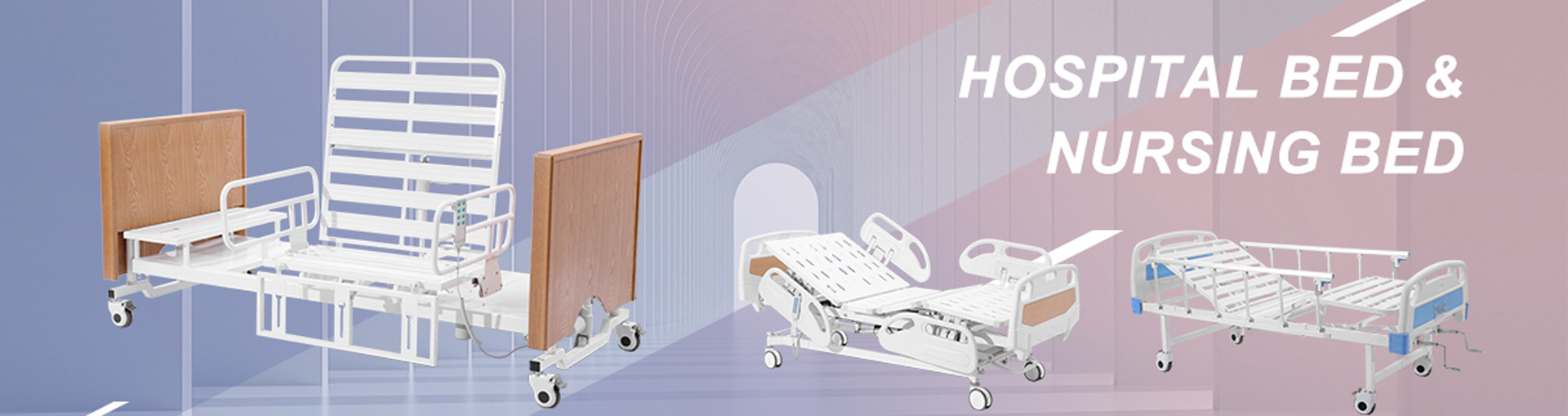
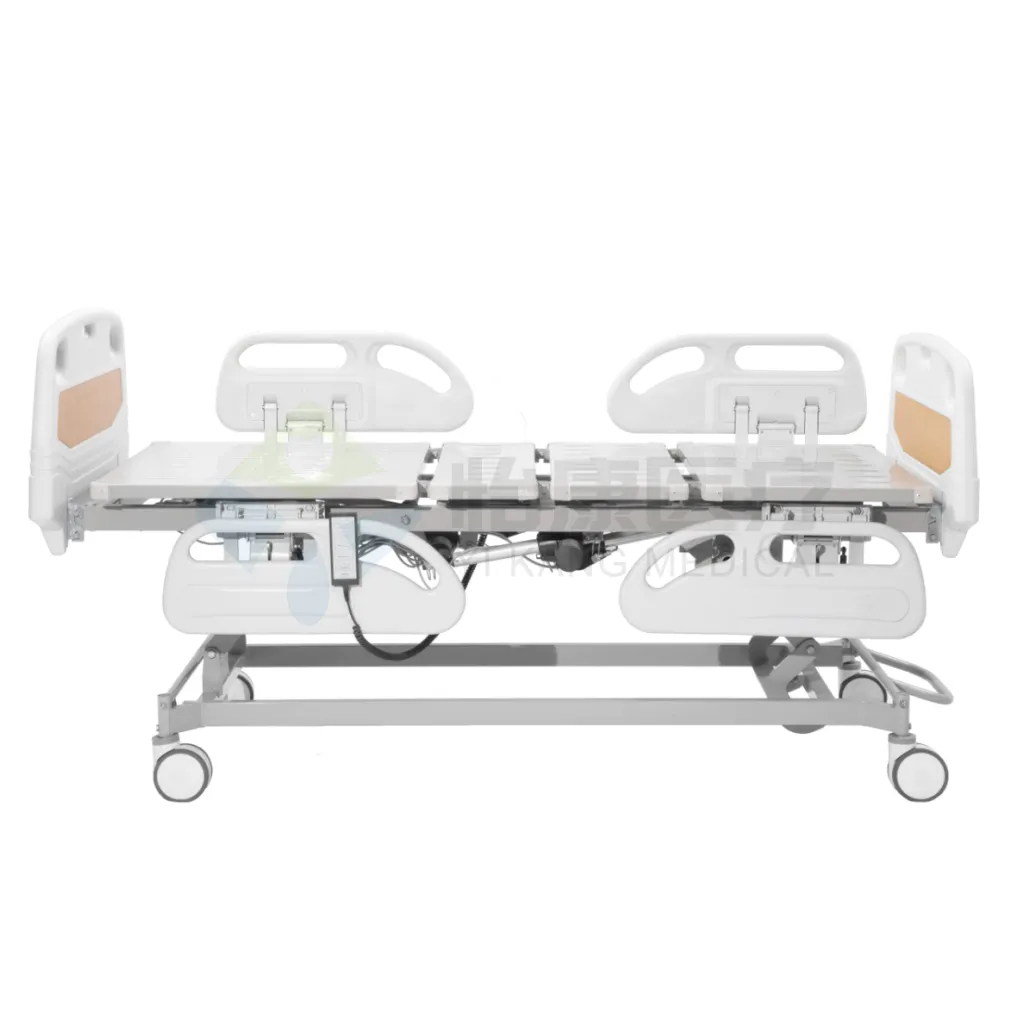
In a hospital intensive care unit (ICU), the ICU bed is the core equipment supporting the life management and nursing process for critically ill patients. One widely used type of product is the five-function ICU bed. It is an advanced medical bed with five basic electrically adjustable functions, specifically designed for intensive care, emergency intervention, position management, and multi-device collaboration.
The five-function ICU bed is crucial because critically ill patients are often unable to move independently, their vital signs fluctuate rapidly, and they require precise, stable, and continuous position control and monitoring interfaces. The five-function ICU bed is designed for this medical environment, and its functions constitute the most basic, commonly used, and critical bed adjustment mode in critical care.
This article will systematically explain what a five-function ICU bed is, what its five functions are, in which monitoring scenarios it is suitable, why ICUs must use this type of bed, and the differences between five-function and other types of ICU hospital beds.
What are the core functions of a five-function ICU bed?
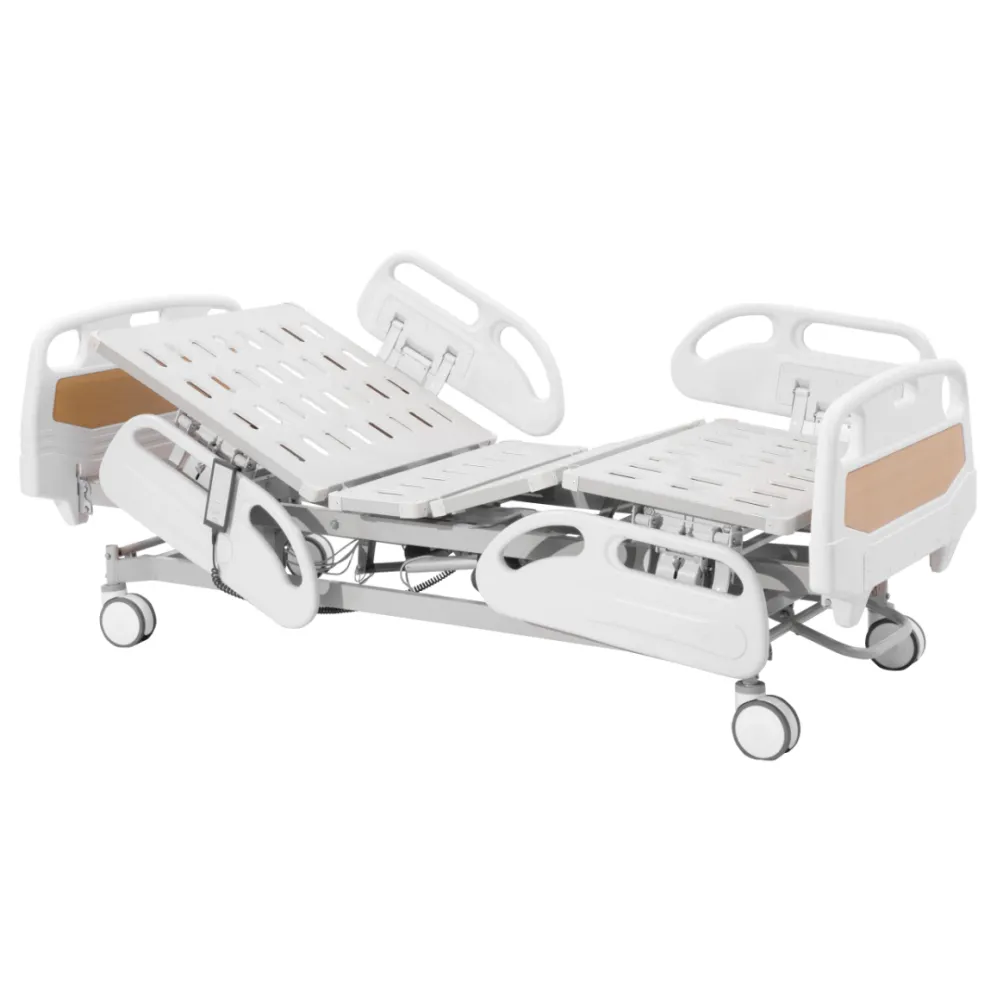
A "five-function ICU bed" refers to an ICU-specific bed with five basic electrically adjustable functions. Typically, these functions include:
1. Backrest height adjustment (electrically adjustable back angle)
2. Legrest height adjustment (electrically adjustable leg angle)
3. Overall height adjustment (adjustment of the entire bed height)
4. Bed tilt – Trend-Lomber position
5. Bed tilt – Anti-Trend-Lomber position
These five functions are frequently used adjustments in all ICU nursing scenarios and are fundamental for maintaining respiratory function, promoting blood circulation, preventing pressure sores, and assisting with nursing care in critically ill patients.
The significance and applicability of each of these five functions will be explained below.
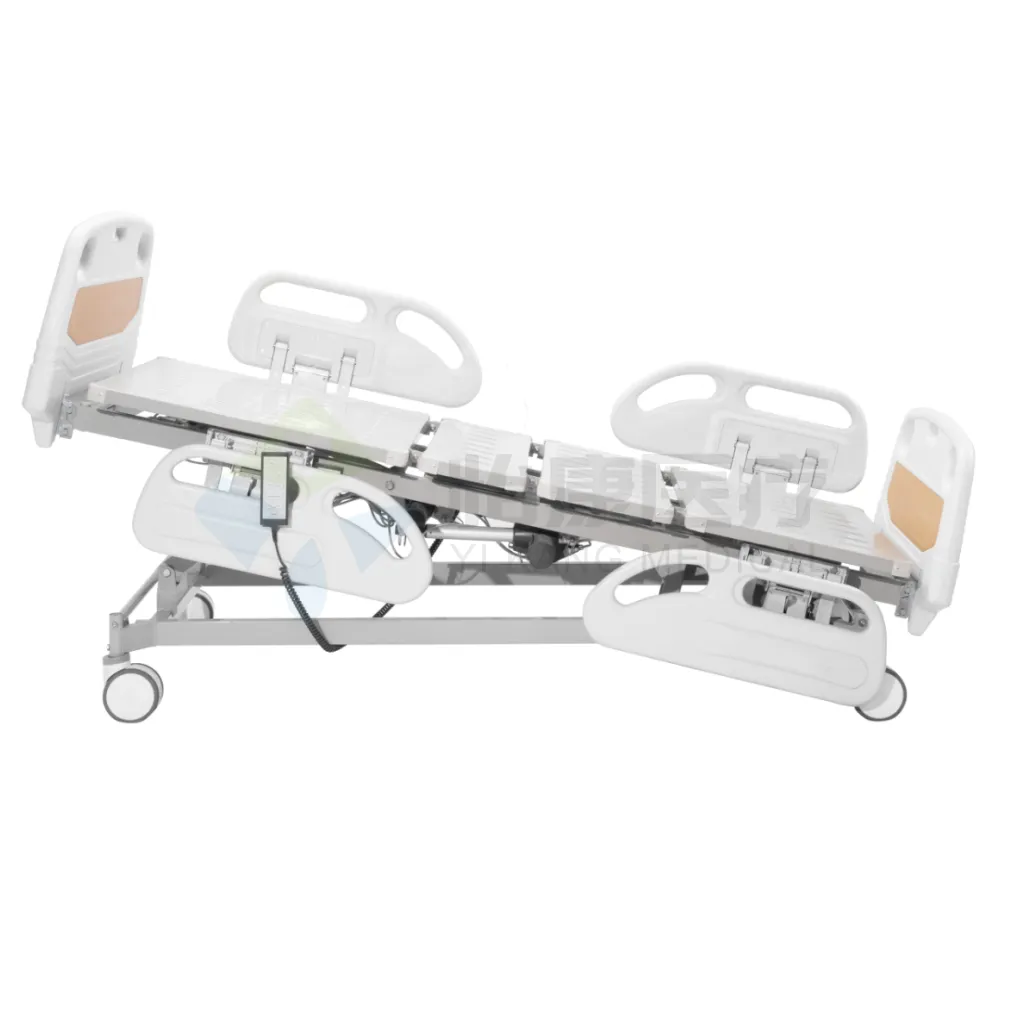
What are the functions of the five functions of a five-function ICU bed?
1. What is the function of the backrest height adjustment function?
Backrest height adjustment is one of the most critical functions of an ICU hospital bed, allowing patients to be adjusted from a supine position to a semi-recumbent or high-back position.
Functions include:
• Improved breathing and lung expansion
• Reduced cardiac workload
• Enhanced patient comfort
• Prevention of aspiration and reflux
• Facilitated eating and communication
• Facilitated nursing procedures such as suctioning, turning, and cleaning
In intensive care, the back angle is often between 30–45 degrees; therefore, a stable angle and electrically adjustable mechanism are crucial for a five-function ICU bed.
2. What is the significance of leg rest adjustment for patients?
The leg angle adjustment in a five-function ICU bed is used to:
• Improved lower limb blood return
• Reduced edema
• Reduced lumbar spine pressure
• Increased patient positional comfort
• Coordinated with back adjustment to create different nursing postures
Leg rest adjustment is also commonly used for specific postoperative or critical care patient positioning adjustments to help promote circulatory stability.
3. Why must a five-function ICU bed have an overall lifting function?
The overall height adjustment system allows ICU hospital beds to be adjusted to meet the needs of the medical team:
• Lowering the height: Facilitates patient safety when getting in and out of bed, reducing the risk of falls.
• Raising the height: Allows nurses or doctors to perform examinations, dressing changes, or nursing care at an ergonomic height.
• Avoiding fatigue caused by prolonged bending: The pace of work in the ICU is intense, and height adjustment is a crucial component of medical efficiency, thus it is listed as one of the five basic functions.
4. What is the function of the Trendel-Lomber position?
The Trendel-Lomber position, with the head lower than the feet, is a commonly used clinical position in the ICU.
Its functions include:
• Improving lower limb reflux in certain situations
• Assisting with shock management
• Providing circulatory support in certain situations
• Assisting with specific nursing procedures
• Providing a more favorable position for some acute treatments
Using this position requires stable bed surface control; therefore, ICU hospital beds must have an electric tilt function.
5. Why is the reverse Trendel-Lomber position important?
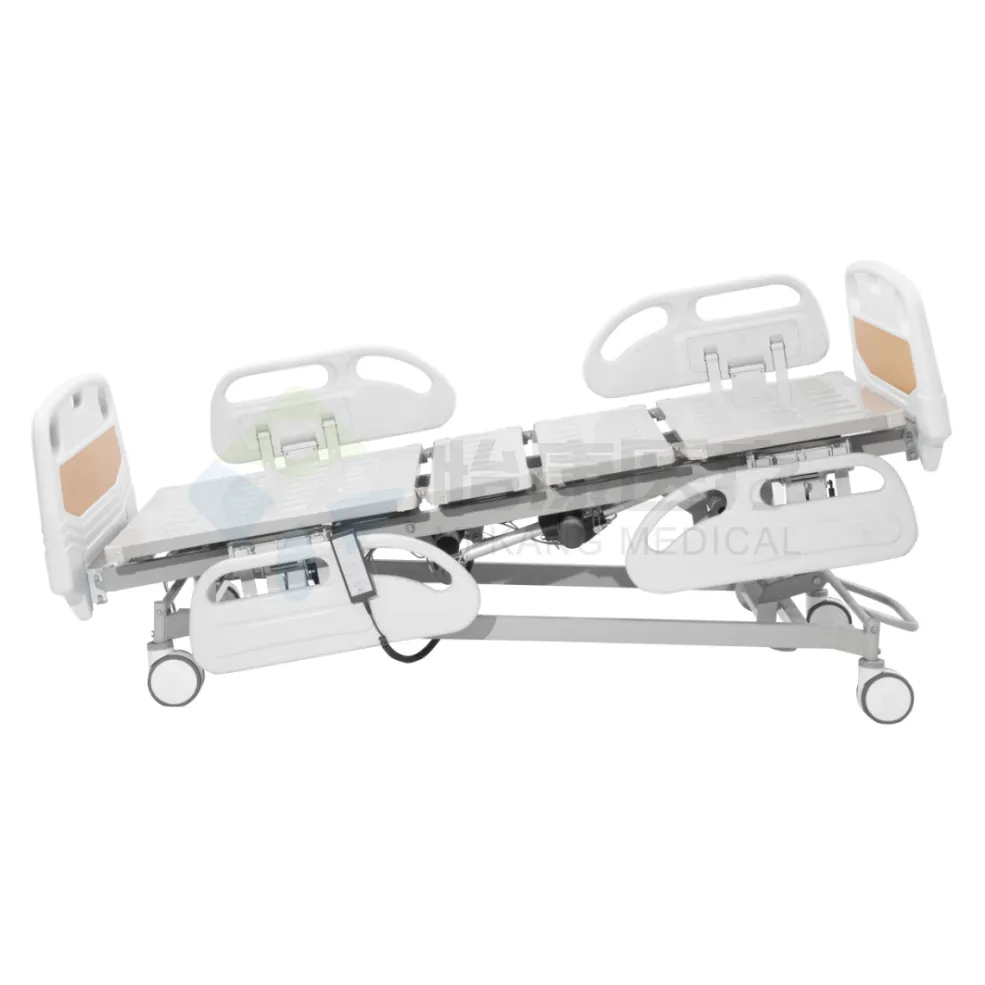
The reverse Trendel position (head-up, feet-down) is also an indispensable function of the five-function ICU bed.
Applications:
• Improves breathing
• Reduces gastric pressure
• Reduces the risk of aspiration
• Assists with patient gastrointestinal management
• Extremely frequently used in postoperative care
This position can reduce the respiratory burden on some critically ill patients; therefore, the stability and precision of this specific angle are crucial for ICU hospital beds.
What are the differences between a five-function ICU bed and other ordinary hospital beds?
The differences between a five-function ICU bed and an ordinary hospital bed are significant, mainly including:
1. Different number of functions and adjustment precision
• Ordinary hospital beds are usually mechanically adjustable or have only basic electric functions.
• ICU hospital beds must have at least the five core functions mentioned above, and the adjustments must be precise and stable.
2. Higher stability and load-bearing requirements
ICU hospital beds must withstand the additional weight of monitoring equipment, tubing, nursing procedures, etc.
3. Compatible with More Monitoring Equipment
They are typically equipped with:
• Monitor bracket
• Infusion pole interface
• Oxygen cylinder holder
• Additional bedside equipment mounting positions
4. Enhanced Safety Features
For example:
• Higher, more stable side rails
• Automatic locking system
• One-button supine position for emergency CPR
These are capabilities not found in ordinary hospital beds.
Why must intensive care units (ICUs) use five-function beds?
Is a five-function bed the minimum requirement for intensive care?
In most ICUs, a five-function ICU bed is standard. The reasons are as follows:
1. Critically ill patients cannot move on their own
Positioning adjustments are entirely dependent on the ICU hospital bed, not a regular hospital bed.
2. Vital signs fluctuate more rapidly
Different nursing angles can affect respiration, circulation, and neurological status; therefore, a five-function bed is essential.
3. Multi-device collaboration requires higher stability
For example:
• Ventilator
• ECG monitor
• Infusion pump
• Drainage device
The five-function ICU bed can maintain long-term stable operation in conjunction with these devices.
In which nursing scenarios is the five-function ICU bed suitable?
1. Patients requiring respiratory support
For those requiring semi-recumbent or elevated back positions to improve lung function.
2. Patients with circulatory instability
The five-function bed plays a crucial role when the Trendel-Lombard position or lower limb elevation is required.
3. Long-term bedridden patients
Leg and back elevation help reduce the incidence of pressure ulcers.
4. Postoperative monitoring
Positioning management is an important part of postoperative monitoring, and the five-function ICU hospital bed can provide precise electric adjustments.
5. Neurological monitoring
Some neurological patients require reverse Trendel-Lombard position management, which the five-function bed meets.
Does the five-function ICU bed fully meet the needs of the ICU?
Besides the five core functions, what additional features might an ICU hospital bed include?
While a "five-function ICU bed" is a basic configuration, common hospital ICU beds often also include:
• One-button CPR reset
• Extended bed surface
• Weighing system
• Electric tilting function
• Built-in control panel in the guardrail
• Central control system
These upgraded features are not included in the definition of "five functions," but are very common in modern ICU wards.
Is a five-function ICU bed suitable for all critically ill patients?
Generally speaking, a five-function ICU bed can meet most intensive care needs. However, its suitability for a particular patient depends on:
• Whether tilting care is required
• Whether a higher bed tilt angle is required
• Whether a special positioning is required
• Whether a higher level of respiratory or circulatory support is required
In other words, a five-function ICU bed is a basic choice for ICU use, but not all ICU situations require a five-function configuration.
What are the structural design characteristics of a five-function ICU bed?
A five-function ICU bed typically features the following structural elements:
1. High-strength bed frame
Capable of supporting multiple pieces of equipment and the patient's weight.
2. Multi-segment bed structure
Corresponding to the back, hips, thighs, and calves.
3. Electric push-rod system
For precise adjustment of the five functions.
4. Medical and nursing control panel
Centralized, safe, and intuitive operation.
5. Highly stable movement system
Equipped with locking casters for easy transfer and fixation.
These structural features ensure the long-term stable operation of the five-function ICU bed in intensive care.
What is a five-function ICU bed?
A five-function ICU bed is a high-level medical bed with five core functions: backrest lifting, legrest lifting, overall bed lifting, Trendel-Lombard position, and reverse Trendel-Lombard position. Used in intensive care environments, it is a basic and essential nursing device in the ICU.
Its significance lies in:
• Providing basic control over respiration, circulation, and body position
• Improving nursing efficiency and safety
• Being compatible with the monitoring equipment requirements of the ICU
• Providing stable body position management for critically ill patients
In summary: The five-function ICU hospital bed is the most important basic configuration in critical care and a key piece of equipment to ensure the safety and efficiency of ICU medical care.