
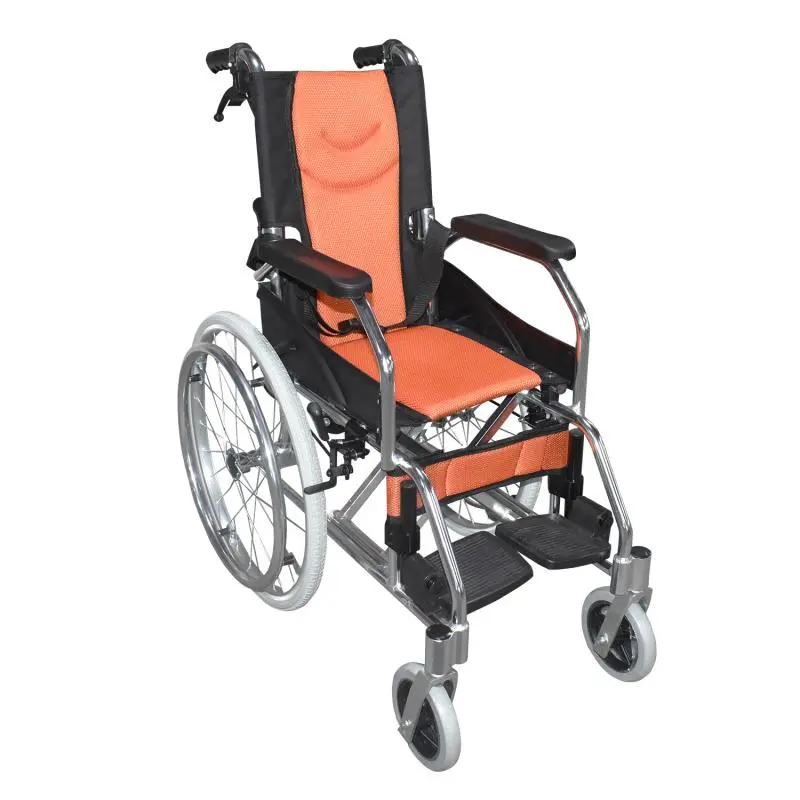
A children's wheelchair is an assistive mobile device specifically designed for children with mobility impairments or those requiring assisted mobility. Compared to regular adult wheelchairs, children's wheelchairs are specially optimized in structure, size, adjustment functions, and support methods to accommodate the characteristics of children's physical development, including smaller stature, lighter weight, incomplete spinal development, and uneven muscle strength development.
Because children's bodies are still growing, children's wheelchairs need to provide flexible adjustment space, allowing the seat width, seat depth, backrest height, and leg length to adapt or adjust to the child's individual differences and growth rate, thereby maintaining a stable, safe, and ergonomic sitting posture.
This article will systematically explain what a children's wheelchair is from multiple perspectives, allowing users to fully understand the essence and value of children's wheelchairs.
What is the difference between a children's wheelchair and a regular wheelchair?
Many parents, before encountering a children's wheelchair, often mistakenly believe that a children's wheelchair is simply a smaller version of an adult wheelchair. However, in reality, the differences between the two go far beyond size.
1. More Suitable for Children's Bone Development
Children's spines, pelvises, and lower limbs are still developing. Unstable wheelchair support can lead to poor posture and even long-term impacts on bone development.
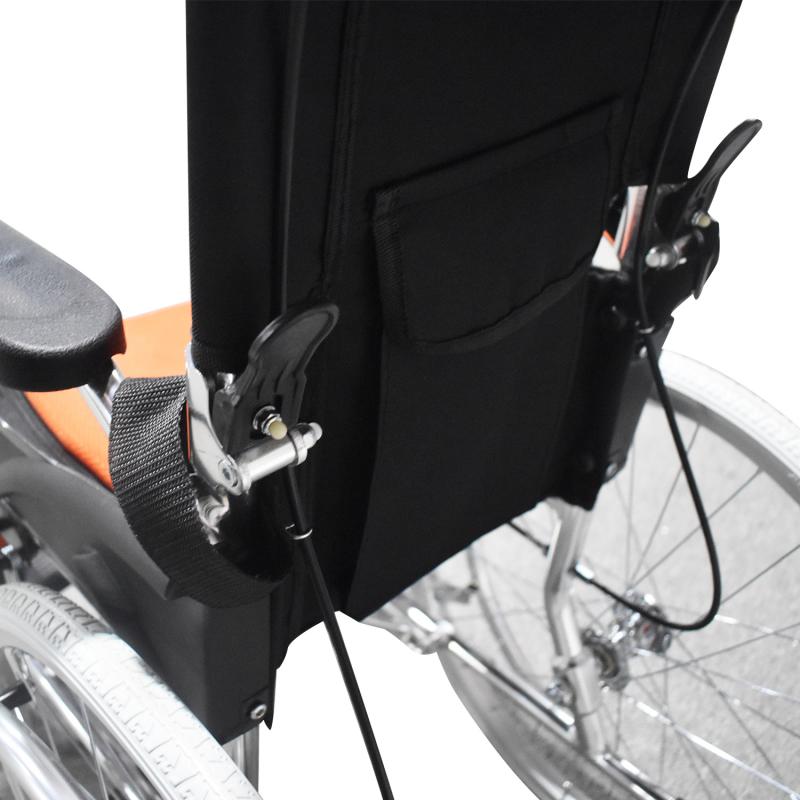
Children's wheelchairs are designed with this in mind, including adjustable back support, customizable cushions, and more scientifically designed seat depth and armrest height.
2. Wider Adjustment Range
Children's body shape changes significantly with age.
Therefore, children's wheelchairs must have:
• Adjustable leg rest length
• Adjustable seat depth
• Adjustable seat width
• Adjustable backrest height.
This structure covers multiple stages of a child's growth, extending the wheelchair's lifespan and making it more suitable for long-term use.
3. Lighter and More Controllable
Compared to adult wheelchairs, children's wheelchair frames are typically lighter, easier to push, and easier to operate, which benefits parents, caregivers, and children themselves.
4. Stricter Safety Requirements
Due to children's underdeveloped muscle strength and limited trunk control, children's wheelchairs typically require more comprehensive safety systems, such as:
• Five-point harness
• Anti-rollover wheels
• Additional lateral support pads
• A more stable frame structure. These designs minimize the risk of falls, tipping over, or slipping.
What are the core structural components of a children's wheelchair?
To help parents understand more clearly, the following are the main structural components and functions of a children's wheelchair:
1. Seat System
Including the seat cushion, seat width, and depth adjustment mechanism, used to support the child's hips and pelvis, maintaining correct posture.
2. Backrest System
Adjusting the backrest height is crucial for spinal protection; children's wheelchairs support precise adjustments based on trunk length.
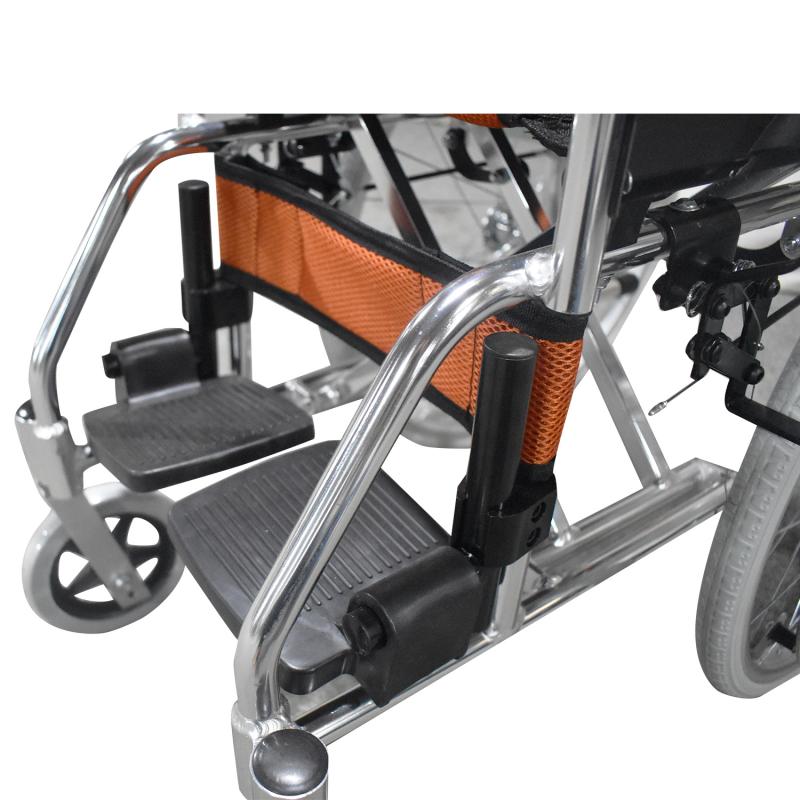
3. Leg Support and Footrests
The leg support length is adjustable, and the footrest angle is adjustable, helping to maintain natural lower limb posture.
4. Push Handles and Frame
The height of the push handles is usually also adjustable, making it easier for parents or caregivers to push the wheelchair.
5. Wheel System
Children's wheelchairs typically use lighter wheels and have more flexible steering capabilities, making them easier to use indoors and in school environments.
Who are children's wheelchairs primarily suitable for?
Children's wheelchairs are not designed for a specific condition but serve a variety of children with limited mobility or muscle strength, including but not limited to:
• Children with cerebral palsy
• Children with muscular dystrophy
• Children with spina bifida or spinal cord injury
• Children with lower limb musculoskeletal disorders
• Children whose developmental delays affect their mobility
• Children who require a long-term sitting support system
In any case, if a child has difficulty moving, needs a stable sitting posture, or requires mobility aids, a children's wheelchair can provide assistance.
How can the size of a children's wheelchair be adjusted?
This is one of the most important questions for parents, as children's wheelchairs must not only meet current needs but also adapt to growth.
The main adjustment methods for children's wheelchairs include:
1. Seat Width Adjustment
As a child's hips and thighs grow, the seat can be widened to maintain comfort and stability.
2. Seat Depth Adjustment
A seat that is too shallow can affect pelvic positioning, while one that is too deep can compress the legs. Therefore, children's wheelchairs allow for fine-tuning based on thigh length.
3. Backrest Height Adjustment
The backrest height can be adjusted as the spine grows, providing sufficient back support.
4. Leg Length Adjustment
The leg rest can be adjusted according to shinbone length, ensuring the footrest supports the feet and maintains a natural angle.
This comprehensive adjustability is one of the biggest differences between children's wheelchairs and adult wheelchairs.
Does a children's wheelchair need an additional support system?
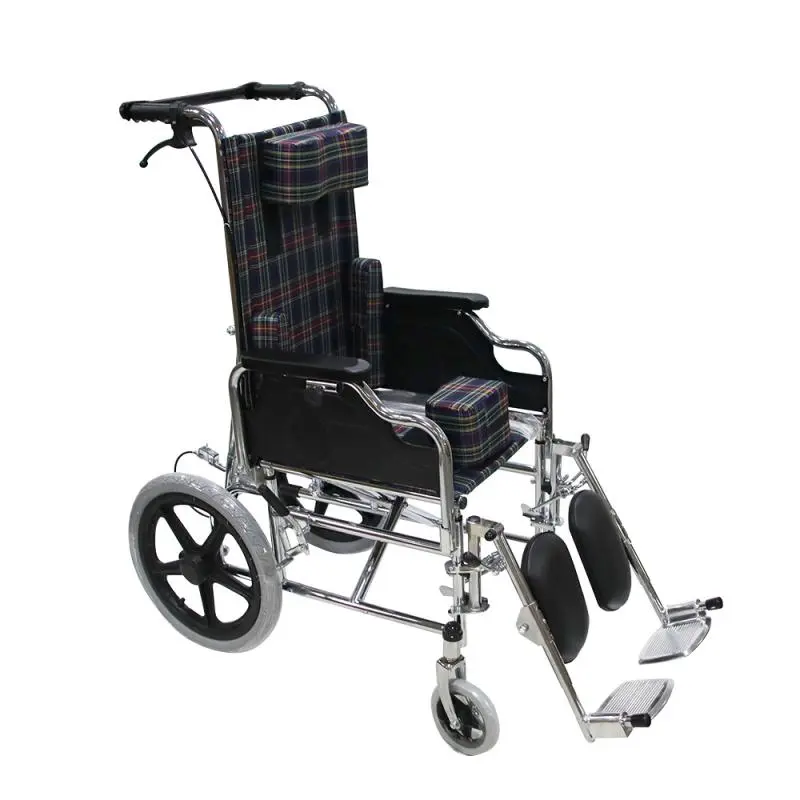
Most children require more precise trunk control support, so children's wheelchairs are often equipped with various external supports:
• Lateral support system
• Pelvic anchorage strap
• Five-point harness
• Headrest support
• Padded backrest or pressure-managed seat cushion
These support systems not only improve comfort but also ensure that children maintain a stable posture in the wheelchair, preventing tilting, slipping, or leaning backward.
Can children's wheelchairs help children maintain correct posture?
The answer is yes.
Due to insufficient muscle strength and the characteristics of spinal development, children are prone to the following problems when sitting for extended periods:
• Lateral bending
• Backward leaning
• Body twisting
• Pelvic rotation
The adjustable structure of children's wheelchairs is precisely designed to improve these problems, enabling children to maintain a stable and healthy sitting posture, which is beneficial for:
• Smooth breathing
• Normal digestion
• Reduced spinal pressure
• Improved concentration
• Increased participation in school and home environments
Therefore, a suitable children's wheelchair is not just a means of transportation, but also an important posture management device for children's daily lives.
What key parameters should be considered when choosing a children's wheelchair?
To maximize the wheelchair's functionality, parents should pay attention to the following core indicators when purchasing a children's wheelchair:
1. Seat width and depth
This must be assessed based on the child's current size and growth potential over the next few years.
2. Trunk support
Whether headrests, side supports, pelvic belts, etc., are needed.
3. Safety devices
Whether the anti-tipping wheels, braking system, and restraint straps are stable and reliable.
4. Frame Material and Weight
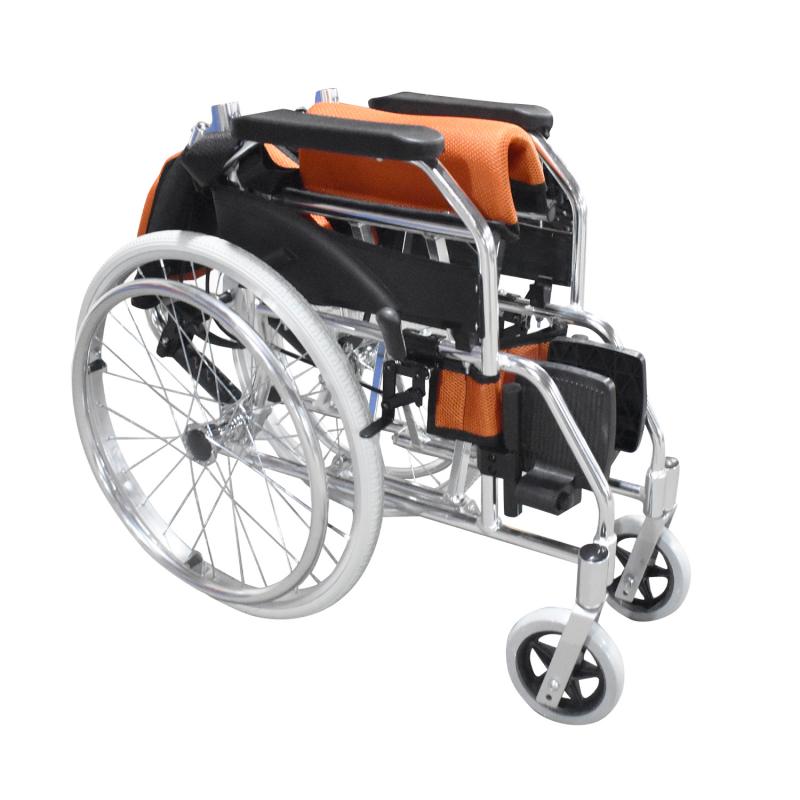
Is the frame lightweight, easy to fold, and portable?
5. Wheel Type
Is it suitable for indoor school environments? Is it easy to push and steer?
6. Adjustability Range
This is particularly important, determining whether the wheelchair can be used for a longer period as the child grows.
Does a Child Wheelchair Require Professional Assessment?
Children's wheelchairs are assistive medical devices, therefore, it is generally recommended that they be assessed by professional assessors such as rehabilitation therapists or posture management experts.
They will determine the most suitable wheelchair for the child based on:
• Muscle strength
• Postural stability
• Trunk control
• Lower limb strength
• Growth rate
• Mobility needs
What Types of Children's Wheelchairs Are There?
Children's wheelchairs are not a single type, but rather categorized according to usage scenarios and needs:
1. Push-type Children's Wheelchairs
Pushed by parents or caregivers.
2. Manually Driven Self-Propelled Children's Wheelchairs
Children can propel themselves using the large wheels.
3. Rehabilitation-type Children's Wheelchairs
These are more complex devices with a comprehensive posture correction system.
4. Lightweight Folding Children's Wheelchairs
Suitable for portability, commuting to and from school, or outings.
Each type has its own application scenario, but they all share common characteristics: adjustable structure, strong support, and high safety.
What types of products can Yikang Medical supply?
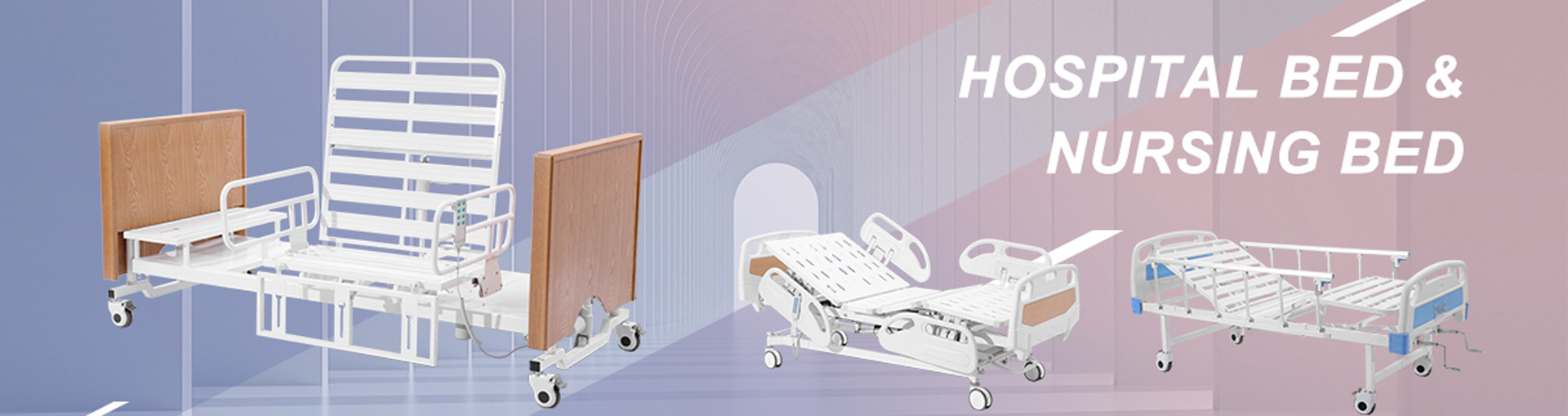
Foshan Yikang Medical Technology Co., Ltd. offers a wide range of hospital and rehabilitation equipment, including hospital beds, nursing beds, electric and manual wheelchairs, bath chairs, toilet chairs, walkers, and canes. We are a professional manufacturer and supplier from China, committed to producing high-quality equipment that meets international standards. Our factory supports customization, allowing clients to choose product configurations, colors, and additional features to suit specific needs.