
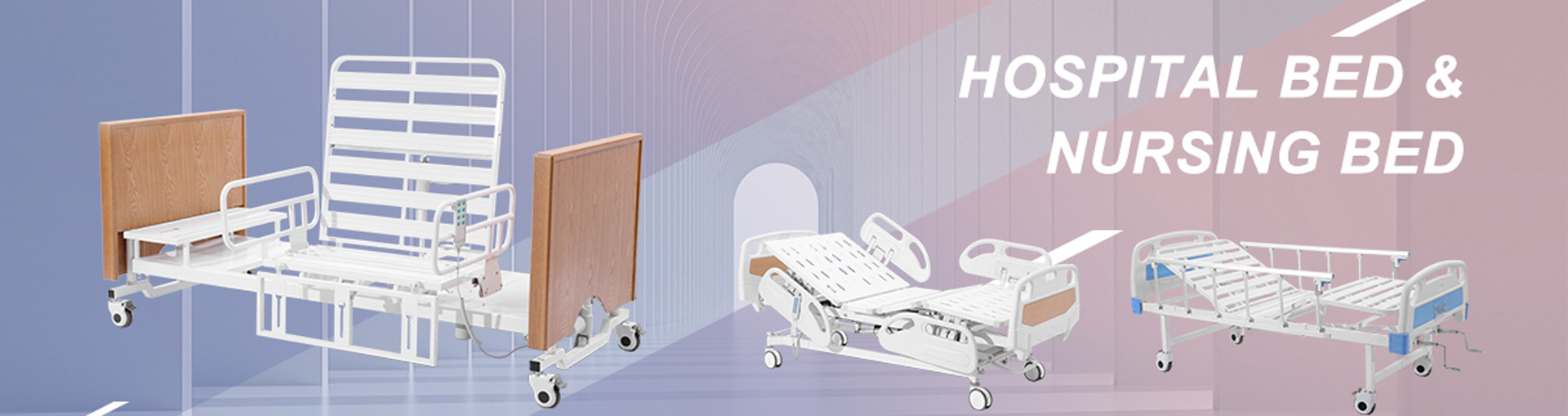
In hospitals, nursing homes, rehabilitation centers, and home care settings, adjustable hospital beds have become an increasingly common piece of care equipment. Compared to traditional fixed beds, adjustable hospital beds utilize electric or mechanical mechanisms to allow for multi-angle adjustments—such as raising the backrest, elevating the legs, or adjusting the overall height—thereby helping patients change their posture and making nursing tasks more convenient.
For many users, the greatest advantage of these beds lies in their "adjustability."
For example:
•When semi-reclined rest is required, the angle of the hospital bed's backrest can be adjusted.
•When assisting with patient transfers, the hospital bed's height can be adjusted.
•When relieving pressure on the lower limbs, the position of the leg section can be adjusted.
These features transform the hospital bed from a mere static piece of furniture into an integral component of the caregiving system.
However, this also raises a practical concern:
What happens to the hospital bed if the power goes out?
This is a question that weighs on the minds of many users when purchasing and using these beds.
Particularly in home care environments, a power outage often triggers a host of anxieties:
•Will the bed suddenly collapse?
•Will the bed automatically lower itself?
•Will the bed get stuck in a specific position, unable to return to a neutral state?
•Will the patient become trapped in the bed?
These concerns are not without merit.
Since adjustable hospital beds rely on electric power for operation, a loss of power supply will indeed alter the bed's functional status.
However, whether or not the bed "gets stuck"—and how it actually behaves during a power outage—depends largely on the bed's structural design and its power supply architecture.
Therefore, discussing what happens to an adjustable hospital bed during a power outage is, fundamentally, an exercise in understanding the bed's underlying operational logic.
Why Do Adjustable Hospital Beds Rely on Electricity?
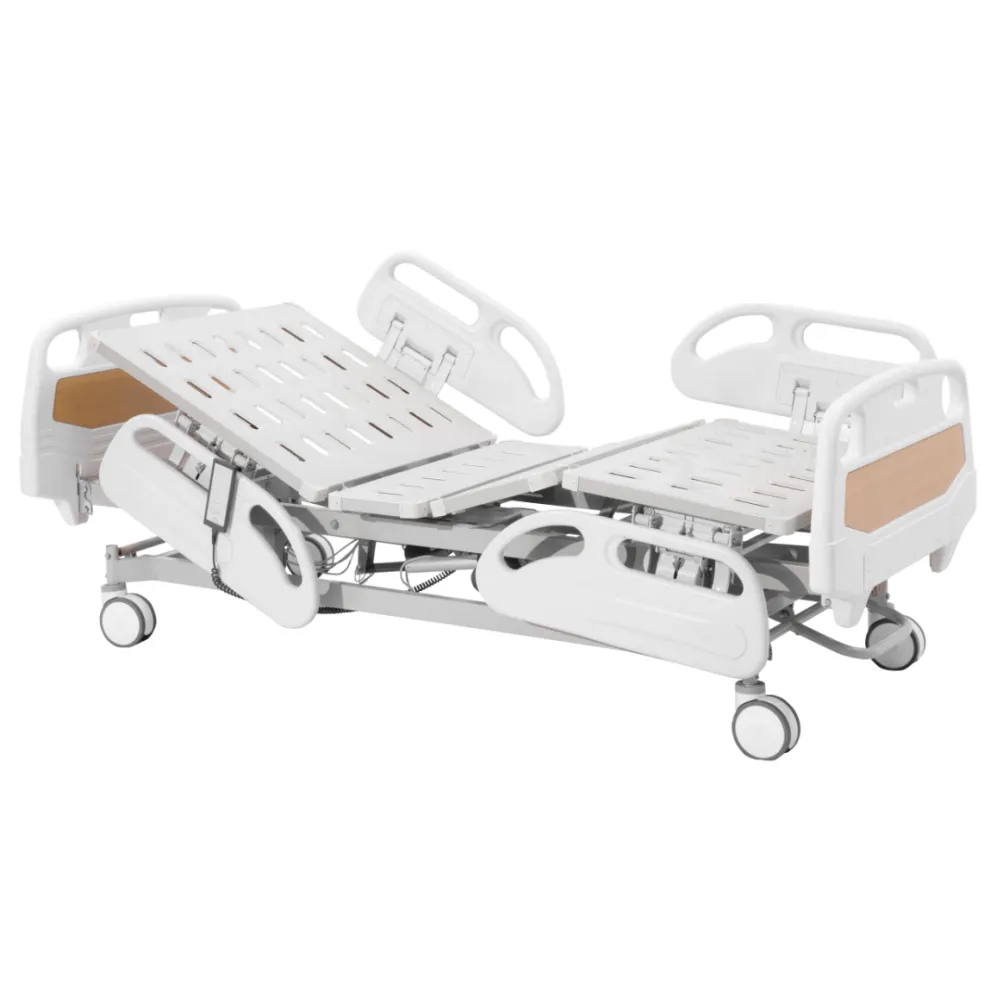
Modern adjustable hospital beds are typically driven by electric motors.
Common functions include:
•Raising and lowering the backrest
•Raising and lowering the leg section
•Adjusting the overall height of the hospital bed
•Switching between different postural configurations
These movements require a mechanical drive system to execute.
The common components of a hospital bed include:
•Electric motors
•Control unit
•Power supply module
•Remote control
•Mechanical linkage system
For example, when a user presses the "Back Up" button on the bed's remote control:
1.The control unit receives the command.
2.The motor activates.
3.The linear actuator extends or retracts.
4.The backrest lifts up.
This entire process relies on electrical power.
Therefore, in the event of a power outage:
•The motors lose their power supply.
•The control system ceases to function.
The hospital bed's ability to actively adjust its position typically stops immediately.
This is the most direct consequence of a power outage for a hospital bed.
Hospital Beds Typically Do Not Suddenly Collapse During a Power Outage
A primary concern for many people is:
Will the hospital bed suddenly drop or give way during a power outage?
For instance:
•The backrest suddenly flattening out.
•The entire bed suddenly lowering.
•The patient's posture suddenly shifting.
Under normal design standards, such scenarios typically do not occur.
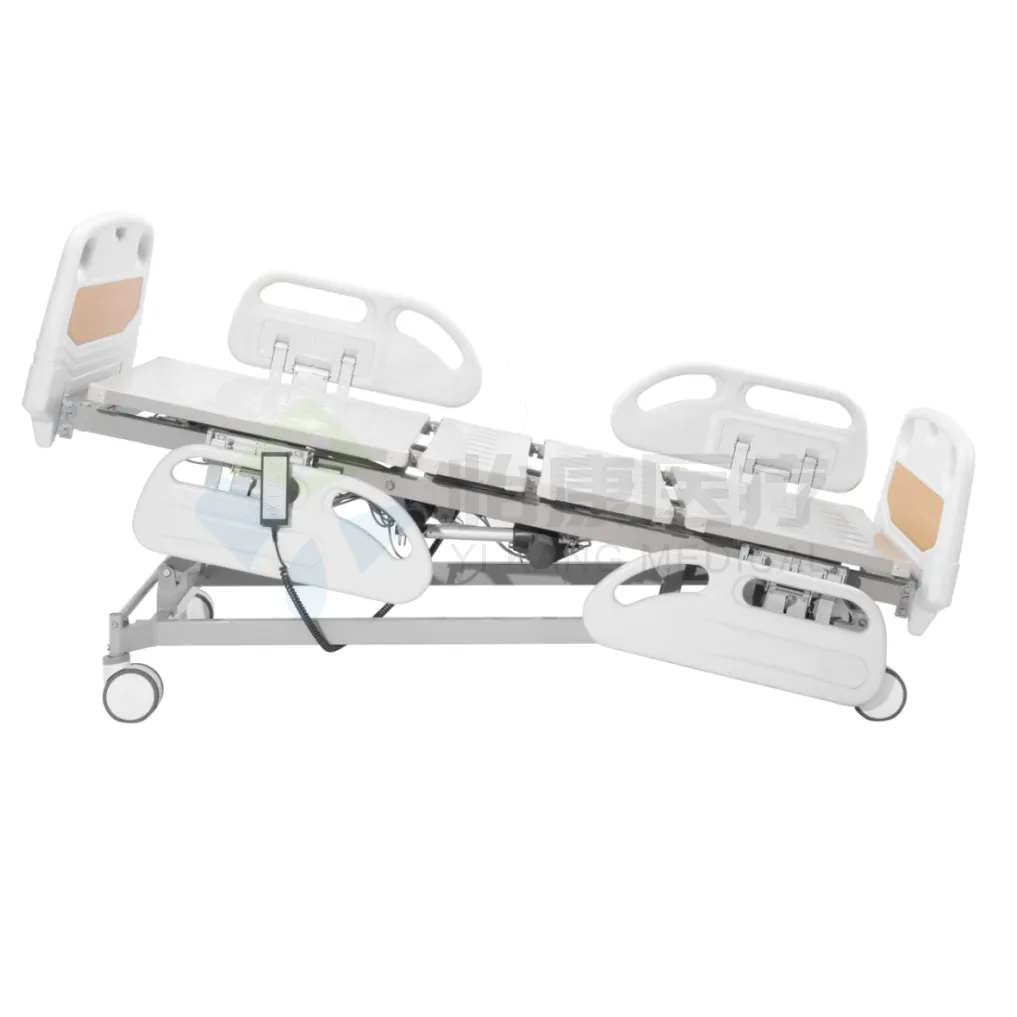
The reason is that most adjustable hospital beds employ a self-locking mechanism.
This means that even if the motors lose power, the bed's current position is generally maintained.
For example:
•If the backrest is raised to a 45° angle...
•It will typically remain at approximately 45° after a power outage.
It will not automatically lower simply because the power has been cut.
The primary reasons for this include:
1. Self-Locking Linear Actuators
Many hospital beds utilize linear actuators.
These actuators typically possess internal mechanical locking properties.
Once power is cut, they cannot freely retract.
2. Gear Reduction Mechanisms
Some hospital beds incorporate a gear reduction system.
When power is lost, this mechanism remains stationary.
Consequently, during a power outage, the hospital bed typically:
Ceases movement, but maintains its current position.
Therefore, the hospital bed generally will not suddenly collapse.
Hospital Beds Typically Cannot Be Adjusted During a Power Outage
While a hospital bed typically will not collapse, a more practical issue arises:
The bed may be unable to perform any further adjustments.
For instance:
•It cannot be raised further.
•It cannot be lowered further.
•It cannot be flattened out.
•The angles of the backrest or leg section cannot be adjusted.
This is the most typical impact of a power outage,
as the bed's active functions are dependent on a power supply.
For example:
A user wishes to return the hospital bed from a semi-reclined position to a completely flat position.
However, following a power outage:
•The buttons on the remote control become unresponsive.
•The motors fail to respond.
In this scenario, the hospital bed may remain locked in its current position.
From the user's perspective, this is commonly described as:
"The bed is stuck."
Strictly speaking, the hospital bed is not mechanically jammed; rather, it has lost its motive power.
Whether the Bed "Gets Stuck" Depends on Its Position Prior to the Outage
Whether a power outage causes actual inconvenience depends heavily on the bed's current position.
For example:
Scenario 1: The Bed Is in a Flat (Supine) Position
If the hospital bed is lying flat at the moment the power goes out:
The impact is typically minimal.
This is because:
•The patient can still rest normally.
Although the hospital bed cannot be adjusted at this time, this does not necessarily pose a significant problem.
Scenario 2: The Bed Is in a Semi-Reclined Position
For example:
•The backrest is elevated to 50 degrees.
If the hospital bed cannot be lowered back to a flat position after the outage, the patient may be forced to remain in a semi-reclined posture.
If the power outage is brief, this inconvenience is usually tolerable.
However, during prolonged outages, patient comfort will be compromised.
Scenario 3: The Bed Is in a High Position
For example, after nursing care has been administered, the hospital bed height has been raised to over 70 cm.
If the bed cannot be lowered following the outage:
•Getting in and out of the bed becomes more difficult.
•The risk of falling increases.
Therefore, the inherent risk associated with a power outage is fundamentally linked to the bed's specific configuration (posture) at the time.
Beds Equipped with Backup Batteries Are Less Affected by Power Outages
Some hospital beds are designed with a built-in backup power supply.
This feature is commonly found in:
•Hospital beds (clinical settings)
•High-end nursing beds
These types of beds are typically equipped with:
•An internal backup battery
or
•A separate battery module
When a power outage occurs, the hospital bed can switch over to its backup power source.
Consequently, it remains capable of performing a limited range of movements.
For example:
•Lowering the bed back to a flat position
•Reducing the bed's overall height
This design is primarily intended for use in emergency situations.
For example:
•Transferring a patient during a power outage
•Making urgent postural adjustments
Therefore, the presence—or absence—of a backup battery constitutes a critical distinction regarding a hospital bed's resilience in the event of a power failure.
Home-Use Hospital Beds Do Not Necessarily Come Standard with Backup Power
Many families mistakenly assume that all hospital-style hospital beds come equipped with a backup battery as a standard feature.
In reality, this is not the case.
To keep costs down, some home-use hospital beds do not include a backup power supply as part of their standard configuration.
Consequently, a power outage typically results in the following:
•Suspension of functions
•Retention of the current position
For this type of bed, the behavior during a power outage more closely resembles a "frozen state."
Therefore, when using a medical bed in a home setting, it is worth verifying in advance whether it is equipped with a backup battery.
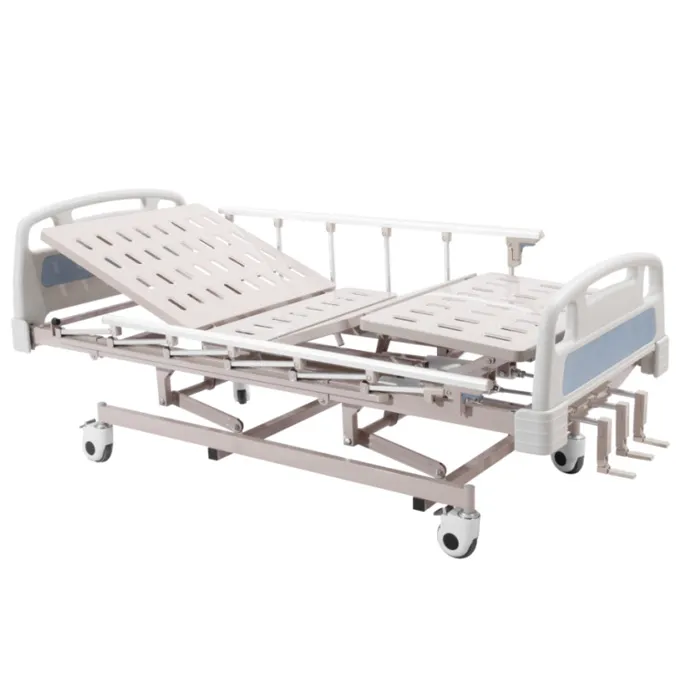
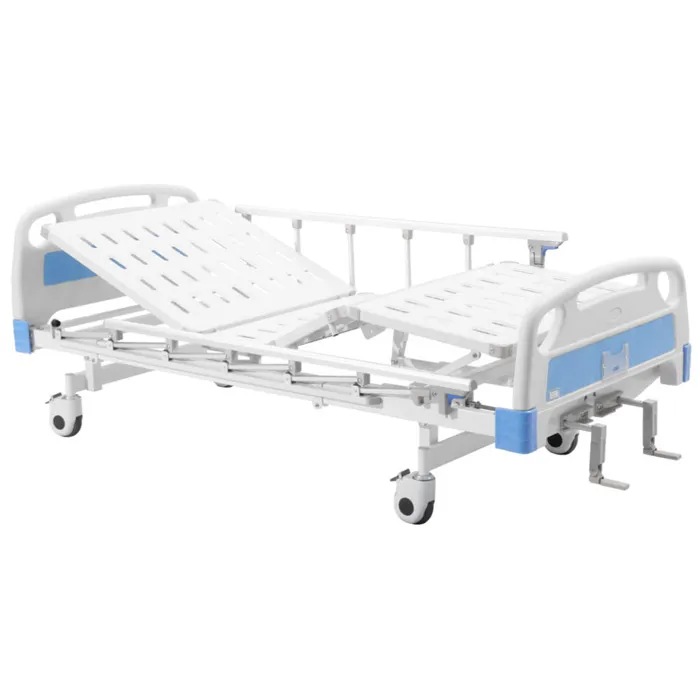
Some medical beds support manual emergency lowering.
Certain beds offer mechanical emergency features.
For example:
•Manual release mechanisms
•Emergency hand cranks
These are used to adjust the bed's position in the event of a power outage.
Common applications include:
•Flattening the bed
•Lowering the bed's height
Although the operational efficiency is not on par with electric controls, these features are critically important during a power outage scenario.
This is particularly true for:
•Beds with height adjustment capabilities
Consequently, high-end medical beds typically incorporate such emergency mechanisms into their design.
The Most Common Issue During a Power Outage: An Inability to Change Position, Not a Malfunction
When encountering a power outage for the first time, many users mistakenly assume that the medical bed has broken down.
For example:
•Pressing the remote control yields no response
However, this is typically not a malfunction of the bed itself.
Rather, it is the normal response to a power outage.
The structural integrity of the bed itself may remain completely intact.
It is simply a matter of:
•A lack of power supply
Therefore, the most common issue encountered with a medical bed during a power outage is not physical damage, but rather:
•The inability to alter the current position
Essentially, this is an issue stemming from an interruption in the power supply.
The Impact of Prolonged Power Outages on Bed Usage Is More Significant
Short-duration power outages typically present limited issues.
For instance, outages lasting from a few minutes to a few tens of minutes.
In such cases, it is usually sufficient for the hospital bed to simply maintain its current position.
However, prolonged power outages have a much greater impact.
For example:
•Inability to assist with turning over
•Inability to adjust the backrest angle for sitting up
•Inability to lower the bed's height
For individuals who are highly dependent on the bed's functions, the impact is particularly pronounced.
For example:
•Patients who are bedridden for the long term
•Patients who experience difficulty sitting up
Consequently, in high-dependency care settings, medical beds require a higher degree of power supply stability.
How Can the Impact of a Power Outage Be Minimized?
To mitigate the impact of a power outage, the following points are generally recommended for consideration during the use of a medical bed:
1. Determine Whether the Bed Is Equipped with a Backup Battery
Verify this prior to purchase:
•Does the bed support backup power operation in the event of a mains failure?
2. Avoid Maintaining Extreme Positions for Extended Periods
For example:
•Keeping the hospital bed at its maximum height for long durations
•Maintaining a highly elevated backrest angle
Adopting these practices helps to minimize risks should a power outage occur.
3. Familiarity with Emergency Bed Operations
For example:
•Manual lowering procedures
4. UPS Power Supply for High-Dependency Users
Some households opt to equip their medical beds with a backup power supply.
This serves to mitigate the impact of power outages.
A Power Outage Does Not Mean Hospital Bed Failure
It is important to clarify the following point:
When a power outage occurs, the bed's functions are temporarily suspended; this does not mean the hospital bed is rendered permanently inoperable.
Once power is restored, the bed will typically resume normal operation.
For example:
•The remote control becomes responsive again after power is restored
•The hospital bed resumes normal adjustment capabilities
Therefore, in most cases:
A power outage = temporary inoperability.
It does not constitute a permanent malfunction.