
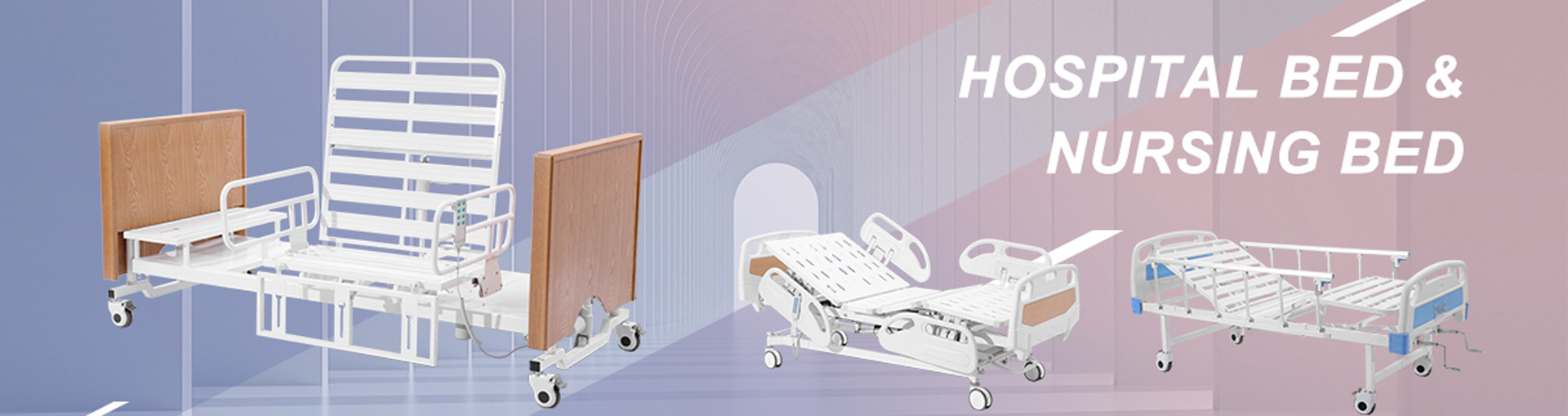
Compared to traditional fixed beds, adjustable hospital beds offer patients a more comfortable lying experience—thanks to features such as back elevation, leg adjustment, and overall height variation—while simultaneously reducing the physical strain on caregivers.
However, for many consumers, the actual process of purchasing an "adjustable hospital bed" often proves far more complex than anticipated. Beyond obvious price disparities, different beds vary significantly in terms of functionality, structural design, weight capacity, safety features, and operational methods. Focusing solely on aesthetics or a single specific function makes it easy to overlook the critical factors that truly impact the user experience.
In reality, selecting an adjustable hospital bed is not merely a matter of buying a "bed that goes up and down"; rather, it requires a comprehensive assessment based on multiple factors, including the patient's physical condition, specific care requirements, the home environment, and long-term comfort needs.
So, what specific factors should take priority when choosing an "adjustable hospital bed"? This article addresses this question by offering a comprehensive analysis from various perspectives: patient needs, adjustment capabilities, weight capacity, dimensions and structure, safety features, mattress compatibility, and daily operation.
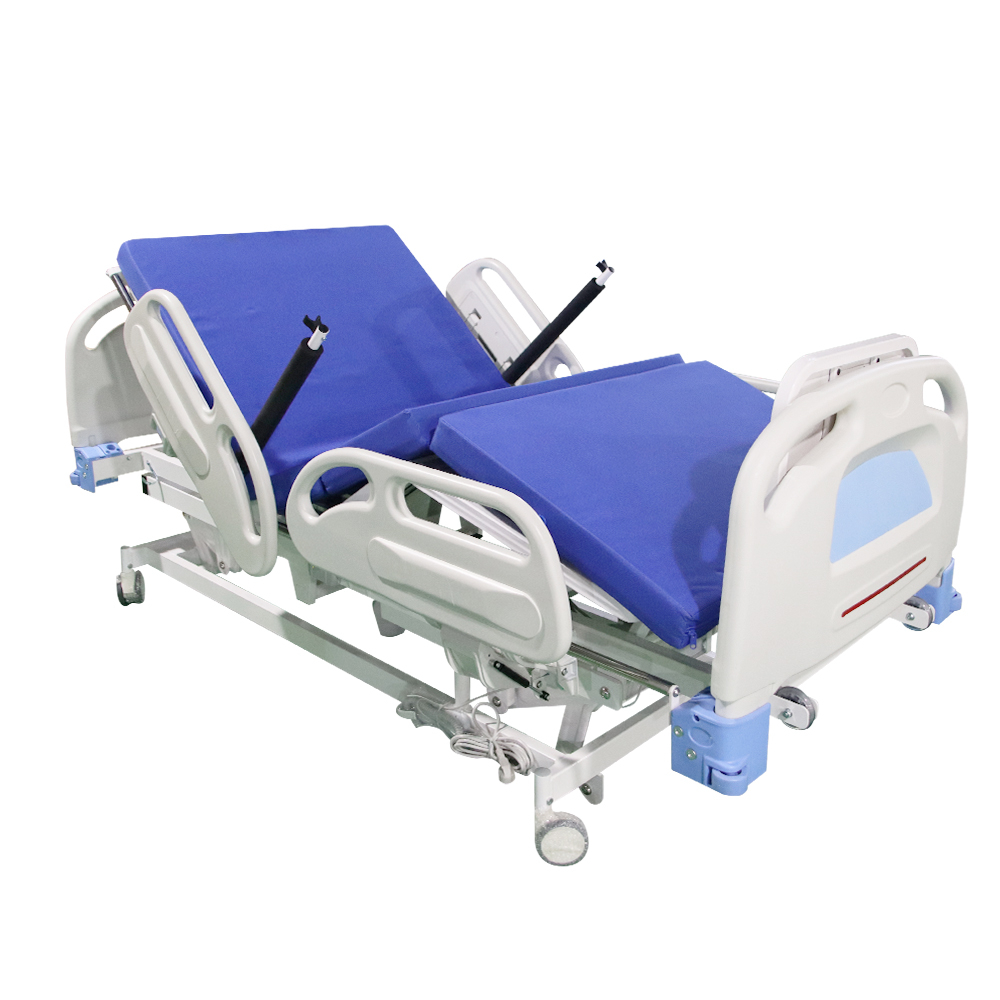
First: Consider the Patient's Specific Needs
Before selecting an "adjustable hospital bed," the most critical step is not to tally up the number of features, but rather to clearly define the patient's actual requirements. This is because different patients have distinct needs and expectations regarding their hospital beds.
For example:
•Patients requiring long-term bed rest
•Patients recovering from surgery
•Elderly individuals with limited mobility
•Individuals undergoing rehabilitation care
Each of these groups will have markedly different priorities when it comes to the features required in an "adjustable hospital bed."
1. Can the Patient Move Independently?
This is a crucial question.
If the patient:
•Can turn over independently
•Can sit up without assistance
•Possesses a certain degree of mobility
Then their functional requirements for the bed may be relatively simple.
However, if the patient:
•Is unable to turn over for extended periods
•Requires long-term bed rest
•Has severely restricted physical movement
Then they will require the comprehensive functional support provided by a more advanced "adjustable hospital bed."
For instance:
•Back elevation
•Leg adjustment
•Whole-bed height adjustment
•Caregiving assistance features
All become significantly more important in such cases.
2. Is the Frequency of Caregiving High?
Many families tend to overlook this particular point. If a patient requires:
•Frequent repositioning
•Daily feeding assistance
•Extended periods of care
•Frequent hygiene and nursing care
then the adjustment efficiency of an "adjustable hospital bed" becomes absolutely critical. This is because caregivers will be operating the bed frequently throughout the day.
If the adjustment process is overly complex, it not only increases the caregiver's burden but may also compromise the efficiency of the care provided.
3. Duration of Patient Bed Rest
The requirements for an "adjustable hospital bed" differ significantly depending on whether it is intended for short-term or long-term use.
Short-term recovery:
Emphasis may be placed primarily on basic comfort.
Long-term bed rest:
Key considerations must include:
•Supportiveness
•Pressure distribution
•Adjustment flexibility
•Ease of caregiving
Failure to prioritize these factors can easily lead to increased physical discomfort during prolonged use.
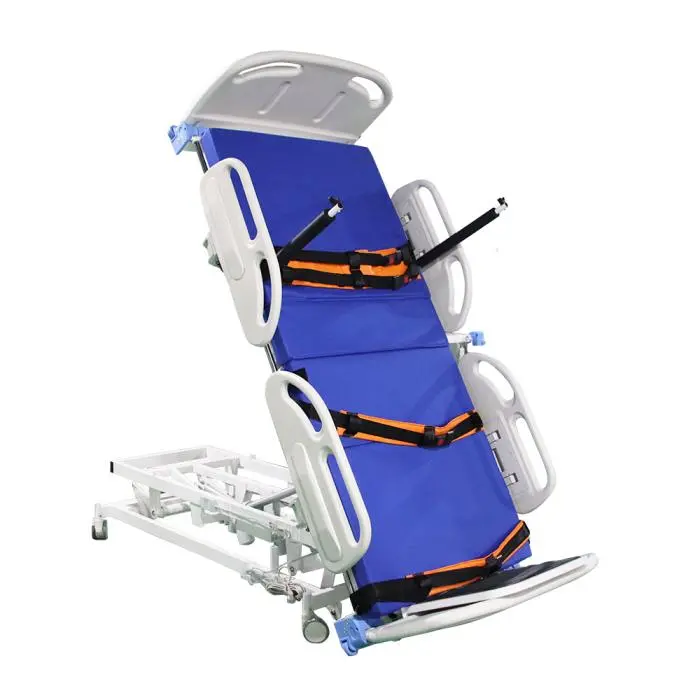
Adjustment Functionality: The Core of Choosing an Adjustable Bed
Given that it is an "adjustable hospital bed," its adjustment functionality naturally serves as the core factor. However, when making a purchase, many consumers tend to focus solely on the number of features while overlooking their actual practical utility. In reality, the significance and purpose of different adjustment functions vary considerably.
Is the Backrest Adjustment Smooth?
Backrest elevation is one of the most fundamental—and most frequently used—functions of an "adjustable hospital bed."
It is primarily utilized for:
•Sitting up
•Eating
•Reading
•Nursing procedures
•Resting in a semi-reclined position
Consequently, the quality of the backrest adjustment mechanism is of paramount importance.
1. Is the Adjustment Angle Appropriate?
For most "adjustable hospital beds," the backrest angle typically ranges from 0° to 70°.
An angle that is too shallow provides insufficient support; conversely, an angle that is too steep can easily increase pressure on the lower back.
Therefore, ensuring that the adjustment range is appropriate is absolutely critical.
2. Does It Support Stepless Adjustment?
Some "adjustable hospital beds" are limited to a few fixed angle presets.
In contrast, stepless adjustment allows for:
•Precise control over the angle
•Fine-tuning of the patient's posture
This typically results in a higher level of comfort.
3. Is the Operation Smooth?
During elevation and lowering, a high-quality "adjustable hospital bed" should:
•Avoid sudden upward jerks
•Refrain from violent shaking or wobbling
•Move in a slow, steady, and controlled manner
This is particularly important for patients undergoing long-term bed rest.
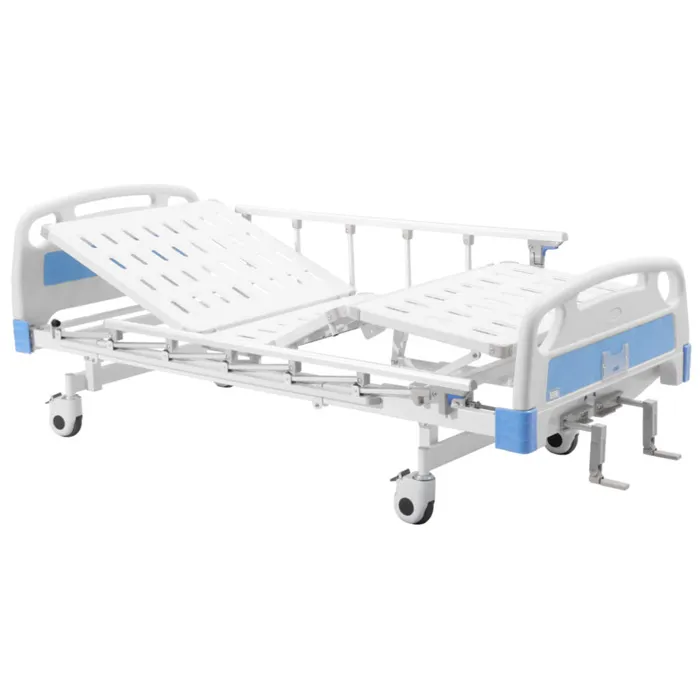
Does the Leg Adjustment Function Meet Caregiving Needs?
When selecting an "adjustable hospital bed," many people focus exclusively on the backrest functions while overlooking the importance of leg adjustment capabilities. In fact, leg support is equally important.
1. The Function of Leg Elevation
Leg adjustment features can help to:
•Relieve pressure on the lower limbs
•Improve blood circulation
•Reduce swelling
This is particularly important for patients who are bedridden for extended periods.
2. Does It Feature Synchronized Movement?
Some "adjustable hospital beds" are designed so that when the backrest is raised, the leg section simultaneously bends slightly.
This serves to:
•Prevent the body from sliding down
•Enhance stability
•Increase overall comfort
3. Is the Adjustment Smooth Enough?
If the leg section moves too quickly, it can easily cause physical discomfort for the patient.
Therefore, high-quality "adjustable hospital beds" typically employ a slow, gentle adjustment mechanism.
Is the Full-Bed Height Adjustment Feature Necessary?
Not all "adjustable hospital beds" come equipped with a full-bed height adjustment function. However, this feature is crucial in many caregiving scenarios.
1. Facilitating Caregiving Tasks
For caregivers performing tasks such as:
•Changing bed linens
•Repositioning the patient
•Routine cleaning
—if the bed height cannot be adjusted, the need to constantly bend over for extended periods significantly increases physical strain.
2. Making It Easier for Patients to Enter and Exit the Bed
Different patients require different bed heights to get in and out of bed comfortably.
By allowing for height adjustment, the bed helps reduce the difficulty patients face when entering or exiting the bed.
3. Enhancing Safety
Lowering the bed height helps to minimize the risk of injury in the event of a fall.
This is particularly important for elderly patients.
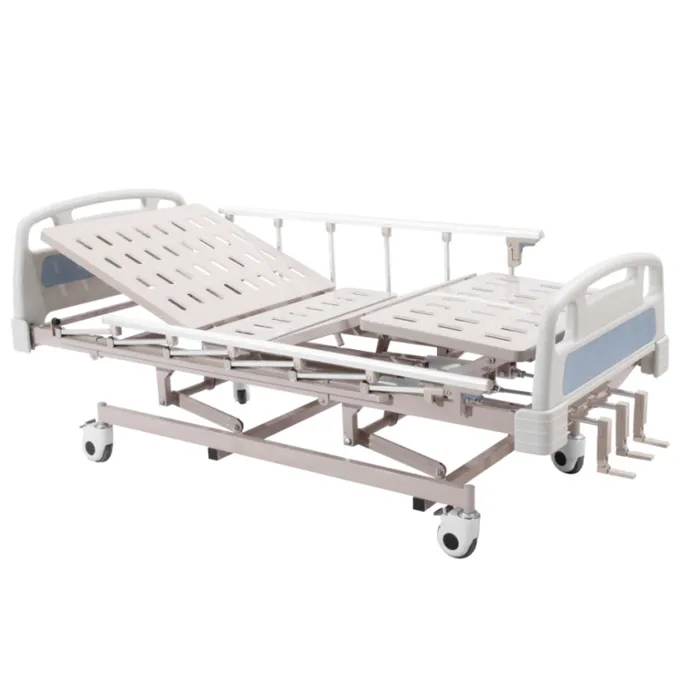
Load-Bearing Capacity: A Critical Consideration
Many consumers tend to overlook the load-bearing specifications of "adjustable hospital beds."
However, in reality, the load-bearing capacity directly impacts:
•Safety
•Stability
•Service life
1. Load-Bearing Capacity Involves More Than Just Body Weight
A hospital bed must support more than just the patient's body weight.
It must also withstand:
•Pressure exerted during patient repositioning
•Dynamic forces (movement)
•Pressure applied during caregiving procedures
Consequently, the actual load placed on an "adjustable hospital bed" is typically greater than the patient's static weight alone.
2. What Problems Arise from Insufficient Load-Bearing Capacity?
If a bed's load-bearing capacity is insufficient, the following issues may occur:
•Deformation of the bed frame
•Excessive strain on the motors
•Jerky or stuck adjustment mechanisms
•Loosening of structural components
In severe cases, this can even compromise patient safety.
3. Why Do Heavy-Duty Beds Have More Complex Structures?
High-load-bearing "adjustable hospital beds" typically require:
•Thicker steel components
•A stronger support structure
•Higher-power motors
Consequently, their overall structure is usually more robust and stable.
Does the Size Fit the Actual Space?
This is an issue often overlooked when purchasing an "adjustable hospital bed."
Many people focus solely on the bed itself while neglecting the constraints of their home environment.
1. Is the Room Area Sufficient?
An "adjustable hospital bed" requires not only space for placement but also room for:
•Nursing access
•Patient maneuvering (turning over)
•Placement of medical equipment
If the space is too confined:
Providing care will become extremely difficult.
2. Can It Pass Through Doorways?
Many "adjustable hospital beds" are quite large in size.
Therefore, it is essential to verify the following in advance:
•Doorway width
•Elevator dimensions
•Clearance for turning corners in hallways
Otherwise, it may be impossible to transport the bed into the room.
3. Is the Bed Height Appropriate?
Different beds have different heights.
Too high: Makes getting in and out of bed difficult.
Too low: Makes nursing tasks physically strenuous.
Therefore, ensuring the height is appropriate is equally important.
Is the Operation Simple and Intuitive?
"Adjustable hospital beds" are typically used very frequently.
Consequently, ease of operation is of paramount importance.
1. Is the Controller Intuitive?
High-quality "adjustable hospital beds" typically feature:
•Icon-based buttons
•Large-sized buttons
•Clearly defined functional zones
This makes them easy for both elderly users and caregivers to operate.
2. Is Accidental Operation Easily Avoided?
Some beds feature complex button layouts, making it easy to press the wrong button by mistake.
Therefore:
•A locking function
•Simplified control logic
are extremely important features.
3. Can the Patient Operate It Independently?
If the patient possesses a certain degree of mobility,
it is necessary to consider: Is the controller designed for convenient independent use?
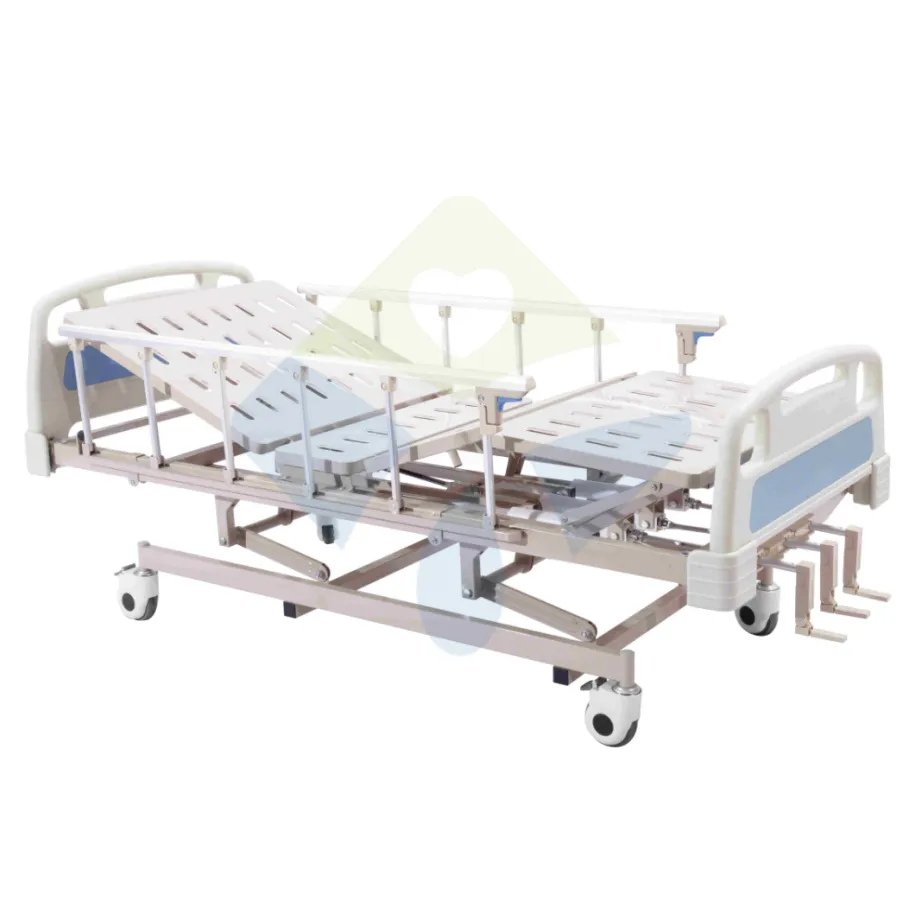
Safety Performance: The Core Priority
When it comes to "adjustable hospital beds," safety always serves as the most critical foundation.
Is the Side Rail Design Sound?
Side rails serve as more than just a physical barrier;
they are directly linked to the patient's safety.
1. Are They Sturdy and Stable?
Side rails must:
•Remain free of wobbling
•Not become loose or detached
•Withstand the pressure of being used for leverage (support)
Failure to meet these criteria creates a significant safety risk.
2. Is the Height Appropriate?
Side rails that are too low: Provide insufficient protection.
Side rails that are too high: Hinder the patient's ability to get in and out of bed.
3. Is There a Risk of Pinching?
High-quality "adjustable hospital beds" take the following into consideration:
•Gap control
•Rounded-edge design
•Anti-pinch mechanisms
—all to minimize the risk of accidental injury.
Is the Braking System Stable?
Once the bed has been moved, it must be securely fixed in place. Therefore, the braking system is of paramount importance.
1. Do the Casters Move Smoothly?
High-quality "adjustable hospital beds" offer:
•Easier pushing
•More stable steering
2. Are the Brakes Secure?
Once locked, the bed should not slide easily.
Failure to ensure this will compromise:
•Patient safety when getting in or out of bed
•Overall nursing safety
Motor Quality Directly Impacts User Experience
The motor serves as the core power system of an "adjustable hospital bed."
Its quality directly influences:
•Service life
•Operational stability
•Smoothness of adjustment
1. Is the Motor Excessively Noisy?
In a long-term care environment:
Noise can disrupt rest. Therefore, quiet operation is a crucial feature.
2. Is It Prone to Stuttering or Sticking?
Some low-quality "adjustable hospital beds":
Are prone to the following issues during height adjustment:
•Pauses
•Shaking or vibration
•Jerky, disjointed movements
These issues significantly detract from the user experience.
3. Does It Feature Overload Protection?
High-quality beds typically include:
•Motor overheat protection
•Automatic power-off protection
•Travel limits (stroke limits)
—all designed to enhance safety.
Does the Mattress Match the Bed's Structure?
Many people purchasing an "adjustable hospital bed" tend to overlook the importance of the mattress.
In reality, the bed frame and the mattress must be compatible.
1. Standard Mattresses May Not Flex
During the adjustment process (raising or lowering) of an adjustable hospital bed, the mattress must flex in sync with the frame.
If the mattress is too rigid, it will hinder the bed's adjustment functionality.
2. Is the Mattress Thickness Appropriate?
Too thick: Compromises the effective height of the safety side rails.
Too thin: Lacks sufficient comfort and support.
3. Does It Offer Pressure-Redistribution Capabilities?
Patients requiring long-term bed rest: Require superior pressure support.
Therefore, selecting a compatible mattress is absolutely essential.