

When people think of basketball, the first things that come to mind are usually the ball, the hoop, and the court. However, a complete, regulation-standard wheelchair basketball match requires a much wider array of equipment than a standard game. Beyond the standard ball and international-standard court, specialized gear—such as basketball wheelchairs, anti-tip wheels, safety belts, protective equipment, and timing/scoring systems—is essential for ensuring fairness, safety, and a high level of competition. Among these, the basketball wheelchair is the sport's most critical piece of equipment; it directly influences an athlete's speed, agility, and stability, thereby determining overall competitive performance.
In recent years, driven by the rapid growth of sports for people with disabilities, wheelchair basketball has emerged as one of the most influential competitive sports in this sector globally. The International Wheelchair Basketball Federation (IWBF) currently boasts over 100 member nations and regions, and the sport is a highlight of the Paralympic Games. According to data from the International Paralympic Committee (IPC), wheelchair basketball has hundreds of thousands of registered athletes and recreational players worldwide. With numerous international, continental, and national tournaments held annually, the sport has reached a level of professionalism comparable to that of mainstream professional basketball.
Those new to the sport often ask questions such as: "What equipment is actually used in wheelchair basketball? How do basketball wheelchairs differ from standard wheelchairs? Why do the sports wheelchairs used in matches have such unique designs?" In reality, modern wheelchair basketball is a highly specialized competitive sport; every piece of equipment is scientifically designed and adheres to strict international regulations. This article provides a comprehensive overview of the key equipment used in wheelchair basketball, offering insight into the vital roles played by basketball wheelchairs, sports wheelchairs, and other gear during competition.
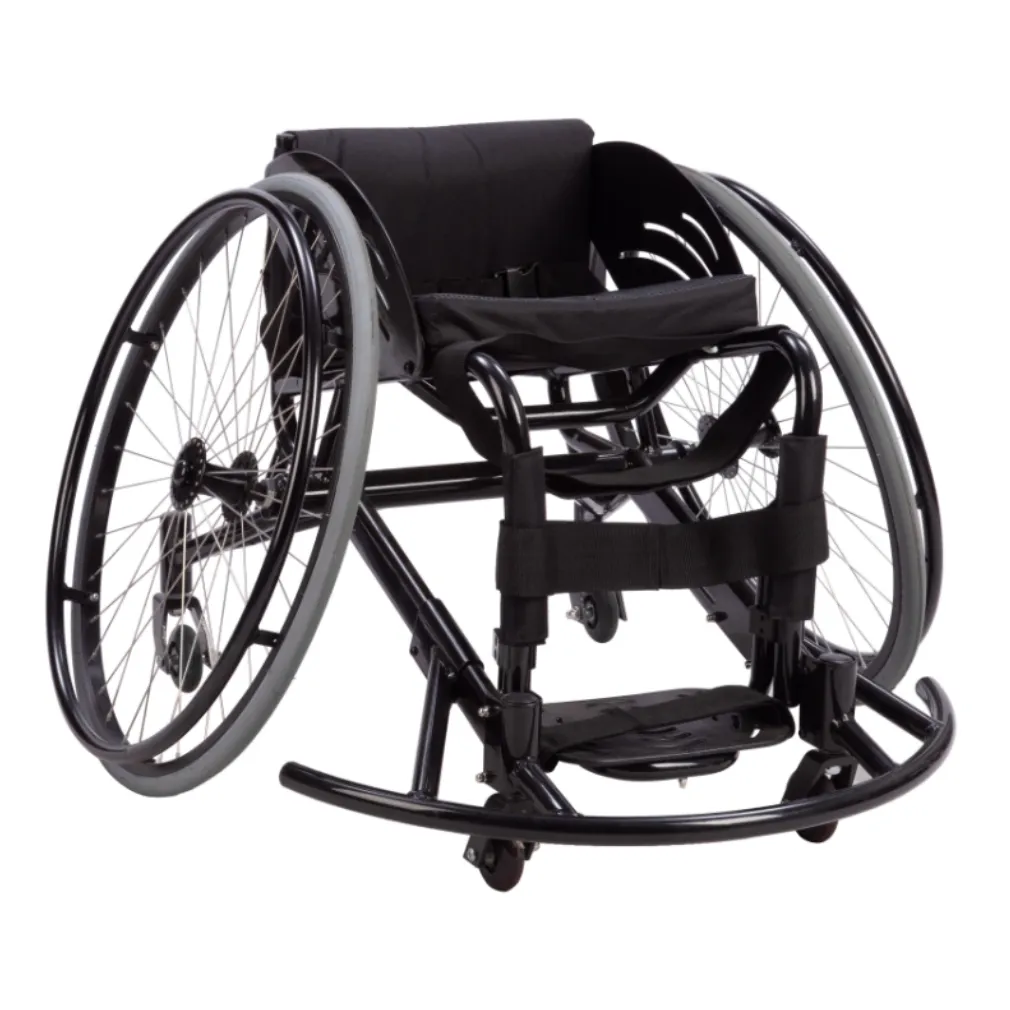
The basketball wheelchair is the most important piece of equipment in the sport
If the basketball itself is the most crucial piece of equipment in standard basketball, then the basketball wheelchair is undoubtedly the core piece of gear in wheelchair basketball. Classified as a type of sports wheelchair, the basketball wheelchair is a competitive model specifically engineered for the sport, differing fundamentally from the standard wheelchairs used in daily life. The defining characteristics of basketball wheelchairs are their emphasis on speed, agility, stability, and impact resistance. During a match, athletes must perform high-speed sprints, rapid turns, sudden stops, physical contests, and rebounding—often involving intense physical contact. Standard wheelchairs cannot meet these competitive demands, whereas specialized basketball wheelchairs offer superior handling and maneuverability while ensuring safety.
Modern basketball wheelchairs are typically constructed from lightweight materials such as aerospace-grade aluminum alloy, titanium alloy, or even carbon fiber, significantly reducing the overall weight while maintaining high structural strength. Unlike standard wheelchairs, they lack complex care-oriented features or folding mechanisms; instead, they utilize a rigid, one-piece frame to maximize power transfer efficiency and impact resistance. For high-level international competitions, high-performance basketball wheelchairs are often custom-built to match an athlete's height, weight, playing position, and technical style, ensuring optimal competitive performance.
How do basketball wheelchairs differ from standard wheelchairs?
Many first-time spectators notice that the sports wheelchairs used in games look completely different from the wheelchairs commonly found in hospitals or homes. This is because basketball wheelchairs are specialized pieces of competitive equipment; they are not designed for everyday mobility but rather to provide maximum stability and control during high-speed movement.
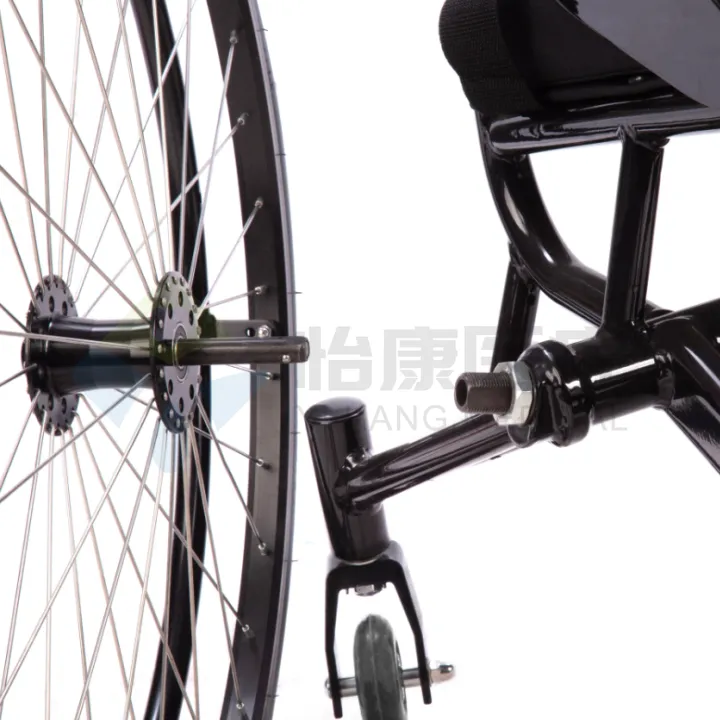
First, basketball wheelchairs feature wheels with a significant outward tilt, known as camber. Typically, the drive wheels are angled outward by approximately 12° to 20°. This design effectively lowers the center of gravity and improves stability during high-speed turns while enhancing resistance to tipping over sideways, allowing athletes to quickly execute drives, defensive maneuvers, and sudden stops.
Second, the overall center of gravity is lower. The seat is usually positioned lower than in standard wheelchairs, enabling athletes to maintain a more stable body posture while improving pushing efficiency and allowing for faster acceleration.
Additionally, basketball wheelchairs are usually equipped with a front bumper for impact protection and rear anti-tip wheels. These features safeguard the athletes during play and minimize the risk of damage from collisions between wheelchairs. In contrast, standard wheelchairs prioritize comfort and care-related functions, making them unsuitable for intense competitive sports.
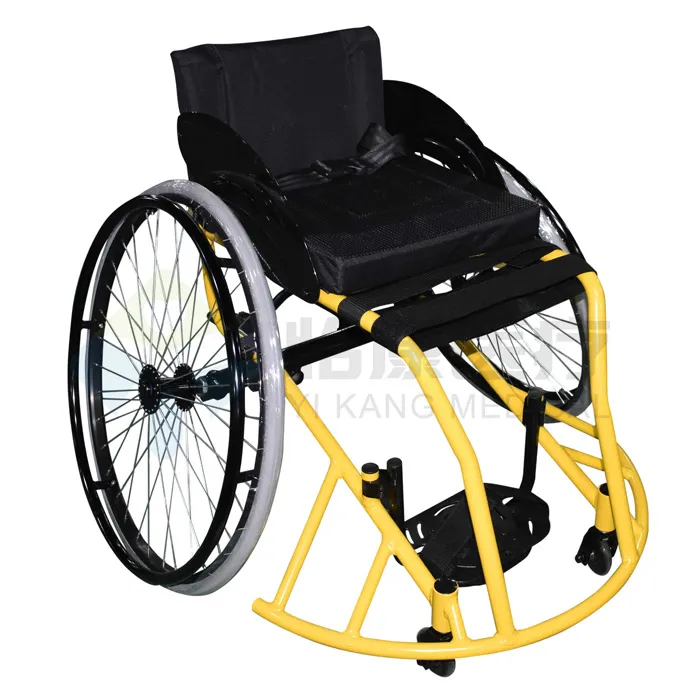
Why do sports wheelchairs feature a lightweight design?
In wheelchair basketball, athletes rely on their hands to push the drive wheels for almost every movement; consequently, the weight of the wheelchair directly impacts performance during the game. The lighter the wheelchair, the faster its acceleration and the more agile its handling; consequently, the athlete expends less physical energy. Therefore, weight reduction has become a key focus in the design of modern basketball wheelchairs.
Currently, most mainstream sports wheelchairs are constructed from aerospace-grade aluminum alloy—a material that combines high strength with low weight, meeting the demands of high-intensity competition. Some top-tier international models have even begun incorporating titanium alloys and carbon fiber to further reduce weight while enhancing rigidity and durability. However, weight reduction does not come at the expense of safety; wheelchairs used in international competition must still comply with relevant standards to ensure structural stability during intense collisions.
For professional athletes, a weight reduction of just a few kilograms can translate to faster acceleration, greater efficiency in ball handling, and improved overall performance; thus, lightweight technology remains a crucial area of development in sports wheelchair engineering.
Is the basketball used in competition the same as a standard basketball?
Many people assume that wheelchair basketball requires a specialized ball, but this is not the case. According to the regulations of the International Wheelchair Basketball Federation (IWBF), the specifications for the ball used in wheelchair basketball are essentially identical to those set by the International Basketball Federation (FIBA).
Size 7 basketballs are typically used for men's competitions, while Size 6 balls are generally used for women's events. The ball's weight, diameter, material, and elasticity all meet international standards, allowing athletes to employ the same fundamental techniques—dribbling, passing, shooting, and rebounding—as in standard basketball.
This standardization ensures technical consistency between wheelchair basketball and traditional basketball, while also facilitating the promotion of the sport and the standardized management of equipment.
What are the requirements for the playing court and the basketball hoop?
The court used for wheelchair basketball is essentially the same as that used for standard basketball. Official international matches are typically played on a standard court measuring 28 meters in length and 15 meters in width. The hoop height remains 3.05 meters, and the dimensions for the free-throw line, three-point line, center circle, and restricted area all adhere to international basketball regulations.
Although court dimensions are largely identical, the width of basketball wheelchairs necessitates a greater focus on surface evenness and traction. Professional arenas generally utilize wooden flooring or high-performance sports flooring to ensure excellent grip and wear resistance as the wheelchairs maneuver at high speeds. In addition, the basketball hoop assembly must possess sufficient stability to withstand the rigors of high-intensity competition. It should feature a high-transparency tempered glass backboard, along with a rim and net that meet international standards, ensuring fair playing conditions for athletes.
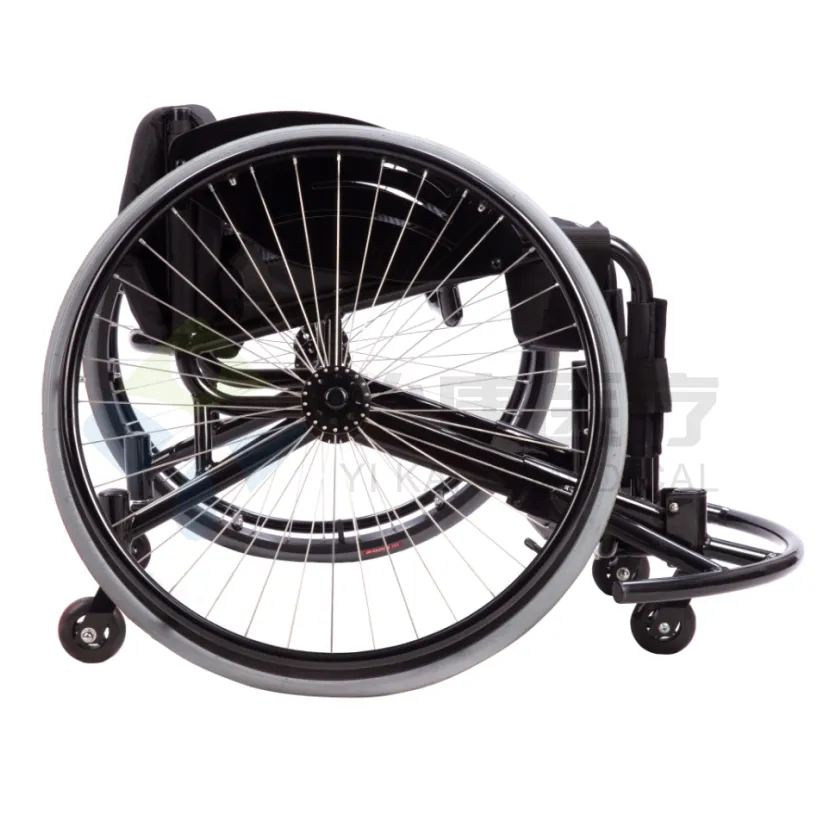
Anti-tip wheels are a crucial safety feature for basketball wheelchairs
During high-speed play, the center of gravity of a basketball wheelchair often shifts due to rapid acceleration, sudden stops, leaning back to shoot, or collisions. Without auxiliary protective devices, the wheelchair could tip over backward, increasing the risk of injury to the athlete. Consequently, almost all modern basketball wheelchairs are equipped with anti-tip wheels.
These wheels are typically located at the rear of the chair, providing extra support via one or two small wheels. When the wheelchair's center of gravity shifts backward, the anti-tip wheels make contact with the ground, preventing the chair from tipping over completely. Although small in size, they play a vital role in ensuring safety during matches and are a standard component of basketball wheelchairs in international competition.
Seatbelts and restraint systems enhance athletic stability
In wheelchair basketball, athletes frequently perform rapid turns, lean forward, play defense, and execute shooting motions. If the athlete is not securely connected to the wheelchair, it not only hinders technical performance but can also lead to a loss of balance during play. Therefore, most professional basketball wheelchairs are equipped with waist straps, leg straps, and foot restraints.
These restraint systems help athletes maintain a stable seated position, allowing for more effective power transfer to the drive wheels and improving propulsion efficiency. They also minimize body shifting during collisions, thereby enhancing overall safety. It is important to note that while these straps must ensure stability, they should not impede the athlete's ability to execute basketball techniques; thus, they require proper adjustment based on the individual's physique.
Protective gear is also essential
Although wheelchair basketball is a competitive, contact-heavy sport, safety remains a fundamental prerequisite. Consequently, many athletes wear protective gear tailored to their specific needs.
For instance, sports gloves increase friction when pushing the wheels, reduce palm abrasion, and enhance comfort during prolonged matches. Knee, elbow, and wrist guards offer protection against collisions or falls, lowering the risk of sports-related injuries. Depending on the intensity of the game, some athletes also wear finger guards or shoulder pads to further enhance physical protection. While these protective accessories may not be as conspicuous as the basketball wheelchairs themselves, they are equally valuable to athletes who train and compete regularly.
Timing, Scoring, and Officiating Equipment Ensure Fair Play
Modern wheelchair basketball matches require not only athletic gear but also specialized event equipment. Standard matches typically feature electronic timers, 24-second shot clocks, electronic scoring systems, match recording systems, and communication equipment for referees, ensuring the game proceeds in strict accordance with international rules.
With the advancement of digital sports technology, an increasing number of international tournaments are adopting video replay systems, high-speed cameras, and electronic statistical systems. These tools provide real-time analysis of data such as shooting accuracy, rebounds, assists, turnovers, and distance covered, thereby enhancing both the fairness and the spectator appeal of the sport.
FAQ
What is the difference between a basketball wheelchair and a standard wheelchair?
Basketball wheelchairs are specialized sports chairs featuring lightweight rigid frames, wheels with a high camber angle, bumpers, anti-tip wheels, and secure restraint systems, making them better suited for high-speed movement and physical contact. Standard wheelchairs, conversely, are designed for daily mobility and caregiving and are not suitable for competitive sports.
Is the basketball used in wheelchair basketball the same as a standard basketball?
It is essentially the same. International wheelchair basketball matches typically use the same ball specifications as standard international basketball games: a size 7 ball for men's matches and a size 6 ball for women's matches.
Why are the wheels on a basketball wheelchair tilted?
Basketball wheelchairs feature a cambered wheel design (tilted outward). This lowers the center of gravity, improves stability during high-speed turns, reduces the risk of tipping over, and enhances the athlete's maneuverability during the game.
Can any sports wheelchair be used for wheelchair basketball?
No. Sports wheelchairs come in various types—such as those for tennis, track and field, and racing—each designed for a specific discipline. Official wheelchair basketball matches require the use of specialized basketball wheelchairs that comply with the sport's regulations.
Can a basketball wheelchair be used for daily life?
It is generally not recommended. Basketball wheelchairs are designed primarily for competitive sports, prioritizing speed and agility over comfort, foldability, and everyday functionality. Therefore, they are best suited as specialized equipment for training and competition rather than as a means of daily transportation.