
Portable commode chairs are increasingly mentioned in home care, travel care, and temporary toilet needs. They are particularly popular for the elderly, post-operative recoveries, people with mobility issues, and families who travel frequently, due to their lightweight, foldable, and easily movable features.
However, many people, while having heard of portable commode chairs, are unclear about their specific advantages, potential disadvantages, and whether they are suitable for their family use.
Therefore, understanding the advantages and disadvantages of portable commode chairs is crucial for proper selection and scientific use.
This article will systematically explain the characteristics of portable commode chairs, allowing readers to fully understand whether this product suits their care needs.
What are the design features of portable commode chairs?
Why are they called "portable"?
To understand the advantages and disadvantages of portable commode chairs, it is essential to first understand their design structure and functional positioning.
1. "Portable" means lightweight, foldable, and movable
Compared to traditional commode chairs, the biggest advantages of portable commode chairs are:
• Small size
• Lightweight
• Foldable for storage after use
• Easy to carry
• Can be moved to different locations at any time.
This makes portable commode chairs ideal for:
• Business trips, travel
• Frequent moving in rented apartments
• Small apartments
• Temporary use for home care
2. Portable commode chairs are typically made of lightweight metal or plastic
Common materials include:
• Aluminum alloy (lightweight, rust-free)
• High-strength plastic (lightweight)
• Steel tubing (some models)
These materials give portable commode chairs sufficient load-bearing capacity while ensuring easy movement.
3. Simple Structure Yet Complete Functionality
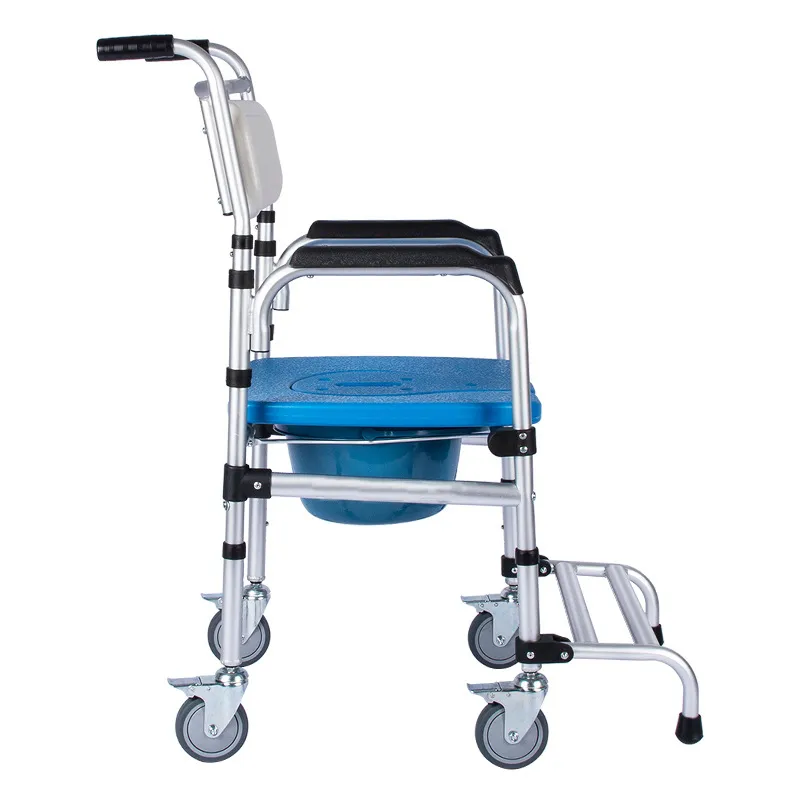
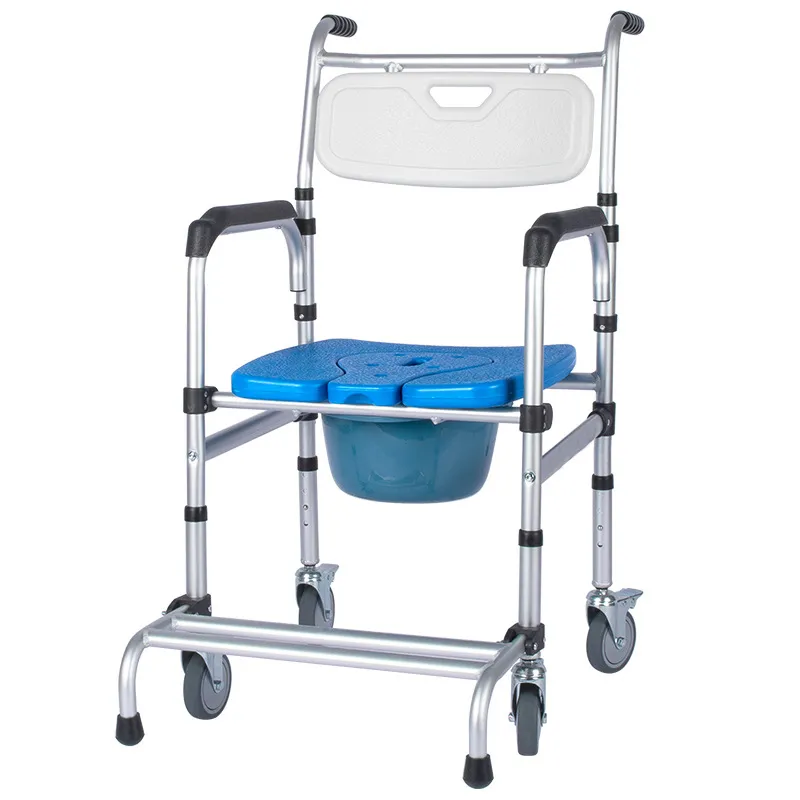
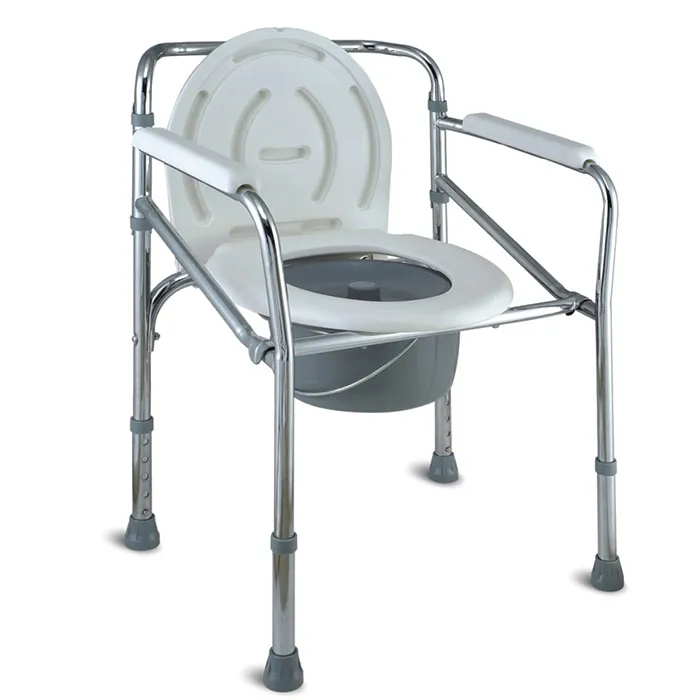
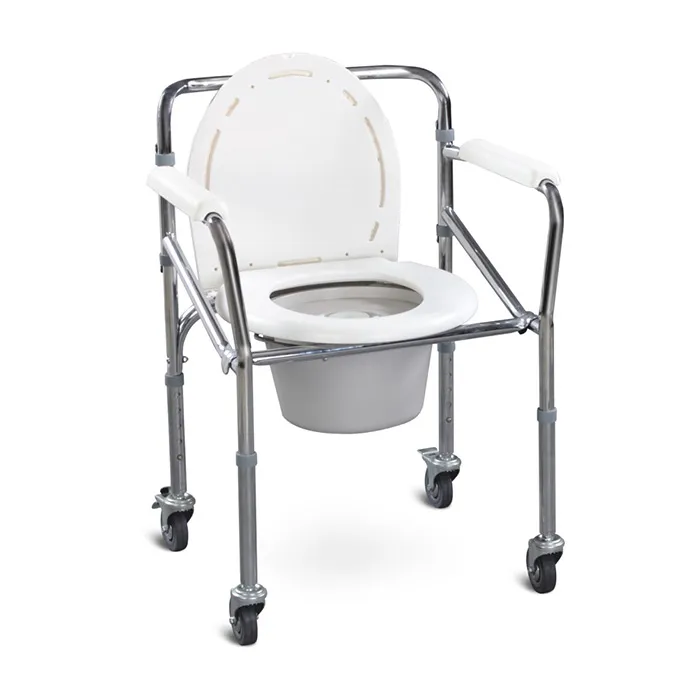
Portable commode chairs typically include:
• Foldable frame
• Seat ring or cushion
• Removable potty
• Non-slip footpad
• Partial armrests or armrestless design
While simple, it is sufficient to meet basic toileting needs.
4. Flexible Use, Unrestricted by Space
Many portable toilet chairs can be used in:
• Bedroom
• Bathroom
• Outdoors
• Hotel
• Vehicle use (for short stops)
Therefore, the essence of "portable" emphasizes its flexibility and mobility.
What are the main advantages of portable commode chairs?
Why are portable commode chairs so popular with families and caregivers? Mainly because their advantages perfectly match modern care needs.
Below is a systematic analysis of the core advantages of portable commode chairs from different perspectives.
1. Portability and Ease of Movement – This is the Biggest Advantage of Portable Commode Chairs
Compared to traditional commode chairs, portable commode chairs are typically:
• Lighter
• Smaller when folded
• Easier to move
• Can be taken to different cities or used outdoors
This is an extremely important feature for frequent travelers, caregivers, or renters.
2. Small Footprint, Ideal for Small Apartments
For small homes or caregivers with limited space, the advantages of portable commode chairs are significant:
• Can be stored in a closet when folded
• Takes almost no space when not in use
• Does not obstruct movement
This eliminates the need for bulky care equipment.
3. Flexible Use, Can Be Adjusted as Needed
The lightweight design of portable commode chairs allows them to be easily moved to:
• Bedside
• Balcony
• Bathroom
• Well-lit areas
• More comfortable positions for the user
The position can be flexibly adjusted to suit different usage scenarios.
4. Generally More Affordable
Portable toilet chairs are made of relatively simple materials and have a simpler structure, making them more affordable overall.
For families with limited budgets, portable toilet chairs are a cost-effective care option.
5. Suitable for Special Scenarios such as Travel, Camping, and Short Trips
Portable toilet chairs are not only suitable for families but also for:
• Road trips
• Military training
• Outdoor camping
• Staying in hotels while traveling but worried about toilet access
• Temporary relocation
They can serve as a mobile toilet solution.
6. Relatively Simple Cleaning
The simple structure of portable toilet chairs and the easier disassembly of the potty make:
• Convenient emptying of the potty
• Faster cleaning
• Easier hygiene management
This is a very practical advantage for caregivers.
7. Suitable for Short-Term Care, No Long-Term Space Required
For example:
• Short-term recovery after surgery
• Temporary back and leg problems for the elderly
• Temporary care needs
Portable commode chairs do not need to be placed for extended periods, making them ideal for temporary care scenarios.
What are the potential disadvantages of portable toilet chairs?
What issues should be considered?
While portable commode chairs offer many advantages, they also have significant drawbacks.
Understanding these drawbacks helps users choose and use them correctly, avoiding potential safety hazards.
Below, we analyze their shortcomings from the perspectives of structure, safety, stability, and comfort.
1. Slightly Weaker Stability Compared to Traditional Commode Chairs
This is the most frequently discussed drawback of portable toilet chairs.
Because portable structures typically mean:
• Lighter materials
• Simpler fixing methods
• Slimmer legs
• Foldable frames
Therefore, their stability is not as strong as steel commode chairs.
Suitable for mobile individuals, but not for extremely frail elderly people.
2. Limited Weight Capacity
The typical weight capacity of a portable toilet chair is:
• 80kg ~ 120kg
• Larger individuals may not be able to use it.
This limits its usability for some users.
3. Insufficient Armrest Support (Varies by Model)
Some portable toilet chairs, in order to reduce weight, may:
• Have no armrests
• Have armrests that are too low or narrow
• Have limited armrest support
This may be a drawback for elderly people who need support to get up.
4. Less Comfortable Than Regular Commode Chairs
Because portable toilet chairs emphasize portability:
• The seat cushion may be harder
• The backrest may be smaller or even nonexistent
• The seat ring may be narrower
Prolonged use may cause discomfort for the user.
5. Smaller Potty Capacity, Requires More Frequent Cleaning
The potty of a portable toilet chair is generally shallower to:
• Reduce weight
• Facilitate folding
• Reduce volume
This leads to more frequent cleaning, which may burden caregivers.
6. Not Suitable for Long-Term Use in One Location
If you intend to:
• Place it by your bedside long-term
• Use it multiple times a day
• Use it for extended periods
Then a portable toilet chair may be less than ideal due to insufficient stability and comfort.
7. Not suitable for users requiring extremely high safety
For example:
• Elderly people with difficulty standing
• People with very weak lower limb strength
• People prone to losing balance
The lightweight structure may not be sufficient to support stable and safe use.
Who are portable toilet chairs suitable for? Who are not suitable?
To make a more scientific selection, we must discuss the applicable groups.
Suitable for the following users:
• Elderly people with relatively good mobility but occasionally need assistance using the toilet
• People with a short post-operative recovery period
• People who have difficulty frequently entering and exiting the bathroom
• Users in small apartments
• People who frequently move or rent
• People who frequently travel or go out
• Light users with low care needs
These groups can fully utilize the lightweight advantage of portable toilet chairs.
Not suitable for the following users:
• Elderly individuals who are completely unable to stand independently for extended periods
• Individuals with extremely weak lower limbs who require strong handrails for support
• Overweight users
• Individuals with severe leg and foot disabilities
• Individuals with impaired mental function who are prone to falls
• Users requiring long-term use and high stability
These users are better suited to sturdy steel commode chairs or wheeled portable toilet chairs.
How to determine if a portable commode chair is right for you?
You can consider the following 5 aspects:
1. Is your living space limited?
Limited space ⇒ Portable commode chairs are more suitable.
2. Does the user require extensive handrail support?
Yes ⇒ Portable commode chairs are not suitable.
3. Do you need to take it to different locations?
Need to move it or go out ⇒ Portable commode chairs have a clear advantage.
4. Does the user's weight exceed the weight-bearing capacity?
Overweight ⇒ Reinforced model required.
5. Are your care needs long-term and frequent?
Long-term use ⇒ A stable commode chair is recommended.
How to maximize the advantages and avoid the disadvantages of a portable toilet chair?
To make portable toilet chairs safer and more comfortable to use, please refer to the following suggestions:
1. Choose a model with a higher load-bearing capacity
Higher load-bearing capacity means greater stability.
2. Choose a version with armrests
Increase safety and support.
3. Place it on a flat, dry surface
Prevent slipping.
4. Check that the folding mechanism is locked before each use
Prevent loosening under stress.
5. Clean the commode bowl promptly after use
Maintain hygiene and odor control.
6. For long-term use, it is recommended to use a non-slip mat or wall support
Increase stability.
What are the main advantages of Yikang Medical’s hospital equipment?
Yikang Medical provides high-quality hospital equipment with several advantages: customizable design, reliable manufacturing, international certifications, and efficient delivery. Founded in Foshan, China, in 2010, we expanded in 2014 to produce hospital beds, nursing beds, wheelchairs, walkers, crutches, shower chairs, and toilet chairs. As an OEM supplier for top brands, we provide tailored solutions to meet client needs. Certified with ISO13485, ISO9001, CE, and FDA, our products are trusted worldwide.