
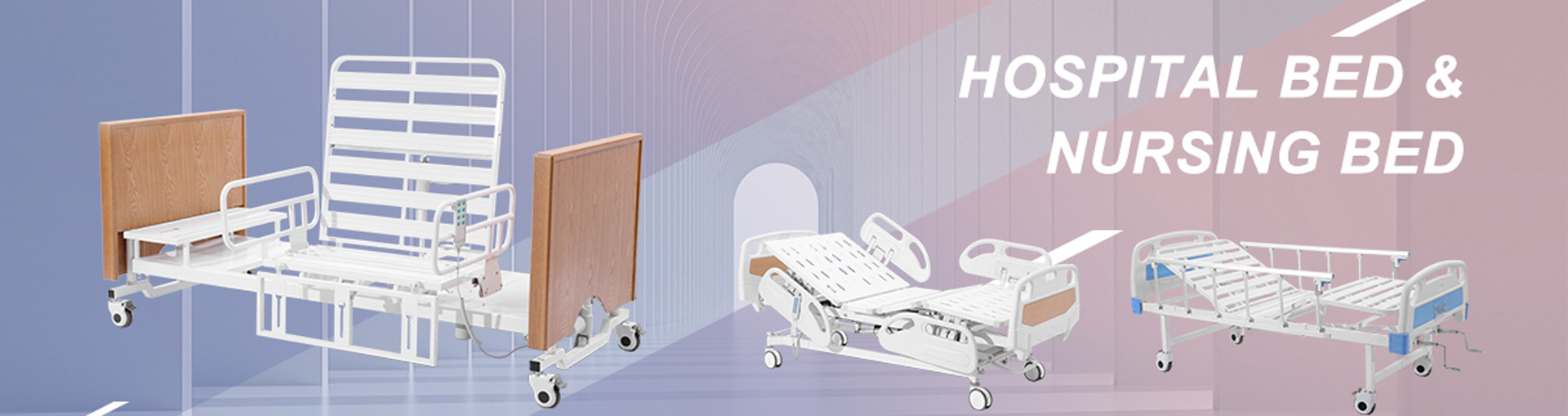
In the fields of home and medical care, adjustable hospital beds are gradually becoming an important choice for many families and medical institutions. Whether it's a patient who is bedridden for a long time, a post-operative recovering patient, or an elderly person who needs assistance getting up, adjustable hospital beds can significantly improve the convenience and comfort of care.
However, every piece of equipment has its advantages and limitations. For many users who are considering purchasing an adjustable hospital bed, a common question is: what exactly are the advantages and disadvantages of adjustable hospital beds?
This article will analyze the advantages and disadvantages of adjustable hospital beds from the perspectives of structural design, user experience, safety, maintenance, and economy, helping you make a more rational and scientific choice before purchasing.
What is an adjustable hospital bed? Why is it attracting more and more attention?
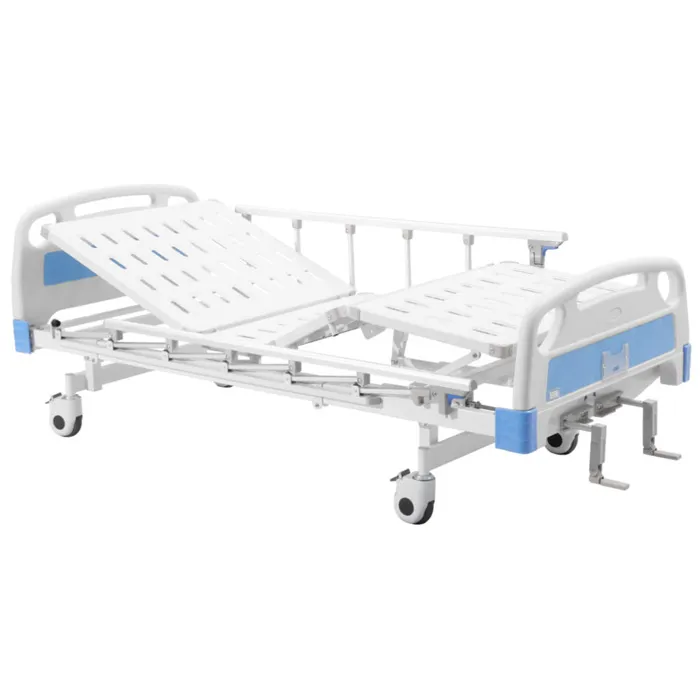
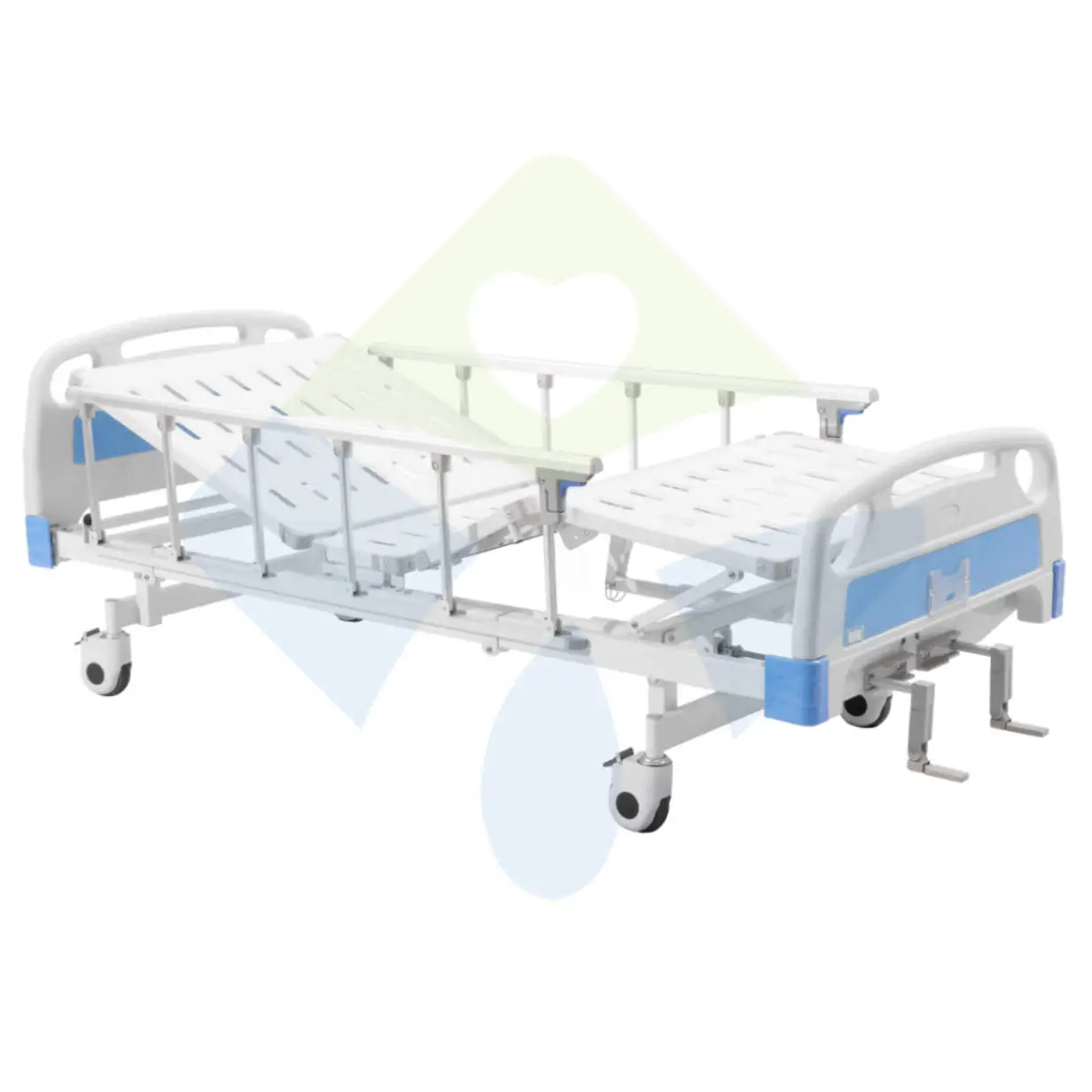
An adjustable hospital bed, as the name suggests, is a medical bed whose angle, height, and posture can be adjusted through a mechanical or electric system.
It typically possesses the following basic functions:
• Adjustable backrest (0–70°): Helps patients sit up or recline for rest;
• Adjustable legroom (0–30°): Improves blood circulation in the lower limbs;
• Overall height adjustment: Facilitates care and transfer;
• Guardrails and casters: Enhance safety and mobility.
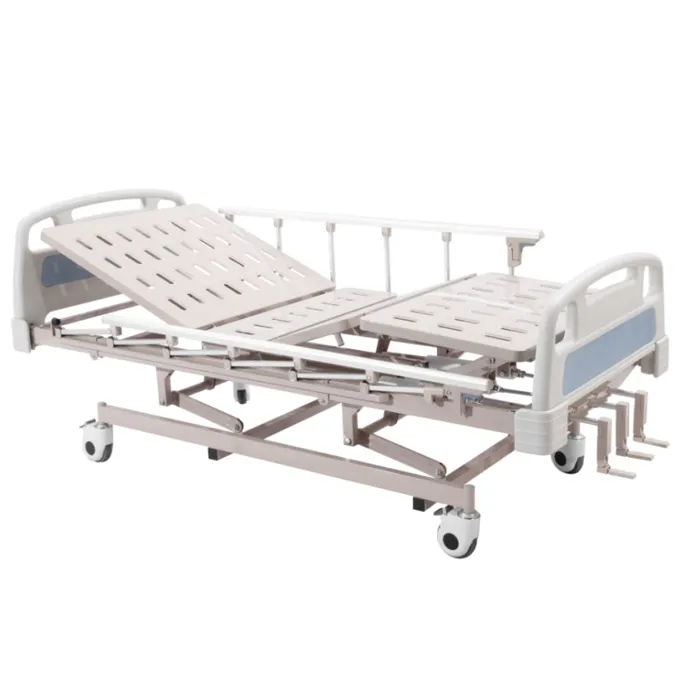
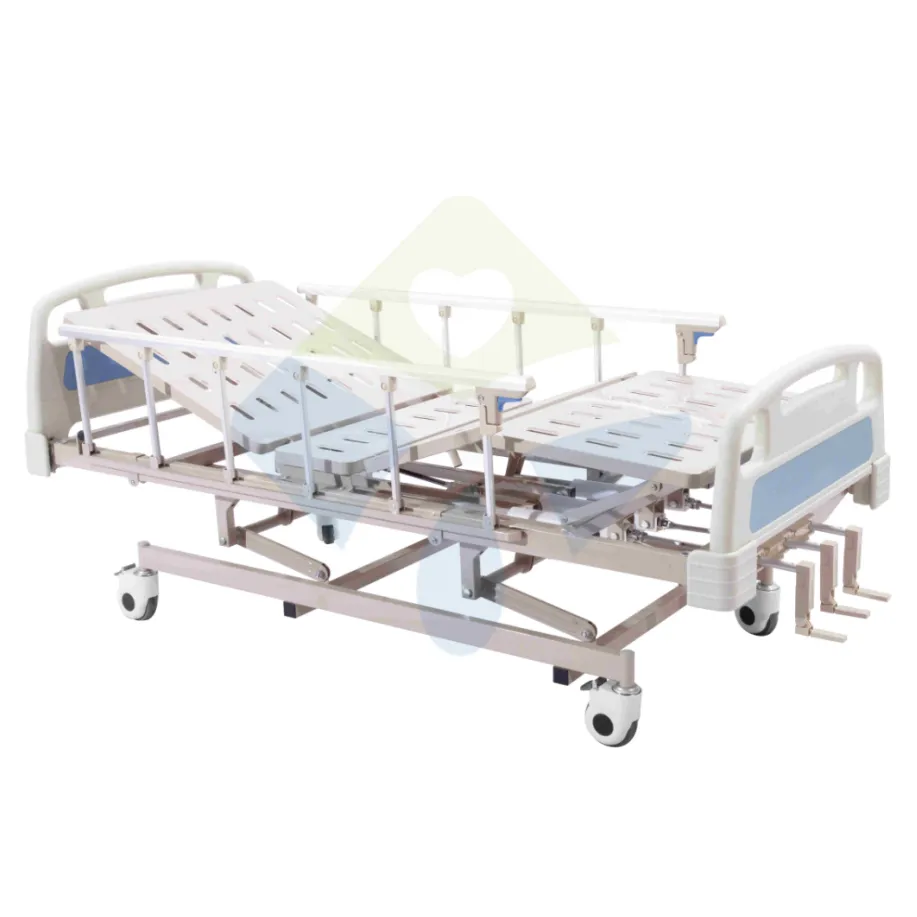
A typical adjustable hospital bed features a powder-coated steel frame structure, equipped with detachable ABS headboard and footboard, and foldable aluminum guardrails.
These detailed design features make it not only sturdy and durable but also suitable for various home and healthcare environments.
What are the outstanding advantages of an adjustable hospital bed?
The advantages of an adjustable hospital bed are multifaceted—it is not only a tool for patient rehabilitation but also an auxiliary device that improves quality of life and care efficiency.
The following will systematically analyze its advantages from four aspects: structure, safety, comfort, and care.
1. Flexible adjustment to meet various posture needs
The biggest advantage of an adjustable hospital bed is its ability to freely adjust the angle and height.
Common adjustment ranges include:
• Backrest adjustment: 0–70°
• Footrest adjustment: 0–30°
• Bed height: Approximately 45cm, adjustable to 75cm
This flexible adjustment design effectively alleviates fatigue and pressure caused by prolonged supine lying, promotes blood circulation, and reduces the risk of pressure sores.
Additionally, for patients recovering from surgery or with respiratory illnesses, adjusting the upper body angle helps them breathe more smoothly and improves comfort.
2. Improved nursing efficiency and reduced burden on families
In home care, traditional flat beds often make nursing work difficult; actions such as turning over, feeding, and bathing require extra physical strength.
Adjustable beds, with their height adjustment and folding functions, make nursing easier:
• Raising the bed reduces the need for caregivers to bend over excessively;
• Lowering the bed facilitates patient entry and exit;
• Adjusting the backrest angle facilitates eating or changing clothes.
Therefore, adjustable beds effectively reduce the burden on caregivers' backs, especially during prolonged care.
3. Enhanced Patient Safety
Adjustable hospital beds typically feature the following safety designs:
• Foldable aluminum alloy guardrails: prevent falls;
• Casters with pedal locking function: prevent slippage;
• Removable ABS headboard and footboard: facilitate resuscitation or patient movement.
These features enhance patient safety while in bed and facilitate nursing care. Guardrails are especially important for patients with limited mobility or low consciousness.
4. Significantly Improved Comfort
Adjustable hospital beds offer significantly greater comfort than standard beds.
• Ergonomically designed backrests reduce patient fatigue during extended periods of bed rest;
• Leg raise function promotes blood circulation and reduces swelling;
• Electrically adjustable models allow for fine adjustments, enabling patients to choose the optimal posture.
This comfort extends beyond physical comfort, improving psychological well-being and maintaining a positive mood for bedridden patients.
5. Robust and Durable Structure
Standard adjustable hospital beds typically employ a powder-coated steel frame structure, a process characterized by high strength, corrosion resistance, and oxidation resistance.
Combined with high-quality welding and connector design, it can withstand a weight of up to 175kg without deformation.
Furthermore, the detachable headboard and footrest design facilitates transportation and installation, increasing the lifespan of the equipment.
6. Meeting the Professional Needs of Home Care
Modern home care is no longer limited to simple companionship but emphasizes professionalism and humanization.
Adjustable hospital beds can simulate the comfort and functionality of a medical environment at home, allowing patients to enjoy a professional care experience at home.
For the elderly or those who are bedridden for extended periods, it is not only a daily necessity but also an extension of the "care platform."
What are the Unavoidable Disadvantages of Adjustable Hospital Beds?
Despite the significant advantages of adjustable hospital beds, some limitations and shortcomings exist in practical use.
Understanding these disadvantages helps users make reasonable expectations when purchasing and avoid misconceptions.
1. Larger Space Occupancy
Due to their complex structure and diverse functions, adjustable hospital beds are often larger than standard beds.
• Standard dimensions are approximately 200×90cm;
• Wider or electric models may reach 210×110cm.
For small apartments, space may be limited, and a nursing access aisle (at least 60–80cm) is required.
2. Higher Price
Adjustable hospital beds are more expensive to manufacture than standard beds.
• Manually adjustable models are moderately priced, but still higher than standard beds;
• Electric or multi-functional models are even more expensive due to the inclusion of motors and control systems.
While they offer practical value in the long run, the initial investment can be a significant expense for some families.
3. Higher Maintenance Costs and Care Requirements
Adjustable hospital beds contain multiple mechanical structures (such as lifting supports, pivots, and motors).
After prolonged use, the following may occur:
• Loosening of parts;
• Insufficient lubrication;
• Aging of the electric system.
Therefore, users need to regularly inspect and maintain the beds to ensure all components are functioning properly, which increases daily maintenance workload.
4. Limited Mobility
Although most adjustable hospital beds are equipped with locking casters, their overall weight is relatively large (generally 70–100 kg).
Frequent movement or transfer between rooms is difficult, especially in narrow corridors or environments with narrow doorways, which may require removing the headboard or guardrails to pass through.
5. Some Models Have Excessive Adjustment Noise
In electrically adjustable hospital beds, the motor may produce slight noise during operation, especially at night, which may affect the patient's rest.
High-quality brands usually optimize this through quiet design, but this issue still exists in lower-end products.
6. Models Reliant on Power Supply Have Usage Limitations
For electrically adjustable hospital beds, a power supply is a prerequisite for operation.
In the event of a power outage, wiring failure, etc., the bed may not be able to be adjusted, requiring a backup power supply or manual mode as an auxiliary method.
Therefore, the home's power supply layout and safety protection should be considered when purchasing.
A Comparison of the Advantages and Disadvantages of Adjustable Hospital Beds
For a more intuitive understanding, the following table compares the main advantages and disadvantages of adjustable hospital beds:
Project | Advantages | Disadvantages |
| Structural Design | The powder-coated steel frame is sturdy and durable, with a load-bearing capacity of up to 175kg | Heavy weight, inconvenient to move |
| Adjustable Functions | Adjustable backrest, footrest, and height to meet various posture needs | Electric models rely on power |
| Comfort | Reduces pressure and improves blood circulation | Noise may disturb rest |
| Care Efficiency | Reduces the burden of care, facilitating daily care | Takes up a lot of space |
| Safety | Guardrails and locking casters enhance protection | Components require regular maintenance |
| Economy | High cost-effectiveness for long-term use | High initial investment cost |
Who is more suitable for using adjustable hospital beds?
While adjustable hospital beds are suitable for almost all bedridden individuals, the following groups particularly benefit from them:
• Post-operative recovery patients: Need to adjust their position to alleviate pain;
• Elderly individuals: Those with difficulty getting in and out of bed can benefit from the height adjustment function;
• Patients with chronic diseases: Need long-term bed rest or semi-recumbent rest;
• Stroke or paralyzed patients: Assist with turning over and prevent bedsores;
• Home caregivers: Need safe and efficient daily care.
How to maximize the advantages of adjustable hospital beds?
To fully utilize the advantages of adjustable hospital beds while avoiding their disadvantages, the following points should be noted:
1. Choose the appropriate size based on space
Measure the room dimensions before purchasing to ensure sufficient passage is left after the bed is placed (at least 70cm on each side).
2. Select Functionality Based on Needs
• For basic backrest adjustment, choose the manual model;
• For multi-angle and height adjustment, choose the electric model;
• For frequent care, choose a model with a detachable headboard and caster locking system.
3. Regular Maintenance and Inspection
Check bolts and structural stability every 3 months; For electric models, periodically test motor operation and remote control response.
4. Power Supply and Safety Measures
Ensure a power outlet is available near the bed and equip it with an overvoltage protection strip to prevent wiring failures.
5. Keep Clean and Dry
Although the powder-coated steel frame is rust-resistant, it should still be protected from prolonged moisture and kept in a well-ventilated environment.
Who is Yikang Medical and what do they offer?
Foshan Yikang Medical Technology Co., Ltd is a leading Chinese manufacturer and supplier specializing in hospital rehabilitation and nursing equipment. Established in 2010 in Foshan, Guangdong, we initially focused on producing high-quality hardware accessories and mechanical components. Since 2014, we have expanded into electric and manual wheelchairs, hospital beds, and other healthcare products, becoming a trusted OEM manufacturer for several major international brands.
Choose Yikang Medical for reliable, high-quality hospital equipment from a professional factory.