

Wheelchairs vary significantly in structure, safety features, and functional design depending on the intended user. For growing children, a pediatric wheelchair is not merely a basic mobility aid; it is a crucial tool for maintaining proper posture and supporting physical development. In contrast, adult wheelchairs—designed for fully developed bodies—prioritize load-bearing capacity, safety, stability, and long-term comfort.
So, what exactly distinguishes pediatric wheelchairs from adult ones? Why can’t parents simply buy a smaller-sized adult wheelchair as a substitute?
This article provides a professional analysis covering structural functions, dimensions, safety features, comfort and support, adaptability and adjustability, and accessories, offering clear guidance for those planning a purchase.
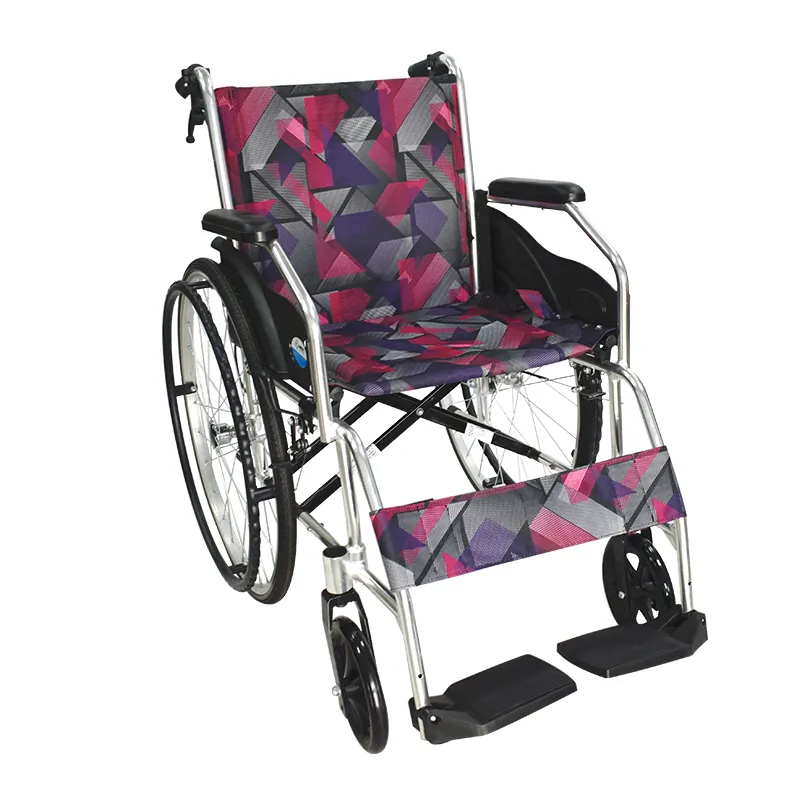
Why Can’t an Adult Wheelchair Replace a Pediatric One?
A common question among parents is: "Do pediatric wheelchairs really need to be custom-made? Can't we just use a smaller adult wheelchair?"
The answer is no.
Pediatric wheelchairs cannot be replaced by adult wheelchairs for the following reasons:
•Adult wheelchairs are structurally proportioned based on adult skeletal dimensions; simply scaling them down fails to provide children with the correct points of support.
•Pediatric wheelchairs serve not only as seating but also play a vital role in postural management during a child's developmental years—a need adult wheelchairs cannot meet.
•Children are constantly growing and require long-term adjustability, whereas adult wheelchairs typically feature a fixed structure.
Therefore, when comparing pediatric and adult wheelchairs, one must consider their fundamental functional differences rather than focusing solely on size.
What Are the Fundamental Structural Differences Between Pediatric and Adult Wheelchairs?
Although both are wheelchairs, their design objectives differ completely, resulting in significant structural distinctions.
1. Differences in Frame Proportions
Pediatric wheelchair frames are proportioned to suit a child's skeletal structure and physique, including the positioning of the ischial tuberosities (sit bones), backrest length, front seat height, and footrest distance. Adult wheelchairs, conversely, are developed based on adult body proportions, with seat width, backrest height, and armrest length all calibrated to the average adult physique.
2. Differences in Center of Gravity and Stability Structure
Children have a higher center of gravity and are more active; therefore:
•Pediatric wheelchairs must feature enhanced anti-tip designs.
•Rear wheel axle positions are adjustable to accommodate varying postures and activity levels.
•Brake points and control positions are placed further forward to facilitate operation by caregivers.
In contrast, adult wheelchairs have a lower, more stable center of gravity and do not require such extensive specialized anti-tip measures.
3. Significant Differences in Growth-Related Adjustability
This is the most critical distinction.
•Pediatric wheelchairs feature designs that allow for adjustments to seat width, seat depth, backrest height, footrest length, and armrest height.
Since a child's height can increase by 5–10 cm within a year, the wheelchair must be adjustable to keep pace with growth; otherwise, it will quickly become unsuitable.
•Most adult wheelchairs have a fixed structure.
Adult body dimensions generally do not change, so the focus is on load-bearing capacity and comfort rather than growth adaptability.
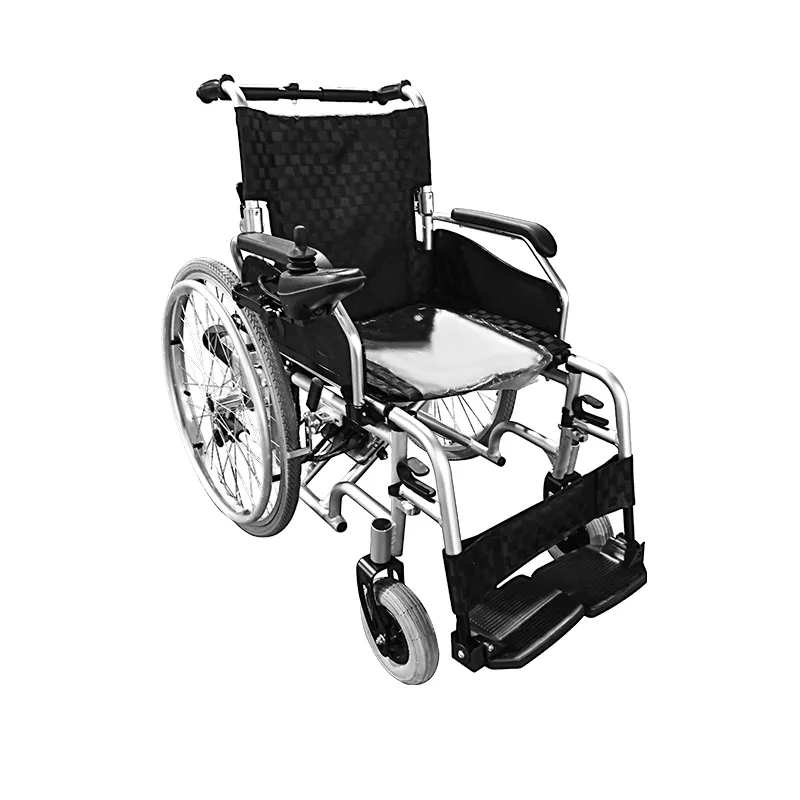
Why do pediatric wheelchairs require greater adjustability?
Children are in a developmental stage; using an ill-fitting wheelchair can directly impact:
•Spinal development
•Pelvic stability
•Lower limb support positioning
•Postural effects on the respiratory system
•Abdominal pressure control
•Propulsion efficiency (hand-rim usage)
Consequently, pediatric wheelchairs possess distinct adjustable features:
1. Adjustable Seat Width
Accommodates pelvic development, preventing issues where the seat is "too wide (causing lateral sliding) or too narrow (causing compression)."
2. Adjustable Seat Depth
Ensures support for two-thirds of the thigh, preventing compression behind the knee and maintaining pelvic stability.
3. Adjustable Backrest Height
Allows the back support point to be adjusted as the child grows, ensuring the spine is not compromised by poor posture.
4. Adjustable Footrest Height
Must be adjusted in sync with increasing leg length to prevent feet from dangling or incorrect knee angles.
Since adult body dimensions are fixed, adult wheelchairs rarely offer such extensive adjustability.
What are the differences in seat width and depth between pediatric and adult wheelchairs?
Size selection is the aspect most frequently misunderstood.
Dimensional characteristics of pediatric wheelchairs:
•Seat width typically ranges from 20–32 cm
•Seat depth ranges from 18–30 cm
•Compact base dimensions but a wide range of adjustability
•Enhanced lateral support
Dimensional characteristics of adult wheelchairs:
•Common seat width of 40–50 cm
•Seat depth of 40–48 cm
•Designed for stable body dimensions; no need for growth-related adjustments
•Sturdier structure and higher weight capacity
If an adult wheelchair is downsized to serve as a substitute for a pediatric wheelchair:
•Seat depth is often excessive
•Backrest height is ill-fitting
•Armrest positioning does not align with the child's arm length
•Footrest distance is too long
•Center of gravity is mismatched, increasing the risk of tipping
Consequently, even if the dimensions seem close, it cannot meet the requirements for proper posture.
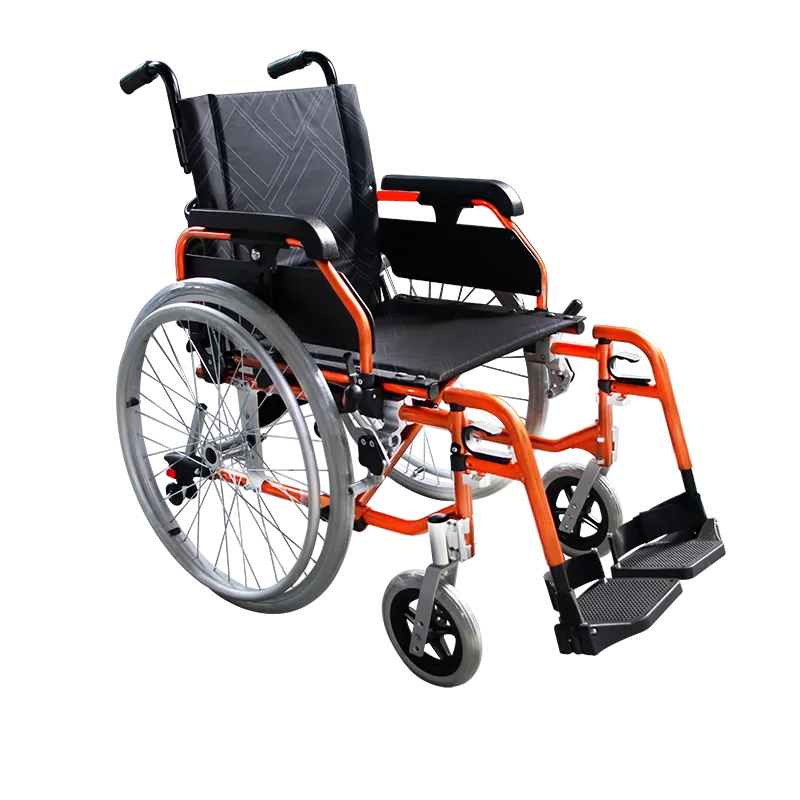
How do safety designs differ between pediatric and adult wheelchairs?
1. Anti-tip systems
Children tend to be more active and prone to sudden forward or backward movements; therefore, anti-tip wheels are usually standard equipment on pediatric wheelchairs.
For adult wheelchairs, these are optional features based on specific needs rather than standard equipment.
2. Brake design
Pediatric wheelchairs are often equipped with:
•Attendant-operated brakes
•Caregiver-controlled braking systems
•Easily accessible auxiliary handbrakes
Adult wheelchairs place greater emphasis on brakes designed for the pusher or self-braking mechanisms.
3. Restraint and postural stability devices
Pediatric wheelchairs utilize:
•Five-point harnesses
•Pelvic belts
•Chest straps
•Lateral supports
•Head supports
Adult wheelchairs typically require only:
•Waist belts
•Standard armrests
This is because adults can better maintain their own posture, whereas children require more complex support for body positioning.
Why are the comfort requirements for pediatric wheelchairs higher than those for adult wheelchairs?
Children have flexible spines and incompletely developed pelvises; prolonged incorrect sitting posture can lead to:
•Scoliosis
•Pelvic tilt
•Hip misalignment
•Exacerbation of abnormal muscle tone
Therefore, pediatric wheelchairs place special emphasis on:
1. Specialized seating systems
Providing pressure distribution, anti-slip stability, and postural control.
2. Multi-point support
Includes headrests, lateral supports, and pelvic positioning systems.
3. Posture correction functionality
Achieves optimal support by adjusting angles, depth, and backrest tension.
Adult wheelchairs, by contrast, focus more on:
•Long-term sitting comfort
•Weight-bearing capacity
•Propulsion efficiency
The priorities for the two types differ significantly.
Why are children's wheelchairs lighter than adult ones? How do the materials differ?
Children have limited pushing strength and require:
•A lighter frame
•Smoother wheel assemblies
•High-efficiency bearings
Adult wheelchairs are heavier because they require:
•High load-bearing capacity
•Robust structural integrity
•Emphasis on durability and stability
Children's wheelchairs utilize aluminum alloy, lightweight steel, or even carbon fiber structures to prioritize ease of propulsion.
Adult wheelchairs predominantly use high-strength steel or reinforced aluminum to ensure stability.
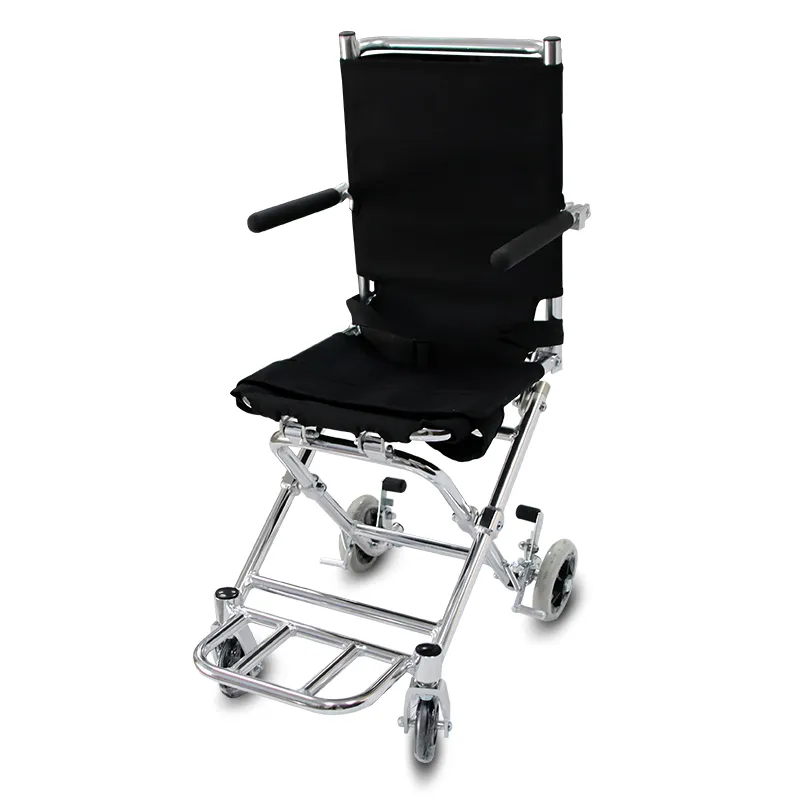
How do the accessories for children's and adult wheelchairs differ?
Common accessories for children's wheelchairs:
•Growth-adjustable footrests
•Multi-position headrests
•Lateral supports
•Pelvic positioning systems
•Five-point harnesses
•Anti-tip wheels
•Schoolbag racks and hooks for school supplies
Common accessories for adult wheelchairs:
•PU armrests
•Simple seatbelts
•Caregiver-operated brakes
•Stain-resistant cushions
•Oxygen tank holders
•Commode systems (for medical use)
The intended uses differ markedly, resulting in completely different accessory systems.
Why are children's wheelchairs usually more expensive than adult ones?
A smaller size does not mean a lower price; the design complexity of children's wheelchairs is far greater than that of adult models.
Key reasons for the higher price of children's wheelchairs include:
•Requirement for more adjustable components
•More specialized postural management systems
•Lower production volumes and higher demand for customization
•A higher proportion of medical-grade accessories
Adult wheelchairs are typically standardized products, whereas children's wheelchairs are often semi-customized or fully custom-made, naturally leading to different cost structures.
How do you correctly select a wheelchair based on a child's physique?
When selecting a wheelchair for a child, parents should consider the following:
1.Seat width: Ideally 2–3 cm wider than the pelvis.
2.Seat depth: Two-thirds of the leg length.
3.Backrest height: Based on the lower edge of the shoulder blades.
4.Footrest height: Positioned to maintain an angle of approximately 90° between the thigh and lower leg.
5.Center of gravity: Adjusted according to the child's pushing ability.
6.Handrim fit: Must allow the child to reach and operate them easily.
The method for selecting adult wheelchairs is completely different, focusing more on body width, usage scenarios, and weight capacity.