
In the field of rehabilitation assistive devices and professional medical wheelchairs, tilting wheelchairs are a type of wheelchair with a complex structure, highly integrated functions, and a focus on posture management and safety. Compared to ordinary manual wheelchairs or basic care wheelchairs, tilting wheelchairs not only serve as "mobility tools" but are also a complete seating support and posture adjustment system.
Many people, when learning about reclining manual wheelchairs, often only focus on "whether it can tilt," neglecting the fact that: the tilting function relies on the coordinated work of multiple key components.
So, what exactly are the components of a complete reclining manual wheelchair? What role does each component play during use? Why are these components crucial for safety and comfort?
This article will provide a systematic and in-depth analysis of the components of a tilting wheelchair from a professional structural perspective, helping you fully understand its design logic and functional value.
Why is the structure of a tilting wheelchair more complex than that of an ordinary wheelchair?
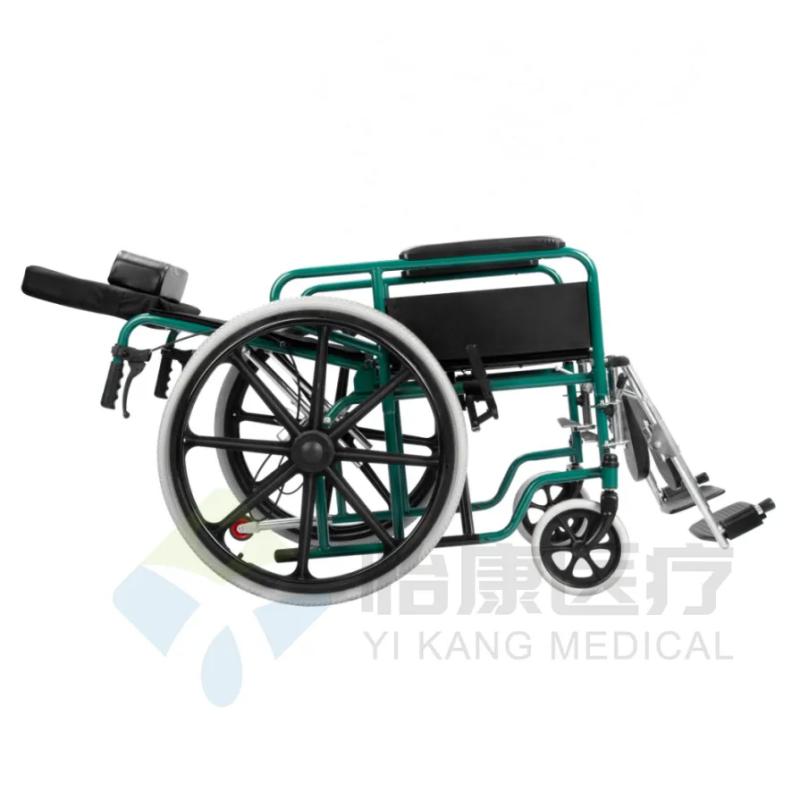
Before delving into the specific components, it's essential to understand a fundamental concept: a tilting wheelchair is not simply a wheelchair with "an added reclining function."
The core characteristics of a tilting wheelchair are:
• The seat and backrest tilt as a single unit.
• The hip angle remains essentially constant during tilting.
• The body's center of gravity shifts with the entire seat, rather than changing in a single component.
To achieve this, a tilting wheelchair must possess:
• A stable load-bearing structure.
• A precise tilting mechanism.
• A multi-point postural support system.
• Height-adjustable ergonomic components.
Therefore, its component composition is far more systematic and specialized than that of a conventional wheelchair.
What components make up the frame of a tilting wheelchair?
Is the frame a fundamental component of a tilting wheelchair?
The answer is yes, and the frame is one of the most crucial and fundamental components of a tilting wheelchair.
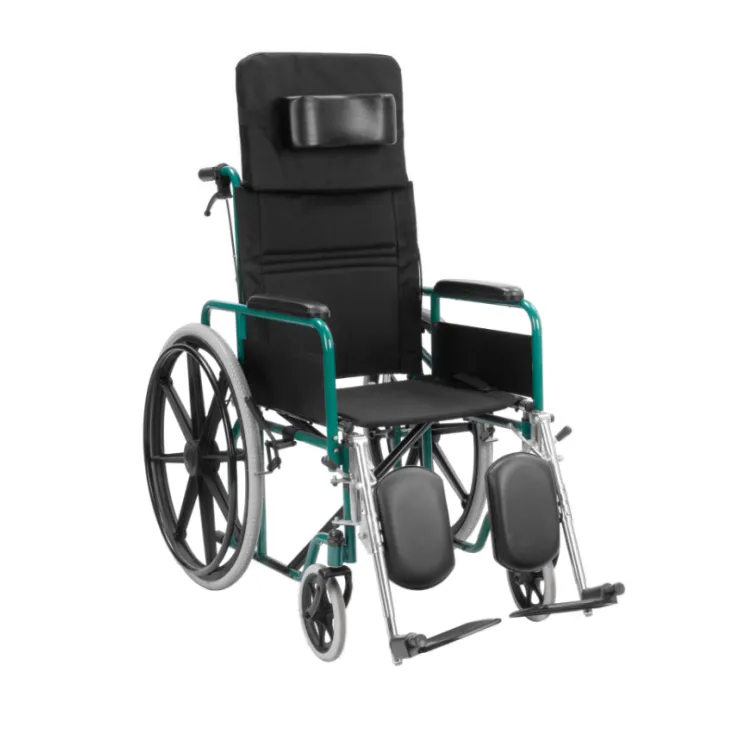
1. Main Frame Structure
The main frame of a tilting wheelchair is typically made of high-strength materials, such as:
• Medical-grade steel
• High-strength aluminum alloy
The main frame performs the following functions:
• Supports the weight of the entire reclining manual wheelchair
• Supports the user's weight
• Connects the tilting mechanism, wheel set, and seat system
The stability of the main frame directly determines the safety of the reclining manual wheelchair during tilting.
2. Seat Support Frame
In a tilting wheelchair, the seat is not directly fixed to the main frame but is connected via a separate seat support frame.
This frame serves to:
• Act as the main body for tilting movement
• Support the seat cushion, backrest, armrests, and other components
• Link with the tilt adjustment mechanism
This structure is key to achieving "overall tilting."
What components make up the tilting mechanism of a tilting wheelchair?
How does a tilting wheelchair tilt?
The tilting function relies on a sophisticated tilting mechanism.
1. Tilting Adjustment Mechanism
This is the most functionally representative component of a tilting wheelchair.
Common forms include:
• Manual mechanical adjustment mechanism
• Hydraulically assisted adjustment structure
This device is responsible for:
• Controlling the tilt angle
• Maintaining stability in the tilted position
• Preventing accidental rebound
2. Tilting Locking System
A reclining manual wheelchair must have a reliable locking mechanism when used at different angles.
The locking system's functions include:
• Fixing the current tilt angle
• Preventing the wheelchair from changing its angle during use
• Improving overall safety
Without a stable locking system, the tilting function becomes useless.
3. Hinges and Connecting Components
Tilting wheelchairs are connected by multiple high-strength hinges:
• Main frame
• Seat support frame
• Tilting mechanism
These hinges must possess:
• High wear resistance
• High load-bearing capacity
• Long-term stability
What components are included in the seating system of a tilting wheelchair?
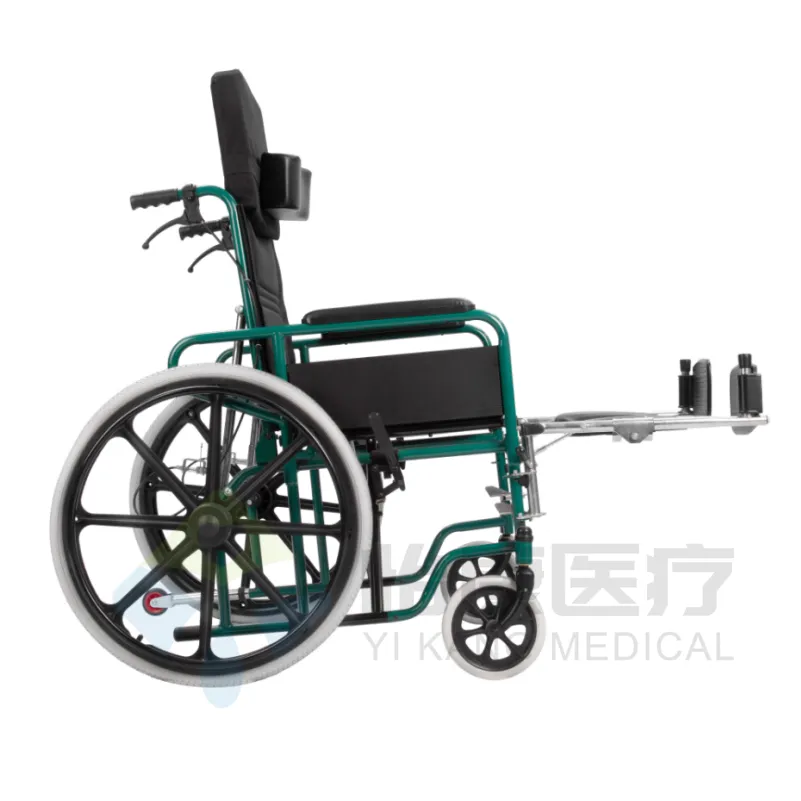
Why is the seating system so important in a tilting wheelchair? Because the seating system is in direct contact with the user's body, its design is crucial for comfort, posture management, and safety.
1. Seat Cushion
The seat cushion of a tilting wheelchair typically has the following characteristics:
• Sufficient thickness
• Pressure-distributing capabilities
• Securely integrated with the seat frame
The main functions of the seat cushion are:
• Distributing pressure on the ischial tuberosities
• Improving postural stability
• Reducing discomfort from prolonged sitting
2. Backrest System
The backrest of a tilting wheelchair is not a typical straight panel structure, but rather:
• Height adjustable
• Angle adjustable
• Can be equipped with lateral support
The backrest maintains a relatively fixed angle with the seat cushion during tilting, thus ensuring consistent body posture.
Does a tilting wheelchair always include a headrest?
Why do tilting wheelchairs usually need a headrest?
When tilted, the support required for the user's head increases significantly; therefore, the headrest is a very important component of a tilting wheelchair.
The main functions of a headrest include:
• Supporting the head and neck
• Preventing the head from tilting backward or to the side
• Improving overall comfort
• Ensuring safety when tilting
Common headrest types include:
• Height-adjustable headrest
• Angle-adjustable headrest
• Multi-point support headrest
What components make up the armrests of a reclining manual wheelchair?
What is the role of armrests in a reclining manual wheelchair?
Armrests not only provide support for the arms but also assist in postural stability.
Armrests in reclining manual wheelchairs typically feature:
• Detachable structure
• Height-adjustable design
• Thickened armrest pads
Their functions include:
• Supporting the upper limbs
• Preventing body tilting
• Improving posture stability
What components make up the footrest system of a tilting wheelchair?
Does the footrest system move synchronously with tilting?
The answer is: Yes, and this is one of the important characteristics of reclining manual wheelchairs.
1. Footrests
Footrestles typically feature:
• Adjustable height
• Non-slip surface
• Sufficient weight-bearing capacity
2. Leg Supports
Many tilting wheelchairs are equipped with:
• Leg supports
• Leg straps
Used to maintain lower limb stability and prevent legs from slipping during tilting.
3. Footrest Linkage System
The footrest system is usually linked to the seat frame to ensure:
• Synchronized lower limb posture during tilting
• No additional pulling
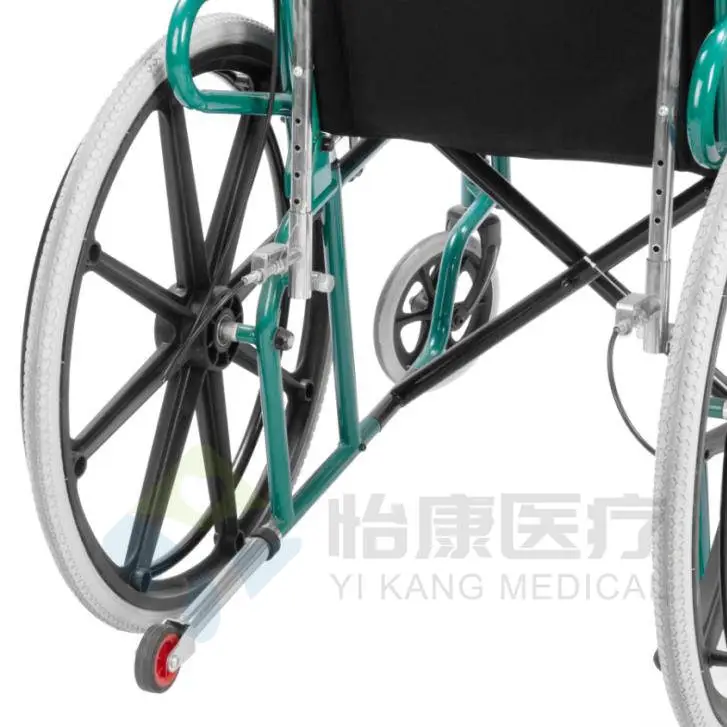
What components make up the wheel system of a tilting wheelchair?
1. Rear Wheels
The rear wheels bear the main weight and propulsion functions, and typically feature:
• Large diameter
• High-strength rims
• Wear-resistant tires
2. Front Wheels (Swivel Wheels)
The front wheels are responsible for steering, requiring:
• Flexible turning
• Good shock absorption
• High stability
3. Axles and Bearings
High-quality bearings improve:
• Smoothness of pushing
• Service life
• Driving stability
Does a tilting wheelchair include a braking system?
Is the braking system an indispensable component?
Yes, the braking system is a key component of the safety structure of a tilting wheelchair.
The braking system typically includes:
• Manual parking brake
• Rear wheel locking device
Its functions include:
• Preventing wheelchair slippage
• Ensuring safety when getting in and out of the wheelchair
• Maintaining stability during tilt adjustments
Does a tilting wheelchair include a seatbelt or restraint system?
Most tilting wheelchairs are equipped with:
• Pelvic harness
• Chest brace
• Multi-point restraint system (depending on model)
These components are used to:
• Stabilize body posture
• Prevent slippage
• Enhance safety during tilting use
What components make up a tilting wheelchair?
A tilting wheelchair is not a single structure, but rather a combination of several key components, including a frame system, tilting mechanism, seat system, headrest, armrests, footrests, wheel set, braking system, and safety restraint devices.
It is the precise coordination of these components that gives the reclining manual wheelchair its stable, safe, and comfortable overall tilting function, meeting the high requirements of specific users for posture management and safety.
Can I purchase nursing beds directly from Yikang Medical?
Yes, Yikang Medical offers direct purchasing of high-quality nursing beds from our factory in Foshan, China. Founded in 2010 and expanded in 2014 to hospital and nursing beds, we are an OEM manufacturer and supplier trusted by major brands. Our nursing beds are designed for hospitals, rehabilitation centers, and home care, and we support full customization including configuration, appearance, and color.
Customers worldwide rely on Yikang Medical for reliable supply, competitive pricing, and high-quality products.