
In the field of assistive mobile devices, the rollator has long been an important tool for many people to maintain their independence. However, with technological advancements and increasing user demands, more and more users are starting to focus on whether there are more convenient, safer, and less strenuous alternatives to traditional rollators.
Among the many alternatives, electric wheelchairs have become a category of great interest. So, are electric wheelchairs really better than rollators? Who are electric wheelchairs suitable for? What are the differences between the two?
This article will provide an in-depth analysis of rollators and electric wheelchairs to help readers determine whether, if they are currently using a rollator, they should consider an electric wheelchair as an upgrade option.
Can electric wheelchairs really replace rollators?
To discuss whether electric wheelchairs are a better choice than rollators, we must first understand the fundamental differences between the two in terms of structure and function.
1. Rollator
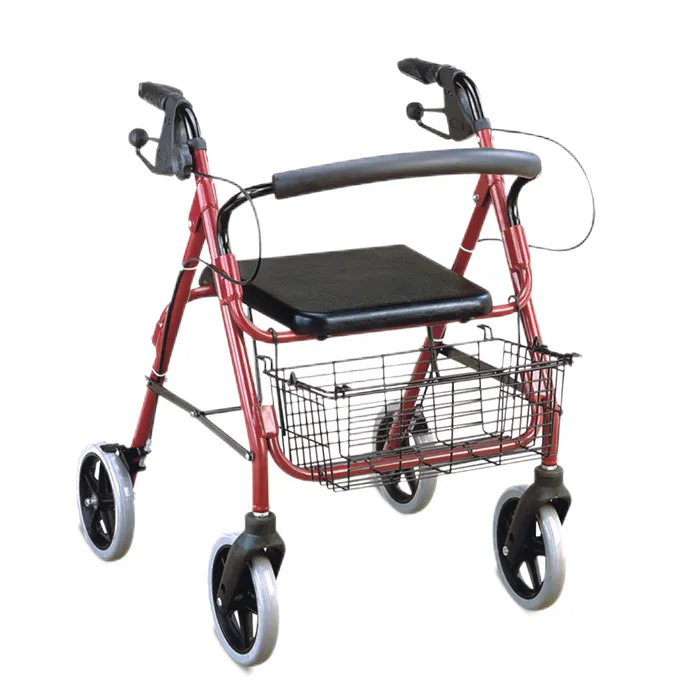
A rollator is an assistive walking device that relies on the user's own strength to propel themselves. It is mainly used to improve balance, provide support, and reduce the risk of falls. Rollators are suitable for people who still have some walking ability but are not stable enough or have limited walking time.
2. Electric Wheelchairs
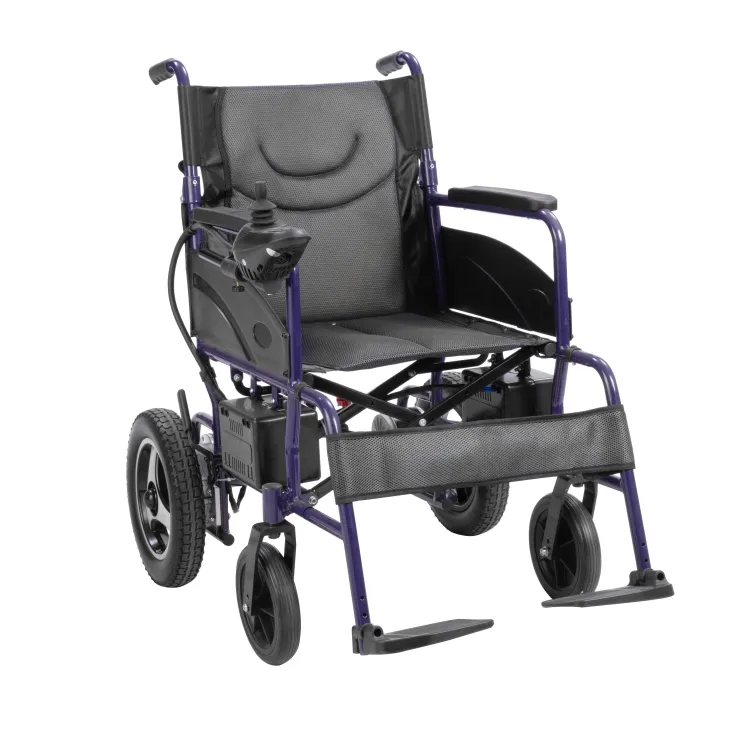
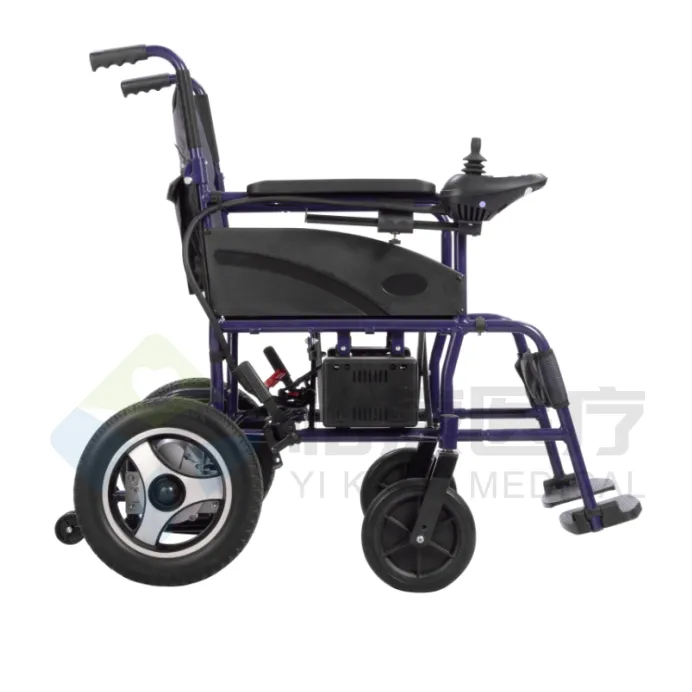
An electric wheelchair is a fully automated mobility device driven by an electric motor and controlled by a controller. It is suitable for users who cannot walk long distances or are completely unable to walk. It provides stable seating support and allows for long-distance movement without assistance.
Therefore, determining whether an electric wheelchair can replace a rollator should be based on the user's actual abilities and needs, rather than simply comparing product grades.
What are the obvious limitations of a rollator that make people consider switching to an electric wheelchair?
Although rollators are simple and lightweight, in certain situations, some users gradually realize that they cannot meet higher-level mobility needs, mainly in the following aspects:
1. Rollators require sufficient physical strength from the user
While rollators provide support, movement still requires the user to push. If the user has decreased physical strength, insufficient arm strength, or suffers from respiratory/cardiovascular diseases, prolonged use of a rollator will be very strenuous.
2. Rollators cannot cover long distances of movement
Rollators are suitable for short-distance movement, such as walking indoors or in the yard. They are not suitable for needs such as shopping, walking in corridors, or moving within the community.
3. Rollators still require a relatively high level of balance
While rollators provide support, users still need to maintain upper limb control and balance. If balance deteriorates further, the risk of falls remains.
4. Rollators cannot replace seating long-term
Rollators are generally not suitable for prolonged use as chairs. Users need to constantly switch between devices for movement and rest, increasing fatigue.
When these limitations begin to impact a user's quality of life, an "electric wheelchair" becomes a natural and necessary upgrade.
Why is an electric wheelchair a better alternative to a rollator?
The advantages of electric wheelchairs over rollators are mainly reflected in the following dimensions: less effort, safety, comprehensive functionality, and long-distance mobility.
1. Electric wheelchairs do not require physical exertion from the user
Electric wheelchairs are electrically powered and do not require the user to push the device or stand for movement. For people with insufficient endurance, declining physical strength, or those who are already unable to walk, electric wheelchairs offer truly "burden-free mobility."
2. Electric wheelchairs significantly reduce the risk of falls
Rollators rely on balance control while walking, while electric wheelchairs are designed for a seated position, offering high stability and eliminating the risk of falls for the user.
3. Electric wheelchairs enable long-distance travel
Whether in large shopping malls, communities, parks, or long corridors, electric wheelchairs are more practical than rollators, allowing users to maintain their daily activities more easily.
4. Electric wheelchairs combine mobility and rest functions
Electric wheelchairs are inherently stable seats, so users don't need to frequently stand, move around, or find resting places, making them particularly suitable for people with limited physical strength or short standing time.
5. Electric wheelchairs enhance daily autonomy
Rollators have limited use and sometimes require family accompaniment, but electric wheelchairs allow users to perform more tasks independently, such as:
• Going out independently
• Moving between rooms independently
• Operating indoor spaces independently
• Shopping or handling daily chores independently
This autonomy is often a key factor in improving quality of life.
Therefore, when a user's needs exceed the capabilities of a current rollator, an electric wheelchair is indeed a better choice.
Who are suitable candidates for electric wheelchairs?
In what situations should an upgrade from a rollator be considered?
Electric wheelchairs do not completely replace rollators, but rather provide a more suitable option for specific groups. The following situations are particularly suitable for electric wheelchairs:
1. People with difficulty walking or unable to walk independently
If a user cannot move effectively using a rollator, for example:
• Unsteady standing
• Dizziness while walking
• Weakness making it difficult to push the rollator
• Limited lower limb mobility
Electric wheelchairs offer greater safety.
2. People with insufficient physical strength who cannot endure prolonged walking
For example:
• Weak cardiopulmonary function
• Rapid fatigue
• Chronic diseases affecting physical strength
• Advanced age and decreased endurance
These users tire easily using a rollator, while electric wheelchairs significantly reduce the physical burden.
3. Users who need to go out frequently
If a user's life requires a lot of movement, such as:
• Living in a large environment
• Needing to go to the community, supermarket, or hospital
• Outdoor environments with slopes or long distances
Electric wheelchairs offer higher efficiency and comfort than rollators.
4. Users who need to maintain independent living for extended periods
When users want to reduce their dependence on others, electric wheelchairs are better at maintaining independent mobility than rollators.
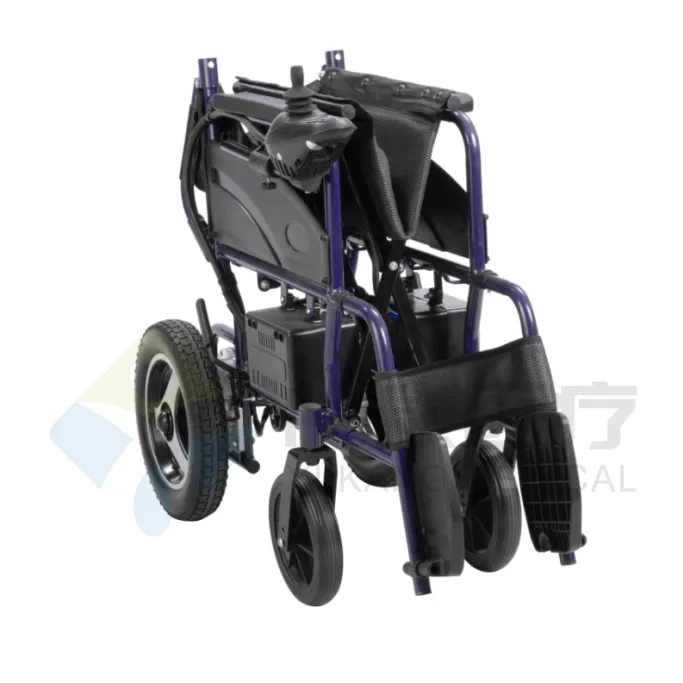
How to choose between a rollator and an electric wheelchair? Is an upgrade necessary?
Choosing between a "rollator" and an "electric wheelchair" should be based on an assessment of actual needs, rather than simply comparing the price or performance of the devices:
Assessment Items | Rollator is more suitable | Electric wheelchair is more suitable
Learning Ability | Can walk independently but requires support | Unable to walk or walking very difficult
Physical Condition | Can push the wheelchair | Unable to push or declining physical strength
Usage Scenarios | Short distances indoors | Long distances indoors and outdoors
Autonomy Needs | Accepts accompaniment | Wants to move independently
Balance Ability | Has some balance | Insufficient balance
If the user's needs gradually shift towards the right-hand option, then an electric wheelchair is a better upgrade direction.
What types of wheelchairs does Yikang Medical manufacture?
Yikang Medical produces both electric and manual wheelchairs as part of its comprehensive hospital and rehabilitation equipment line. As a leading Chinese manufacturer and supplier, we also offer hospital beds, nursing beds, bath chairs, toilet chairs, walkers, and canes. Our factory supports OEM customization, including color, configuration, and design adjustments, to meet client requirements.