
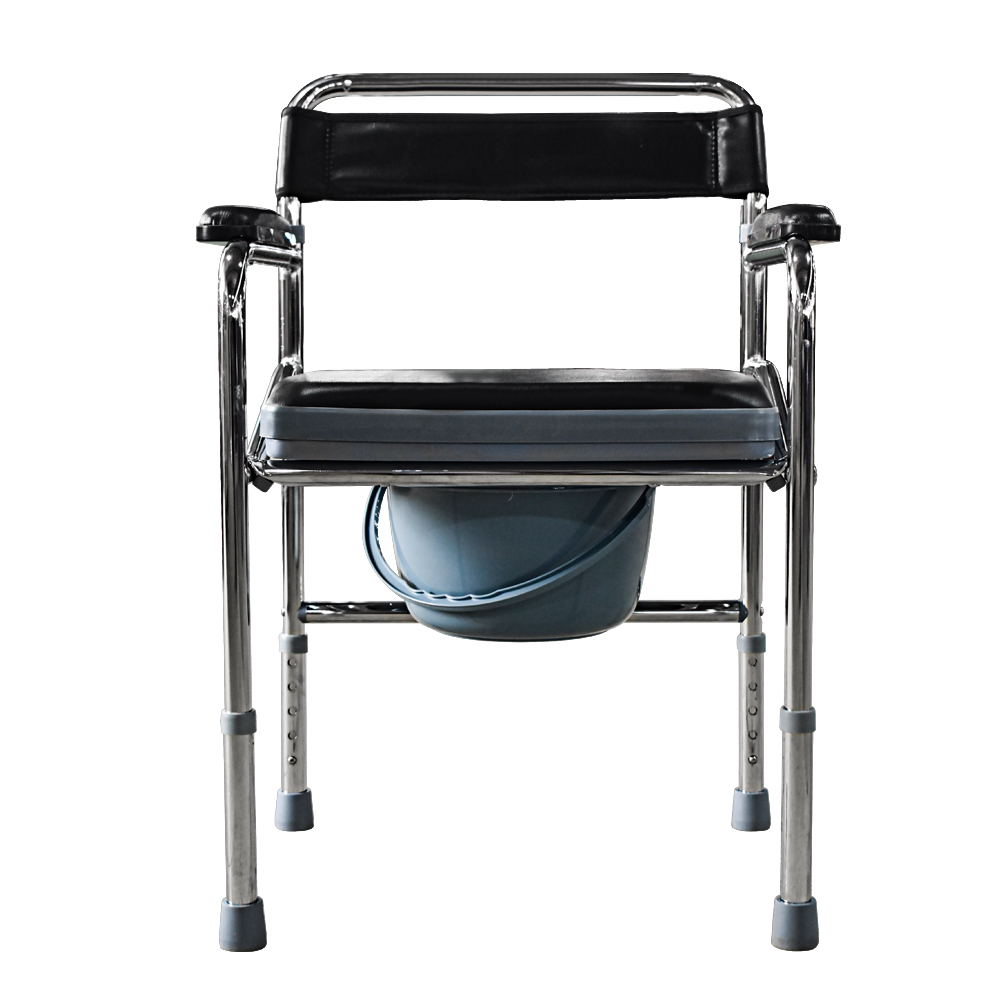
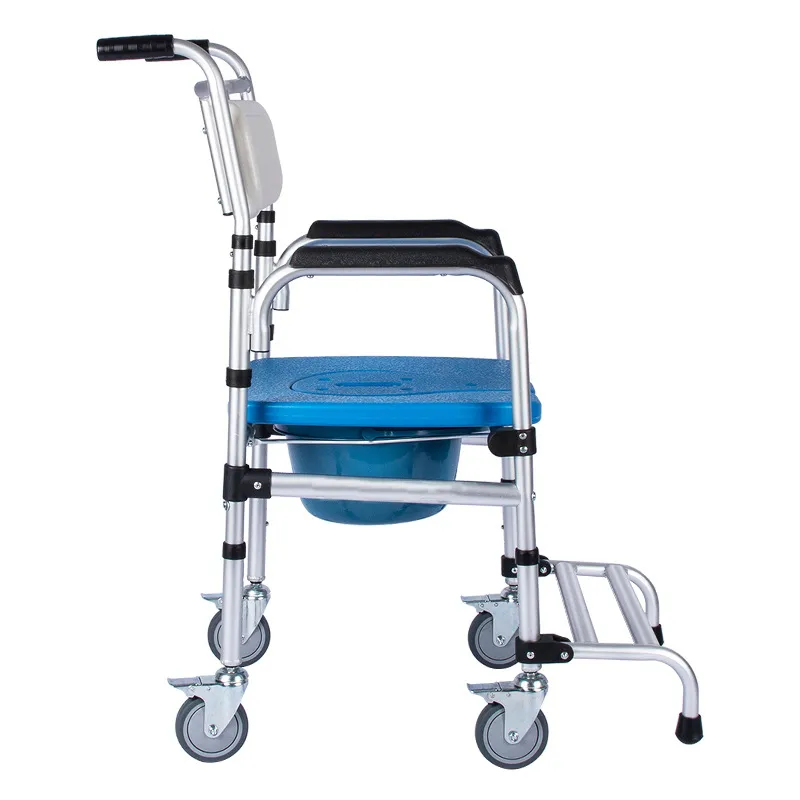
In hospitals, rehabilitation centers, nursing homes, and home care settings, you may often see a type of portable toilet that can be pushed around. It typically has a seating structure, a bedpan, can be used at the bedside, and can be moved short distances within the room via a mobile support.
Many people don't know the official name of this device and often call it a "portable toilet," "nursing chair," or "wheelchair with bedpan," etc.
In fact, from a professional perspective of medical devices and nursing equipment, the official name for this device is usually "Portable Commode Chair."
The name "Portable Commode Chair" accurately describes its design purpose: a portable assistive device that can be moved and placed at any time for toileting, especially providing convenience for people with mobility impairments.
This article will use a professional, systematic, and logically clear approach to analyze in detail: what are portable toilets in hospitals actually called, why are they commonly used in hospitals, and how do they differ from traditional bedpans?
Why are portable toilets in hospitals called Portable Commode Chairs?
Hospitals have clear functional definitions for toilet assistance equipment, which must meet the following requirements:
• Mobility
• Stability
• Weight-bearing capacity
• Disinfectability and cleanability
• Adaptability to different departments and nursing needs
The name "portable toilet chair" perfectly encapsulates these core functions:
• Portable: Movable, readily available, and can be placed in various rooms
• Toilet: Equipped with toileting function
• Chair: Equipped with a seating support system, conforming to patient ergonomics
Hospitals use this name because it is a widely accepted and standardized term in the medical and nursing industry, facilitating clinical communication, procurement management, and nursing training.
The core significance of the portable toilet chair is:
To allow patients with limited mobility, unable to enter the bathroom, or unable to sit on a fixed toilet to safely use the toilet.
Why are portable commode chairs widely used in hospitals?
Patients in hospitals include:
• Post-operative recoveries
• Lower limb fracture patients
• Elderly patients
• Patients with chronic diseases
• Patients with limited mobility
• Patients on short-term bed rest
These patients often have difficulty walking directly to the bathroom to use a fixed toilet, making portable toilet chairs an indispensable piece of equipment in the nursing process.
1. Portable toilet chairs reduce the risk of patient movement
Safety is the primary goal of hospital nursing.
Compared to having patients walk to the bathroom, using a portable toilet chair can:
• Prevent slips
• Avoid excessive force
• Prevent secondary injuries from falls
• Reduce the dangers of long-distance movement
This is especially crucial for post-operative, fracture, or neurological patients.
2. Portable toilet chairs reduce the burden on nursing staff
Helping patients walk to the bathroom every time is cumbersome, time-consuming, and exhausting. Using a portable toilet chair can:
• Reduce the difficulty of transfer
• Reduce the force required to assist
• Save nursing time
• Improve nursing efficiency
Therefore, portable toilet chairs are almost standard equipment in hospitals.
3. Can be used during doctor's rounds and intravenous infusions
Portable toilet chairs, due to their flexible placement, can be used at any time:
• During intravenous infusions
• While receiving IV drips
• After ward rounds
• In the postoperative monitoring area
This avoids frequent patient movement.
What are the structural components of a portable commode chair?
Why are these structures important for patients?
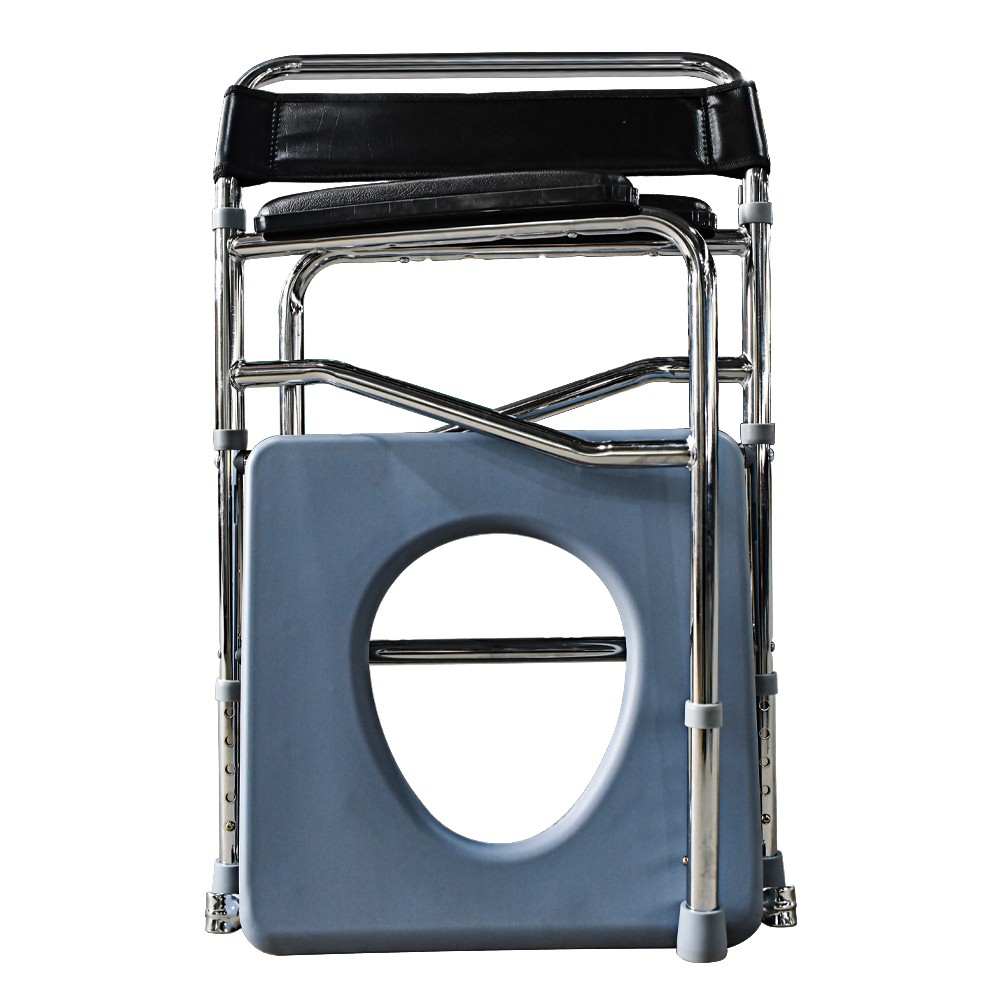
Portable commode chairs are suitable for hospitals because of their specific structure, designed specifically for patients with limited mobility.
1. Nursing-grade armrests
Portable commode chairs are generally equipped with armrests on both sides, which serve to:
• Help patients get up
• Provide lateral stability
• Prevent slipping
• Assist nursing staff with procedures
Armrests are an important safety component of portable toilet chairs.
2. Removable bedpan
The bedpan of a portable toilet chair is usually made of:
• Medical-grade sterilizable material
• With a lid
• Pull-out design
Easy to clean, empty, and quickly change.
3. Height-Adjustable Seat
Patients vary greatly in height, and hospital patients often include:
• Elderly patients
• Patients with short or long legs
• Patients with limited sitting posture after surgery
The height of the portable commode chair is adjustable, ensuring the safest angle when sitting down and getting up.
4. Padded Seat or Removable Seat Ring
Hospital-use seats typically feature:
• Waterproof
• Non-slip
• Skin-friendly
• Soft material for pressure relief
This is more comfortable and suitable for patients sitting for extended periods than the hard seat ring of a regular toilet.
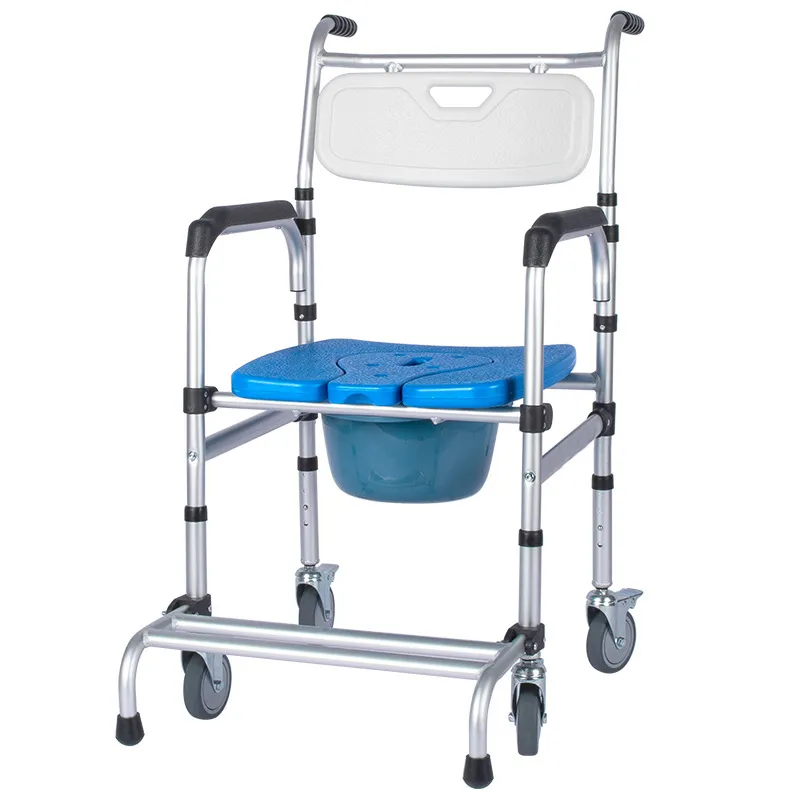
5. Medical Casters (Some Models)
Many hospitals use portable toilet chairs with casters:
• Easy to move
• Casters with brakes for securing
• Can be pushed to the bedside or bathroom
This is a common feature in hospitals.
What are the advantages of a portable toilet chair compared to a regular toilet?
1. Unrestricted Usage Environment
Regular toilets are confined to the bathroom, while portable toilet chairs can:
• Beside the hospital bed
• In the treatment room
• In the infusion area
• In the rehabilitation area
Flexible placement and adaptability.
2. More Suitable for People with Limited Mobility
Regular toilets lack:
• Handrails
• Height adjustment
• Medical casters
• Nursing support structures
For patients, regular toilets may be too low, too narrow, or unsafe, while portable commode chairs are designed to be more ergonomic.
3. Easier to Maintain Cleanliness and Hygiene
The commode in a portable commode chair can be disposed of promptly without requiring the patient to enter the bathroom, reducing the risk of cross-infection.
4. Safer and More Convenient
Portable commode chairs reduce:
• Travel distance
• Risk
• Effort required
More reliable for both patients and caregivers.
Which hospital departments and nursing scenarios are suitable for portable toilet chairs?
Portable toilet chairs are commonly found in:
• Orthopedics
• Neurology
• Obstetrics and Gynecology
• Geriatrics
• Rehabilitation Medicine
• ICU (specific setting)
• General Surgery
• Long-term Care Wards
Patients in these departments generally have reduced mobility, making the importance of portable toilet chairs even more pronounced.
Why are portable toilet chairs better suited to medical care needs than bedpans?
While bedpans can assist bedridden patients with toileting, their limitations are significant. Portable toilet chairs, on the other hand, better align with scientifically sound medical care principles:
1. More Natural Posture
Bedpans require lying down or semi-reclining, while portable commode chairs completely mimic a natural sitting posture.
2. Easier Bowel and Urination
A natural sitting posture allows for:
• Better abdominal pressure application
• Smoother bowel movements
• Reduced constipation
This is especially important for the elderly and post-operative patients.
3. Greater Protection of Dignity
Portable commode chairs resemble proper toilet equipment more closely than bedpans, reducing psychological stress.
Portable Toilet Chairs vs. Wheeled Toilet Chairs and Nursing Wheelchairs: What's the Difference?
Portable toilet chairs in hospitals may be confused with the following devices:
• Nursing wheelchairs
• Push wheelchairs with commodes
• Adjustable nursing chairs
Key differences are as follows:
Device Name | Commode | Mobility | Core Use
Portable Toilet Chair | Yes | Movable or stationary | Toileting assistance
Nursing Wheelchair | No (some with commodes) | Yes | Patient transportation
Wheelchair with commode (Toilet Wheelchair) | Yes | High mobility | Transportation + toileting
Bathroom Chair | Mostly without commodes | Showerable | Bathing assistance
The purpose of portable commode chairs is very clear: to facilitate toileting, not transportation.
What factors should be considered when choosing a portable toilet chair?
Hospitals and families typically consider the following when choosing a portable toilet chair:
1. Weight Capacity: Must meet the patient's weight requirements.
2. Wheels: Wheeled models are usually needed for ward use; stationary models may be necessary for home use.
3. Seat Material: Must be waterproof, non-slip, and antibacterial.
4. Armrest Design: Should it be stable and able to be flipped up for easy movement?
5. Height Adjustment: Suitable for patients of different heights.
6. Ease of Cleaning: Is the bedpan easy to disassemble and clean?
These conditions determine the safety and convenience of using a portable commode chair.
What are portable toilets in hospitals called? The answer is—portable toilet chairs.
The "portable toilets" commonly seen in hospitals are officially called portable commode chairs. They are toilet assistance devices designed specifically for people with mobility impairments, offering advantages such as:
• Mobility
• Safety and stability
• Ergonomic structure
• Easy cleaning
• Flexible use
• Reduced risk of falls
Portable toilet chairs have become an indispensable nursing device in hospitals and are increasingly being used in home care environments.
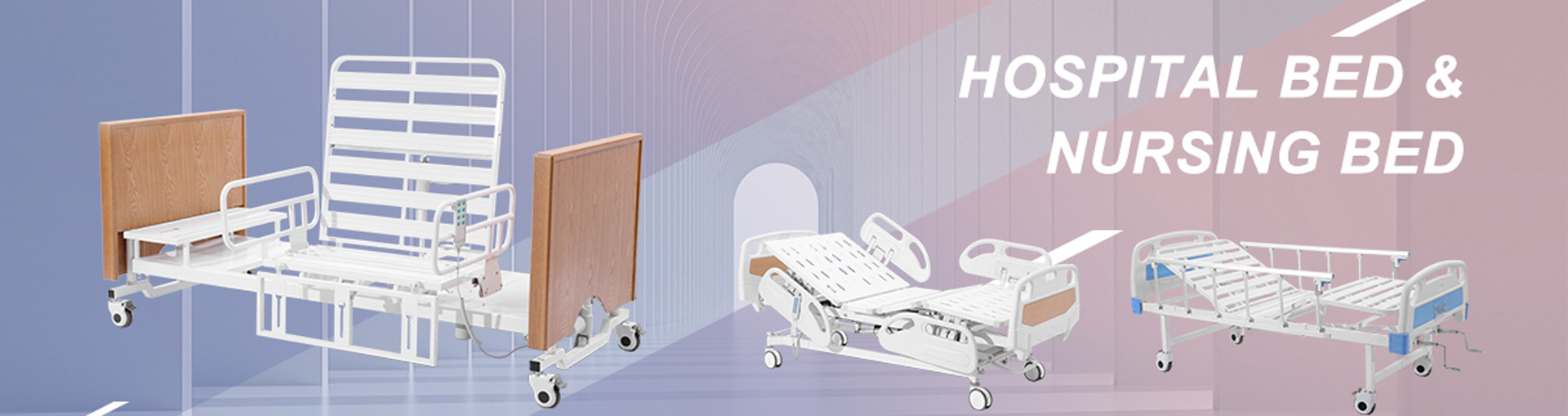
Does Yikang Medical support OEM manufacturing?
Yes. Foshan Yikang Medical Technology Co., Ltd has been an OEM manufacturer for multiple international brands since 2014. We supply hospital and rehabilitation equipment, including hospital beds, nursing beds, electric and manual wheelchairs, bath chairs, toilet chairs, walkers, and canes. As a professional supplier from China, our factory offers high-quality products and supports customization of design, configuration, and color.