

Wheelchairs are essential mobility tools for many people with limited mobility. With the increasing specialization of wheelchairs, the emergence of sports wheelchairs allows users to have more precise and professional choices for different scenarios.
Many people want to know: what exactly is the difference between a sports wheelchair and a regular manual wheelchair? If you're considering choosing the right wheelchair for yourself, this question is particularly crucial.
This article will systematically analyze the core differences between sports wheelchairs and regular manual wheelchairs from a professional perspective, providing in-depth analysis from structural design, functional positioning, operation methods, material characteristics to target users, allowing you to fully understand the performance differences between the two and make the right choice for you.
Why differentiate between sports wheelchairs and regular manual wheelchairs?
Regular manual wheelchairs primarily serve daily travel, basic mobility, and daily living assistance.
Sports wheelchairs, on the other hand, are designed specifically for athletes, sports enthusiasts, and people undergoing rehabilitation training; they are highly functional professional equipment.
A proper understanding and distinction between the two can help wheelchair users and their families:
• A safer experience in usage scenarios
• Find equipment more suitable for individual needs
• Improve physical fitness, skills, or efficiency in daily activities
• Avoid wasting money by purchasing the wrong type of wheelchair
Based on these importance, this article will delve into the topic from multiple perspectives.
What are the structural differences between sports wheelchairs and ordinary manual wheelchairs?
Why is the structure of sports wheelchairs more "special"?
When sports wheelchairs are mentioned, many people immediately think of lightweight, flexible, and sports-equipped appearances. Indeed, sports wheelchairs are optimized for "sports performance" in their structural design, with their design goals clearly focused on:
• Faster speed
• More flexible steering
• Greater stability
• Higher control precision
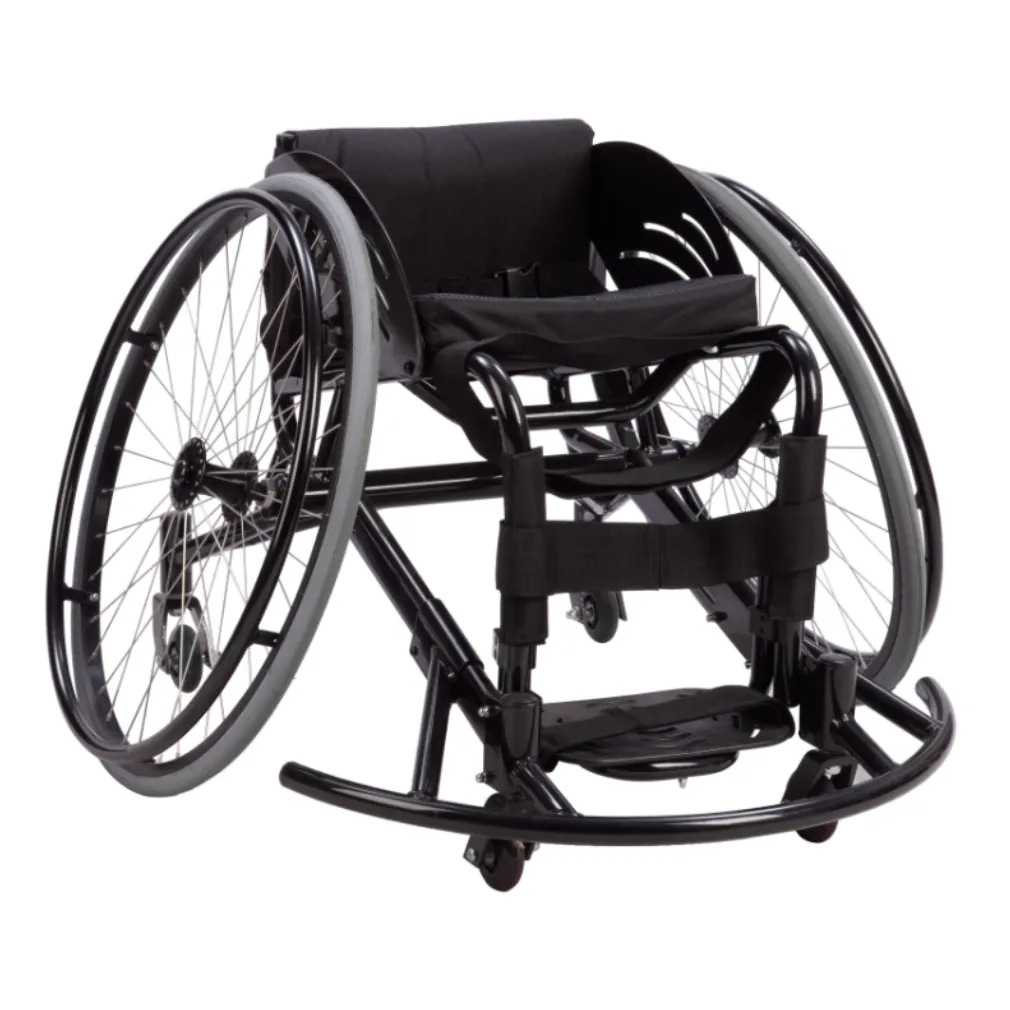
Sports wheelchairs typically have the following structural features:
1. Forward-tilting frame design
The frame of a sports wheelchair often adopts a forward-tilting or backward-retracting design, making the wheelchair's center of gravity more suitable for high-speed movement and directional adjustments.
2. Widened and Tilted Rear Wheels
Sports wheelchairs typically have their rear wheels angled outwards (called the "bend angle" or "tilt angle"), which helps to:
• Increase stability
• Prevent tipping over
• Enhance lateral support during high-speed movement
This design is almost never found in ordinary manual wheelchairs.
3. Lighter Overall Weight
To improve speed, sports wheelchairs mostly use aerospace-grade aluminum alloy, titanium alloy, or ultralight carbon fiber, making them significantly lighter than ordinary wheelchairs.
4. Narrower or More Ergonomic Seats
The seat design is entirely geared towards the needs of movement, such as a tighter cushion and a more stable posture, helping users to exert force more easily during exercise.
Why is the structure of ordinary manual wheelchairs more "lifestyle-oriented"?
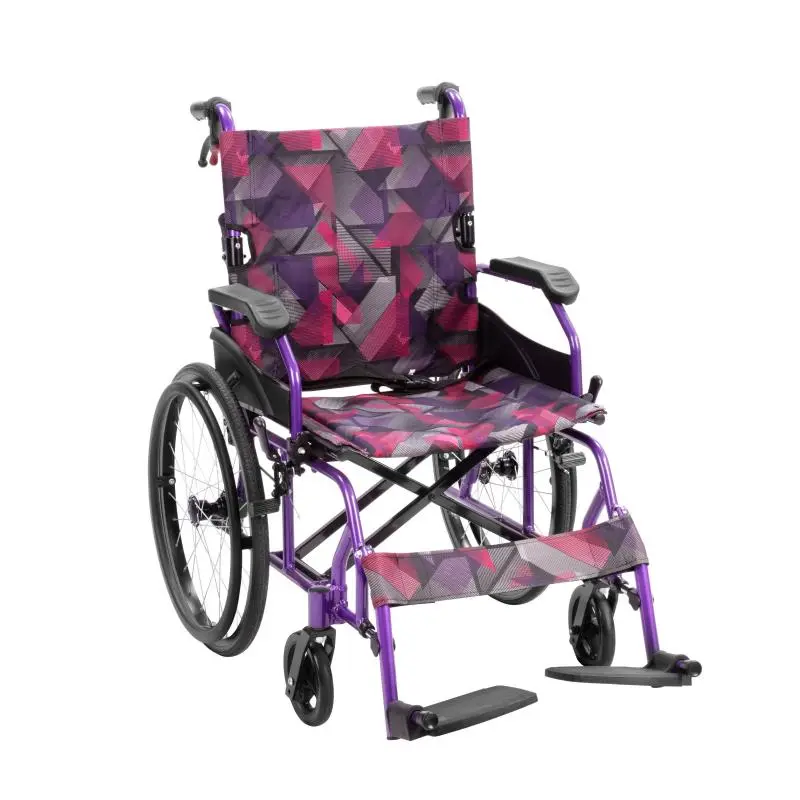
The design focus of a standard manual wheelchair is not on sports, but rather on:
• Comfort
• Stability
• Weight-bearing capacity
• Foldability
• Ease of care
Structural features include:
• A more stable upright frame
• No tilting angle in the rear wheels
• Wider, more comfortable seat
• Emphasis on the user experience of the backrest, armrests, and footrests
• Greater weight but greater stability
Standard manual wheelchairs are suitable for daily mobility, recovery use, and short trips, not for high-speed sports or acrobatic maneuvers.
What are the functional differences between sports wheelchairs and standard manual wheelchairs?
Are sports wheelchairs more geared towards professional use? —Yes
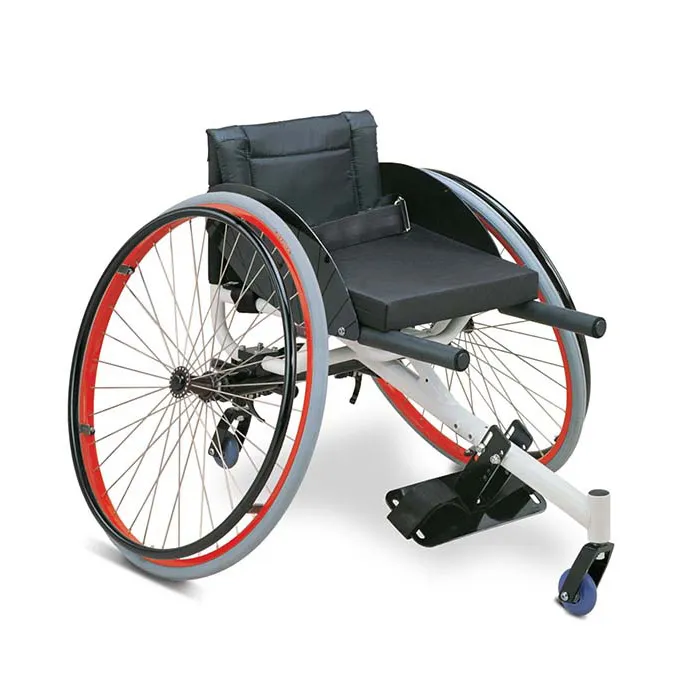
Sports wheelchairs are designed entirely around athletic performance, including:
• Greater explosive power
• More precise steering
• Faster acceleration
• Greater stability
• A design better suited for complex movements
These features make sports wheelchairs suitable for:
• Basketball
• Tennis
• Racing
• Fencing
• Dance
• Other wheelchair sports
Standard manual wheelchairs cannot meet these performance requirements.
Do standard manual wheelchairs prioritize functionality for daily life?
— Yes. Standard manual wheelchairs emphasize:
• Comfortable seating posture
• Smooth movement
• Easy care
• Suitable for short indoor and outdoor walks
• Assistance with daily activities
For example:
• Adjustable backrest and armrests
• Removable footrests
• Larger seating space
• Foldable design for easy storage
These features make them ideal for prolonged sitting and daily use.
Why is adaptability more important for sports wheelchairs?
Why do sports wheelchairs require "high-precision personalization"?
The performance of a sports wheelchair depends on the user's:
• Height
• Hip width
• Arm length
• Core strength
• Force exertion
• Usage scenario (basketball, tennis, racing, etc.)
Therefore, sports wheelchairs are highly customized, for example:
• Seat height
• Seat width
• Center of gravity position
• Rear wheel angle
• Push-up wheel diameter
• Back height
• Footrest length
• Frame material
This customization makes sports wheelchairs truly "personalized equipment."
Why don't ordinary manual wheelchairs need such high customization?
The core of ordinary manual wheelchairs is to provide universal daily functionality, so common options include:
• Standard seat widths in different sizes
• Adjustable footrests
• Standard armrest design
Suitable for most users, requiring no particularly fine-tuning.
What are the differences in handling between sports wheelchairs and ordinary manual wheelchairs?
Why are sports wheelchairs more responsive?
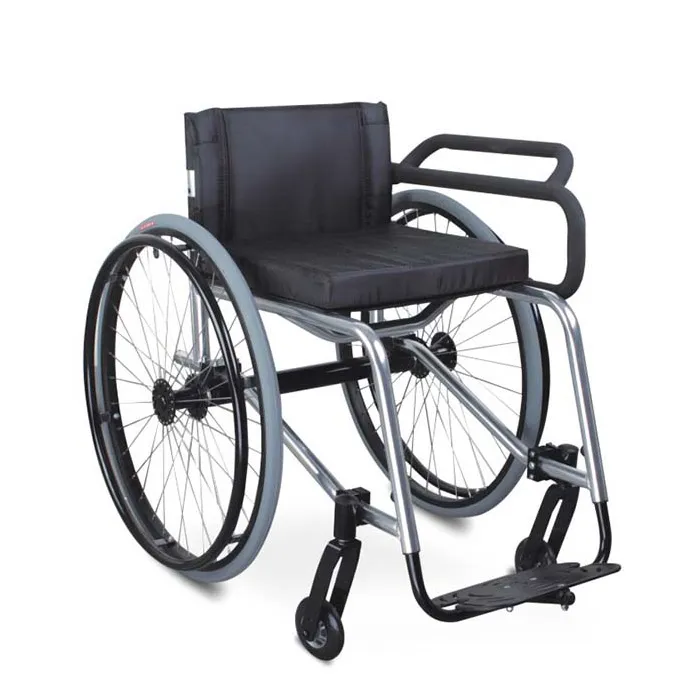
To meet the demands of rapid mobility, sport wheelchairs feature:
• Smaller turning radius
• Lighter handling
• Faster wheel response
• More flexible directional adjustment
Users can perform various maneuvers:
• Quick start
• Sudden stop
• Tilt
• Steering
• Lateral movement
These maneuvers are difficult to achieve in a standard manual wheelchair.
Are standard manual wheelchairs more stable to handle?
— Yes. Standard wheelchairs are designed for stability rather than agility, therefore their handling characteristics include:
• Slightly slower response
• Larger turning angle
• Suitable for smooth, slow movement
• Especially suitable for indoor and short-distance use
They don't emphasize speed or agility like sport wheelchairs, making them easier to use and safer.
What is the weight difference between sport wheelchairs and standard manual wheelchairs?
Why are sport wheelchairs lighter?
Because sports wheelchairs require users to propel their wheels more quickly, they utilize:
• Titanium alloy
• Lightweight aerospace-grade aluminum
• Carbon fiber
• Ultralight frame structure
Their weight is significantly lower than ordinary manual wheelchairs, some even as low as 6-9 kg.
Are ordinary manual wheelchairs heavier?
— Yes. Ordinary manual wheelchairs typically use:
• Durable steel
• Heavier aluminum
• Thickened frame structure
Therefore, their weight is generally between 12-20 kg.
The focus is on load-bearing capacity and durability, not speed.
What are the differences in user experience?
The user experience of sports wheelchairs emphasizes "freedom and speed."
The sensations sports wheelchairs provide include:
• Greater freedom of movement
• Significantly improved mobility
• Smoother movements
• Faster acceleration and reaction time
• Higher body engagement
This experience is ideal for active, sports-loving individuals.
The user experience of a standard manual wheelchair prioritizes comfort and stability.
Users will experience:
• More comfortable seating posture
• More comprehensive support
• Better suited for extended sitting periods
• Slower pacing
Suitable for various everyday scenarios.
Who are sports wheelchairs and standard manual wheelchairs suitable for?
Who are sports wheelchairs suitable for?
Sports wheelchairs are suitable for:
• Sports enthusiasts
• Wheelchair basketball players
• Wheelchair tennis players
• Competitive users
• People who want to improve their physical fitness or training
• People who need high flexibility and speed
Who are standard manual wheelchairs suitable for?
Standard manual wheelchairs are suitable for:
• Elderly people
• People in rehabilitation
• People who require long-term sitting assistance
• People with daily mobility needs
• Temporary users
How can I buy crutches from Yikang Medical?
Yikang Medical offers high-quality crutches for hospitals, clinics, and home care. Located in Foshan, China, our factory started in 2010 with hardware production and expanded to hospital and rehabilitation equipment in 2014. Our crutches are ergonomic, durable, and adjustable, with customization options for size, material, and color. We are an OEM supplier for major brands and hold ISO13485, ISO9001, CE, and FDA certifications.