
In daily life, the manual wheelchair stands as one of the most common and widely used mobility aids available. When the need arises to acquire a wheelchair—whether for oneself, a family member, or an institution—many people encounter a question that, while seemingly simple, is actually quite critical: What exactly is the difference between a medical manual wheelchair and a home-use manual wheelchair?
Many assume there are vast differences between the two; however, in reality—from structural principles to propulsion methods—their fundamental designs are quite similar. Both rely on basic components such as wheels, frames, push handles, and brakes to fulfill mobility requirements. Nevertheless, significant distinctions do exist between the two categories regarding their intended usage environments, comfort levels, safety features, and specific design details.
This article will address this core question directly, offering an in-depth analysis of the differences between medical and home-use manual wheelchairs. Our goal is to help you gain a clearer understanding of how to select the most suitable manual wheelchair based on the specific needs of the user.
Why Do Hospitals Prefer Medical Manual Wheelchairs?
Medical manual wheelchairs are primarily utilized in public or semi-public settings, such as hospitals, rehabilitation centers, and long-term care facilities. This raises a pertinent question: Why do hospitals tend to favor these specifically designed medical manual wheelchairs rather than simply using standard home-use models?
The hospital environment is unique; it involves a diverse patient population and frequent mobility requirements, and manual wheelchairs are often used repeatedly by multiple individuals. Consequently, medical manual wheelchairs must possess the following specific characteristics:
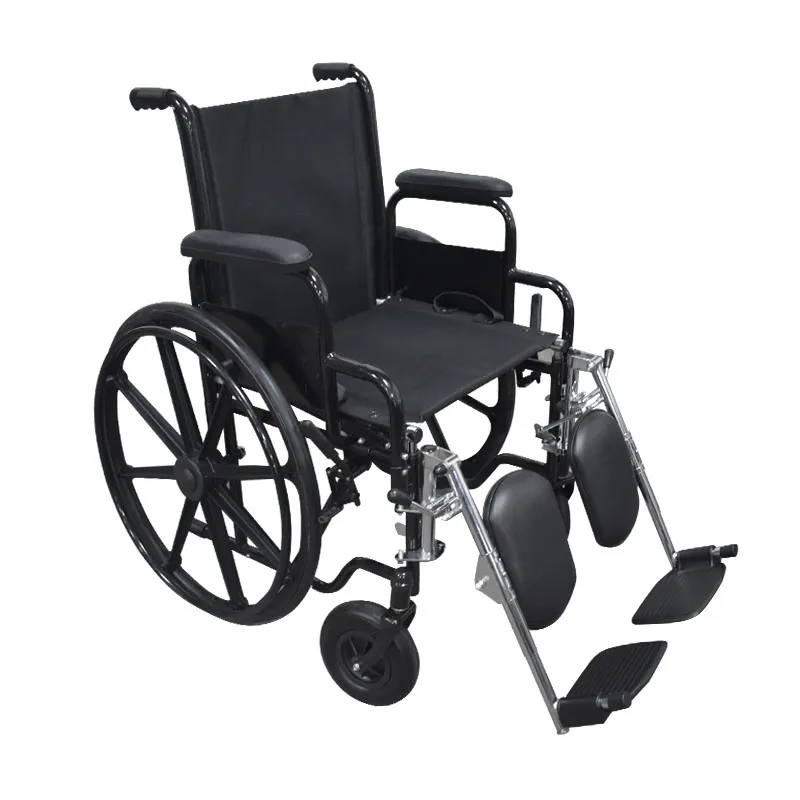
• Enhanced Structural Stability: Ensuring smooth and steady movement across various hospital environments, including corridors, ramps, and elevators.
• Facilitated Caregiving Operations: Features such as flip-up armrests and detachable footrests make it easier to perform lateral transfers of patients or to position them alongside medical beds.
• Highly Durable Materials: Given the high frequency of use in a hospital setting, medical wheelchairs require superior durability to minimize maintenance costs.
• Easy-to-Clean Surfaces and Materials: Hospitals must maintain rigorous hygiene standards; therefore, medical manual wheelchairs typically feature materials and surfaces that are easy to wipe down and disinfect.
It is precisely because of these characteristics that—while medical manual wheelchairs may appear simple in appearance—they actually place a much greater emphasis on functional details and are specifically designed to be caregiver-friendly.
What Makes Home-Use Manual Wheelchairs Better Suited for Domestic Settings?
In contrast to medical manual wheelchairs, home-use manual wheelchairs prioritize personalization, comfort, and the overall long-term user experience.
The primary reasons include:
• Enhanced Seat Comfort: Home users typically spend extended periods sitting in their manual wheelchairs; consequently, these models are designed with a stronger emphasis on ergonomics.
• Greater Adaptability to Individual Needs: Features such as backrest height, seat width, and footrest angle can be customized to suit the user's specific body type.
• Lighter Weight: This facilitates daily use for family members—making it easier to push the wheelchair, fold it for storage, or load it into a car trunk.
• Flexible Price Range: Consumers can select from a variety of models—ranging from basic entry-level versions to advanced, high-end options—to fit their specific budget.
The frequency and context of use in a home environment differ significantly from those in a hospital setting; therefore, manual wheelchairs designed for home use prioritize "long-term comfort" and "convenience for family caregivers."
Why does the functional design of medical manual wheelchairs prioritize a "Smooth and Stable Experience"?
A defining characteristic of medical manual wheelchairs is that they typically offer a more stable and smooth riding experience.
The reasons include:
1. Patients' Physical Condition is Often Fragile:
Many hospital users are post-operative patients, elderly individuals, or those with limited mobility who may have unstable sitting postures or compromised balance. Consequently, the manual wheelchair must provide a high degree of stability.
2. Hospital Corridors Are Long, Requiring Extensive Pushing Distances:
Medical staff often need to push patients across the entire hospital facility; a stable frame and smooth-rolling wheels significantly reduce the physical burden on caregivers.
3. The Need to Prevent Secondary Injury Caused by Bumps:
Excessive vibration can aggravate patient injuries—such as wounds or fractures—or cause discomfort. Therefore, medical manual wheelchairs are typically equipped with thicker tires, higher-strength frames, and more stable seating structures.
Consequently, "smoothness, safety, and suitability for caregiving" serve as the core design principles for medical manual wheelchairs.
Where are the primary structural differences between medical manual wheelchairs and home-use manual wheelchairs most evident?
Although both categories fall under the umbrella of manual wheelchairs, they differ in structural details, specifically in the following key areas:
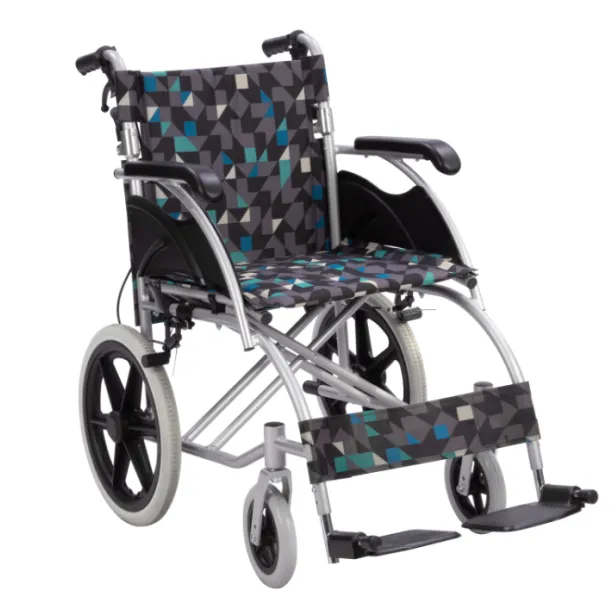
1. Armrest Design: Medical models typically feature flip-up or detachable armrests.
Medical manual wheelchairs are frequently equipped with:
•Flip-up armrests
•Detachable armrests
•Barrier-free structural designs that facilitate lateral transfers
These specific design details enable medical staff to quickly and efficiently transfer patients from hospital beds, examination tables, or stretchers into the wheelchair, thereby enhancing operational efficiency and ensuring patient safety. Home-use manual wheelchairs, on the other hand, tend to feature fixed armrests to enhance structural stability and help control costs.
2. Footrest Structure: Medical Models Offer Greater Flexibility
The footrests on medical manual wheelchairs typically:
•Support quick detachment
•Can be flipped up
•Can be swung outward
•Facilitate medical procedures (such as IV infusions, nursing care, etc.)
In contrast, the footrests on home-use manual wheelchairs usually prioritize comfort—for instance, featuring adjustable footplate angles and lengths that can be adapted to the user's specific leg length.
3. Frame Strength and Material Differences
Medical manual wheelchairs often utilize sturdier steel or reinforced structures, as they must withstand high-frequency usage and frequent cleaning.
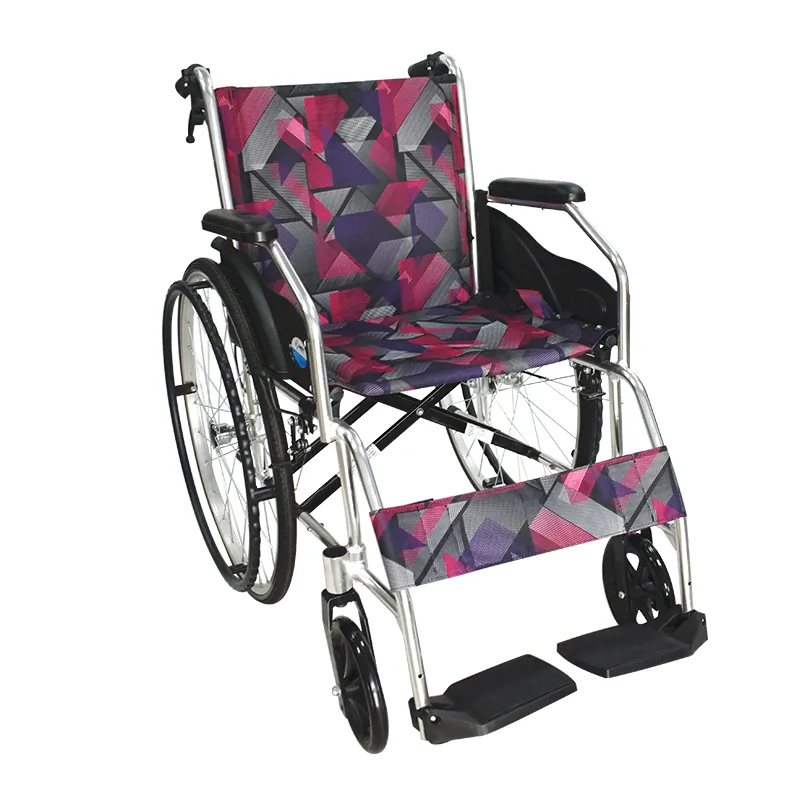
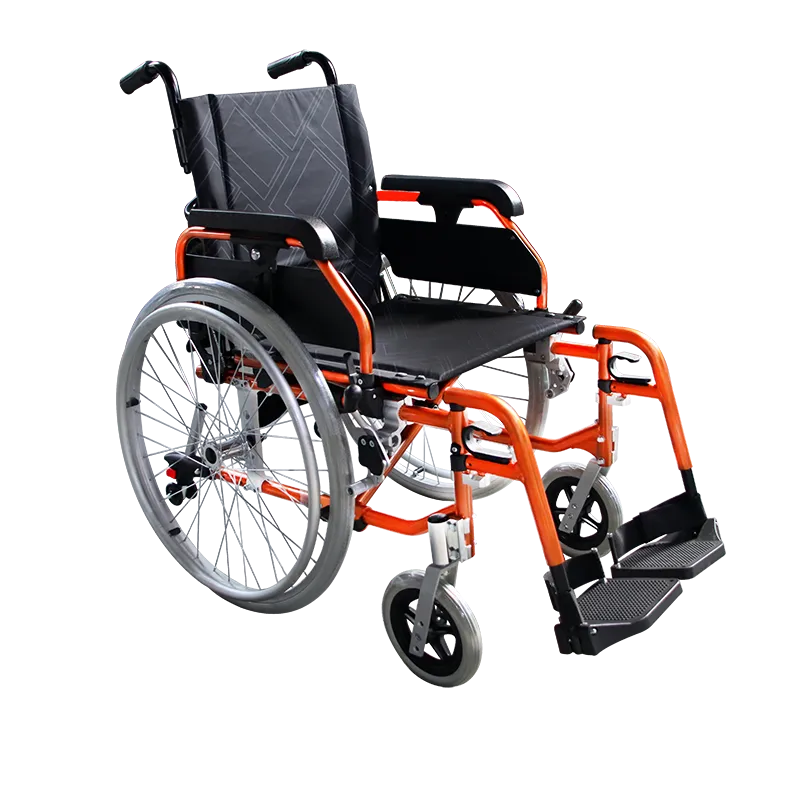
Home-use manual wheelchairs, conversely, tend to employ lightweight aluminum alloys, making them easier to fold, store, and transport when going out.
4. Brake System Configuration
Medical manual wheelchairs generally need to meet the operational demands of a hospital environment; therefore:
•Brake levers are positioned more visibly
•Hand brakes are more responsive
•Certain models even feature a dedicated attendant brake system
Home-use manual wheelchairs typically utilize hand brakes or wheel-locking brakes that are better suited for independent operation by the user.
How do medical manual wheelchairs and home-use manual wheelchairs differ in terms of safety?
The greatest commonality between the two is that they must both be "safe and reliable"; however, their actual configurations prioritize different aspects of safety.
Safety Priorities for Medical Manual Wheelchairs
•Emphasis on "fall prevention" and "prevention of lateral sliding"
•Seat widths are designed to accommodate a broad range of body types to ensure safety
•Robust braking systems are designed to suit hospital floor conditions
•Allow caregivers to quickly apply brakes and make adjustments
Safety Priorities for Home-Use Manual Wheelchairs
•Designed to fit the individual user's body shape more closely, minimizing sliding or pressure-related issues caused by prolonged sitting
•Equipped with tires better suited for home flooring surfaces (e.g., hardwood, non-slip flooring, etc.)
•Greater focus on safety-related comfort features, such as soft seat cushions and anti-tipping designs
In short:
Medical manual wheelchairs emphasize "universality + ease of caregiving"
Home-use manual wheelchairs emphasize "personalization + long-term comfort"
From the perspective of user experience, is there a significant difference between the two?
When viewed from the perspective of the overall user experience, the difference between medical-grade manual wheelchairs and home-use manual wheelchairs can be summarized in a single sentence:
Home-use manual wheelchairs prioritize "sitting comfort," whereas medical-grade manual wheelchairs prioritize "ease of use and safety."
Therefore, if you are selecting a manual wheelchair for a family member, a home-use model is often the more suitable choice;
Conversely, if the wheelchair is intended for use in a hospital, care facility, or rehabilitation center, a medical-grade manual wheelchair will better meet your needs.