
In hospitals, rehabilitation centers, and even home care settings, medical beds serve as essential equipment for supporting patient rest, treatment, and nursing procedures. With advancements in medical technology, hospital beds have evolved beyond merely accommodating a patient's need to lie down; they now offer functions such as patient positioning, nursing assistance, safety assurance, and rehabilitation support. Furthermore, the operational mechanisms, adjustment methods, and level of automation inherent in these beds directly impact both nursing efficiency and the patient experience.
Among the wide array of medical beds available, the three most common types are manual beds, semi-electric beds, and full-electric hospital beds. While these three categories may appear similar in appearance, they differ significantly in terms of functional structure, ease of nursing care, applicable settings, and cost. In particular, electric beds—which have seen widespread adoption in recent years—have become a standard and critical fixture in hospitals and care facilities.
So, what exactly distinguishes these three types of hospital beds? Which type is best suited for a hospital environment? Which is more appropriate for home care? And how does one determine which type of bed will best meet the specific needs of an individual patient?
This article provides a comprehensive analysis from a professional nursing perspective to help you clearly understand the differences and unique characteristics of each type.
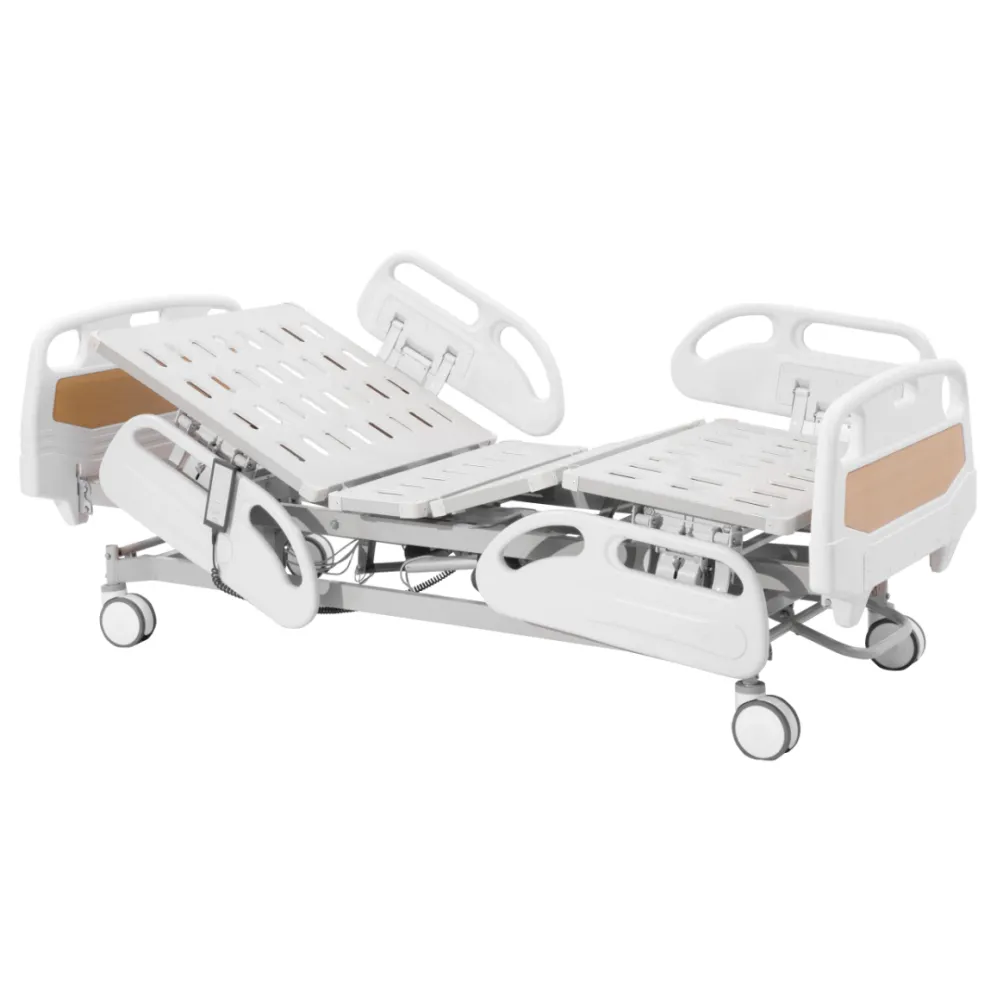
Why Is It Important to Distinguish Between Manual, Semi-Electric, and Full-Electric Beds?
In the context of patient care, a hospital bed is not merely a piece of "furniture," but rather a medical device that actively participates in the treatment and nursing processes.
The specific functions of a hospital bed have a direct impact on the following aspects:
•Nursing workload
•Patient positioning and management
•Pain management and patient comfort
•Patient safety
•Nursing efficiency
•Accessibility of care
•Compatibility with other medical equipment and instruments
The differences in the level of support provided by various bed types become particularly pronounced in situations involving long-term bed rest, limited mobility, or the need for frequent positional adjustments.
Therefore, understanding the distinctions between manual, semi-electric, and full-electric hospital beds is crucial for informed decision-making regarding hospital equipment procurement, home care setup, and the assessment of specific professional nursing requirements.
How Do Manual, Semi-Electric, and Full-Electric Beds Differ?
The core difference among these three types of hospital beds lies in their adjustment mechanisms:
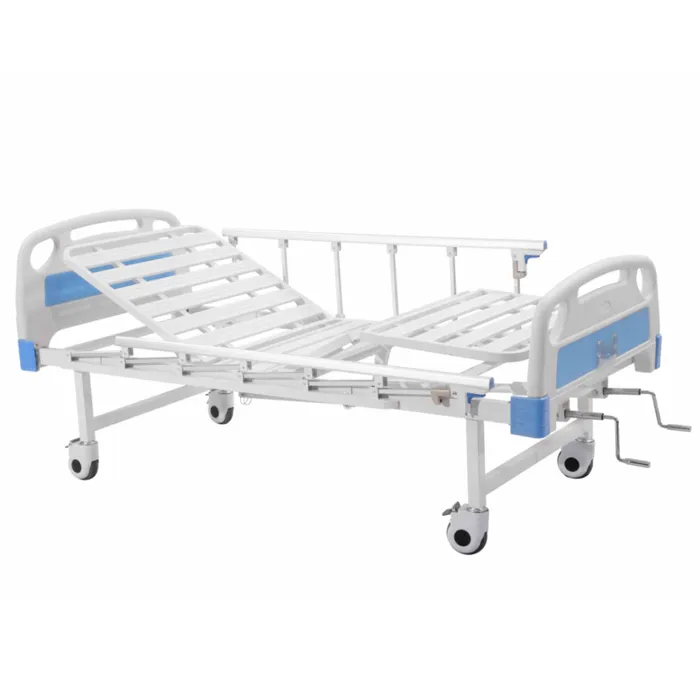
•Manual Beds: Rely on mechanical cranks for adjustment.
•Semi-Electric Beds: Feature a combination of electric and manual adjustments.
•Fully Electric Beds (Electric Hospital Beds): All major adjustments are controlled electrically.
The following section provides an in-depth comparison across various aspects, including functionality, structure, intended use, and nursing requirements.
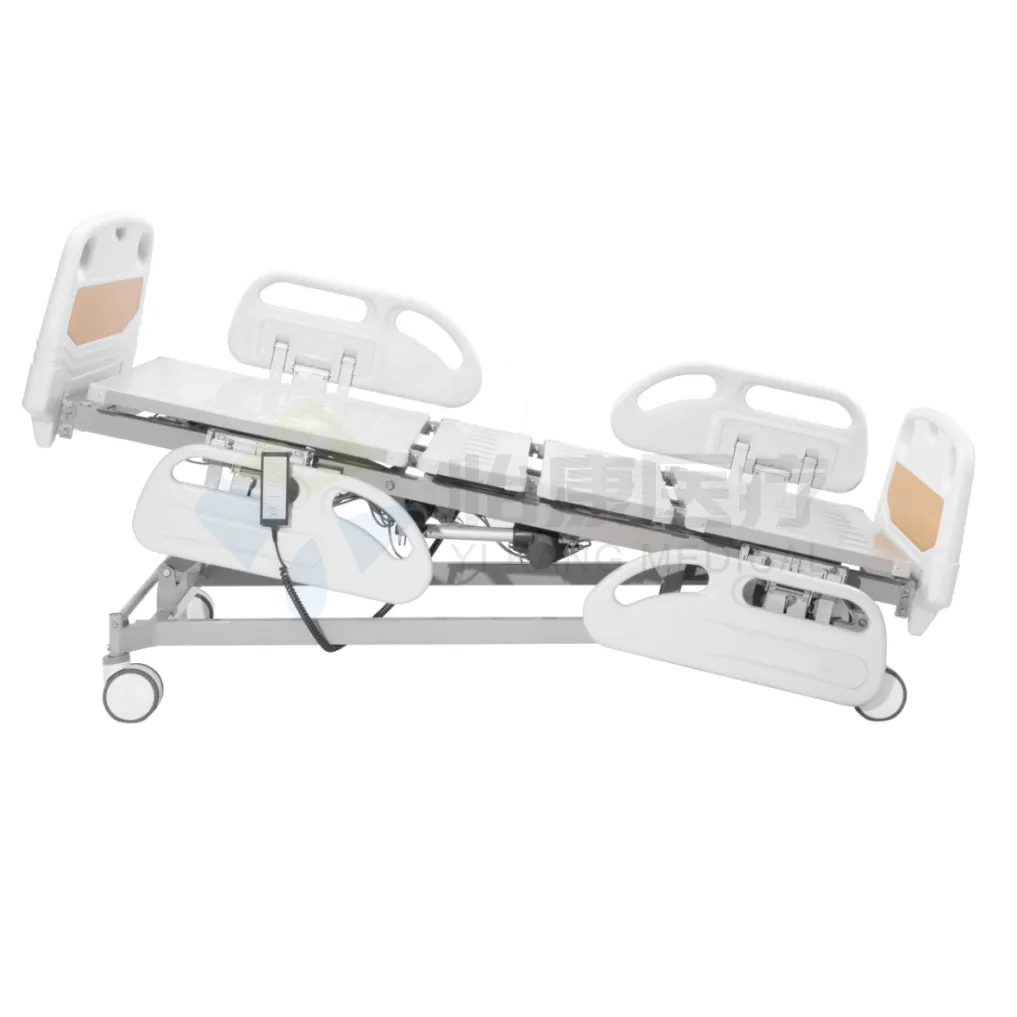
What are the characteristics of manual hospital beds?
Manual hospital beds represent the most basic type of medical bed; they are typically utilized in wards requiring lower-intensity nursing care, for temporary care situations, or in settings with limited budgets.
1. Adjustment relies entirely on a manual crank mechanism
Common adjustments include:
•Raising and lowering the backrest
•Raising and lowering the leg section
Nursing staff must use a hand crank to adjust the bed's angles—a process that is both time-consuming and physically demanding.
2. Basic structure is stable, but functionality is limited
Manual hospital beds typically lack the following features:
•Electric height adjustment
•Overall bed frame elevation/lowering
•Trendelenburg positioning (head-down, feet-up tilt)
•Lateral tilt functions (for patient turning)
Their structural design is fundamentally simple.
3. Suitable settings
•General wards
•Temporary care situations
•Institutions with tight budgets
•Patients with minimal requirements for positional adjustments
Manual hospital beds are unsuitable for critically ill patients or those requiring frequent positional management.
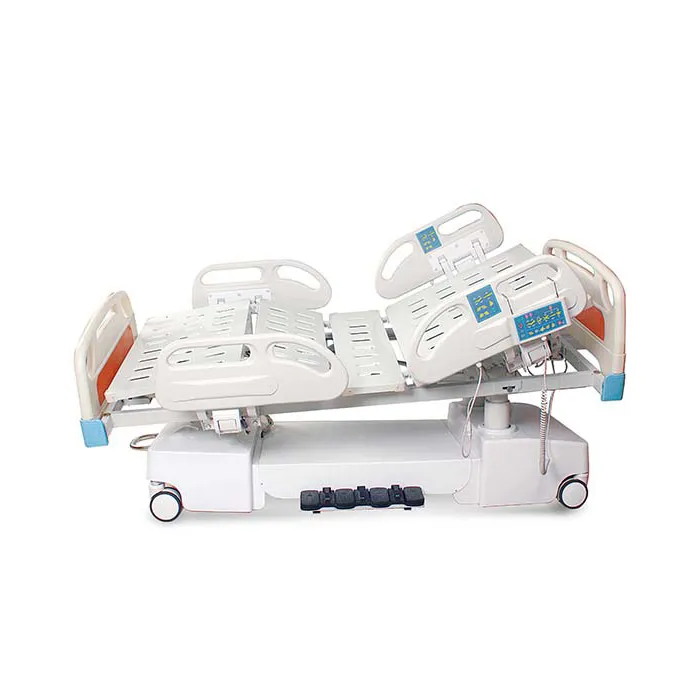
Do semi-electric beds fall somewhere between manual and fully electric models?
Semi-electric hospital beds can be viewed as a "transitional model" situated between manual and electric hospital beds, striking a balance between nursing convenience and cost-effectiveness.
1. Adjustment mechanism: Part electric + Part manual
Typically:
•The backrest is adjusted electrically.
•The leg section or the overall bed frame height is adjusted manually.
This hybrid approach improves nursing efficiency to some extent, though nurses are still required to perform certain manual mechanical adjustments.
2. Functionality is more extensive than that of manual hospital beds
For example:
•Electric backrest adjustment offers greater precision.
•They can be equipped with a simple handheld remote control.
•Some semi-electric models offer limited electric adjustment of the overall bed frame height.
However, they do not possess the full range of capabilities found in fully electric hospital beds.
3. Applicable settings
•Facilities requiring moderate-intensity nursing care
•Home care environments
•Rehabilitation centers
•Patients who require occasional positional adjustments but do not depend on frequent, intensive nursing interventions
While semi-electric hospital beds offer improvements over manual models, they still present limitations when compared to true fully electric hospital beds.
Why Have Electric Hospital Beds (Fully Electric Beds) Become the Mainstream Choice?
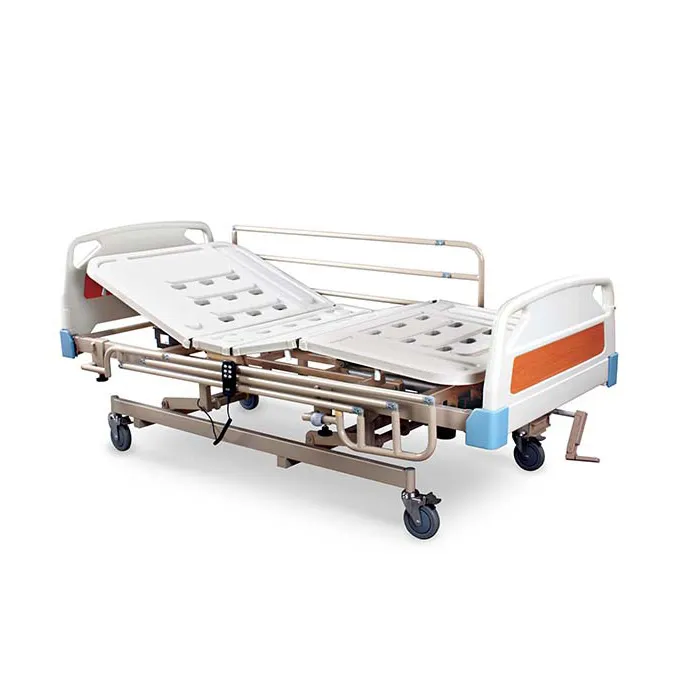
Fully electric hospital beds—often simply referred to as electric hospital beds—are the most widely utilized type of patient bed in modern healthcare facilities. They rely on motorized systems to achieve highly automated adjustments, providing immense support for both hospital care efficiency and patient safety.
1. All Key Functions Are Electrically Adjustable
These include:
•Backrest elevation
•Legrest elevation
•Overall bed height adjustment
•Trendelenburg and Reverse Trendelenburg positions
•Cardiac chair position (on select models)
•One-touch reset (on select models)
Nursing staff can perform these operations easily and effortlessly using a control panel or remote handset.
2. Enhanced Care Efficiency
Electric hospital beds allow nurses to devote more of their energy to actual medical care rather than to strenuous physical labor.
3. Highly Precise Patient Positioning
Supports:
•Restoration of respiratory function
•Reduction of aspiration risk
•Mitigation of desaturation risk
•Promotion of blood circulation
•Prevention of pressure ulcers (bedsores)
These factors are critically important, particularly for long-term bedridden patients, post-operative patients, or those in critical care.
4. A Safer Care Environment
Electric hospital beds typically feature:
•Anti-pinch safety systems
•Power management systems
•Protective side rails
•Caster locking mechanisms
•Robust bed frame designs
All of which contribute to a safer care process.
5. Ideal for Hospitals and Long-Term Care Facilities
Almost all professional healthcare institutions now adopt electric hospital beds as their standard equipment.
What Are the Core Differences Between the Three Types of Hospital Beds?
For ease of reference, a clear comparison is presented in the table below.
Comparison Criteria | Manual Hospital Bed | Semi-Electric Hospital Bed | Fully Electric Hospital Bed (Electric Bed) |
| Adjustment Method | Fully Manual | Partially Electric, Partially Manual | Fully Electric |
| Nursing Efficiency | Low | Medium | High |
| Nurse Physical Exertion | Large | Medium | Compact |
| Patient Comfort | Basic | Good | Excellent |
| Common Functions | Backrest and Legrest Adjustment | Electric Backrest Adjustment | Fully Electric Adjustment, Multifunctional |
| Trendelenburg/Reverse Trendelenburg | None | Rarely Available | Common |
| Whole-Bed Height Adjustment | None | Available on Select Models | Standard Configuration |
| Applicable Settings | Basic Care | Moderate Care | Hospitals / Intensive Care / Long-Term Care |
| Price | Low | Medium | High |
| Safety | Basic | Medium | High |
As the table illustrates, electric hospital beds significantly outperform the other two categories in terms of functionality, safety, patient comfort, and care efficiency.
Which Patients Are Best Suited for Manual, Semi-Electric, and Fully Electric Beds?
Different types of hospital beds are designed to meet specific care requirements:
Which Patients Are Suitable for Manual Hospital Beds?
Manual hospital beds are better suited for patient groups with lower care requirements—for instance:
•Patients capable of adjusting their own body positions
•Patients with short-term illnesses who do not require prolonged bed rest
•Patients with mild conditions in general wards
•Situations where a high degree of precision in patient positioning is not critical
If a patient requires frequent turning or positional adjustments, a manual hospital bed would not be an appropriate choice.
For Which Care Needs Are Semi-Electric Hospital Beds Most Suitable?
Semi-electric hospital beds are suitable for:
•Patients requiring moderate nursing assistance
•Home care settings
•Patients undergoing rehabilitation
•Situations requiring occasional electric adjustments, but not complex positional management
Semi-electric hospital beds strike a balance between cost-effectiveness and functionality.
For Which Patients Are Electric Hospital Beds Most Suitable?
Electric hospital beds (fully electric beds) are best suited for:
•Patients requiring long-term bed rest
•Patients requiring frequent positional adjustments
•Patients in the post-operative recovery phase
•Patients with respiratory conditions
•Individuals requiring geriatric care or long-term care
•Hospitalized patients requiring professional nursing care
Electric hospital beds are virtually indispensable, particularly in the following situations:
•The patient is unable to move independently
•The patient requires specific positioning to facilitate breathing
•Nursing staff need to perform frequent adjustments
•Risk management requirements are high
•A high level of safety protection is required
Why Do Electric Hospital Beds Significantly Improve Nursing Efficiency?
Electric hospital beds not only reduce the physical exertion required of nursing staff but also make the care process more standardized, controllable, and safe.
Here are the specific advantages of electric hospital beds compared to other types of beds:
1. Instantaneous Positional Adjustment
For example:
•Backrest elevation
•Leg elevation
•Whole-bed height adjustment
•Cardiac chair position
•Trendelenburg position
These operations are time-consuming and physically demanding with manual hospital beds, whereas an electric bed allows them to be completed simply by pressing a button.
2. Reduction of Occupational Injuries Among Nurses
The long-term physical strain of manually turning patients or lifting their backs can cause severe injuries to a nurse's lower back and spine.
The automated functions of electric hospital beds significantly reduce this risk.
3. Reduction of Nursing Errors
Precise angle adjustment ensures that the patient's positioning is more medically sound and comfortable.
4. Better Alignment with Modern Healthcare Standards
Modern healthcare protocols emphasize efficiency, safety, and ergonomics—standards that electric hospital beds perfectly fulfill.
How Do You Choose the Right Bed: Manual, Semi-Electric, or Fully Electric?
When selecting a hospital bed, consider the following factors:
1. Does the patient require frequent positional adjustments?
If frequent adjustments are required—such as:
•Turning the patient
•Elevating the backrest
•Elevating the leg rest
•Trendelenburg positioning
•Respiratory positioning
—then an electric hospital bed is clearly the more suitable choice.
2. Is the caregiver professionally trained?
Family caregivers are better suited to use:
•Semi-electric hospital beds
•Electric hospital beds
—as they are simple to operate.
3. Is long-term bed rest required?
Patients requiring long-term bed rest must use an electric hospital bed to minimize the risk of:
•Pressure ulcers
•Respiratory distress
•Bed-related complications
•Caregiving-related risks