
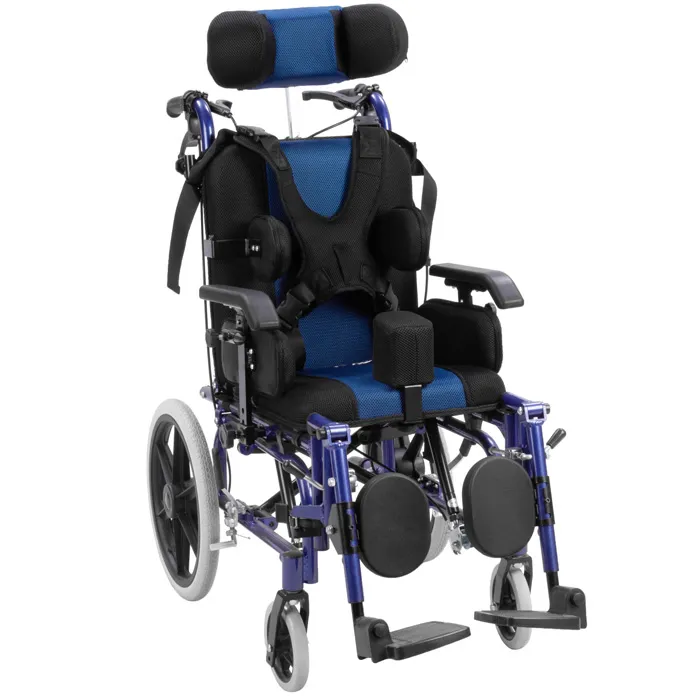
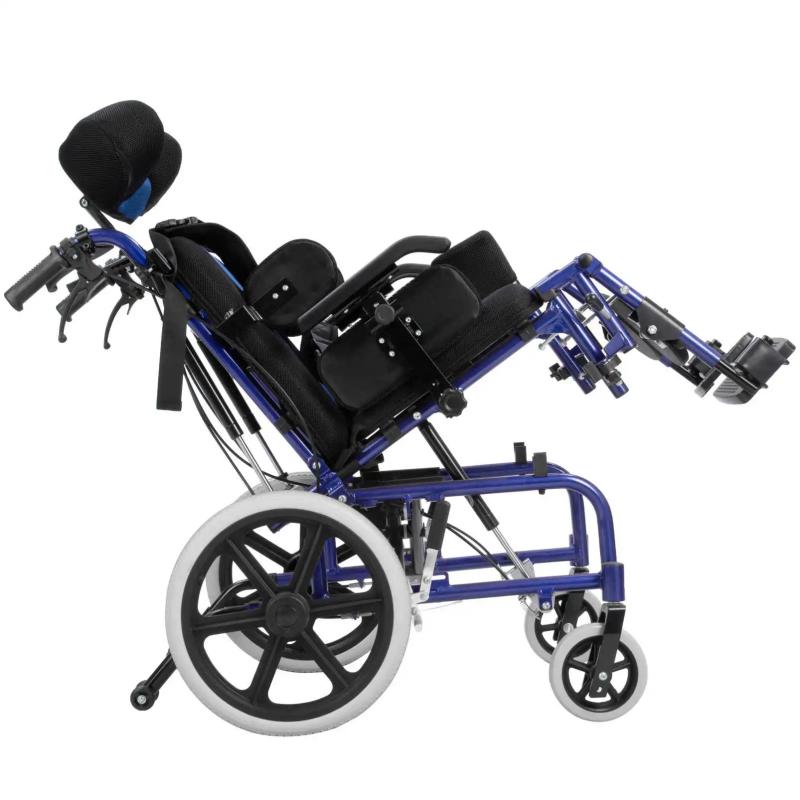
For children with cerebral palsy, wheelchairs are not only a means of transportation but also crucial equipment for long-term sitting support and posture management. Among all the components of a child's cerebral palsy wheelchair, the safety belt is often overlooked, but in reality, it plays a vital role in ensuring the child's safety, maintaining correct sitting posture, and preventing slippage and abnormal postures.
So, how do you correctly use a child's cerebral palsy wheelchair safety belt?
It's not just about "fastening it"; it involves several professional details, including position, tightness, sequence, type matching, and daily checks.
This article will systematically explain the correct use of a child's cerebral palsy wheelchair safety belt from the aspects of structural principles, purpose of use, operating procedures, and safety precautions, helping parents and caregivers establish a scientific and standardized understanding of its use.
Why Must a Child's Cerebral Palsy Wheelchair Use a Safety Belt?
Before discussing how to use it, we must first clarify a fundamental question:
Why is it almost always necessary to use a safety belt in a child's cerebral palsy wheelchair?
1. Insufficient Postural Control in Children with Cerebral Palsy
Many children with cerebral palsy experience the following problems:
• Weak trunk control
• Abnormal muscle tone (too high or too low)
• Prone to leaning forward, falling sideways, or slipping off
• Inability to maintain a stable sitting posture for extended periods
In these cases, the seat itself alone cannot provide sufficient restraint.
2. A Child Cerebral Palsy Wheelchair is a "Posture Assistive Device," Not a Regular Wheelchair
One of the core goals of a child cerebral palsy wheelchair is to help children maintain a functional sitting posture.
The seatbelt is a crucial component in achieving this goal.
3. Preventing Slips and Accidental Injuries
If the seatbelt is not used correctly, children in wheelchairs may experience:
• Slipping forward
• Sudden forward leaning
• Body shifting leading to a risk of tipping over
Therefore, the seatbelt is an indispensable safety device for a child cerebral palsy wheelchair, not an optional accessory.
What are the common types of seatbelts for child cerebral palsy wheelchairs?
Before learning how to use them, it's essential to understand the common types of seat belts used on children's cerebral palsy wheelchairs. Different types of seat belts serve different purposes and are worn differently.
1. Pelvic Belt (Layer Belt)
This is the most basic and important type of seat belt in children's cerebral palsy wheelchairs.
• Secures the pelvis
• Prevents forward slippage
• Helps establish a stable sitting posture. Pelvic belts are almost standard equipment on all children's cerebral palsy wheelchairs.
2. Chest Belt
Chest belts are primarily used to:
• Prevent the upper body from leaning forward
• Provide additional trunk support
• Improve upper body stability. Common forms include single-strap, Y-shaped, or X-shaped structures.
3. Shoulder Belt
Shoulder belts are used to control shoulder posture, preventing:
• Leaning to one side
• Upper body collapse. They are often used for children with weaker trunk control.
4. Multi-point harness system
Some cerebral palsy wheelchairs use multi-point harnesses for more precise posture control.
What are the core principles of using a cerebral palsy wheelchair harness?
Before any operation, several basic principles must be kept in mind; these are prerequisites for the safe use of a cerebral palsy wheelchair harness.
Principle 1: The harness is for "fixing posture," not "restraining the child."
The purpose of the harness is not to restrict a child's movement, but to provide stable support.
Using it too tightly or incorrectly can actually create risks.
Principle 2: Pelvis takes priority over upper body.
In a cerebral palsy wheelchair, pelvic stability is the foundation of all posture control.
If the pelvis is not properly secured, no amount of chest or shoulder straps will be effective.
Principle 3: Moderate tightness, allowing normal breathing and slight movement.
The harness should fit snugly but not constrictingly, avoiding any restriction on breathing, blood circulation, or skin health.
What are the correct steps for using a child cerebral palsy wheelchair pelvic harness?
Step 1: Ensure the child is properly seated in the child cerebral palsy wheelchair.
Before fastening the harness, ensure:
• The child's buttocks are fully seated against the back of the seat.
• The child's back is against the seat back.
• Both feet are on the footrests.
This is a prerequisite for using any harness.
Step 2: Determine the position of the pelvic harness.
The pelvic harness should be positioned:
• Above and in front of the hip bones.
• Slightly below the abdomen.
• Close to the pelvis, not the abdomen.
Incorrect positioning (such as fastening it to the abdomen) will reduce the restraint effect and may even cause discomfort.
Step 3: Adjust the tightness.
The correct tightness is:
• The harness fits snugly against the pelvis.
• One or two fingers can be inserted.
• It does not restrict breathing.
• It does not create a noticeable feeling of pressure.
In a child cerebral palsy wheelchair, a pelvic harness that is too loose or too tight is unsafe.
How to correctly use the chest harness in a child cerebral palsy wheelchair?
What is the primary function of a chest harness?
A chest harness is used to assist in controlling upper body posture, not as a replacement for a pelvic harness.
Correct wearing guidelines include:
• The chest harness should be positioned in the middle of the sternum.
• It should not be close to the neck.
• It should not compress the abdomen.
• It should be symmetrical with the body.
Common mistakes include:
• Fastening the chest harness too high, affecting breathing.
• Using only the chest harness while neglecting pelvic support.
• The chest harness being too tight, causing discomfort.
In a child cerebral palsy wheelchair, the chest harness should always be used as a supplementary, not primary, restraint device.
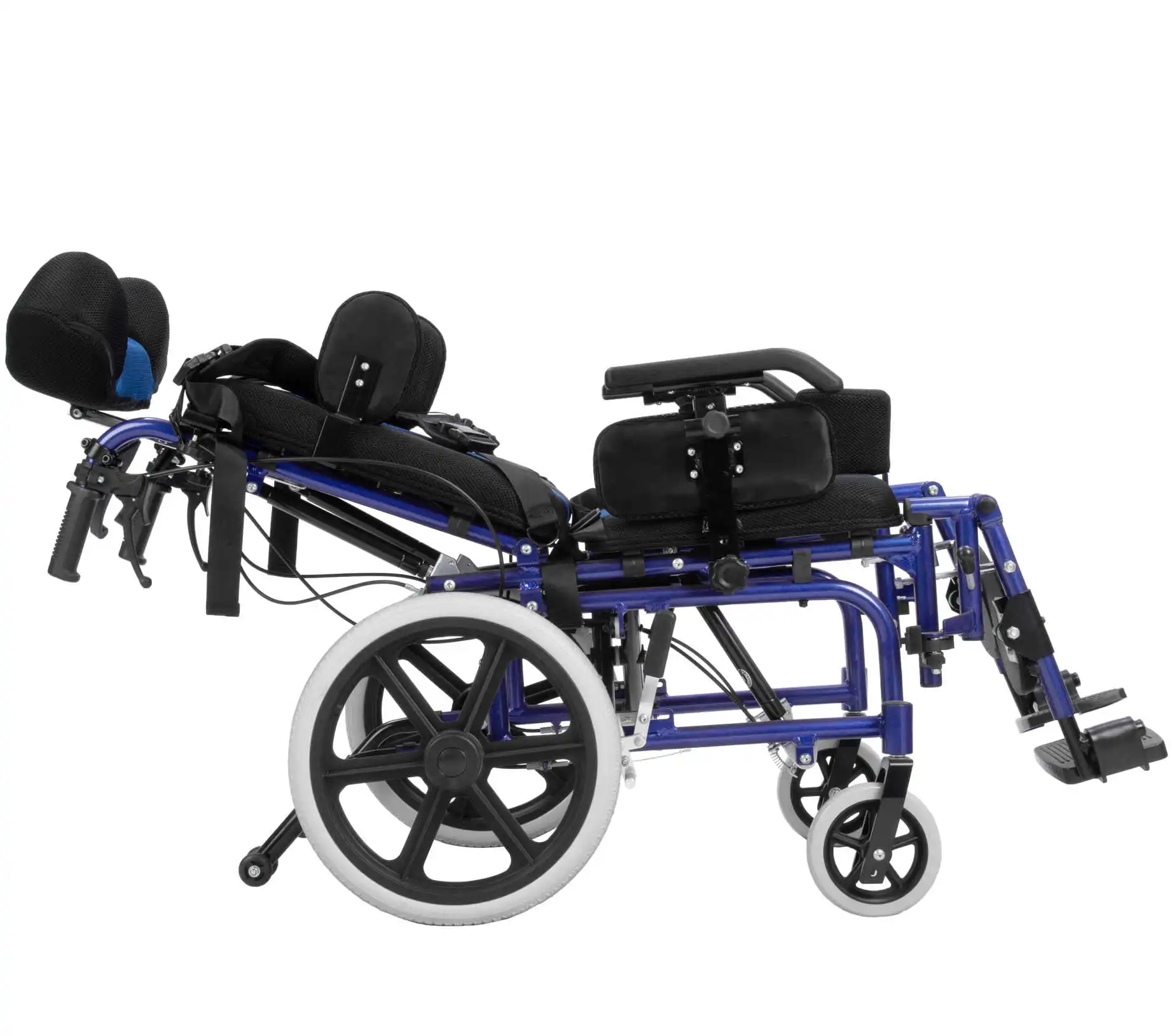
How should a shoulder harness be used in a child cerebral palsy wheelchair?
In what situations are shoulder harnesses suitable?
Shoulder harnesses are typically used for:
• Significant upper body tilt to one side
• Insufficient shoulder control
• Obvious torso asymmetry
When using a shoulder harness, pay attention to:
• Maintaining symmetrical shoulder strap lengths
• Avoiding neck strain
• Not restricting necessary shoulder movement
Shoulder harness adjustments require more precision; avoid over-restriction.
What are some common mistakes when using a child cerebral palsy wheelchair harness?
For safety, the following mistakes should be avoided:
• ❌ Only fastening the chest strap, not the pelvic strap
• ❌ The harness is too tight, restricting breathing
• ❌ The harness is too loose, losing its restraint function
• ❌ Incorrect harness position
• ❌ Failure to check the harness for extended periods
These mistakes will reduce the safety of the child cerebral palsy wheelchair.
What should be checked daily when using a child cerebral palsy wheelchair harness?
Daily checks are a crucial part of safely using a child cerebral palsy wheelchair. Daily checks should include:
• Wear and tear on the seatbelt
• Whether the buckle locks properly
• Whether it is loose
• Whether it causes skin redness or discomfort
Any abnormalities should be addressed immediately by adjusting or replacing the seatbelt.
Does a child cerebral palsy wheelchair seatbelt need adjustment as the child grows?
The answer is: Yes, it must be adjusted.
Children are in a stage of growth and development, and child cerebral palsy wheelchair seatbelts are usually designed to be adjustable.
Adjustments are needed for:
• Changes in height
• Changes in weight
• Changes in sitting posture control
• Changes in muscle tone Regularly reassessing the tightness and position of the seatbelt is an important part of safely using a child cerebral palsy wheelchair.
How to determine if a child cerebral palsy wheelchair seatbelt is being used correctly?
The following aspects can be used to assess the child's posture:
• Is the child's sitting posture stable?
• Is there any obvious forward slippage or side-falling?
• Is the child breathing naturally?
• Are there any skin marks or discomfort?
• Does the child show obvious resistance?
If all of the above are satisfactory, the cerebral palsy wheelchair is being used appropriately.
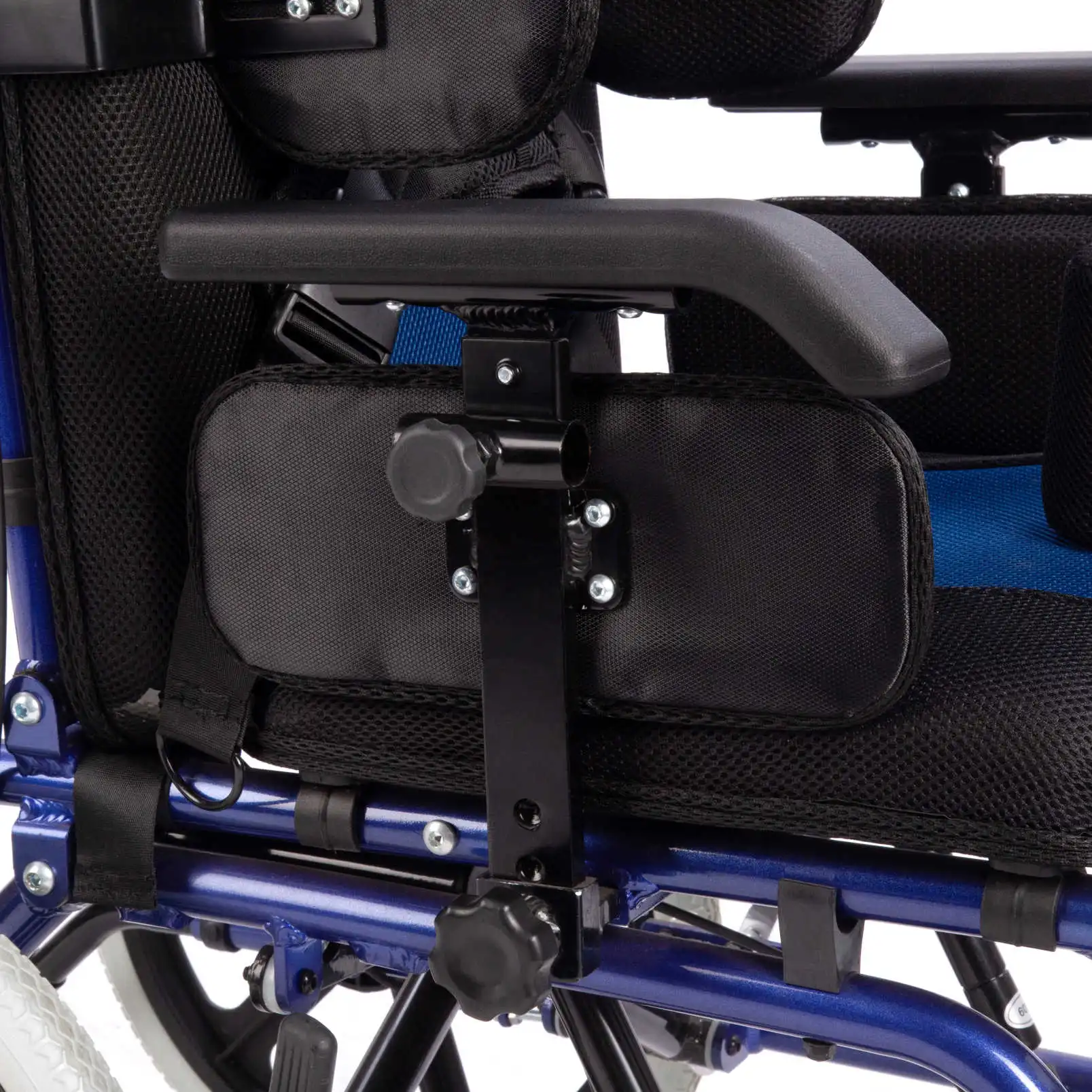
What should caregivers be aware of when using a cerebral palsy wheelchair?
Caregivers should be aware of the following when using a cerebral palsy wheelchair:
• Safety first
• Posture priority
• Regular checks
• Dynamic adjustments
• Observe the child's reaction.
This is not just a matter of operation, but also a professional nursing attitude.
Why should I purchase hospital beds and wheelchairs from Yikang Medical?
Yikang Medical is a professional manufacturer and supplier in China, dedicated to providing high-quality hospital and rehabilitation products. Our company has extensive experience producing hospital beds, nursing beds, electric wheelchairs, manual wheelchairs, and other healthcare devices. With over a decade of manufacturing expertise, we serve both domestic and international markets, supplying products in OEM partnerships with leading brands. Our factory supports customized production, allowing clients to adjust product design, color, and configurations.