

In modern healthcare environments, electric hospital beds have become an indispensable piece of care equipment frequently utilized in hospitals, nursing homes, and long-term home care settings. The widespread popularity of electric beds stems from their advanced features—such as electric height adjustment, backrest elevation, leg positioning, and lateral tilting—which significantly enhance patient comfort while boosting the efficiency of caregivers.
However, many users encounter a common issue during actual use:
When the electric system malfunctions, how does one manually lower the height of the electric hospital bed?
While this question may seem simple, it involves multiple technical aspects, including the bed's structural design, safety systems, mechanical engineering, and emergency operating procedures. Improper handling could not only result in damage to the bed but also jeopardize patient safety. Therefore, it is crucial to understand the correct, safe, and practical methods for "manually lowering an electric hospital bed."
If you are looking for a professional, systematic, and easy-to-understand guide, this article offers the most comprehensive solution available.
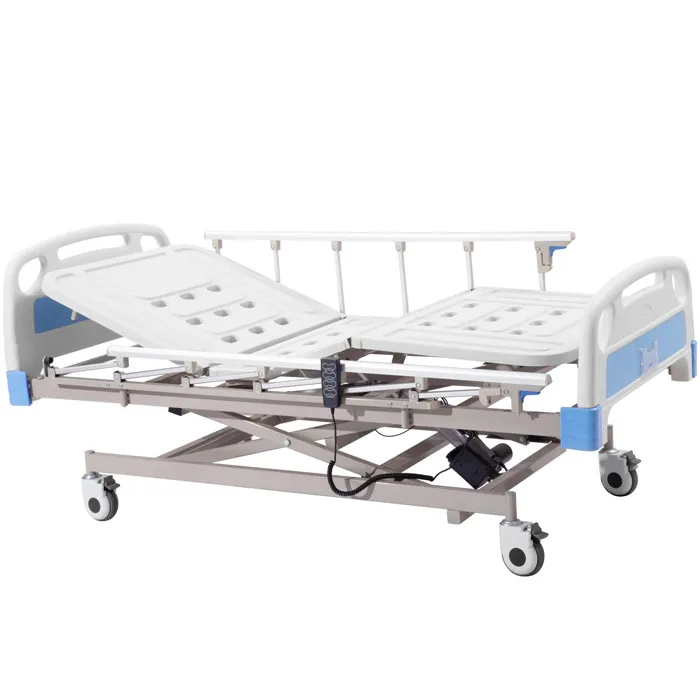
What Are the Principles Behind Electric Bed Height Adjustment? Why Is It Important to Understand Them?
To understand how to manually lower an electric hospital bed, you must first grasp how the bed's height adjustment system operates.
The core components of an electric hospital bed's height adjustment system include:
1. Electric Lifting Motors (Linear Actuators)
Height adjustment in electric hospital beds is primarily achieved through linear actuator motors. These motors drive an internal lead screw mechanism to extend or retract, thereby causing the bed frame to rise or descend.
2. Control System
This includes (but is not limited to):
•Bed-side control panels
•Caregiver control modules
•Handheld remote controls
•Accidental-activation safety locks
The control system transmits lifting and lowering commands to the motors.
3. Bed Lifting Mechanism
Typically configured as:
•Scissor-lift mechanisms
•Sliding-rail mechanisms
•Multi-point support mechanisms
These structures provide structural integrity to the entire bed frame, ensuring that the bed remains stable and secure at any height.
4. Safety Protection Devices
These include:
•Motor overload protection
•Anti-pinch mechanisms
•Power-connection safety interlocks
•Fall-prevention designs
While the specific designs may vary across different brands of electric hospital beds, the underlying principles remain largely the same.
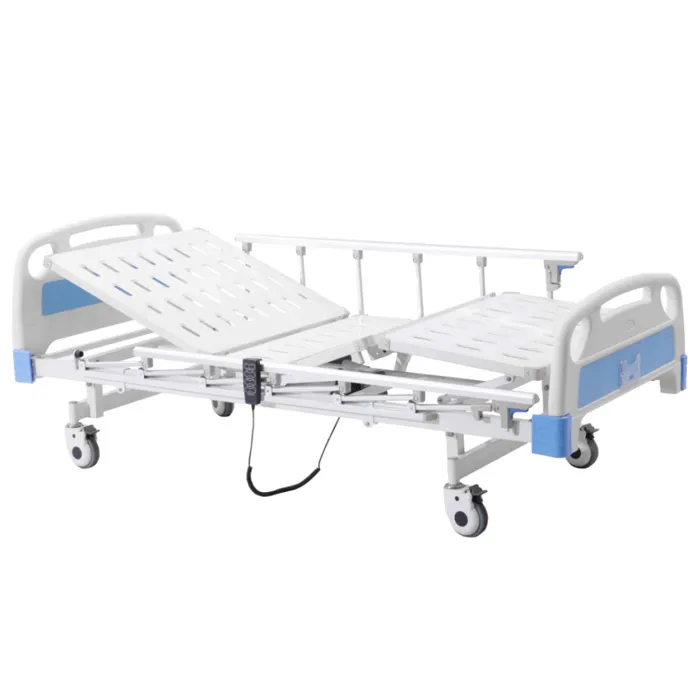
Why Would You Need to Manually Lower an Electric Hospital Bed?
Theoretically, an electric hospital bed should be raised and lowered normally via its electronic control system. However, manual intervention may be required in the following situations:
•A power outage renders the electronic control system unusable.
•The electric hospital bed's motor is damaged.
•The electric hospital bed's controller malfunctions.
•The remote control fails to respond.
•Wiring is damaged, or connections are loose.
•The electric hospital bed becomes jammed or its movement is obstructed.
•A safety lock feature prevents the use of electronic controls.
•An urgent medical situation requires the bed height to be lowered immediately.
In these scenarios, if there is no method to manually lower the bed height, the following may occur:
•Delays in providing patient care or emergency aid.
•An increased risk of the patient falling.
•Inability for caregivers to perform their duties safely.
•Difficulties in transferring the patient to a wheelchair, commode chair, or stretcher.
Therefore, it is crucial to know the correct procedures for such situations.
Can an electric bed still be manually lowered in the absence of power?
The answer is: It depends on the specific design of the electric hospital bed.
Currently, electric beds available on the market generally fall into three categories:
1.Electric hospital beds equipped with a manual emergency lowering mechanism (a few high-end models)
These beds typically feature the following components located at the rear of the motor:
•A hexagonal bolt (hex screw).
•A safety release port.
•An interface for an emergency lowering wrench.
In the absence of power, the motor can be manually rotated to allow the bed frame to descend slowly.
2.Electric beds with a semi-electric structure (certain models)
Some semi-electric hospital beds retain manual adjustment mechanisms, such as:
•A manual crank for adjusting hospital bed height.
•Manual cranks for adjusting backrest or leg sections.
These manual mechanisms can be utilized when electrical power is unavailable.
3.Fully electric beds with no manual backup functions (most standard hospital models)
These types of hospital beds typically cannot be lowered manually in a direct manner, because:
•The entire lifting and lowering mechanism relies exclusively on the motor.
•The lifting mechanism contains no mechanical components that can be manually released.
•To prevent accidental operation, a manual lowering function is generally not incorporated into the design.
The height of such hospital beds can only be adjusted by:
•Restoring the power supply.
•Replacing a damaged motor or controller.
•Having a professional technician manually dismantle the lifting mechanism.
Therefore, the ability to manually lower the hospital bed depends entirely on the specific model.
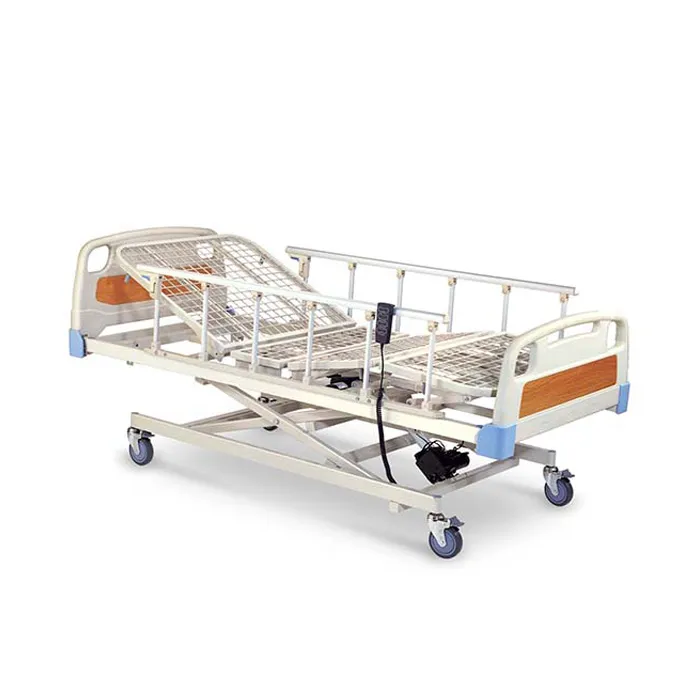
Why do some electric beds not allow for direct manual lowering?
Reasons include:
•Safety Factors: To prevent accidental misuse by non-professional personnel that could result in a patient falling.
•Irreversible Motor Structure: Most linear actuator motors cannot be manually forced back into position using external pressure.
•Prevention of Damage: To avoid damaging the bed's lifting mechanism.
•Structural Stability: Attempting to lower the bed manually would disrupt the internal lead screw system within the motor.
•Medical Device Standards: Regulations in certain countries mandate restrictions on manual release mechanisms.
Consequently, many electric hospital beds do not offer a manual lowering function.
How to Determine if an Electric Bed Has a Manual Lowering Mechanism?
You can determine this by following these steps:
1.Check the Rear of the Motor for a Hexagonal Socket or Emergency Lowering Port
These are typically labeled as:
•Emergency lowering
•Manual release
•Manual crank
•Service port
If present, this indicates that manual operation is possible.
2.Consult the User Manual
The product manual or technical guide will clearly indicate whether manual lowering is supported.
3.Contact the Manufacturer
Structural designs vary significantly across different brands; the manufacturer can provide the most accurate information.
4.Look for Warning Tags or Labels
Some electric beds feature labels on the hospital bed frame stating:
•"Manual Lowering Not Permitted"
•"Do Not Manually Force Down"
If you see these markings, manual operation is not possible.
5.Check for Included Emergency Tools
Examples include:
•Hex wrench (Allen key)
•Specially designed metal handle
•Mechanical release tool
If these tools are not provided, it is highly likely that the hospital bed does not have a manual lowering function.
How to Manually Lower the Height of an Electric Bed? (Standard Procedure)
The following outlines a universal and safe operating procedure, applicable only to electric hospital beds equipped with an emergency manual lowering function.
Step 1: Ensure Patient Safety
Before making any adjustments, you must ensure the following:
•Remove any obstacles from the bedside area.
•Ensure the bed rails are raised.
•Ensure the patient remains lying flat.
•Ensure care personnel are positioned on both sides of the hospital bed.
•Take precautions to prevent injury caused by a sudden drop of the bed frame.
This constitutes the primary safety principle during this operation.
Step 2: Disconnect Power and Confirm the System Is Fully Shut Down
Manual operation must be performed while the unit is completely de-energized.
The reasons for this are:
•To prevent the motor from starting unexpectedly.
•To avoid a conflict between the electrical and manual power sources.
•To protect the electronic control system.
Simply unplugging the power cord is sufficient.
Step 3: Locate the Emergency Operation Port at the Rear of the Motor
Typically located:
•At the rear end of the lifting motor
•At the bottom of the motor unit
•In the middle section beneath the bed deck
•Near a marked or labeled area
Some ports are protected by a rubber cover, which must be opened first.
Step 4: Insert the Manual Tool (Wrench or Hex Key)
Tools typically required include:
•6mm, 8mm, or 10mm hex wrenches (Allen keys)
•A dedicated emergency crank handle
•A tool kit provided by the manufacturer
Simply insert the tool into the corresponding port.
Step 5: Rotate Slowly in the Direction of the Arrow
The general rule is:
•Clockwise rotation → Lowering the bed
•Counter-clockwise rotation → Raising the bed (or no movement)
Specifics may vary slightly between brands; always refer to the user manual for definitive instructions.
During rotation:
•Perform the action slowly
•Do not apply excessive force
•It is normal to feel some resistance or heaviness
This is crucial for ensuring a safe descent.
Step 6: Observe the Bed's Descent
Ensure that:
•The bed descends evenly
•There are no abnormal jerks or stoppages
•The motor unit makes no unusual noises
•The bed remains level and does not tilt
If any abnormalities are detected, stop immediately.
Step 7: Stop Operation Once a Safe Height is Reached
Generally recommended heights include:
•40–50 cm (suitable for patient transfer)
•The lowest possible height (to prevent falls)
Adjust the height according to specific patient care requirements.
Step 8: Confirm Bed Stability
This includes:
•Checking that the bed casters (wheels) are locked
•Confirming that the motor has stopped rotating
•Ensuring the bed frame is steady and does not wobble
Once these steps are complete, you may resume patient care activities.
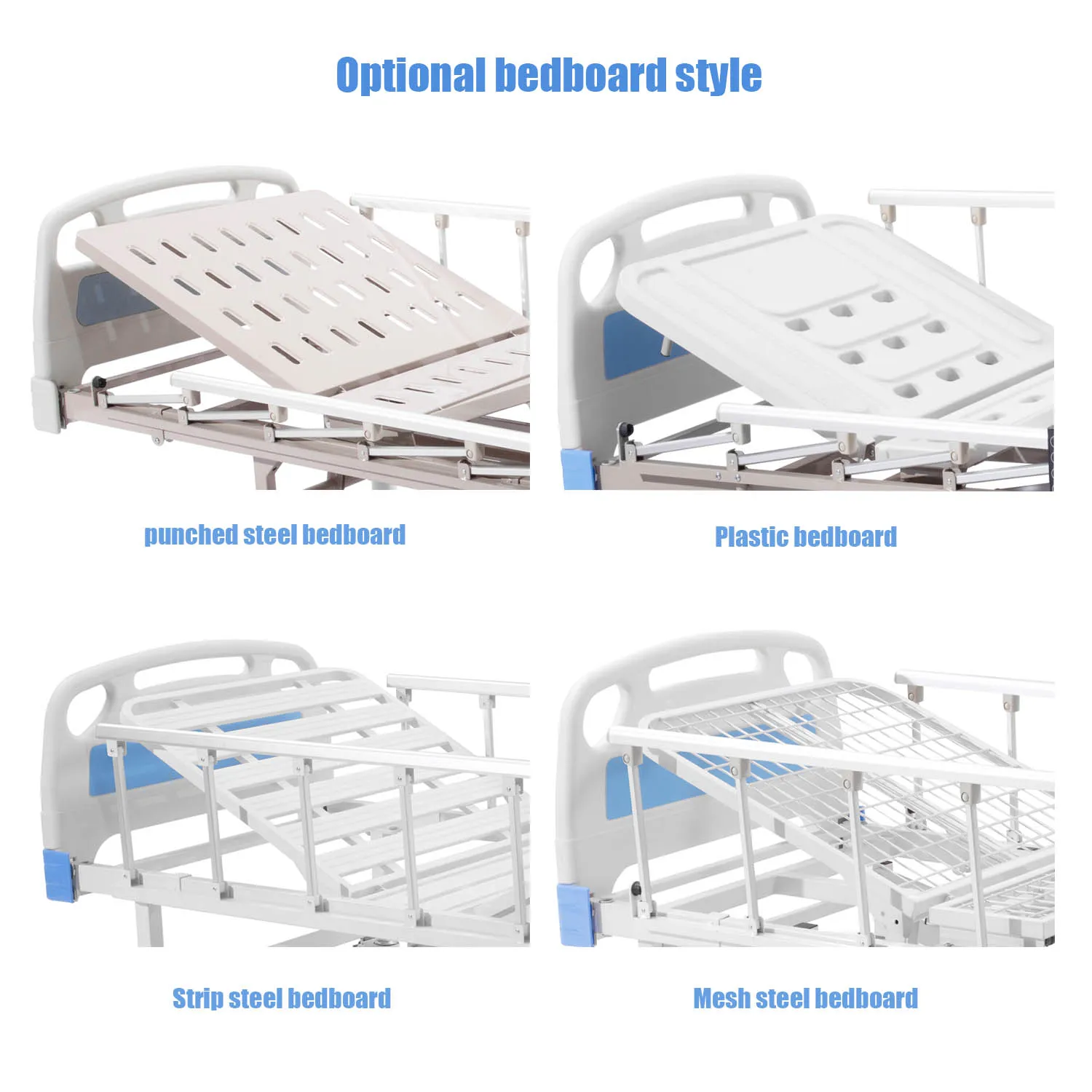
What to Do If the Electric Bed Motor Fails?
If the motor is completely unable to move the bed—and even the manual lowering mechanism cannot be utilized—the following measures may be taken:
Method 1: Contact the Manufacturer's Technical Support
This is the safest and most effective approach; attempting to disassemble the unit yourself is not recommended.
Method 2: Disassemble the Lifting Mechanism (For Professionals Only)
This process involves:
•Removing the motor unit
•Loosening mounting bolts/fasteners
•Adjusting the lifting structure
General users should strictly avoid attempting this procedure.
Method 3: In emergency situations, the patient may first be transferred to another bed or transport device
For example:
•Gurney
•Stretcher
•Wheelchair
This ensures continuity of care.
Is it safe to manually lower the height of an electric hospital bed?
It is safe, provided the following principles are observed:
•Use the correct tools.
•Operation must be performed by trained personnel.
•Rotate in the correct direction.
•Strictly control the descent speed.
•Always prioritize patient safety.
•Avoid applying excessive force.
•Do not attempt to disassemble the motor without authorization.
As long as the proper procedure is followed, manually lowering an electric hospital bed can be performed safely.
Does Yikang Medical support OEM or customized product manufacturing?
Yes, Yikang Medical is a professional OEM manufacturer in China that specializes in customized medical equipment production. We understand that different markets and brands have unique requirements, so we offer flexible customization options including product appearance, technical configuration, color schemes, and branding. As an experienced factory supplier, we have supported many international brands with tailored solutions, helping them expand their product lines efficiently.