
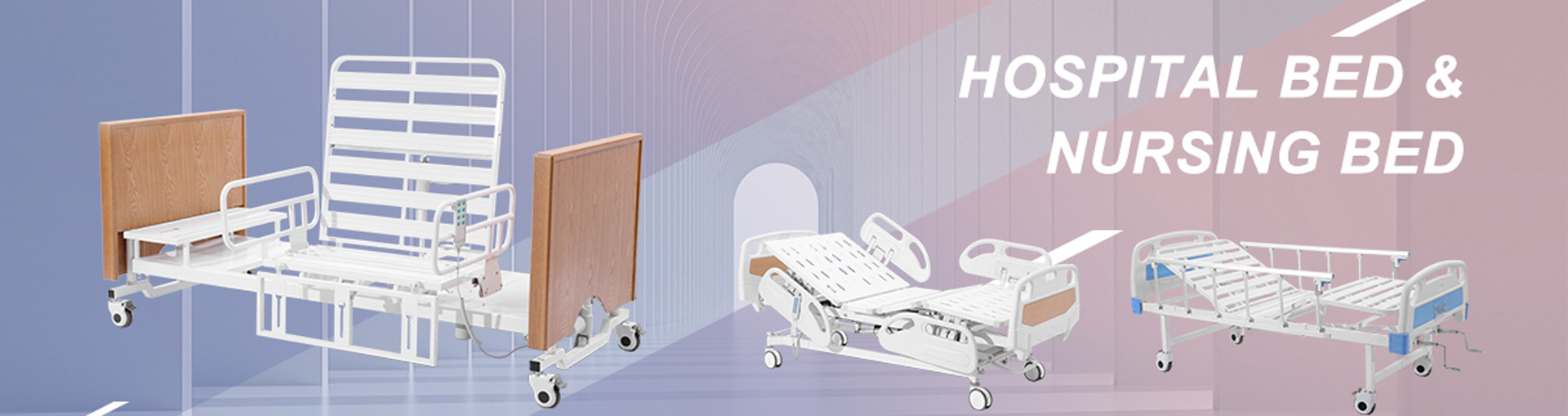
When hospitals and nursing facilities procure medical equipment, "What is the weight of an electric multi-functional hospital bed?" is a crucial question. Electric multi-functional hospital beds, due to their multiple nursing functions such as electric height adjustment, backrest adjustment, legboard adjustment, and position conversion, have a more complex structure than ordinary hospital beds. Therefore, they are typically heavier, have a higher load-bearing capacity, and are made of more robust materials.
Understanding the weight of an electric multi-functional hospital bed not only helps with transportation, installation, and nursing process planning but also helps procurement personnel assess the bed's structural strength and reliability.
This article will systematically introduce the common weight range of electric multi-functional hospital beds, key factors affecting weight, weight differences between different categories, and explain from a professional perspective why weight is an important indicator for evaluating the quality of electric multi-functional hospital beds.
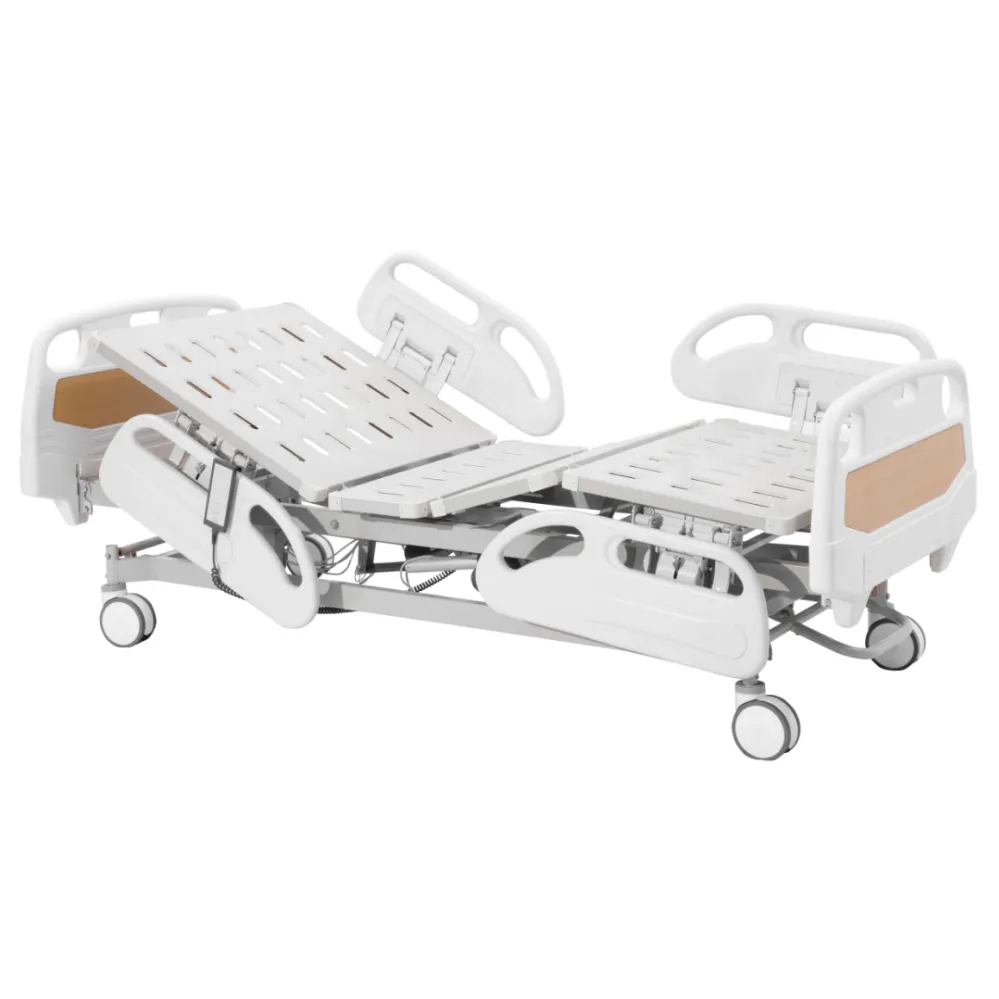
What is the typical weight of an electric multi-functional hospital bed?
From an overall market perspective, the weight of a standard electric multi-functional hospital bed typically ranges from 90 kg to 180 kg. There are significant differences in weight between different types, uses, and configurations of beds, while higher-end or ICU-level electric multi-functional hospital beds can even exceed 200 kg.
The main weight ranges are as follows:
• Basic electric multi-functional hospital bed: 90–120 kg
(Suitable for general wards and home care)
• Standard medical-grade electric multi-functional hospital bed: 120–150 kg
(Suitable for hospital wards and small medical facilities)
• ICU-grade electric multi-functional hospital bed: 150–200 kg or more
(For intensive care and special care environments)
As can be seen from the above ranges, the weight of an electric multi-functional hospital bed increases with the number of functions, material grade, and structural complexity.
Why are electric multi-functional hospital beds heavier than ordinary hospital beds?
Electric multi-functional hospital beds have complex components such as motor systems, lifting mechanisms, multi-stage adjustable structures, protective devices, and high-strength support frames. Therefore, greater weight and structural stability are inherent characteristics.
Does the motor system increase the weight of an electric multi-functional hospital bed?
Of course. The motor is one of the core components of an electric multi-functional hospital bed, and its quantity and type have a significant impact on the bed's weight.
Common motor configurations include:
• Backrest lifting motor
• Legrest lifting motor
• Overall lifting motor
• Trendlenberger functional motor (high-end model)
• Left and right tilting system motor (ICU grade) The more motors and the larger their specifications, the heavier the bed will be.
What factors determine the weight of an electric multi-functional hospital bed?
To understand the weight differences in electric multi-functional hospital beds, we need to analyze them from multiple perspectives, including structure, materials, load-bearing capacity, and additional functions.
Does the material of an electric multi-functional hospital bed affect its weight?
The material is the main factor determining the weight variation of the bed.
Common materials and their weight effects are as follows:
1. Carbon steel structure
• The most common frame for electric multi-functional hospital beds
• High strength
• Moderate to heavy weight
• Surface usually treated with electrostatic spraying for corrosion resistance
This is the most commonly used material in hospitals and nursing homes, and one of the reasons for its greater weight.
2. Welded Iron Structure (Thick-walled Square Tube)
• Slightly lower strength than carbon steel, but more stable
• Moderate weight
• Low cost while maintaining reliability
Mostly used in economy-class hospital beds.
3. Aluminum Alloy Structure (Partial Frame or Guardrails)
• Lighter
• High corrosion resistance
• Mostly used in high-end hospital beds
Aluminum alloy guardrails and components can effectively reduce overall weight.
4. ABS Medical-Grade Plastic
Commonly found in:
• Headboard and footboard
• Control panel
• Bed surface trim
• Guardrail shell
ABS is not only lightweight but also easy to disinfect and clean, helping to control the overall weight of the electric multi-functional hospital bed.
Does the load-bearing capacity of an electric multi-functional hospital bed affect its weight?
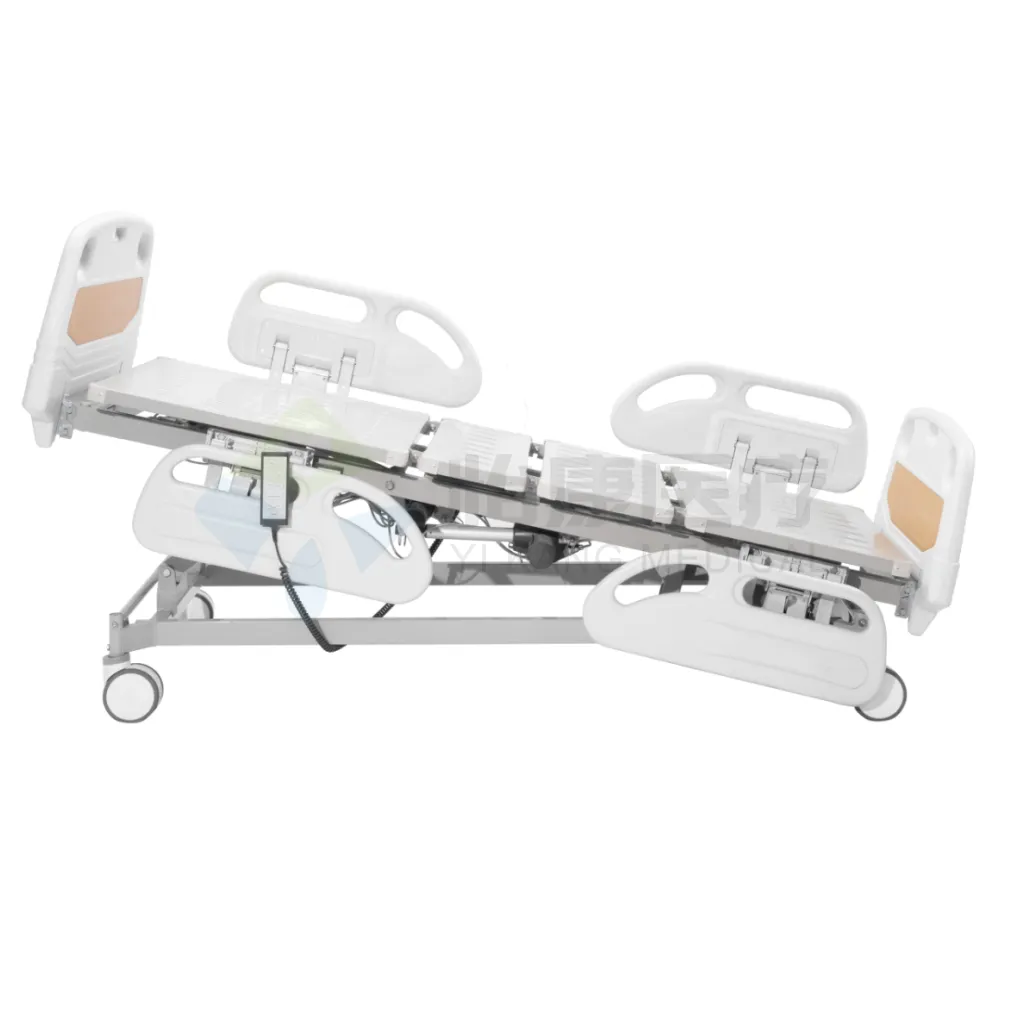
The higher the load-bearing capacity, the stronger the structure, and the thicker the metal used, the greater the weight will be.
Common Load Capacity Ranges:
• Standard Load Capacity: 150–170 kg
→ Lighter Structure
• Medium Load Capacity: 200–250 kg
→ Medical Grade Standard
• Heavy Load Capacity: 250–350 kg or more
→ ICU Grade or Bariatric (Obesity-Specific) Beds
→ Very robust structure, weight up to 180–250 kg
Load capacity directly affects the thickness of the metal tubing used in the bed, thus affecting the weight.
Does the number of bed functions affect weight?
The more functions and the more complex the structure, the heavier the bed.
Common functions include:
• Electric backrest adjustment
• Legrest and knee angle adjustment
• Overall height adjustment
• Trendlenberg and anti-Trendlenberg
• Lateral bed tilt
• Multi-segment bed structure
• Three-, four-, and five-segment bed systems
The more advanced the functions, the more structural support is required, thus increasing the weight.
Do safety systems increase the weight of an electric multi-functional hospital bed?
Yes.
For example:
• Heavy-duty safety rail structure
• Braking system (center brake, single-wheel brake)
• Safety locking device
• Chassis protective shell
• Anti-tipping structure
Enhancing safety naturally increases weight.
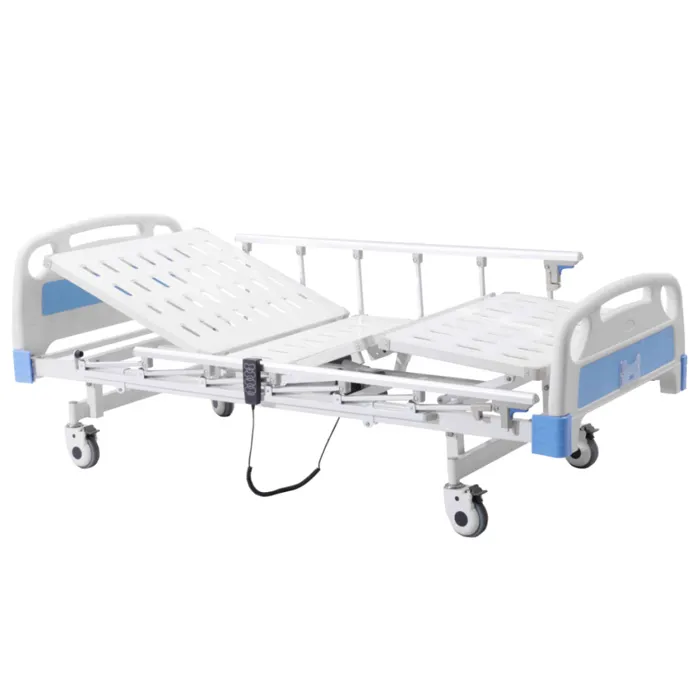
Comparison of Weight Ranges for Different Types of Electric Multi-functional Hospital Beds
To better understand the weight variations of electric multi-functional hospital beds, this section will categorize and explain the weight differences by functional level.
1. Basic Electric Multi-functional Hospital Bed Weight: 90–120 kg
Common Features:
• Basic electric adjustment (backrest + legrest)
• Simple lifting system
• Standard steel frame
• Basic safety rails
Lighter weight, suitable for general wards or home care.
2. Standard Medical Grade Electric Multi-functional Hospital Bed Weight: 120–150 kg
Common Applications: Hospital wards, rehabilitation facilities.
Features:
• Electric adjustment for backrest and legrests
• Integrated lifting system
• ABS headboard and footboard
• Braking system
• High-strength steel frame
This type of bed balances stability and functionality, with a weight in the mid-range.
3. ICU-grade Electric Multifunctional Bed Weight: 150–200 kg or more
ICU beds are among the heaviest categories of electric multifunctional beds.
Reasons include:
• Multi-motor system
• Tilt positioning function
• Full lifting + five or seven function configuration
• High load-bearing structure
• Reinforced chassis and guardrails
These factors result in ICU-grade beds weighing 160–200 kg or even more.
How does the weight of an electric multifunctional bed affect transportation and installation?
Weight not only signifies stability but also relates to the difficulty of transportation, handling, and installation.
Does the weight of an electric multifunctional bed affect transportation costs?
Yes. Higher weight:
• Higher transportation costs
• More manpower required for loading and unloading
• Larger packaging volume
Especially for ICU beds, whose multi-section structure requires disassembly and packaging for transportation.
Does the weight of an electric multi-functional hospital bed affect installation?
Generally speaking:
• Lightweight beds can be installed by 2 people
• Heavy-duty beds require 3-4 people to operate
• ICU beds have more complex structures and require professional installation.
Higher weight increases installation difficulty but also improves stability.
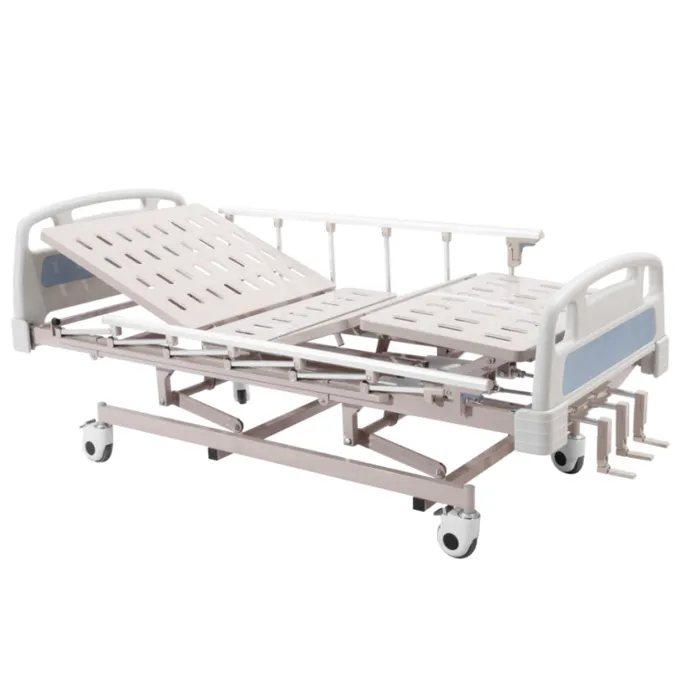
Is weight an important reference standard for selecting an electric multi-functional hospital bed?
Yes. Higher weight indicates a more stable structure, suitable for high-frequency use and high-load environments.
The following situations require a heavier electric multi-functional hospital bed:
• For long-term hospital care
• High load-bearing capacity required
• Use in ICU or emergency rooms
• Advanced functions such as tilting required
• Extremely high stability required
For home use or light care, a particularly heavy model is not necessary.
Can Yikang Medical provide customized hospital and nursing products?
Yes, Yikang Medical specializes in the design and manufacture of customized hospital and rehabilitation products. As a leading manufacturer and supplier in China, we provide electric wheelchairs, manual wheelchairs, hospital beds, nursing beds, bath chairs, and other healthcare equipment. Our customization services allow clients to adjust appearance, configuration, and color according to their specific requirements.
We are your reliable partner for purchasing high-quality medical devices in bulk or wholesale.