

One of the most frequently asked questions when choosing or using an electric wheelchair is: "How many miles can an electric wheelchair travel on a full charge?"
This question seems simple, but it actually involves multiple factors, including battery capacity, motor power, usage environment, user weight, road incline, and tire type. The range of an electric wheelchair not only affects the convenience of daily travel but also determines its suitability for extended or outdoor use.
This article will systematically answer this core question, comprehensively analyzing the key logic behind the range of power wheelchairs, from principles and parameters to influencing factors and optimization methods, helping you scientifically evaluate and correctly use your power wheelchair.
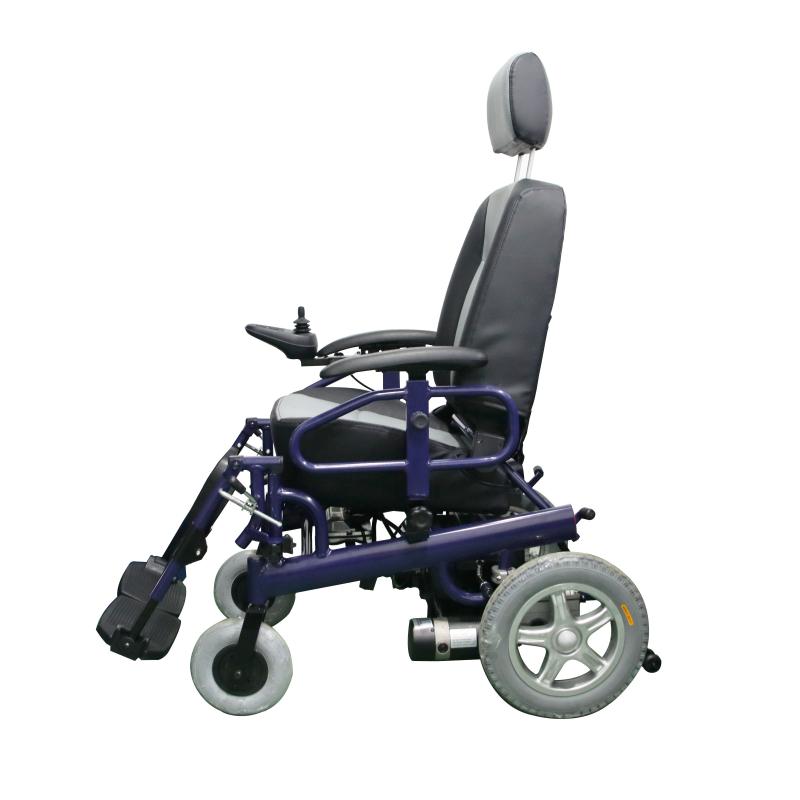
How many miles can an electric wheelchair typically travel on a full charge?
Under normal circumstances, a standard electric wheelchair can travel an average of 10 to 20 miles (approximately 16 to 32 kilometers) on a full charge.
High-performance or long-range electric wheelchairs, equipped with larger capacity lithium batteries, can even achieve a range of over 25 miles (approximately 40 kilometers).
Types of Electric Wheelchairs | Battery Type | Average driving range (miles) | Typical usage environments |
| Lightweight Electric Wheelchairs | Lithium Battery | 10–12 miles | Indoor, short trips |
| Standard Electric Wheelchairs | Lead-acid or Lithium Battery | 15–20 miles | Indoor/outdoor combination |
| Long-Battery-Endurance Electric Wheelchairs | High-Capacity Lithium Battery | 25–30 miles | Outdoor, long-term use |
However, these figures are not absolute. The range of an electric wheelchair is affected by multiple real-world factors, which we will analyze in detail below.
Why is there such a large difference in range between different electric wheelchairs?
The range of an electric wheelchair is affected by the following main factors:
1. Battery Capacity
Battery capacity is the primary factor determining the driving range of a power wheelchair. Capacity is usually measured in ampere-hours (Ah). The larger the capacity, the more power it can supply.
For example:
• A 12Ah lithium battery electric wheelchair typically has a range of about 10 miles;
• A 20Ah battery can reach 15–20 miles;
• High-capacity batteries of 30Ah and above can travel more than 25 miles.
Therefore, choosing an electric wheelchair with a large-capacity battery is the primary way to improve range.
2. Motor Power and Energy Consumption
The more powerful the drive system of an electric wheelchair, the higher its power, and the higher its energy consumption.
For example:
• Low-power (180–250W) motors are suitable for use on flat ground;
• Medium-power (300–400W) motors can climb slopes and overcome obstacles, but consume more power;
• High-power motors are used in heavy-duty wheelchairs, naturally reducing range.
Conclusion: While high-power electric wheelchairs offer superior performance, their travel distance is slightly reduced.
3. User Weight
The heavier the user, the heavier the load on the power wheelchair's drive system, thus accelerating power consumption.
Under standard conditions, for every 10 kg increase in weight, range decreases by approximately 5%–8%.
4. Road Conditions
Flat surfaces consume the least energy, while the following road conditions significantly affect range:
• Uphill or uneven surfaces: Increased motor load;
• Grass, gravel, carpet, etc.: Greater friction, faster power consumption;
• Frequent starts and stops: Greater energy waste.
Therefore, even for the same electric wheelchair, the range can vary by 5 to 10 miles depending on the environment.
5. Tire Type and Pressure
Tire material and tire pressure significantly affect energy consumption. Insufficient tire pressure or high rolling resistance in soft, run-flat tires will shorten the driving range.
Maintaining proper tire pressure is an important maintenance habit for maintaining driving range.
6. Temperature and Weather
In low-temperature environments, battery discharge efficiency decreases, especially for lead-acid batteries.
For every 10°C drop in temperature, the usable battery capacity may decrease by 10%–20%.
Therefore, driving distance in winter is usually shorter than in summer.
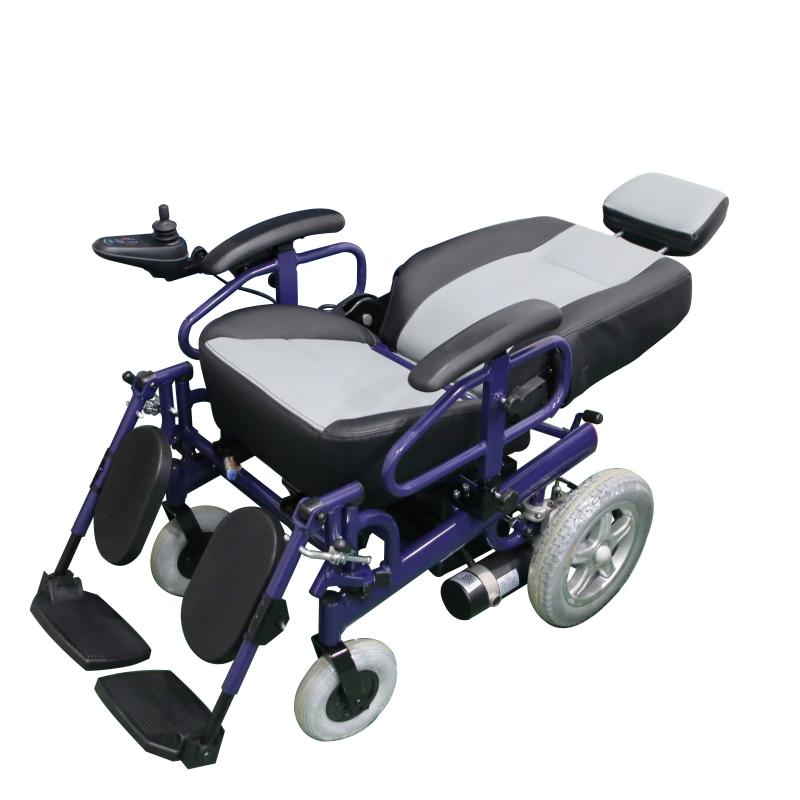
How does the battery type of a power wheelchair affect its driving range?
Different battery types determine the driving range, charging time, and lifespan of a power wheelchair.
1. Sealed Lead-Acid Battery
• Advantages: Inexpensive, stable;
• Disadvantages: Heavy, low energy density, shorter driving range;
• Average driving range: Approximately 10–15 miles;
• Charging time: 6–8 hours.
2. Lithium-ion Battery
• Advantages: Lightweight, high energy density, long lifespan;
• Disadvantages: Relatively high price;
• Average range: Approximately 15–25 miles;
• Charging time: 4–6 hours.
3. Gel Battery
• Advantages: Low maintenance, good shock resistance;
• Disadvantages: Lower energy density than lithium-ion batteries;
• Average range: Approximately 12–18 miles.
Conclusion: If you prioritize range and charging efficiency, lithium-ion battery power wheelchairs are a better choice.
How is the range of a power wheelchair calculated on a full charge?
While the specifications of each power wheelchair vary, a rough estimate can be made using the following simplified formula:
Range (miles) ≈ Battery Capacity (Ah) × Voltage (V) ÷ Power Constant (approximately 40–50)
For example:
An electric wheelchair equipped with a 24V × 20Ah battery:
→ Range ≈ (24 × 20) ÷ 45 ≈ 10.6 miles;
With a 24V × 40Ah high-capacity battery:
→ Range ≈ (24 × 40) ÷ 45 ≈ 21 miles.
Of course, this is only a theoretical estimate. Actual usage will depend on factors such as load capacity and road conditions.
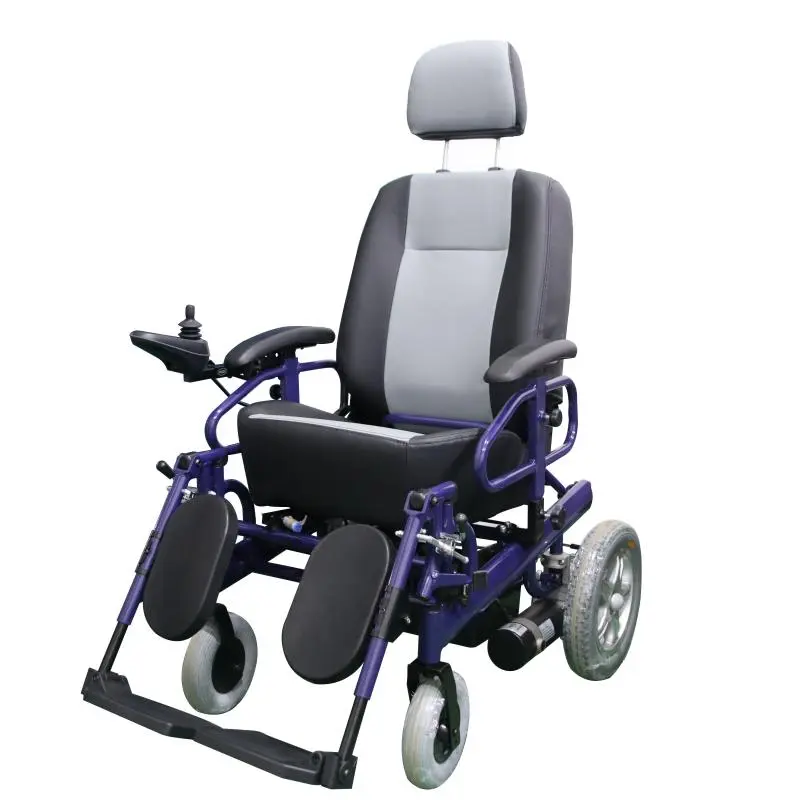
Will the range of an electric wheelchair decrease over time?
Yes. All batteries undergo natural aging and cycle degradation.
After six months to a year of use, the battery capacity of a power wheelchair may decrease by 10%–20%; after two years of use, the range may drop to 60%–70% of its original capacity.
The main reasons include:
• Frequent overcharging or over-discharging;
• Long-term storage without charging;
• Use in high or low temperature environments;
• Inappropriate charger compatibility.
Recommendation: Regular battery maintenance and proper charging are key to extending the lifespan of an electric wheelchair.
How to extend the range of a power wheelchair?
1. Charge on time, do not wait until the battery is completely depleted
Prolonged deep discharge will damage battery performance, especially lead-acid batteries.
It is recommended to recharge after each use.
2. Maintain a suitable ambient temperature
Avoid prolonged use or charging in extremely low or high temperature environments.
3. Check tire pressure regularly
Maintaining proper tire pressure effectively reduces rolling resistance and improves driving efficiency.
4. Reasonably control speed and starting frequency
Frequent starts and sudden stops consume extra power.
Maintaining a smooth driving motion helps save battery power.
5. Reduce unnecessary weight
Avoid placing heavy objects on the power wheelchair to reduce the burden on the motor.
6. Regular maintenance and cleaning
Keep the motor and battery connectors clean and free from corrosion to prevent energy loss.
Which power wheelchairs are considered "long-range"?
Long-range power wheelchairs generally have the following characteristics:
• Equipped with a 24V 30Ah or higher lithium battery;
• Uses a high-efficiency DC brushless motor;
• Employs a lightweight aluminum alloy structure to reduce overall weight;
• Features an energy-saving control system;
• Supports a removable and rechargeable battery design.
These types of electric wheelchairs can travel 25–30 miles on a full charge, making them ideal for daily outings or long commutes.
Common Reasons for Short Battery Life in Electric Wheelchairs
When your electric wheelchair's battery life decreases significantly, it may be due to the following reasons:
• Battery aging, resulting in reduced actual capacity;
• Loose power connection;
• Insufficient charger output;
• Decreased motor or controller efficiency;
• Increased tire resistance.
Solutions include replacing the battery, checking the electrical system, and maintaining proper tire pressure.
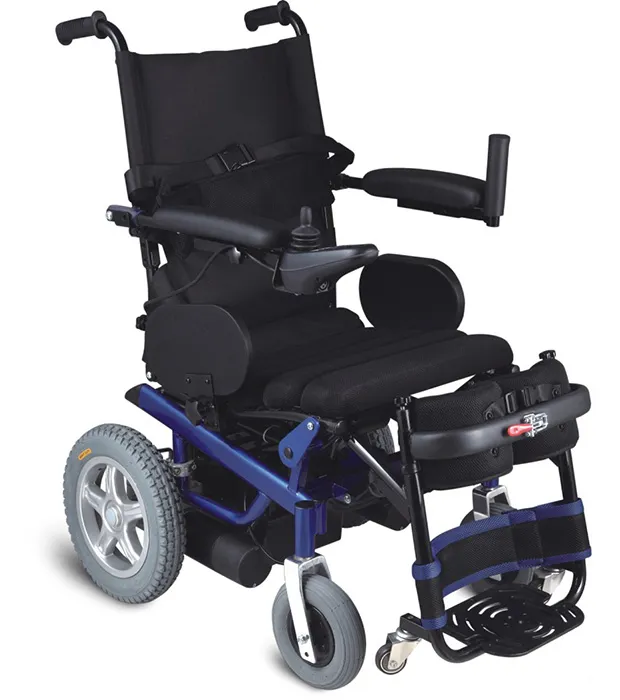
How to Match Electric Wheelchair Range to User Needs?
User Needs Types | Recommended driving range | Battery Types | Description |
| Home Indoor Use | 8–12 miles | Small Capacity Lithium Battery | Suitable for short-distance, daily travel |
| Community Outdoor Use | 15–20 miles | Medium Capacity Lithium Battery | Supports half-day activities |
| Long-Distance Travel or Outdoor Use | Over 25 miles | Large Capacity Lithium Battery | Supports full-day use |
| Nursing Facilities or Hospital Inspections | 10–15 miles | Lead-Acid or Lithium Battery | Stable and reliable, with moderate battery life |
By clearly defining your needs and choosing an electric wheelchair with the appropriate range specifications, you can achieve the best balance between performance and economy.
How Many Miles Can an Electric Wheelchair Travel on a Full Charge?
A typical power wheelchair can travel an average of 10–20 miles on a full charge.
With a high-performance lithium battery and energy-efficient drive system, the range can be increased to 25 miles or more.
The final range depends on:
• Battery capacity and type;
• Motor power and control system;
• User weight and driving environment;
• Proper maintenance and usage habits.
Therefore, when purchasing a power wheelchair, these factors should be considered comprehensively to select the range configuration that best suits your needs.
Does Yikang Medical supply shower and toilet chairs?
Yes, Yikang Medical is a professional manufacturer and supplier of shower chairs, toilet chairs, and other nursing equipment in China. Since 2014, we have expanded our product line from hospital beds and wheelchairs to a complete range of rehabilitation products. Our shower and toilet chairs are designed to improve patient comfort, safety, and mobility in hospitals, nursing homes, and home care. We support customized orders to match your specifications, colors, and configuration. Certified with ISO13485, ISO9001, CE, and FDA, Yikang Medical guarantees high-quality, reliable products.