

Electric wheelchairs are an important mobility tool for people with mobility impairments, and their core power source is the battery. Battery performance directly determines the electric wheelchair's range, operational stability, and lifespan.
One of the most pressing questions for many users during purchase or use is: "How long do power wheelchair batteries last?"
Different types of batteries differ in chemical composition, usage frequency, maintenance methods, and charging habits, resulting in significant differences in lifespan.
This article will provide an in-depth analysis of the lifespan, influencing factors, maintenance methods, and key strategies for extending the lifespan of electric wheelchair batteries from a professional perspective.
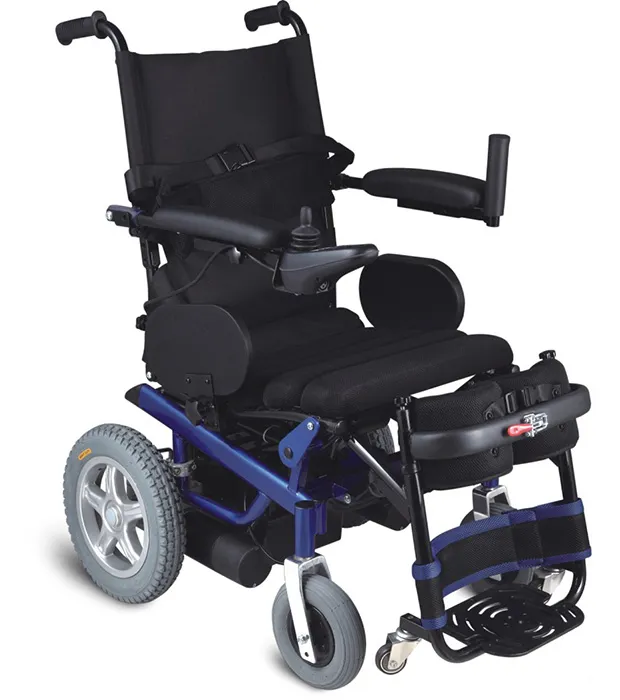
How long do electric wheelchair batteries typically last?
Generally, the lifespan of electric wheelchair batteries is between 2 and 5 years.
This timeframe depends on the battery type, usage environment, and maintenance habits. Here is a general comparison:
Battery Types | Average service life | Number of charging cycles | Features |
Lead-acid batteries | 1.5–3 years | 300-500 times | Low cost, heavy weight, requires periodic refilling |
| Lithium-ion batteries | 3–5 years | 800-1200 times | Lightweight, long lifespan, no memory effect |
| Ni-metal hydride batteries | 2–3 years | 500-800 times | Moderate stability, used in some older models |
While this is a common industry standard, user habits can significantly impact lifespan. For example, even with lithium batteries, some can perform well for 5 years, while others may show signs of degradation in less than two years. This is due to differences in usage behavior.
Why is there such a large difference in the lifespan of power wheelchair batteries?
The lifespan differences of power wheelchair batteries are mainly due to factors such as depth of discharge, charging frequency, ambient temperature, and storage methods.
1. Depth of Discharge Affects Lifespan
The depth of each discharge has a decisive impact on lifespan.
• Lead-acid batteries experience a significant reduction in lifespan when discharged beyond 80%.
• Lithium batteries are better suited for shallow discharges, such as using them to 30%–40% capacity before recharging, which helps slow down aging.
If the battery is consistently used until it is almost empty before charging, the chemical structure of the electric wheelchair battery will be stressed, shortening its lifespan by approximately 30%.
2. Improper Charging Habits
Both undercharging and overcharging of electric wheelchairs for extended periods will cause damage.
• Undercharging can cause cell sulfation or voltage imbalance;
• Overcharging can lead to heat accumulation, electrolyte decomposition, and reduced capacity.
The correct approach is: charge promptly after use and disconnect the power as soon as it is fully charged.
3. Ambient Temperature Affects Performance
Electric wheelchair batteries are highly sensitive to temperature.
• In low-temperature environments (e.g., below 10℃), battery activity decreases, reducing range.
• In high-temperature environments (above 35℃), chemical reactions accelerate, leading to faster aging.
The ideal operating and charging temperature is 15℃~25℃.
4. Long-term Inactivity Without Charging
Many users forget to charge the battery when their power wheelchairs are not in use for extended periods, resulting in "deep discharge" or "dormant state," especially for lead-acid batteries, which may permanently fail.
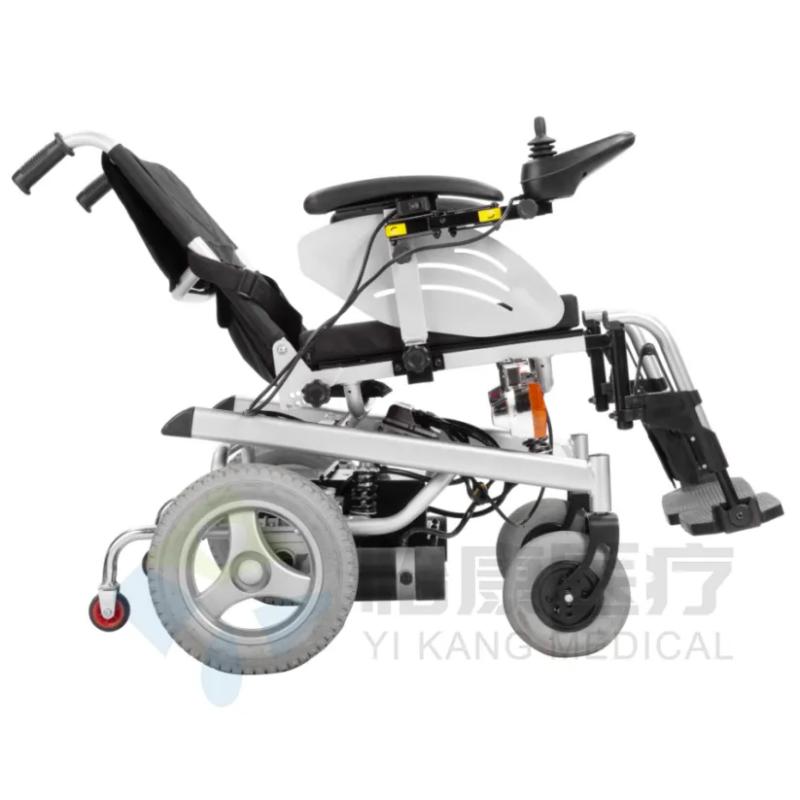
Detailed Comparison of Lifespan of Common Electric Wheelchair Battery Types
1. How long can a lead-acid battery last?
Lead-acid batteries are the mainstream power source for traditional power wheelchairs, generally lasting about 2 to 3 years.
Advantages include low cost and stable structure, but disadvantages include large size, heavy weight, and high requirements for charging management.
With proper maintenance (fully charged each time, no over-discharge, no high-temperature storage), it can be extended to about 3 years. If frequently undercharged or left idle for long periods, performance will significantly decline after about 1.5 years.
2. How long can a lithium battery last?
Lithium-ion batteries are the mainstream configuration for modern electric wheelchairs.
Under normal circumstances, their lifespan is 3 to 5 years, and some can even reach over 6 years.
Lithium-ion batteries have high energy density, no memory effect, and can be repeatedly charged. As long as users maintain proper usage (avoiding full charging and complete discharge), their lifespan is often superior to lead-acid batteries.
3. How many years can nickel-metal hydride (NiMH) batteries last?
NiMH batteries are still found in some older models of electric wheelchairs.
The average lifespan is 2-3 years, with performance between lead-acid and lithium-ion batteries.
However, this type has lower charge/discharge efficiency and is prone to overheating, and is gradually being replaced by lithium-ion batteries.
What usage habits shorten the lifespan of electric wheelchair batteries?
Although electric wheelchair batteries are designed for a long lifespan, incorrect usage can cause them to fail prematurely. Here are five common "hidden killers":
• Frequent deep discharge: Each time the battery is used to near 0% capacity, it puts extreme stress on the cell. Especially for lead-acid batteries, repeated deep discharges can lead to sulfation of the plates.
• Long periods without charging: If a power wheelchair is left idle for more than three months without being recharged, the battery may completely fail. • Overcharging: Many users habitually charge their batteries overnight, which can lead to battery bulging or internal aging due to prolonged full charge.
• Use in extreme temperatures: High or low temperatures can cause abnormal chemical reactions, accelerating battery degradation.
• Using an incompatible charger: Non-original chargers may cause unstable current, leading to overheating or voltage damage.
How to extend the lifespan of an electric wheelchair battery?
To extend the lifespan of your power wheelchair battery, follow these steps:
1. Correct charging methods
• Charge promptly after each use; do not wait until the battery is too low.
• Disconnect the power as soon as it is fully charged to avoid prolonged power-on.
• Use the original charger that matches the battery type.
2. Controlling the depth of discharge
• For lithium-ion battery power wheelchairs, it is recommended to charge when the battery level is between 20% and 30%.
• Lead-acid batteries can be used until approximately 50% before recharging. This reduces cycle stress.
3. Maintain Suitable Temperature
• Use and charge at room temperature, avoiding direct sunlight or extreme cold;
• Keep the environment dry during charging to prevent moisture from causing short circuits.
4. Regular Maintenance and Inspection
• Check battery voltage every 6 months;
• Clean oxides from wiring ports;
• Check cables for looseness or damage.
5. Recharge When Not in Use for Long Periods
If the electric wheelchair is not in use, charge it once a month, maintaining a charge level of 50%–70% to prevent over-discharge of the cells.

What are the signs of battery aging in electric wheelchairs?
To determine if an electric wheelchair battery is nearing the end of its lifespan, you can look for the following signs:
• Significantly reduced range: The power wheelchair travels a shorter distance on the same route, indicating a decrease in battery capacity.
• Abnormal charging time: If charging time becomes increasingly shorter or significantly longer, the battery is aging.
• Unstable output power: Insufficient power during acceleration or climbing hills, and a significant drop in voltage.
• Battery overheating or bulging: This indicates internal chemical aging or gas accumulation, requiring immediate replacement.
• Controller Alarm: Some power wheelchairs are equipped with intelligent detection functions that automatically alarm when battery performance deteriorates.
Can electric wheelchair batteries be repaired or replaced after their expiration date?
1. Can they be repaired?
• Batteries are consumable components. Once the chemical structure deteriorates, the capacity cannot be restored through simple repairs.
• Some manufacturers offer "cell replacement" services, but these are costly and less safe than new batteries.
2. When should the battery be replaced?
Replace the battery immediately if the following occurs:
• The electric wheelchair's range is less than 50% after a full charge;
• The battery is bulging or leaking;
Unstable voltage causes the control system to automatically shut down.
3. Replacement Recommendations
• Choose a model that matches the original vehicle's specifications;
• If it is a lithium battery, ensure compatibility with the original control system and charger;
• Have it replaced by a professional to avoid the risk of short circuits.
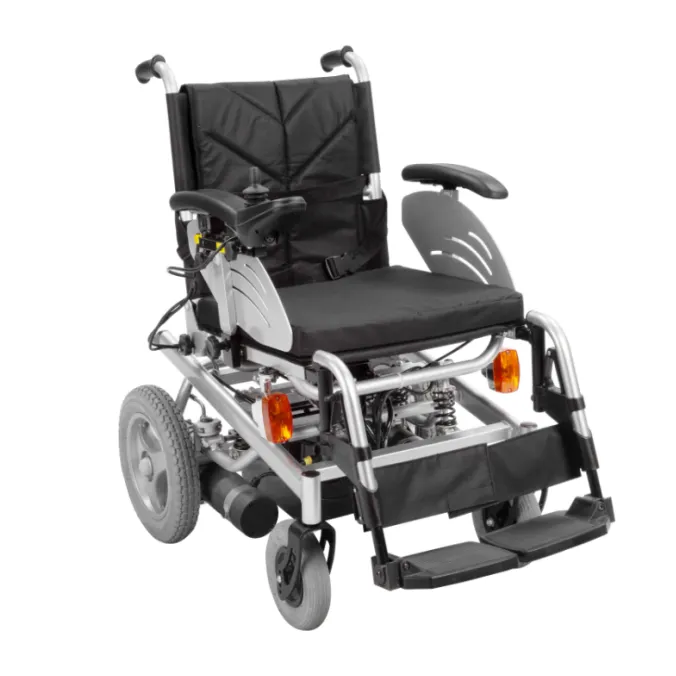
Do different brands of power wheelchair batteries have significantly different lifespans?
Yes, there are differences. Batteries used in different brands of power wheelchairs vary in design quality, energy density, and BMS (Battery Management System) accuracy. High-end medical-grade electric wheelchairs typically use higher-standard battery cells and protection boards, enabling stable use for over 5 years; while lower-end models may experience significant performance degradation after only 2 years.
However, even the best batteries require proper use and maintenance, otherwise their lifespan will be greatly reduced.
Scientific Use is Key to Extending the Lifespan of Electric Wheelchair Batteries
Core factors affecting lifespan include battery type, charging and discharging habits, usage environment, and maintenance frequency.
• Lead-acid batteries: 1.5–3 years, must be fully charged each time, avoid undercharging;
• Lithium-ion batteries: 3–5 years, avoid complete discharge or overcharging;
• Nickel-metal hydride batteries: 2–3 years, maintain moderate discharge and regular charging.
What makes Yikang Medical products high-quality?
Yikang Medical ensures high-quality hospital and rehabilitation equipment through professional manufacturing processes, strict quality control, and internationally recognized certifications like ISO13485, ISO9001, CE, and FDA. Our products include hospital beds, nursing beds, power wheelchairs, manual wheelchairs, toilet chairs, shower chairs, walkers, and crutches.
Established in 2010 in Foshan, China, we are an OEM factory for leading brands and offer customized solutions for clients worldwide. By choosing Yikang Medical, you can purchase high-quality, reliable medical equipment directly from an experienced Chinese manufacturer.