

When selecting and using a manual wheelchair, many people are concerned about a very practical question: How fast can a manual wheelchair actually be pushed?
While this question may seem simple, from a professional perspective, the speed of a manual wheelchair is not a fixed value; rather, it is the result of the combined influence of various factors.
Unlike electric wheel chairs, manual wheel chairs rely entirely on the user's own physical strength for propulsion. Therefore, the speed of a manual wheelchair is not solely dependent on the wheelchair itself, but is also closely tied to the user's physical strength, endurance, maneuvering technique, and the environment in which it is used.
This article will center on the core question—"How fast can a manual wheelchair be pushed?"—and provide a systematic analysis covering speed ranges, influencing factors, performance in different usage scenarios, and the relationship between safety and efficiency. Our goal is to help you form a clear and rational understanding of the actual speed capabilities of manual wheel chairs.
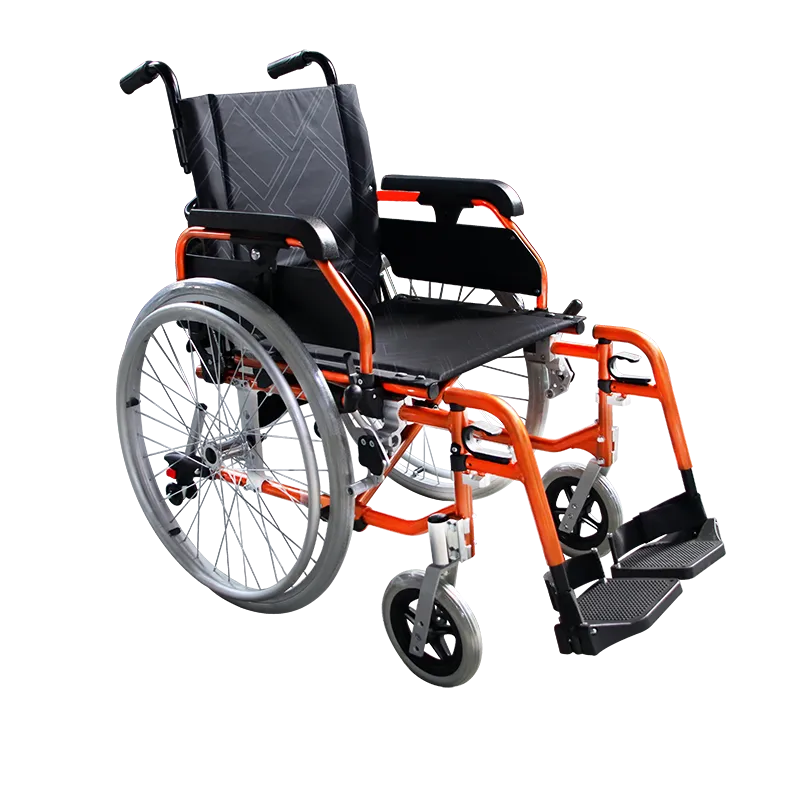
Is There a "Standard Speed" for Manual Wheelchairs?
Strictly speaking, there is no single, unified standard traveling speed for manual wheel chairs.
This is because manual wheel chairs are not driven by a motor; instead, they are propelled forward by the user pushing on the handrims with their hands, making their speed highly dependent on human power.
However, based on everyday usage and general observations, a reference range can still be provided:
Typically, a user can push a manual wheelchair at a speed of 1 to 2 miles per hour.
This speed range is widely regarded as the common operating speed for a manual wheelchair under normal, safe, and sustainable conditions.
Why Does the Speed of a Manual Wheelchair Primarily Depend on the User?
This is the key premise for understanding the question: "How fast can a manual wheelchair be pushed?"
1. Manual Wheel Chairs Rely Entirely on Human Power for Propulsion
Manual wheel chairs possess neither a motor nor an automatic acceleration mechanism; all actions—moving forward, turning, and braking—are generated solely by the strength of the user's arms.
2. The Act of Pushing Itself Consumes Physical Energy
Propelling a manual wheelchair is not merely a matter of exerting a one-time burst of force, but rather a continuous process of expending physical energy.
Consequently, when assessing speed, one must not focus solely on whether it is *possible* to push fast, but—more importantly—whether that speed can be *consistently sustained*.
3. Endurance Has a Significant Impact on Speed
Even if a user can push the wheelchair faster for a short period, if that pace cannot be maintained over the long term, it does not constitute a practical or usable speed.
For this very reason, the actual speed of a manual wheelchair depends largely on the user's physical strength and endurance, rather than on the "maximum speed specifications" of the wheelchair itself.
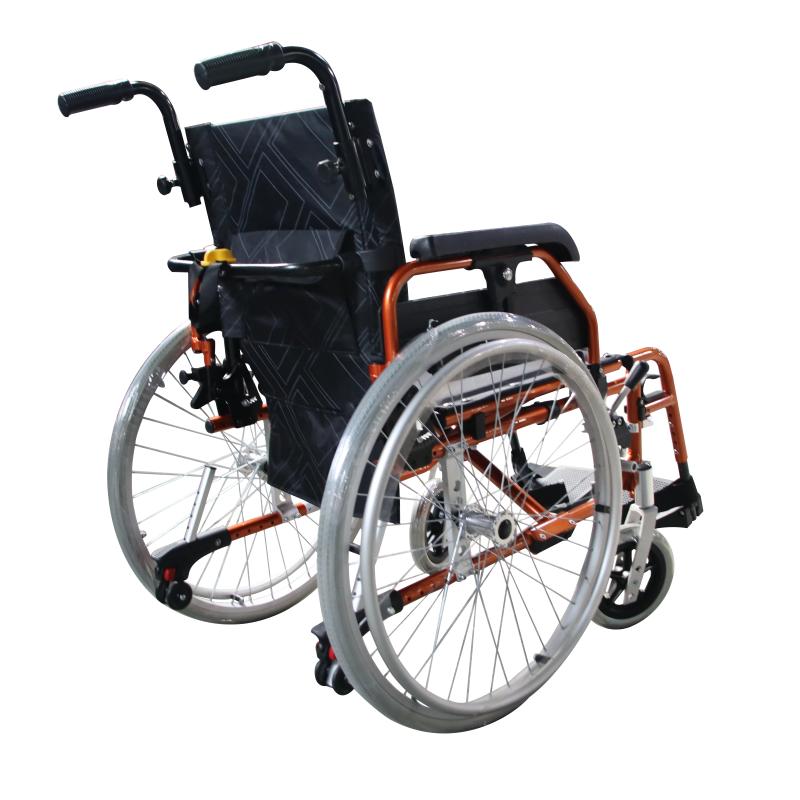
What Are the Primary Factors That Influence the Speed of a Manual Wheelchair?
While the user is the central factor, the speed of a manual wheelchair is nonetheless influenced by a variety of aspects—primarily the following:
How do a user's strength and endurance affect manual wheelchair speed?
This is the most direct and, indeed, the most critical factor.
1. Upper Body Strength
Manual wheel chairs rely primarily on the arms, shoulders, and core muscles for propulsion.
The greater the upper body strength, the more efficient each individual push of the handrim becomes, naturally resulting in faster speeds.
2. Sustained Endurance
Without sufficient endurance, even if one can push quickly for a short burst, it becomes difficult to maintain a steady speed over time.
Consequently, for daily use, most individuals opt for a speed range that is less physically demanding and more sustainable.
3. Pushing Technique
An appropriate pushing rhythm and proper application of force can yield a smoother, more consistent speed, even when physical exertion remains constant.
Does the manual wheelchair itself affect pushing speed?
Yes, it does. While not the sole determinant, the structural design and specific configuration of a manual wheelchair certainly have an impact on speed.
1. Wheelchair Weight
Generally speaking, the heavier a manual wheelchair is, the greater the physical effort required to initiate movement and accelerate.
Given the same level of physical exertion, a lighter manual self propelled wheelchair makes it easier to maintain a speed of 1–2 miles per hour.
2. Tire Type
•Pneumatic (air-filled) tires offer lower rolling resistance.
•Solid tires are more durable but present slightly higher rolling resistance.
Differences in tire resistance affect the smoothness of propulsion, thereby influencing overall speed performance.
3. Bearings and Rolling Efficiency
The smoothness with which the wheels rotate directly determines the forward distance achieved per unit of pushing force.
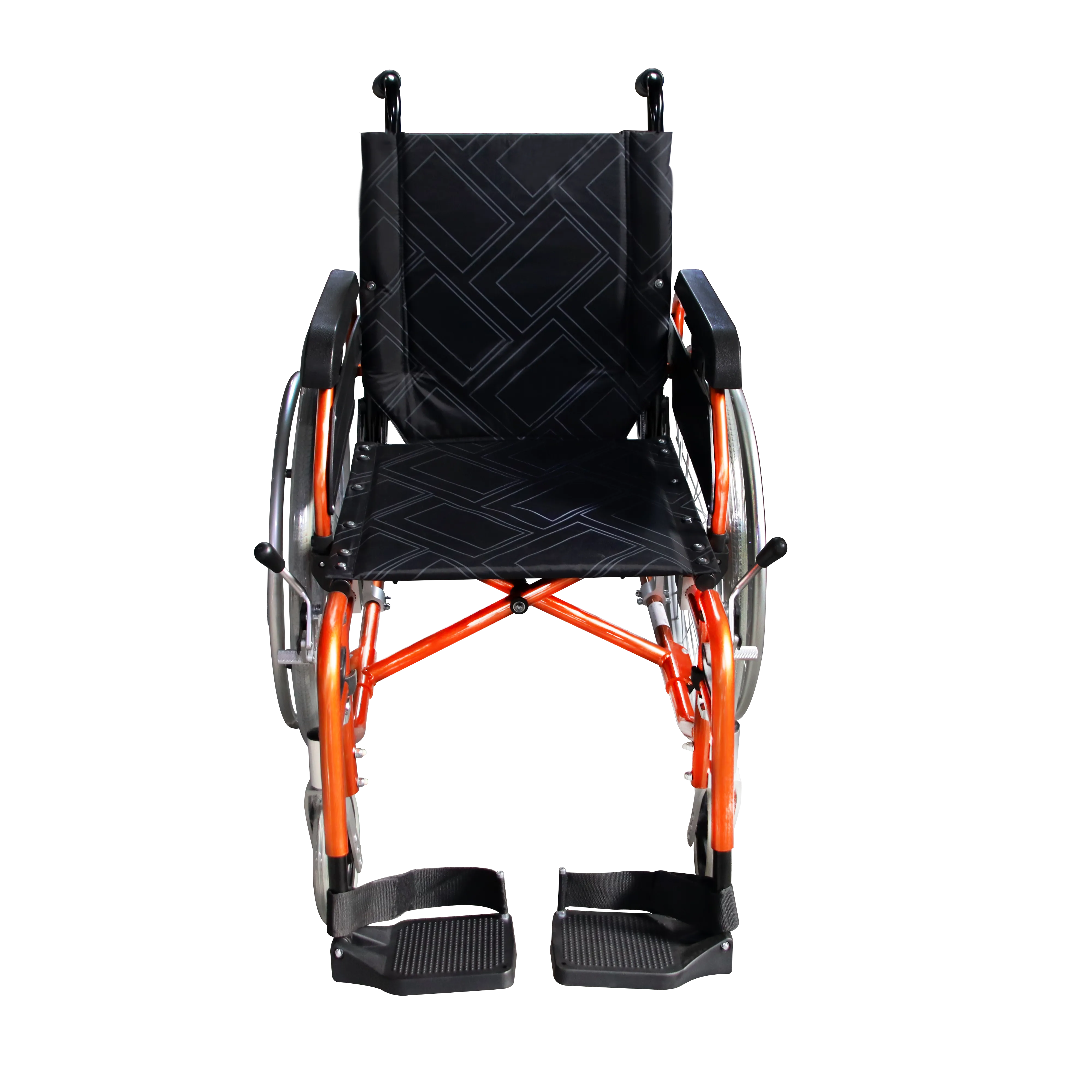
Does manual wheelchair speed vary depending on the surface environment?
The answer is a definitive yes.
1. Flat Indoor Surfaces
This constitutes the ideal environment for propelling a manual self propelled wheelchair.
In such settings, a speed of 1–2 miles per hour is the easiest to achieve and sustain.
2. Outdoor Sidewalks or Hard Surfaces
Provided the surface is smooth and even, a manual self propelled wheelchair can still operate within a speed range close to normal levels, though it may entail a slightly higher physical exertion cost.
3. Ramps or Uneven Surfaces
On ramps, rough terrain, or in environments that present significant resistance, the actual speed of a manual self propelled wheelchair will decrease noticeably. Therefore, when discussing "how fast a manual wheelchair can be pushed," it is essential to consider the specific usage environment.
Can a manual wheelchair be pushed faster than 1–2 miles per hour?
Theoretically, this is possible for short periods.
However, from the perspectives of practical usage and safety, it is not advisable to consistently or frequently pursue higher speeds over the long term.
The reasons include:
•Significantly increased pushing resistance
•Rapid physical exertion and fatigue
•Increased difficulty in maneuvering
•Longer braking distances
Consequently, 1–2 miles per hour represents not the "absolute speed limit," but rather the "sustainable, controllable, and safe operating speed range."
What is the relationship between manual wheelchair speed and safety?
Speed never exists in isolation—especially in the context of manual self propelled wheelchair usage.
1. Higher speeds demand greater maneuvering proficiency
When turning, avoiding obstacles, or coming to a stop, a manual self propelled wheelchair relies entirely on the user's reaction time and control skills.
2. Maintaining a steady speed is paramount
For most users, maintaining a steady, predictable speed is far more practical than attempting to achieve brief bursts of high speed.
3. Physical exhaustion compromises safety
If one pushes too hard in pursuit of speed, leading to accumulated fatigue, the likelihood of operational errors actually increases.
Therefore, having a realistic understanding of the manual self propelled wheelchair's speed capabilities helps to enhance overall safety during use.
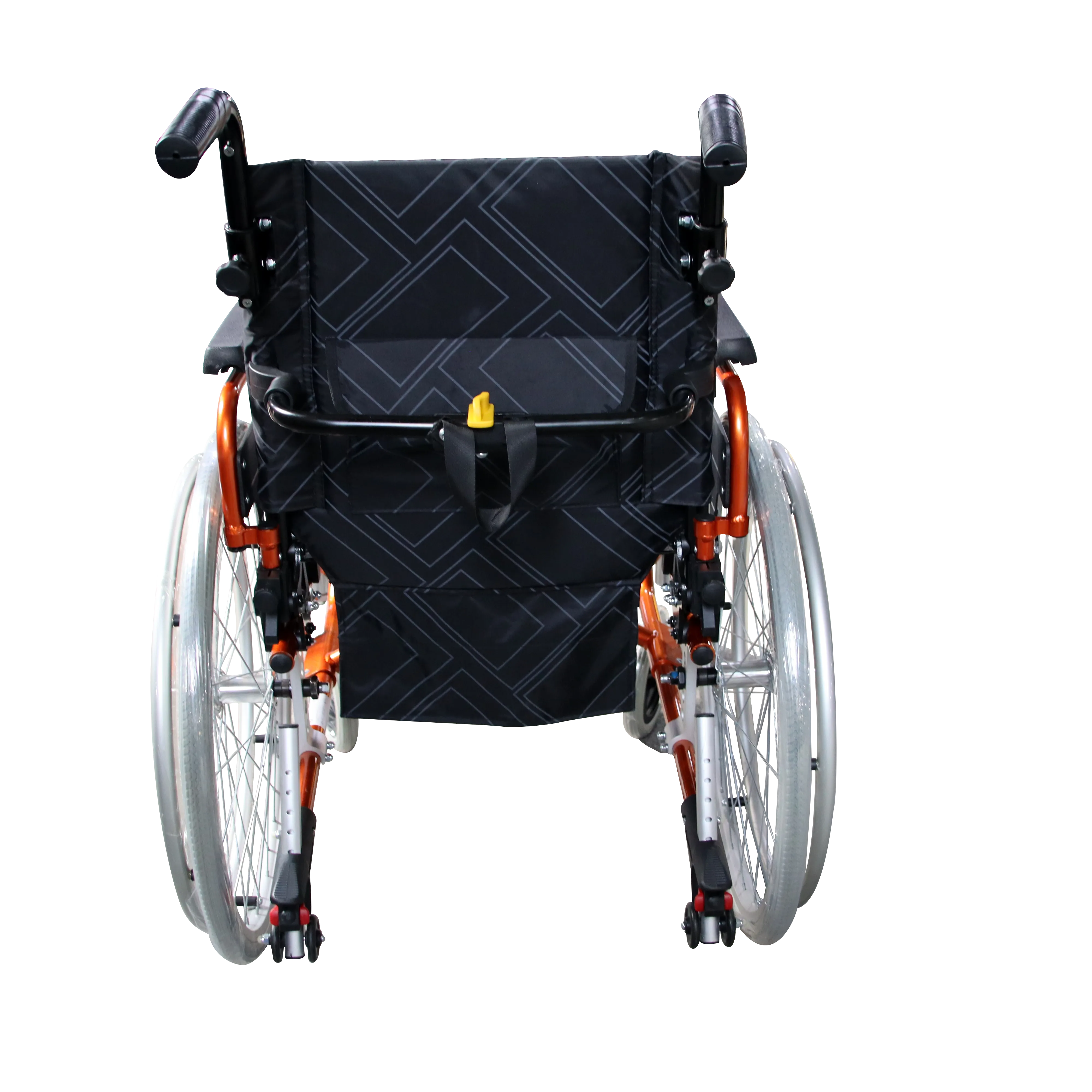
Does the speed of a manual wheelchair vary depending on usage frequency?
1. Occasional users
Typically opt for a slower, more relaxed pace to minimize physical exertion.
2. Daily users
Are more likely to identify a steady speed range that suits their specific needs—which typically still falls within the 1–2 miles per hour range.
3. Prolonged, continuous use
During extended periods of use, maintaining a consistent pace takes precedence over achieving momentary bursts of speed.
This further illustrates that the speed of a manual self propelled wheelchair represents a "dynamic equilibrium"—a balanced state—rather than a single fixed number.
How should one interpret the "actual operating speed of a manual wheelchair"?
Overall, this issue can be understood on three levels:
1.Theoretical Speed: The maximum speed potentially attainable over a short duration.
2.Common Speed: 1–2 miles per hour—the most typical and stable speed.
3.Safe Speed: A speed that remains within a controllable range, allowing for immediate deceleration or stopping at any moment.
For the vast majority of users, the "common speed" and "safe speed" are far more relevant than the question of "how fast can it go at its absolute maximum?"