
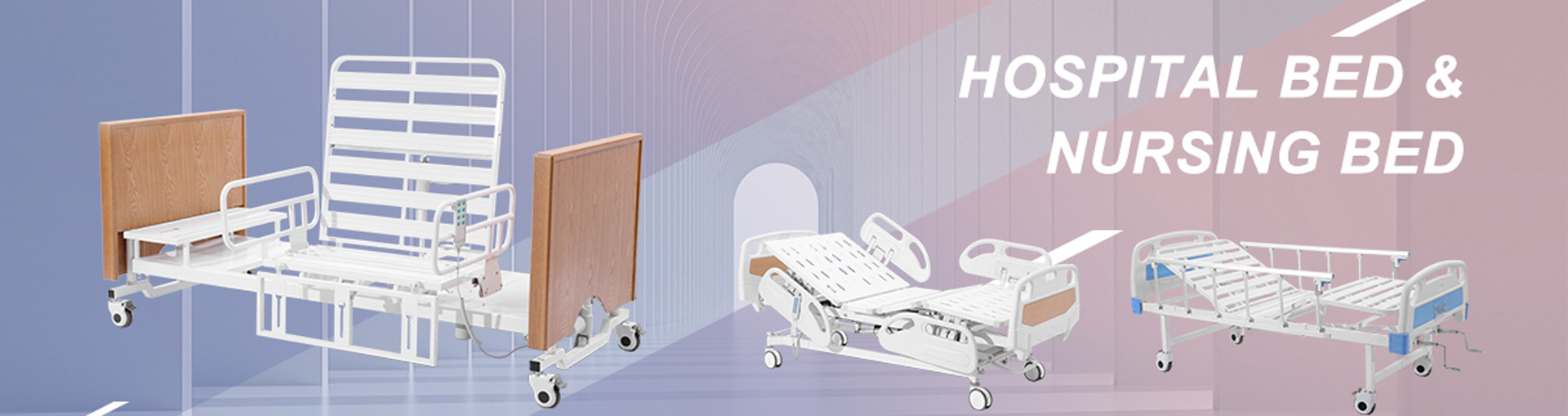
In modern healthcare settings, hospital beds have evolved far beyond basic infrastructure for resting; they have become vital medical devices that integrate nursing care, rehabilitation, patient monitoring, and safety management. In recent years—driven by medical technology upgrades, an aging population, and a rapidly growing demand for rehabilitation and nursing care—electric adjustable hospital beds have become commonplace in large hospitals, elderly care facilities, rehabilitation centers, and even home care environments. Compared to traditional manual beds, electric adjustable hospital beds utilize motor-driven systems and intelligent controls to help patients adjust their positions with ease, while simultaneously reducing the physical strain on caregivers and enhancing both efficiency and safety.
Data from medical equipment market research firms indicates steady growth in the global medical bed market. Electric beds now account for over 60% of the market share, with penetration rates rising steadily in high-end hospital wards and long-term care sectors. In China, the expansion of tertiary hospitals and the popularization of the "smart ward" concept have led to a significant increase in the demand for electric adjustable hospital beds. Although many people frequently encounter this equipment in hospitals, they often do not understand how it actually operates, sometimes dismissing it as merely a "bed that goes up and down." In reality, modern electric adjustable hospital beds offer far more complex functionality than one might imagine; beyond simple adjustments to the backrest, leg rest, and overall height, they support specialized nursing modes such as emergency reset, automatic turning, and Trendelenburg positioning (head-up/feet-down).
So, how exactly are electric adjustable hospital beds operated? What are the core operating principles? Can patients control them independently? What precautions should caregivers take during operation? This article provides a detailed analysis covering equipment structure, operating procedures, functional principles, safety considerations, and future development trends.
What is an electric adjustable hospital bed?
An electric adjustable hospital bed is a piece of medical nursing equipment that uses an electric drive system to control changes in the bed's configuration. Unlike traditional mechanical beds that require manual cranks to adjust angles, electric adjustable hospital beds rely on built-in motors and control modules to automate adjustments. Users can simply press a button or use a remote control to alter the bed's position.
In terms of functionality, the defining characteristic of an electric adjustable hospital bed is its "adjustability." This adjustability goes beyond simple vertical movement; it encompasses movements across multiple dimensions. For instance, raising the backrest assists patients with eating, reading, and breathing; elevating the legs helps promote blood circulation; and adjusting the overall bed height facilitates daily care and patient transfers by nursing staff. Some high-end electric adjustable hospital beds also feature automatic lateral turning, pressure ulcer prevention, position memory, and emergency CPR modes.
These features enable electric adjustable hospital beds to serve various medical departments effectively. In the ICU, for example, they can assist with respiratory therapy; in orthopedic wards, they minimize pain caused by patient movement; and in geriatric care, they significantly reduce the risk of complications associated with prolonged bed rest. Consequently, from a clinical perspective, electric adjustable hospital beds have become a vital component of modern nursing care systems.
What are the main structural components of an electric adjustable hospital bed?
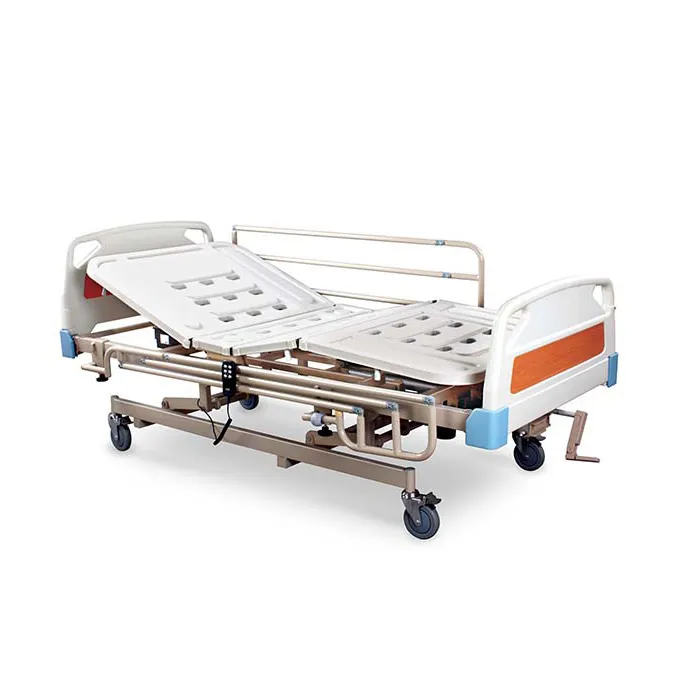
To understand how an electric adjustable hospital bed operates, one must first understand its internal structure. The realization of any function relies fundamentally on the coordinated interaction between the mechanical structure, the electronic control system, and the actuation devices.
1. Bed Frame
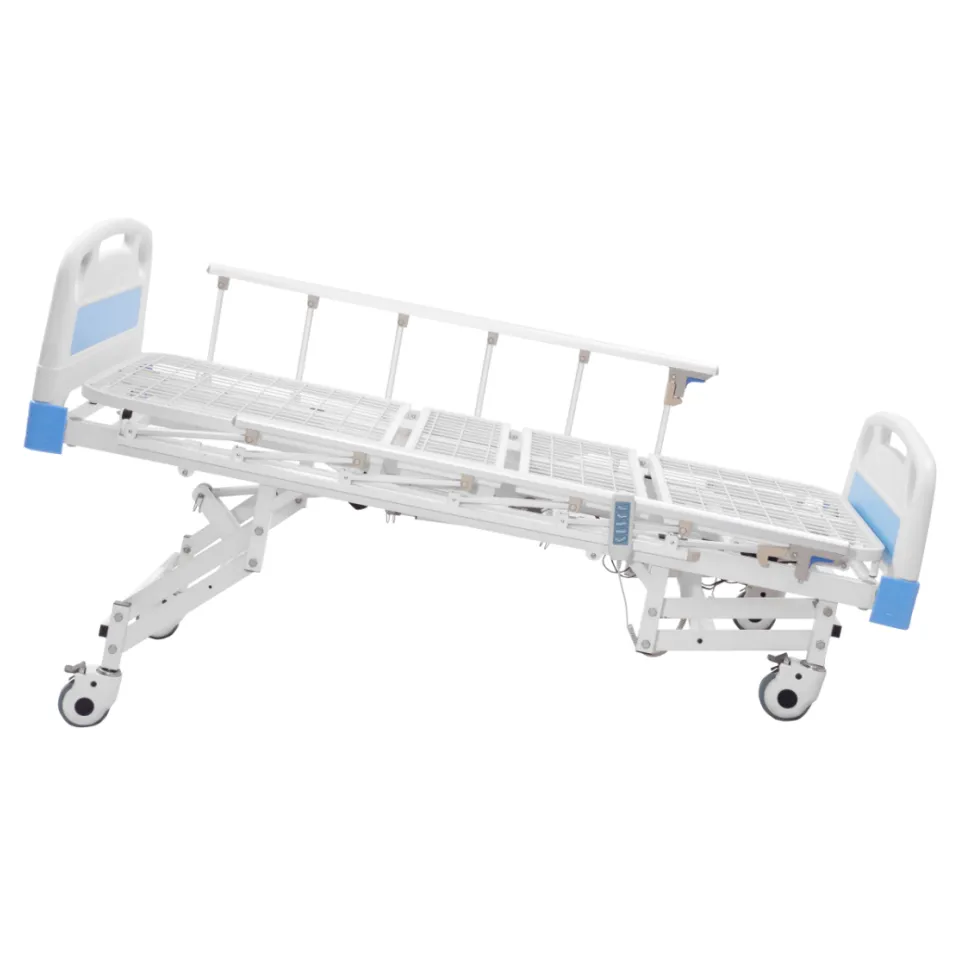
The bed frame serves as the foundational structure of the bed, primarily responsible for load-bearing and support. Most electric adjustable hospital beds are constructed from high-strength steel or aluminum alloy to ensure adequate stability and durability. Standard medical beds typically have a load capacity ranging from 180 kg to 250 kg, whereas beds designed for intensive care or bariatric patients can support loads exceeding 300 kg.
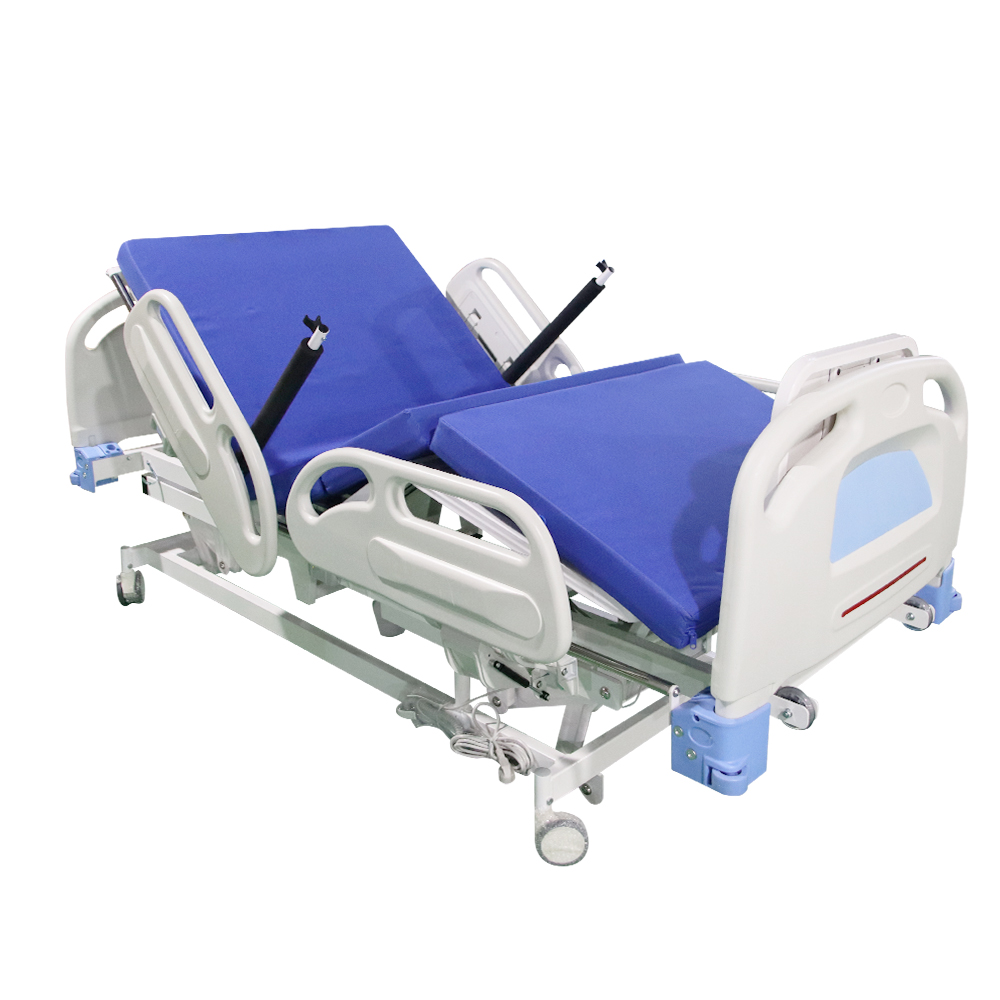
The bed platform is generally divided into several independently movable sections, including the head, back, seat (pelvic), thigh, and foot areas. It is this segmented design that allows the bed to be adjusted to various angles via motor drive.
2. Motor System
The motor system is the power core of the electric adjustable hospital bed. Simply put, virtually all lifting and adjustment movements are powered by motors. The number of motors varies depending on the bed's configuration; common setups include 2, 3, or 4 motors, or sometimes even more.
For example, a basic electric adjustable hospital bed might only offer backrest and leg-rest adjustments, requiring just two motors. In contrast, high-end nursing beds—which support features such as overall height adjustment, lateral turning, and tilting—are typically equipped with four or more motors. The motors used in modern medical beds are predominantly low-noise DC motors; their operating noise level is generally below 50 decibels, ensuring they do not significantly disturb the ward environment.
3. Control System
The control system acts as the "brain" of the hospital bed. User commands are translated by the control system into specific motor actions. Common control methods include handheld remotes, bedside control panels, buttons on the side rails, and centralized control systems at the nurses' station. Some smart, electrically adjustable hospital beds even support control via mobile apps and voice commands.
4. Side Rails and Safety Components
In addition to preventing patient falls, side rails serve as an interface for user interaction. Many electrically adjustable hospital beds feature control buttons, nurse call buttons, and locking mechanisms integrated directly into the side rails. Some high-end models also include angle displays that provide a clear, real-time view of the bed's current position.
Casters and braking systems are also crucial components. Medical-grade casters allow for 360-degree rotation, facilitating easy movement of the bed, while the braking system ensures the bed remains stationary and does not slide during use.
What is the basic operating procedure for an electrically adjustable hospital bed?
Operating an electrically adjustable hospital bed involves more than simply pressing a button. Proper operation requires following specific procedures to ensure patient safety and the stable functioning of the equipment.
Pre-operation Checks
Before using the electrically adjustable hospital bed, nursing staff typically perform a series of basic checks. First, verify the power connection and ensure the plug is securely inserted. Next, check that the remote control and control panel are responsive. Finally, ensure there are no obstacles—such as IV tubing, power cords, or debris—around the bed that could cause entanglement or pinching during adjustment.
If the bed is equipped with a backup battery, verify that the charge level is sufficient. Some high-end models display battery status, system fault codes, and lock status directly on the screen, allowing for a quick assessment of the equipment's condition.
How is the backrest adjustment operated?
Backrest adjustment is one of the most frequently used functions of an electrically adjustable hospital bed and the operation patients perform most often in their daily routine. This function is primarily used to assist patients in transitioning gradually from a lying-flat position to a semi-seated or seated position.
When operating this feature, first ensure the patient is positioned in the center of the bed and that their head and neck are in a natural position. Next, press the back-lift button on the remote control; upon receiving the command, the control system activates the back motor, causing the bed platform to rise slowly. Caregivers should monitor the patient's reaction during adjustment—particularly for post-operative or elderly patients—to check for dizziness, pain, or respiratory discomfort.
Typically, the backrest adjustment range for electric hospital beds is between 0 and 70 degrees. Clinically, a semi-recumbent position of 30 to 45 degrees is most widely used, as this angle helps improve respiratory function while reducing the risk of aspiration. Studies indicate that for long-term bedridden patients, maintaining a head-elevated position of at least 30 degrees can reduce aspiration-related risks by approximately 30%.
How is the leg elevation operated?
Leg adjustment is primarily used to improve lower-limb circulation and relieve pressure. Elevating the legs is a crucial nursing procedure for long-term bedridden patients, post-operative patients, and those with lower-limb edema.
The operation is similar to that of the backrest adjustment. Pressing the leg-lift button activates the leg motor, gradually raising the leg section of the bed platform. Most electric hospital beds offer a leg adjustment range of 0 to 40 degrees. Moderately elevating the legs promotes venous return, alleviates lower-limb swelling, reduces pressure on the lower back, and enhances comfort.
During rehabilitation, leg adjustment also helps patients gradually adapt to sitting positions and activities that involve getting out of bed.
How is the overall height adjustment operated?
Overall height adjustment is a key feature distinguishing electric hospital beds from standard nursing beds. While traditional beds have a fixed height, electric beds allow for height adjustments tailored to specific care needs.
To operate, simply press the "raise" or "lower" button; the lift motor then drives the entire bed frame up or down. Most beds have a minimum height of approximately 35–45 cm and a maximum height of 70–85 cm.
This function is highly significant in nursing care. For instance, when caregivers perform tasks such as turning the patient, changing dressings, or cleaning, they can raise the bed to an appropriate height, thereby minimizing lower-back strain caused by bending over. Statistics show that over 40% of musculoskeletal strain cases in the nursing profession are linked to prolonged bending while handling patients; electric hospital beds can effectively reduce such occupational injuries. For patients, a lower bed height also reduces the risk of falls when getting in or out of bed.
How do the special functions work?
In addition to basic height adjustment, modern electric adjustable hospital beds offer many advanced features.
Trendelenburg Position
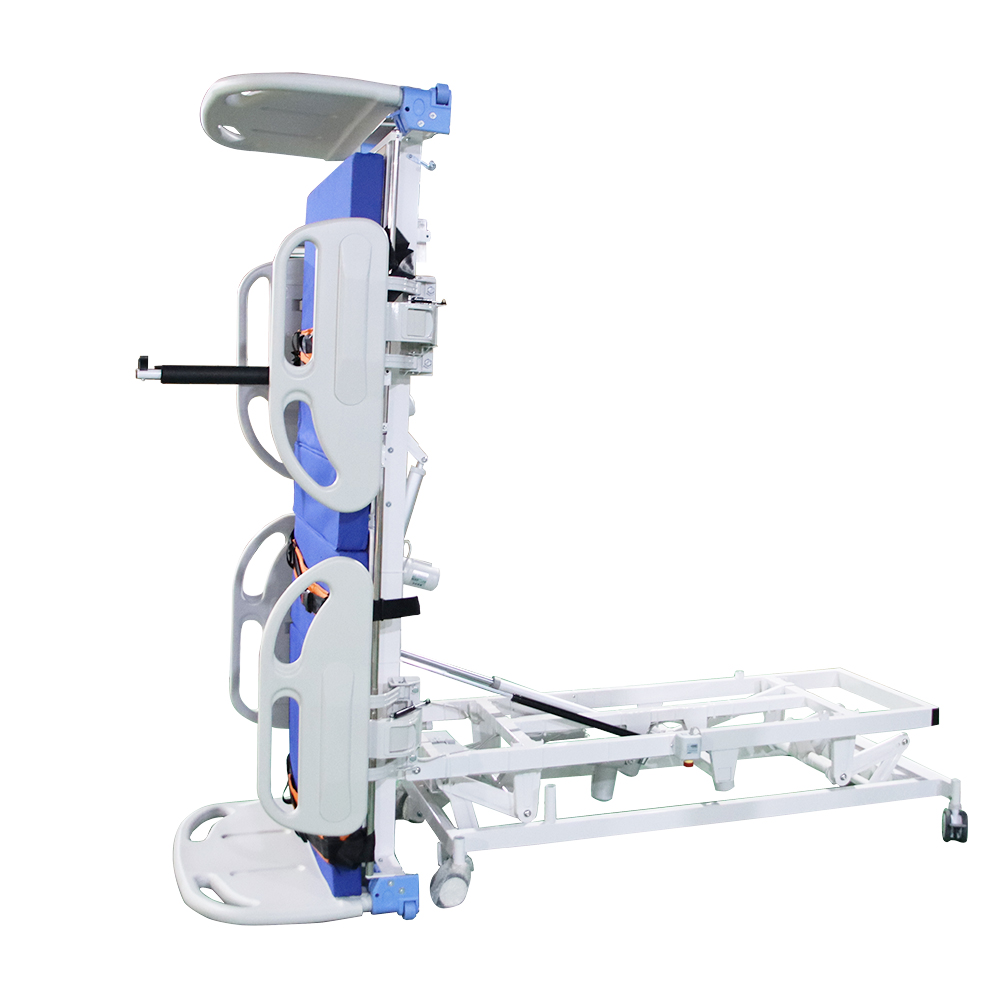
This is a specialized mode commonly found in intensive care units (ICU), characterized by the head being positioned lower than the feet. When activated, the entire bed tilts toward the head, typically at an angle between 5 and 15 degrees. This position is often used for specific surgeries, managing hypotension, and supporting venous return.
1). Reverse Trendelenburg Position
The opposite of the Trendelenburg position, this mode places the head higher than the feet. It is frequently used to improve respiration, alleviate gastroesophageal reflux, and reduce intracranial pressure.
2). CPR Emergency Reset
The CPR mode is a critical emergency function for electric adjustable hospital beds. In emergencies such as cardiac arrest, the bed must quickly return to a flat position to facilitate cardiopulmonary resuscitation (CPR).
While manual adjustment of traditional beds can take tens of seconds, high-end electric adjustable beds can complete the reset in approximately 10 seconds—a crucial factor in emergency care.
3). Automatic Turning Function
Patients confined to bed for long periods are at risk of developing pressure ulcers. Data indicates that the incidence of pressure ulcers among long-term bedridden patients ranges from 8% to 28%. The automatic turning function periodically adjusts the patient's posture based on preset angles and time intervals, thereby reducing the duration of sustained localized pressure and significantly lowering the risk of pressure ulcers.
Can patients operate the adjustable hospital bed themselves?
In most cases, yes. Modern electric adjustable hospital beds are designed with patient autonomy in mind; remote controls typically feature large buttons and icons, making the operation logic easy to understand, even for elderly patients.
For example, an upward arrow indicates raising the bed, a downward arrow indicates lowering it, and human-body icons correspond to specific adjustment areas. Some high-end models even support voice control and preset modes, further simplifying operation.
However, independent operation is not suitable for every patient. Patients with impaired consciousness, those in critical condition, early-stage post-operative patients, and children generally require assistance from caregivers to operate the bed and avoid risks associated with accidental misuse.
What precautions should be taken when operating an electric adjustable hospital bed?
Safety is always the top priority when using electric adjustable hospital beds.
First, overloading must be avoided. Each bed has a rated weight capacity; exceeding this limit can cause motor overload, structural deformation, or even equipment failure. Second, be mindful of the risk of pinching injuries; during adjustment, ensure that the patient's limbs, catheters, and power cords are clear of moving parts and pinch points. The areas where the backrest and leg rest connect are particularly common risk zones.
Emergency procedures for power outages cannot be overlooked. Although most mid-to-high-end electric adjustable hospital beds come with backup batteries, hospitals and care facilities still need to establish comprehensive contingency plans for power failures. Some models also feature mechanical release mechanisms to ensure the bed can still be adjusted in extreme situations.
Furthermore, equipment maintenance is crucial. It is recommended to conduct a system check at least every three months, inspecting the condition of motors, screws, casters, controllers, and cables. Proper maintenance can significantly extend the service life of the bed.
Why are electric adjustable hospital beds becoming increasingly popular?
There are three main reasons behind the rapid adoption of electric adjustable hospital beds.
First is the aging population. The United Nations projects that the global population aged 65 and older will reach 1.6 billion by 2050, leading to a continued rise in the demand for elderly care. Electric adjustable hospital beds are essential for long-term bedridden care, disability support, and rehabilitation.
Second is improved care efficiency. Traditional care models rely heavily on manual lifting and positioning, whereas electric adjustable hospital beds significantly reduce physical exertion and enhance overall care efficiency.
Finally, there is an improvement in the patient experience. Modern healthcare places increasing emphasis on comfort and patient-centered care. Through precise positioning control, electric adjustable hospital beds help improve sleep quality, alleviate pain, and enhance the rehabilitation experience.
FAQ
Do electric adjustable hospital beds consume a lot of power?
Generally, no. Most electric adjustable hospital beds use low-power motors with low standby energy consumption; power usage increases only when adjustments are being made.
Can the bed still be used during a power outage?
Most mid-to-high-end electric adjustable hospital beds are equipped with backup batteries or mechanical emergency mechanisms, allowing for limited operation during power outages.
How much more expensive are electric hospital beds compared to manual ones?
Depending on the features, the price of an electrically adjustable hospital bed is typically two to six times that of a manual bed, but it offers significant improvements in functionality and care efficiency.
Is it worth buying an electrically adjustable hospital bed for home care?
If there is an elderly person who is bedridden long-term, a patient recovering from surgery, or an individual with a disability in the home, an electrically adjustable hospital bed is usually highly practical.
Are electrically adjustable hospital beds prone to breaking down?
Products from reputable brands are highly reliable; the motors typically have a lifespan of tens of thousands of operating cycles, and with regular maintenance, they can generally provide stable service for many years.