

What is an electric wheelchair?
—An electric wheelchair is a medical assistive device powered by electricity and controlled by a handle or controller for movement and steering. It primarily serves people with mobility impairments, the elderly, and patients in rehabilitation, providing them with greater autonomy in movement.
The core components of an electric wheelchair include:
• Motor system (determines the drive method and power output);
• Control system (achieves direction control and speed adjustment);
• Battery system (provides the energy source, typically lead-acid or lithium batteries);
• Frame structure (determines stability and load-bearing capacity);
• Seat and footrest system (affects comfort and body support);
• Wheel configuration (determines the drive mode and riding characteristics).
Based on the location of the motor, electric wheelchairs are mainly divided into three types:
• Front-Wheel Drive
• Mid-Wheel Drive
• Rear-Wheel Drive
This article will focus on analyzing the differences between the two common designs: front-wheel drive and rear-wheel drive.
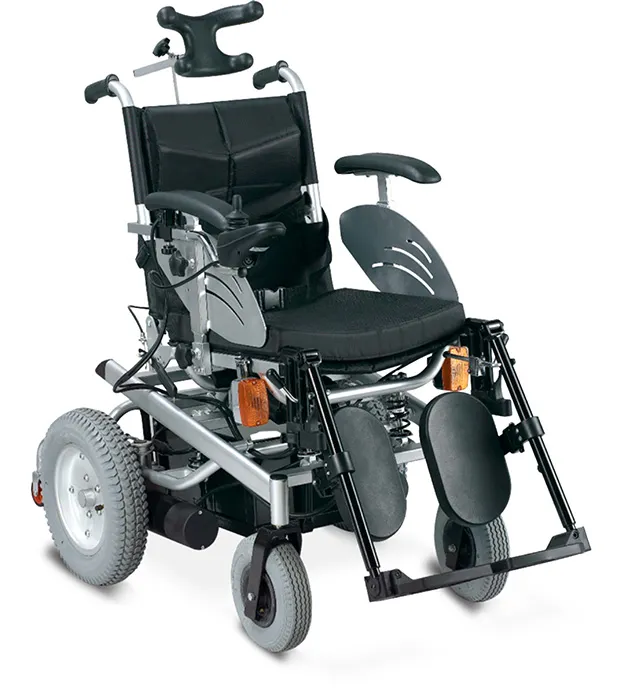
What is a Front-Wheel Drive Electric Wheelchair?
A front-wheel drive electric wheelchair refers to a wheelchair where the drive wheels are mounted at the front, and traction is provided by a front wheel motor.
1. Drive Structure Characteristics
In a front-wheel drive electric wheelchair, the motors are mounted on both sides of the front, driving the front wheels. The rear wheels primarily provide support and stability. Because the driving force comes from the front, the force distribution on the vehicle body during steering and climbing differs from that of a rear-wheel drive wheelchair.
2. Motion Characteristics
• Smaller turning radius: The front-wheel drive design makes the front of the vehicle the steering center, making it more suitable for use indoors or in confined spaces;
• Moderate climbing performance: Because the driving force is located at the front, when the vehicle is going uphill, the center of gravity shifts to the rear, traction weakens, and slippage is more likely;
• Good downhill stability: When the center of gravity shifts rearward, the front-wheel drive structure provides better control;
• Strong traction and smooth start: Smooth power output, less prone to forward tilting.
3. Common Target Users
Front-wheel drive electric wheelchairs are more suitable for users who:
• Need to move around in indoor environments such as at home, nursing homes, and shopping malls;
• Need to frequently turn around, navigate, and enter confined spaces;
• Users of average weight with limited mobility.
What is a rear-wheel drive electric wheelchair?
In contrast to the front-wheel drive structure, the motor of a rear-wheel drive electric wheelchair is mounted at the rear of the vehicle, with the rear wheels providing thrust.
1. Drive Structure Characteristics
The drive wheels of a rear-wheel drive electric wheelchair are located at the rear of the vehicle, while the front wheels serve a guiding function. This layout has a more rearward center of gravity, resulting in stronger overall stability.
2. Motion Characteristics
• Higher speed and more stable straight-line travel: The rear-wheel drive design provides greater stability at high speeds, making it suitable for long-distance use;
• Strong climbing ability: When going uphill, the center of gravity shifts rearward, aligning with the drive wheels, increasing friction and reducing the risk of slippage;
• Larger turning radius: Due to the rearward position of the drive wheels, the steering center is further back, making it more difficult to maneuver in confined spaces;
• Speed control is needed when going downhill: With the center of gravity at the rear, excessive speed downhill can easily cause forward tilting.
3. Common Target Users
Rear-wheel drive electric wheelchairs are more suitable for:
• Users who frequently need to travel outdoors;
• People who require higher speeds and stronger climbing ability;
• Users who do not have high requirements for turning space.
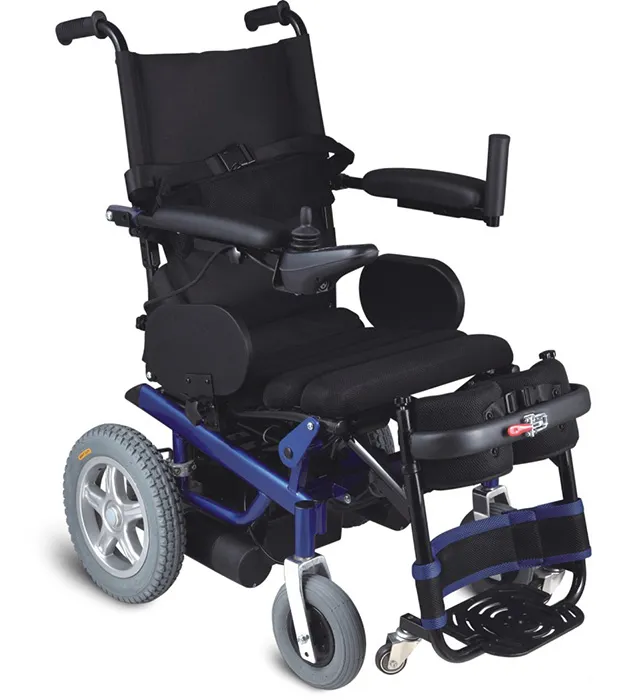
Front-wheel drive VS. Rear-wheel drive: The core differences between electric wheelchairs
Below, we will compare the core differences between the two types of electric wheelchairs from multiple perspectives, including structure, performance, safety, and comfort.
1. Different Drive Principles
• Front-wheel drive electric wheelchairs are propelled by the front wheels.
• Rear-wheel drive electric wheelchairs are propelled forward by the rear wheels.
The drive principle determines the overall characteristics and user experience of the two types of electric wheelchairs.
2. Steering Performance Comparison
Front-wheel drive electric wheelchairs have a smaller turning radius and are more maneuverable; rear-wheel drive wheelchairs have a larger turning radius and are more suitable for open spaces.
• Front-wheel drive electric wheelchairs: Suitable for narrow corridors, rooms, and hospital passageways;
• Rear-wheel drive electric wheelchairs: Suitable for parks, roads, or outdoor surfaces.
3. Climbing and Descending Ability
• Front-wheel drive: When going uphill, the center of gravity shifts backward, reducing front wheel traction and resulting in weaker climbing ability;
• Rear-wheel drive: The center of gravity is aligned with the driving direction, providing stronger traction and better stability when going uphill.
If the user frequently travels on sloping terrain, a rear-wheel drive electric wheelchair is more suitable.
4. Speed and Stability
• Rear-wheel drive electric wheelchairs typically have higher top speeds (6–10 km/h and above), better straight-line stability, and are less prone to veering off course.
• Front-wheel drive electric wheelchairs are relatively slower (generally 4–6 km/h), but offer smoother control, making them suitable for slow-moving environments.
5. Operational Comfort
• Front-wheel drive: Light steering and smooth acceleration, suitable for users with limited physical strength or hand dexterity.
• Rear-wheel drive: Rapid acceleration and powerful acceleration, but requires higher precision from the driver.
6. Safety Comparison
Front-wheel drive electric wheelchairs are more stable downhill and less prone to loss of control; rear-wheel drive electric wheelchairs perform better at high speeds or uphill.
However, rear-wheel drive wheelchairs are more prone to rear wheel slippage when making sharp turns in confined spaces.
Overall:
• Front-wheel drive wheelchairs offer higher safety, suitable for beginners and the elderly;
• Rear-wheel drive wheelchairs offer superior performance, suitable for experienced drivers.
7. Load-Bearing Capacity and Structural Strength
Due to differences in motors and support structures, rear-wheel drive electric wheelchairs typically have a higher load-bearing capacity (up to 150kg or more), while front-wheel drive models are relatively lighter and mostly designed for medium load-bearing capacity.
8. Maintenance and Care Difficulty
Front-wheel drive structures are more complex, with the steering system and drive components concentrated at the front, requiring more space and tools for maintenance; rear-wheel drive models have independent motors and frames, making maintenance easier.
Conclusion:
• If the user prioritizes agility and frequent indoor use—front-wheel drive is better;
• If the user prioritizes power, outdoor performance, and durability—rear-wheel drive is more suitable.
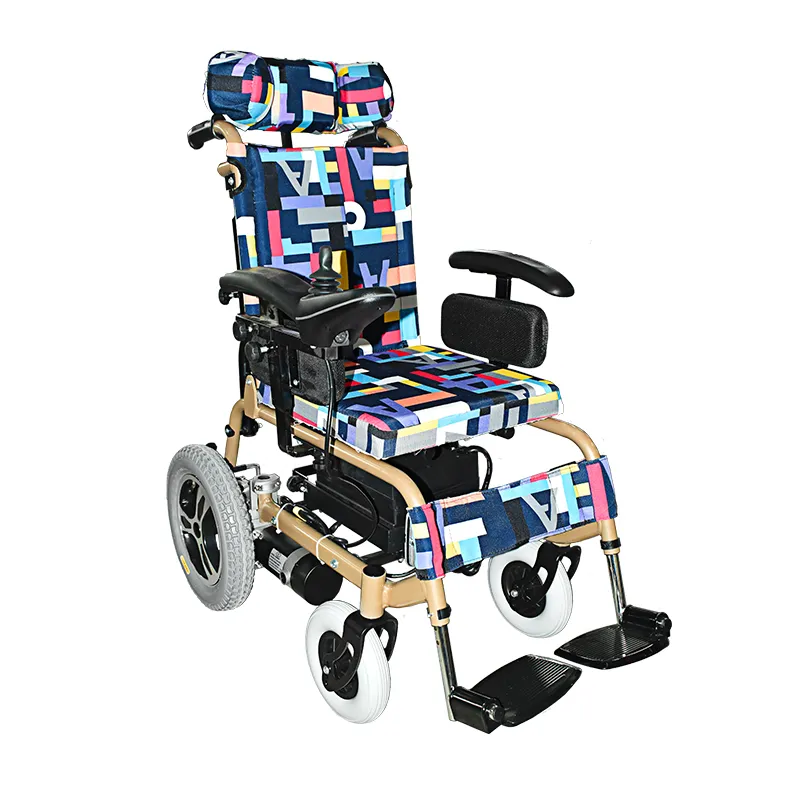
What usage scenarios are front-wheel drive electric wheelchairs more suitable for?
• Primarily for indoor use: homes, nursing homes, hospital corridors;
• Flat, confined spaces;
• Where the operator does not require high speed;
• Where the user prioritizes agile steering and smooth control.
This type of electric wheelchair emphasizes "detailed control," allowing for easy turning in confined spaces and reducing the risk of collisions.
What usage scenarios are rear-wheel drive electric wheelchairs more suitable for?
• Frequent outdoor use: parks, roads, and community outings;
• Need to handle complex road conditions or slopes;
• Need for high speed or long-distance range;
• Users with higher body weight or who frequently travel for extended periods.
Rear-drive electric wheelchairs emphasize "stability and power," making them an ideal choice for performance-oriented users.
What factors should be considered when choosing a front-drive or rear-drive electric wheelchair?
In addition to the drive system, the following factors should be considered when choosing an electric wheelchair:
• Usage environment – Front-drive is preferred for confined indoor spaces, while rear-drive is better for outdoor use.
• User weight – Heavier users benefit from better weight-bearing capacity in a rear-drive configuration.
• Maneuverability – Front-drive is preferable for those with limited hand dexterity, as it is easier to control.
• Road conditions – Front-drive is suitable for flat surfaces, while rear-drive is better for uneven terrain.
• Ease of maintenance – Rear-drive is easier to disassemble, assemble, and repair if the user primarily maintains the wheelchair at home.
By comprehensively considering these factors, you can choose an electric wheelchair that truly meets your individual needs.
Front-wheel drive vs. rear-wheel drive: Which is the better choice?
There is no "absolutely better" electric wheelchair, only the one best suited to your needs.
If you primarily use it indoors and prioritize ease of operation and safety, a front-wheel drive electric wheelchair is the ideal choice.
If you value outdoor performance and powerful motors, a rear-wheel drive electric wheelchair undoubtedly has the advantage.
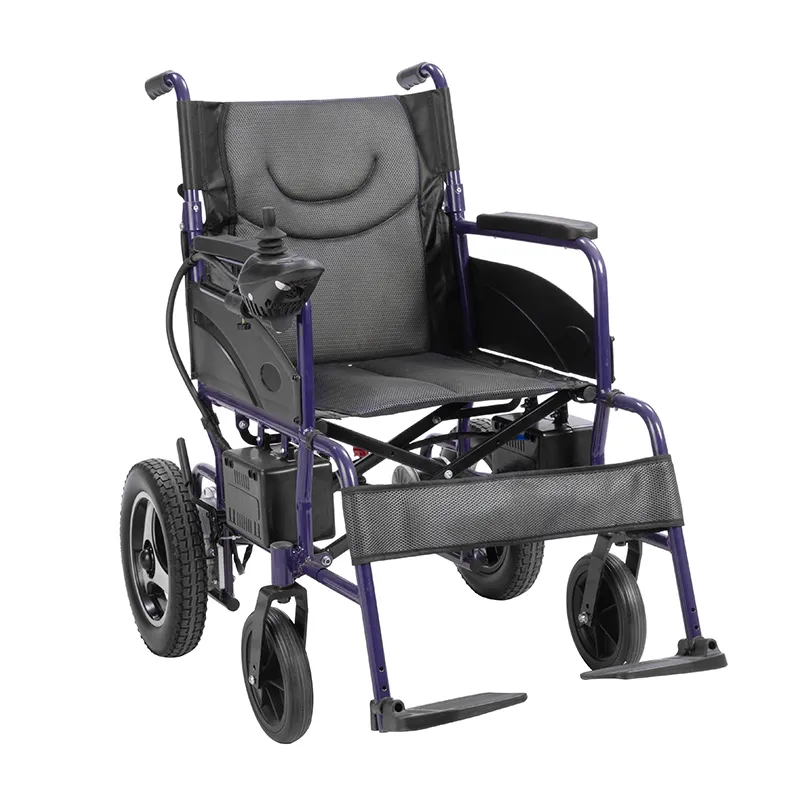
The Impact of Electric Wheelchair Drive Structure on Daily Care
Different drive structures affect the user and maintenance experience for caregivers:
• Front-wheel drive: Forward center of gravity, easy to push or manually operate, but weak rear support, requiring careful balance during transport.
• Rear-wheel drive: More stable to push, easier for caregivers to control, but slightly larger size, inconvenient for navigating narrow passages.
Therefore, when choosing an electric wheelchair, the caregiver's daily operating habits should also be considered.
How does Yikang Medical ensure quality for nursing beds?
Yikang Medical guarantees high-quality nursing beds through strict manufacturing standards and international certifications. Founded in 2010 in Foshan, China, we became an OEM supplier for major brands in 2014. Our nursing beds are designed for patient comfort, caregiver convenience, and long-lasting durability.
Customers can customize features, size, configuration, and color. With ISO13485, ISO9001, CE, and FDA certifications, Yikang Medical ensures compliance with international quality and safety standards.