

When choosing an adjustable hospital bed, many people ask a crucial question: "Does this bed always need to be plugged in to use?"
The answer is actually quite clear:
Manually adjustable hospital beds do not need to be plugged in, while electrically adjustable hospital beds must be plugged in.
Although it may seem like just a difference of "whether it's plugged in or not," it involves many aspects such as the bed's structural principles, operating methods, safety, ease of care, and maintenance costs.
This article will focus on this core question, providing a detailed analysis of whether adjustable hospital beds need to be plugged in, the differences between different types of beds, their working principles, safety precautions, and key factors to consider when purchasing one.
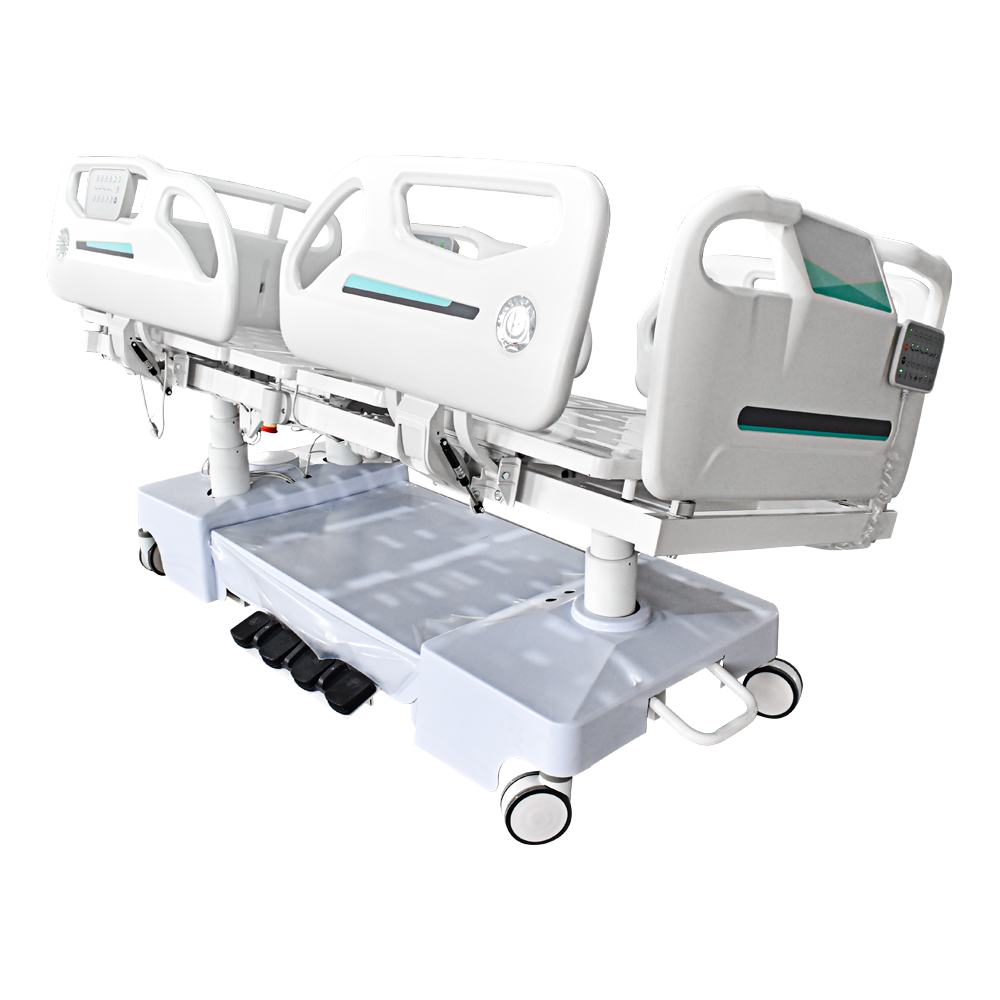
Do Adjustable Hospital Beds Need to Be Pluged in?
— It Depends on Whether It's Manual or Electric
An adjustable hospital bed is a medical care bed whose height, backrest, and leg angles can be adjusted according to the patient's or caregiver's needs.
However, different types of adjustable hospital beds differ significantly in their power sources.
1. Manually Adjustable Hospital Bed: No Electricity Required
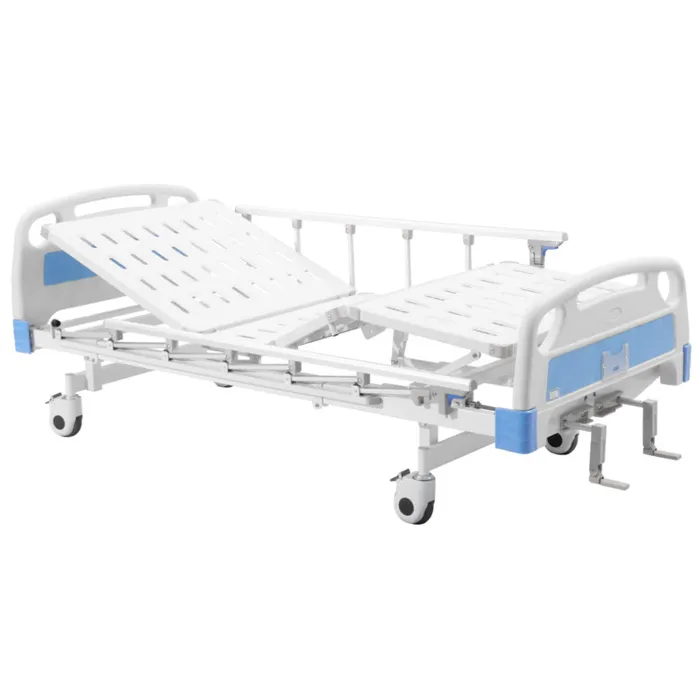
This type of bed achieves angle adjustment through a mechanical structure (usually a rocker arm or hydraulic system).
• Working Principle: Manually turning the rocker arm drives a mechanical linkage, changing the bed angle.
• Advantages: No electricity required, simple structure, low maintenance cost;
• Disadvantages: Slow adjustment speed, strenuous operation for caregivers, unsuitable for patients requiring frequent adjustments or those who are bedridden for extended periods.
2. Electrically Adjustable Hospital Bed: Must Be Plug-in
Electrically adjustable hospital beds are equipped with a motor system that uses electricity to drive lifting and bending movements.
• Working Principle: An internal electric linear actuator drives different bed sections, achieving automatic lifting and lowering;
• Advantages: Easy, precise, and smooth operation, suitable for the elderly or nursing homes;
• Disadvantages: Requires power supply, relatively expensive.
In summary:
Manually adjustable hospital beds do not require electricity;
Electrically adjustable hospital beds must be plugged in to operate normally.
Why do electrically adjustable hospital beds require electricity?
1. Because the electric system relies on motor drive
The core components of an electrically adjustable hospital bed are the motor and actuator. These devices convert electrical energy into mechanical energy, thereby driving changes in the bed's structure.
Typical electric systems include:
• Backrest lifting motor;
• Legrest lifting motor;
• Overall height adjustment motor;
• Sometimes also includes tilting or turning motors.
These motors are operated via a control panel or remote control, and their power comes from a power outlet.
2. Because a power supply is needed to maintain the control system's operation
Modern electrically adjustable hospital beds are typically equipped with:
• Remote control (wired/wireless);
• Control box (main control unit);
• Safety protection circuits (overload protection, short circuit protection).
These electronic components require continuous power to accurately control the operation of each motor.
3. Because of the numerous electric functions and frequent operation
Patients using electrically adjustable hospital beds often adjust their posture or height multiple times a day, making a continuous power supply essential.
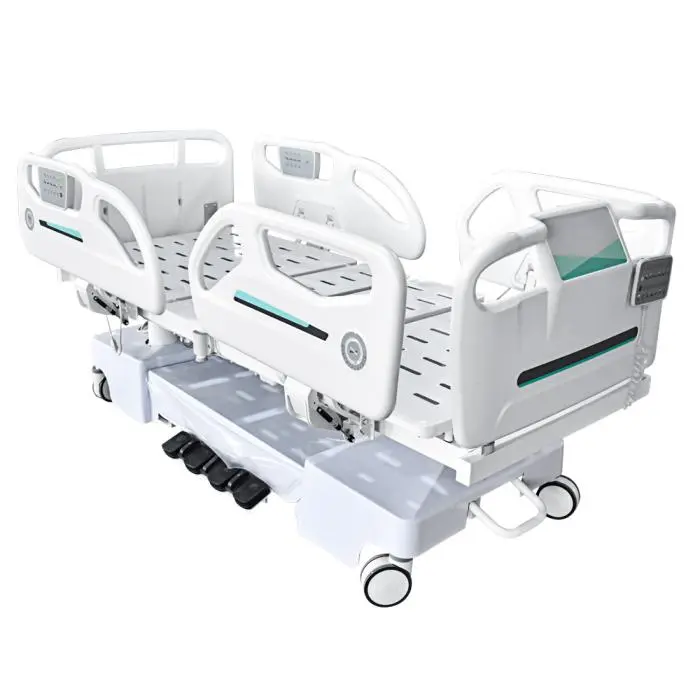
How do manually adjustable hospital beds work?
Although manually adjustable hospital beds do not require electricity, they still achieve adjustment functions through a mechanical structure.
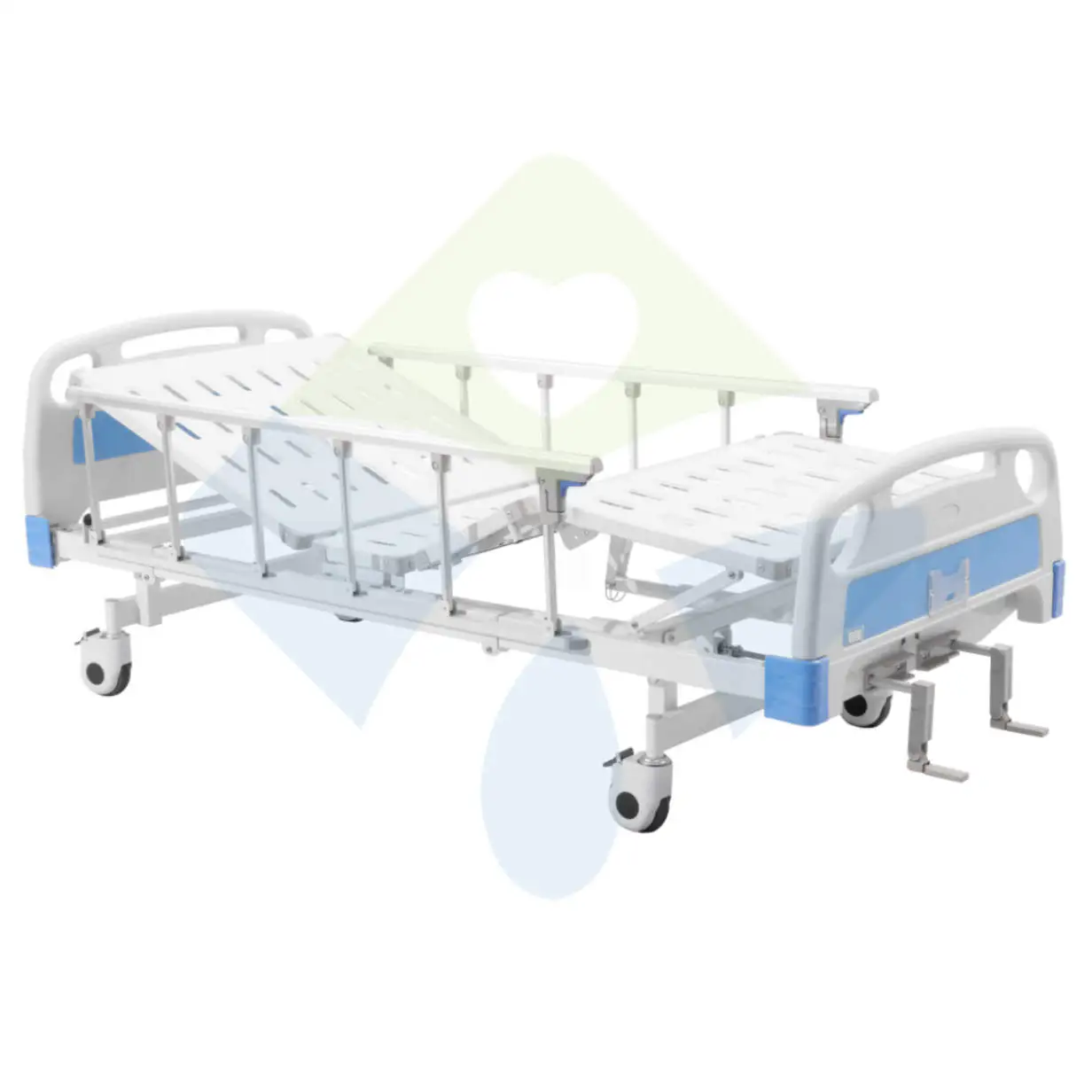
1. Mechanical Transmission Principle
Manually adjustable hospital beds typically use a metal crank to drive a screw mechanism, controlling the lifting angle of different parts of the bed.
Nurses or family members can raise or lower the backrest or legrests by turning the crank.
2. Common Functions
• Backrest height adjustment (approximately 0°–75°);
• Legrest height adjustment (approximately 0°–40°);
• Overall height adjustment (available on some models).
3. Advantages and Disadvantages
Advantages:
• No power supply required, suitable for areas with power outages or no electricity;
• Stable structure, virtually indestructible;
• Simple maintenance, low cost.
Disadvantages:
• Laborious operation, especially when caring for elderly or critically ill patients;
• Adjustments are not smooth or precise enough;
• Frequent adjustments may cause mechanical wear.
Manually adjustable hospital beds are more suitable for temporary care or home use on a limited budget.
What types of electrically adjustable hospital beds are available?
Based on functional complexity and power system configuration, electrically adjustable hospital beds can be mainly divided into the following categories:
1. Single-motor adjustable hospital beds
• Controls backrest height;
• Simple functions, suitable for short-term rehabilitation;
• Affordable price.
2. Dual-motor adjustable hospital beds
• Adjustable back and leg angles;
• More flexible functions and greater comfort;
Commonly used in home care environments.
3. Triple-motor or multi-motor adjustable hospital beds
• Adjustable backrest, leg, and overall height;
• Some have a trendleenburg function;
Suitable for long-term bedridden patients or medical institutions.
4. Battery backup system beds
Some high-end adjustable hospital beds are equipped with backup batteries in addition to the power plug.
Allowing short-term operation during power outages, ensuring patient safety.
What are the power requirements for an electrically adjustable hospital bed?
To ensure safety and performance, electrically adjustable hospital beds have certain power requirements.
1. Standard Voltage and Power
• Generally uses AC 110V or 220V voltage;
• Power consumption is approximately 100–300W;
• Ordinary household power supply is sufficient.
2. Safety Measures
High-quality adjustable hospital beds are equipped with:
• Overload protection device (prevents motor burnout);
• Short circuit protection system;
• Leakage protection power adapter;
• Insulated cable and waterproof socket.
3. Recommended Power Environment
• The socket should be close to the bed to avoid cord tangling;
• Do not share an extension cord with high-power appliances;
• Regularly check the power cord for wear or looseness.
Does an adjustable hospital bed need to be plugged in all the time?
1. It is recommended to keep it plugged in for daily use
Because patients may need to adjust their posture at any time, unplugging the power will affect timely operation.
Meanwhile, the control panel and remote control consume very little power in standby mode, preventing waste.
2. Temporary Disconnection During Power Outages
If the adjustable bed will not be used for an extended period (e.g., during outings or cleaning), the power can be unplugged to prevent moisture or electric shock risks.
3. Models with Battery Backup Can Continue to Use During Power Outages
Some adjustable beds are equipped with lithium or lead-acid batteries, providing several hours of emergency use.
Are Electric Adjustable Beds Better Than Manual Beds?
From the perspective of nursing efficiency and user experience, electric adjustable beds have significant advantages.
1. Easy Operation
Adjustment is as simple as pressing a button on the remote control; no manual cranking is required, saving time and effort.
2. Improved Nursing Efficiency
Nursing staff can quickly adjust posture, feed, and clean, reducing bending and the risk of strain.
3. Greater Patient Comfort
Electric adjustable beds offer smooth adjustments and precise angles, allowing patients to freely choose the most comfortable position.
4. More suitable for long-term bedridden patients
The electric function effectively helps patients move their bodies, promotes blood circulation, and prevents bedsores.
However, there are some precautions to take when using an electrically adjustable hospital bed:
• A safe power supply must be maintained;
• Not suitable for damp or waterlogged environments;
• The price is slightly higher than a manual hospital bed.
What safety issues should be considered when using an electrically adjustable hospital bed?
1. Use a power cord and socket with safety certification
Ensure compliance with national or international electrical safety standards (such as CE, UL certification).
2. Avoid liquid contact with the motor or power cord
The electrically adjustable hospital bed should be kept away from water sources or damp areas.
3. Do not overload the bed
Do not allow the bed to bear items exceeding its rated weight to avoid damaging the motor.
4. Regularly check the power cord and interfaces
Prevent wear, aging, and loosening that could lead to short circuits.
5. Operate with caution during power outages
If there is no spare battery, avoid forcibly pulling on any bed components.
6. Disconnect Power During Cleaning
When wiping or changing sheets, it's best to unplug the bed to prevent accidental button presses and potential injury.
Does an Adjustable Hospital Bed Consume a Lot of Electricity?
Many users worry about the high power consumption of electric hospital beds, but this is completely unnecessary.
• The motor of an electric adjustable hospital bed is an "intermittent working device," consuming power only during adjustment;
• It is in standby mode at other times, with extremely low power consumption (usually below 5W);
• Based on 10 uses per day, the monthly power consumption is equivalent to that of a single LED light bulb.
In other words, the electricity cost of an electric adjustable hospital bed is negligible.
Does an Adjustable Hospital Bed Need to Be Pluged In?
In summary, the answer is quite clear:
Type | Electricity Required | Operation Method | Applicable Scenarios
Manually Adjustable Bed | No electricity required | Mechanical adjustment with joystick | Temporary care, limited budget
Electrically Adjustable Bed | Required | Remote control motor drive | Long-term bedridden, home care, nursing homes
✅ Conclusion:
• Manually adjustable beds do not require electricity;
• Electrically adjustable beds must be plugged in.
The choice of type should be based on the patient's condition, frequency of use, and the physical strength of the caregiver.
If convenience and safety are paramount, an electrically adjustable bed is clearly the more scientific choice.