

Wheelchair basketball is one of the most popular adaptive sports globally, characterized by its highly competitive nature and intense physical intensity. Many people, upon seeing a basketball wheelchair, wonder: If I am able to walk normally, am I allowed to participate in wheelchair basketball? The answer is—absolutely!
Wheelchair basketball is not only an integral part of the adaptive sports ecosystem but also an inherently open and inclusive form of athletics. In many countries and regions, wheelchair basketball welcomes participants from all walks of life; regardless of whether or not you have a mobility impairment, as long as you are willing to sit in a specialized basketball wheelchair to compete, you can experience the unique allure of this sport.
This article will provide a comprehensive analysis—presented in a professional, logical, and systematic manner—covering whether able-bodied individuals can participate in wheelchair basketball, the specialized structural design of basketball wheelchairs, the official rules of the game, why so many able-bodied individuals choose to participate, and how to select a basketball wheelchair that best suits your needs.
Can You Participate in Wheelchair Basketball If You Can Walk?
Yes, you can.
Wheelchair basketball is an exceptionally inclusive sport that does not require participants to have a disability. As long as the competition organizers permit it—and provided you are capable of maneuvering a basketball wheelchair to play—you are eligible to participate.
The reasons why able-bodied individuals are permitted to participate include:
•Wheelchair basketball is, by its very nature, a highly open and accessible sport.
•When everyone utilizes a basketball wheelchair, all participants compete under the exact same set of rules, regardless of their physical condition.
•Many able-bodied individuals participate to gain firsthand experience, for training purposes, or to show their support for adaptive sports.
Therefore, the ability to walk is not a restrictive criterion. What truly matters is this: Are you willing to sit in a basketball wheelchair and play?
Why Does Wheelchair Basketball Welcome Participation from All Groups?
To understand this, we must look at the inherent characteristics of the sport itself.
1. Wheelchair Basketball Emphasizes Fairness
When all participants utilize basketball wheelchairs, their methods of movement, turning, and acceleration become standardized. This eliminates the physical disparities between standing basketball and seated basketball, thereby creating a level playing field for the competition.
2. It Upholds the Concept of Sporting Equality
One of the core tenets of wheelchair basketball is that everyone—regardless of their physical condition—should have the opportunity to participate in sports.
3. The Participation of Able-Bodied Individuals Helps Broaden Awareness of the Sport
This not only fosters greater interaction and exchange among participants but also contributes to the overall diversity and richness of the sport itself.
4. Technical Maneuvers Rely on Wheelchair Skills, Not Leg Strength
Regardless of whether you are able to walk, once seated in a basketball wheelchair, the mechanics of movement are identical for everyone:
→ Movement is achieved by pushing the wheels.
→ Turning involves a coordinated effort between the body and the wheelchair.
→ Shooting is executed from a stable seated position.
Consequently, whether or not you have a physical impairment, as long as you are in a basketball wheelchair, you participate in the game in exactly the same way.
What are the distinct differences between a basketball wheelchair and a standard wheelchair?
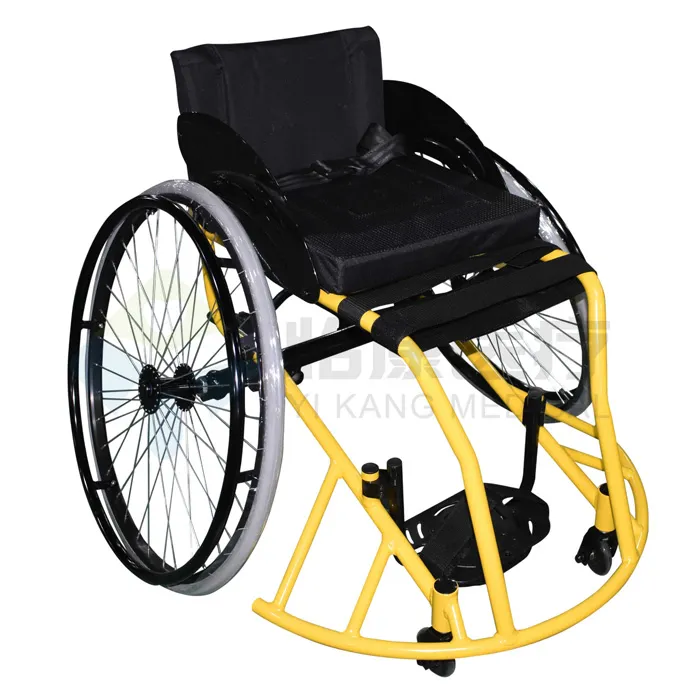
A basketball wheelchair is specialized equipment designed specifically for sports; its differences from a standard wheelchair are quite pronounced:
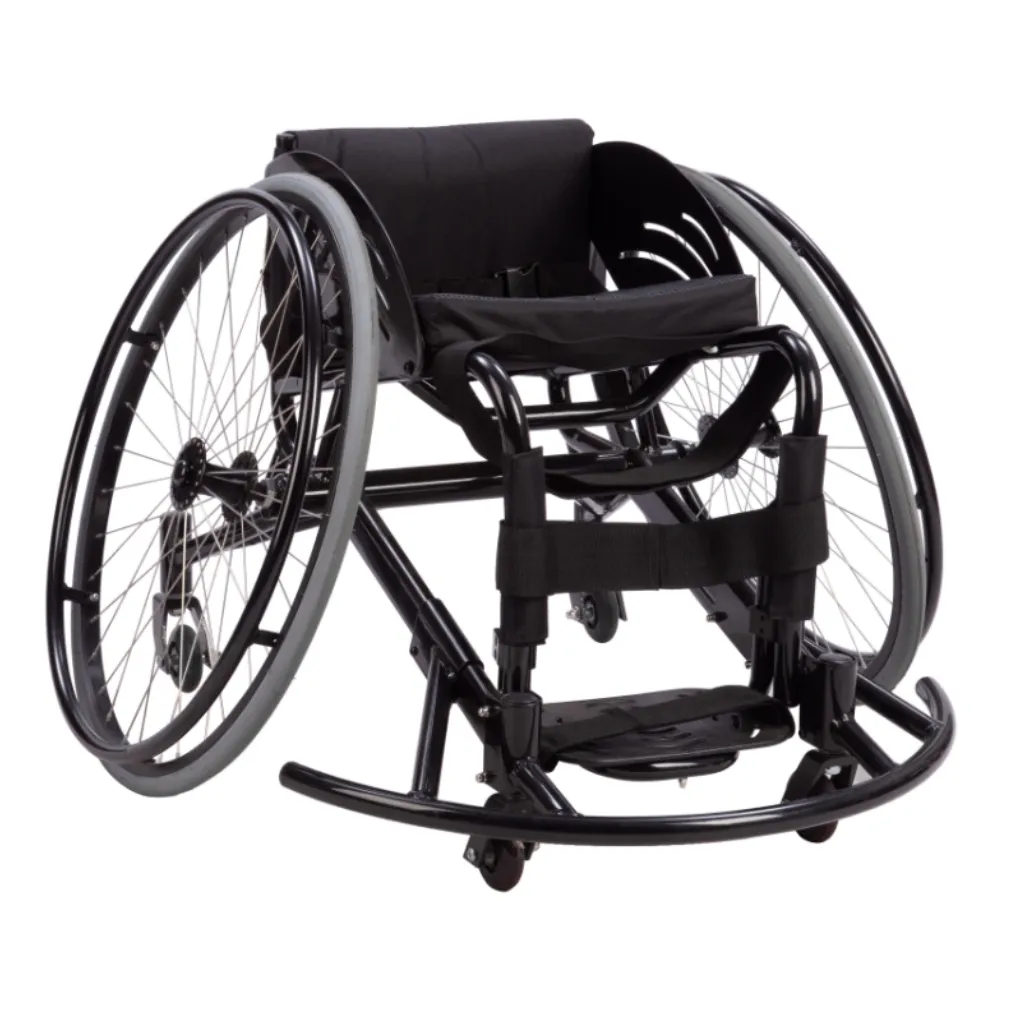
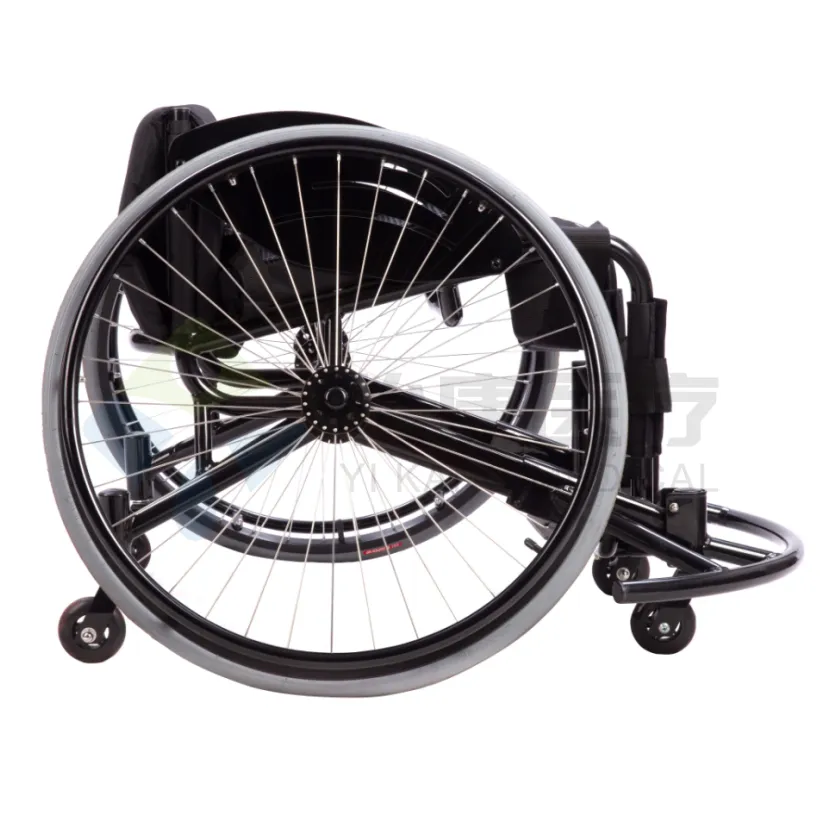
1. Large Rear Wheel Camber
Basketball wheelchairs feature a significant outward tilt (camber) in their rear wheels—typically between 14° and 20°—making them more stable, agile, and suitable for intense athletic activity.
2. Reinforced Frame Structure
To withstand physical contact, high speeds, and collisions, the frame of a basketball wheelchair is built to be exceptionally sturdy.
3. Anti-Tip Device
This mechanism prevents the wheelchair from tipping backward during rapid movements.
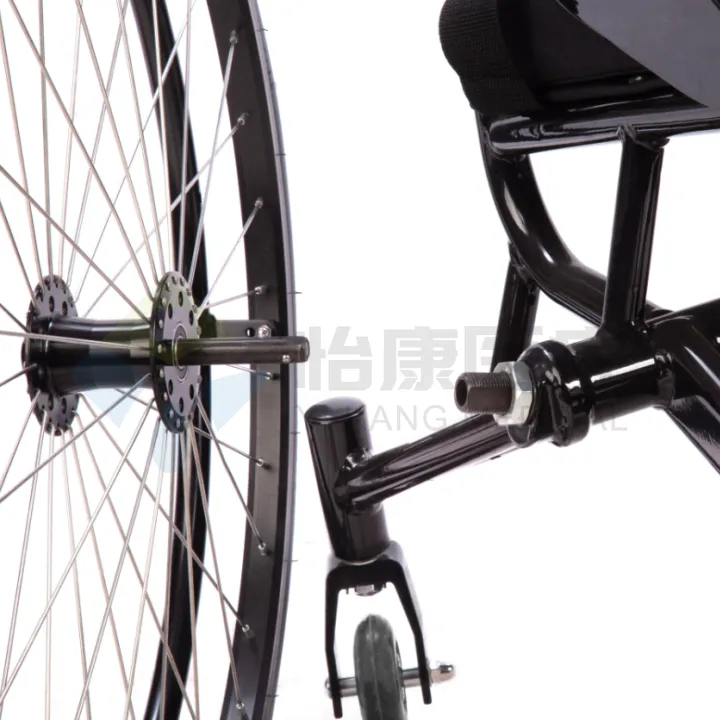
4. Small Front Wheels
These minimize resistance and allow for more agile steering.
5. Fixed Seat Angle
This design helps the athlete become a unified extension of the wheelchair, thereby enhancing maneuverability.
These design features transform the basketball wheelchair into a true piece of athletic equipment, rather than merely a mobility aid.
Why do basketball wheelchairs require a cambered wheel design?
To understand why able-bodied individuals can effectively use basketball wheelchairs, one must first grasp the importance of the cambered design.
Cambered wheels serve the following functions:
•They enhance lateral stability.
•They increase the wheelbase width.
•They prevent tipping or rolling over.
•They accelerate turning speed.
•They allow for a more natural and ergonomic pushing motion for the athlete.
Basketball is a sport filled with sudden stops, sharp turns, and physical contact; therefore, cambered wheels constitute one of the most critical features of a basketball wheelchair.
What specific athletic skills must be mastered when using a basketball wheelchair?
When able-bodied individuals begin playing wheelchair basketball, they discover that they must acquire a host of new skills, as the mechanics of operating a basketball wheelchair differ completely from those of walking.
1. Pushing with One Hand While Dribbling with the Other
Maintaining control of the basketball while simultaneously propelling the wheelchair is the fundamental core skill of wheelchair basketball.
2. Rapid Pivoting
Turning in a basketball wheelchair is primarily achieved through differential propulsion—pushing the left and right wheels at different speeds.
3. Controlling Your Center of Gravity
Athletes must utilize their core strength to maintain balance and support their shooting motion.
4. Precise Braking and Stopping
Braking is achieved by using both hands to apply reverse pressure to the wheels.
5. Synchronizing Body and Wheelchair Movements
Shooting, rebounding, and defending all require the body and the basketball wheelchair to function as a single, unified unit.
These techniques present a new challenge for everyone—regardless of whether or not you are able to walk.
Is wheelchair basketball difficult for able-bodied individuals?
It may be challenging at first, but it is not inherently "more difficult than it is for others."
This is because, once seated in a basketball wheelchair:
•All athletes rely on their upper bodies for propulsion.
•The mechanics of movement are identical for everyone.
•There is no issue of "walking players having an unfair advantage."
Wheelchair basketball is not a lower-body sport; rather, it is a competition of upper-body strength and wheelchair control skills.
The only significant difference between able-bodied and disabled athletes lies in the time required to adapt; however, actual athletic performance depends on technical skill, not physical condition.
How do the rules of wheelchair basketball differ from standard basketball?
The rules of wheelchair basketball closely resemble those of standard basketball, though there are a few key differences:
1. Different Rules for Movement
Players are permitted to push their wheelchairs twice consecutively, but before executing a third push, they must:
•Dribble the ball.
•Pass the ball.
•Shoot the ball.
This concept is analogous to the "traveling" violation in standing basketball, but it has been adapted to the mechanics of wheelchair movement.
2. The Wheelchair Is Considered Part of the Body
If the ball strikes the wheelchair, it is treated as if the ball had struck the player's body.
3. Seating Height Affects Shooting Angle
The rules acknowledge and allow for this natural variation.
4. Different Criteria for Judging Contact in Defense
Since physical contact is an unavoidable part of wheelchair sports, referees determine whether a foul constitutes "blocking" or an "offensive foul" based on the positioning of the wheelchairs involved.
Overall, the rules are simple and easy to understand.
How does the structure of a basketball wheelchair affect athletic performance?
The structural design has a profound impact on athletic performance; for instance:
•Wheel camber (angle) affects turning speed.
•Frame length affects stability.
•Tire type affects traction on the court.
•Seat height affects the trajectory of shots.
•Wheel size affects acceleration and starting ability.
This is precisely why a basketball wheelchair is classified as a piece of specialized athletic equipment, rather than a standard, everyday wheelchair.
How should able-bodied individuals go about choosing a basketball wheelchair that suits their needs?
When selecting a basketball wheelchair, the following factors should be primarily considered:
• Camber Angle: A range of 14° to 18° is recommended.
• Wheelchair Width: Select based on your shoulder width.
• Seat Height: Determines your shooting range.
• Frame Weight: Lighter frames offer greater agility.
• Tire Width: Narrow tires are generally preferred for indoor use.
• Anti-tip Bar Position: Ensures safety and stability.
Able-bodied individuals can select a suitable basketball wheelchair based on their specific usage needs and body type.
What preparations are required before using a basketball wheelchair?
To participate in the sport safely and effectively, you need to:
•Learn proper wheelchair propulsion techniques.
•Familiarize yourself with the wheelchair's steering and braking mechanisms.
•Warm up your shoulder, elbow, and wrist joints.
•Ensure that the wheelchair's axles and tires are secure and stable.
•Understand the basic rules of the game.
All of these preparations apply to both able-bodied individuals and those with disabilities.
Who is wheelchair basketball suitable for?
Wheelchair basketball is suitable for:
•Those wishing to experience a different mode of athletic activity.
•Those looking to build upper-body strength.
•Those interested in participating in team sports.
•Those seeking to improve their reaction time and coordination.
•Those wishing to support adaptive sports.
•Beginners looking to try their hand at competitive sports.
Whether or not you are able to walk, wheelchair basketball is open to you.
What physical fitness benefits does wheelchair basketball offer?
Wheelchair basketball provides a comprehensive physical workout:
•Strengthens the shoulders, arms, and back muscles.
•Enhances coordination.
•Trains agility and reaction speed.
•Improves core stability.
•Boosts cardiovascular endurance.
It is a truly complete, full-body workout.
Does playing wheelchair basketball negatively affect one's skills in standard (standing) basketball?
No; in fact, it offers positive benefits for standard basketball players:
•Increases upper-body strength.
•Improves ball-handling stability.
•Enhances tactical awareness.
•Develops turning techniques and spatial awareness.
•Improves agility and anticipatory skills.
Many standard basketball players incorporate wheelchair basketball into their training regimens to diversify and enrich their practice routines.