
Cerebral palsy (CP) is one of the most common neurological disorders causing motor impairment in childhood. Global epidemiological data indicate that the incidence of CP generally hovers around 2 to 3 per 1,000 live births. As neonatal care standards improve and more premature or high-risk infants survive, issues regarding the long-term rehabilitation, educational integration, and quality of life for individuals with CP are garnering increasing societal attention.
A common misconception exists that having cerebral palsy automatically means one must use a wheelchair. In reality, this view is inaccurate. Cerebral palsy is a highly individualized condition, and motor capabilities can vary drastically from person to person. Some individuals with CP can walk independently, climb stairs, and even participate in the workforce and sports, while others require assistive devices—such as walkers, standing frames, or specialized wheelchairs—to manage daily activities. Therefore, there is no one-size-fits-all answer to whether someone with CP needs a wheelchair; it depends on factors such as motor function, muscle tone, balance, endurance, and the demands of daily life.
From medical and rehabilitative perspectives, a wheelchair is not a mandatory component of the condition itself but rather an assistive tool. For those who need it, a wheelchair can enhance mobility, improve postural control, and alleviate the burden on family caregivers; conversely, for those who do not require one, an over-reliance on a wheelchair could potentially hinder the development of motor skills. Thus, a proper understanding of the relationship between cerebral palsy and wheelchairs is crucial for patients' families, rehabilitation centers, and the general public.
Cerebral palsy does not mean an inability to walk
When many people first hear the term "cerebral palsy," they often picture someone sitting in a wheelchair. In reality, however, cerebral palsy is a syndrome characterized by disorders of movement and posture resulting from damage to the developing brain, and the severity of the condition varies widely.
Cerebral palsy affects the brain's ability to control body movement rather than directly causing a loss of muscle function. Consequently, symptoms manifest quite differently among individuals. Some individuals primarily exhibit mild coordination difficulties, while others experience muscle stiffness, limb weakness, or involuntary movements.
The Gross Motor Function Classification System (GMFCS) is widely used internationally to assess the motor abilities of individuals with cerebral palsy. This system categorizes patients into five levels.
Individuals at GMFCS Level I can usually walk independently, experiencing difficulty only with complex movements; those at Level II can walk independently but have limited ability to engage in long-distance activities; those at Level III may require assistive devices such as walkers; those at Level IV have significantly limited mobility and require more extensive assistive tools; and those at Level V typically rely heavily on wheelchairs and the assistance of others.
This classification system demonstrates that not all individuals with cerebral palsy require a wheelchair. In fact, many with mild cerebral palsy can maintain the ability to walk independently through rehabilitation training—to the extent that the average person might not even realize they have the condition.
Therefore, determining whether an individual with cerebral palsy needs a wheelchair cannot be based solely on the diagnosis itself; it requires an assessment of their specific functional status.
Why do some individuals with cerebral palsy not need a wheelchair?
For those who have retained good motor function, avoiding wheelchair use can actually help maintain and improve their physical capabilities.
The human musculoskeletal system operates on the principle of "use it or lose it." Sustained active movement promotes the development of muscle strength, bone density, cardiopulmonary function, and neuromuscular coordination. If a patient capable of independent walking relies on a wheelchair for mobility over the long term, it may lead to further deterioration of lower-limb muscles, thereby compromising the motor functions they had previously retained.
With systematic rehabilitation training, many individuals with mild cerebral palsy are able to perform the following activities:
•Walking independently;
•Climbing stairs;
•Dressing themselves;
•Using the toilet independently;
•Using public transportation;
•Attending school;
•Engaging in employment.
In recent years, an increasing number of individuals with cerebral palsy have entered universities, the workforce, and even the realm of competitive sports. For instance, in the Paralympic Games, many athletes with cerebral palsy participate in events such as track and field, cycling, and swimming.
For these individuals, a wheelchair is not a daily necessity but rather an assistive tool used only in specific situations. For instance, during long-distance travel, large-scale events, or physically demanding situations, they might use a wheelchair temporarily to minimize fatigue, while still relying primarily on walking for their daily activities.
Which individuals with cerebral palsy might require a wheelchair?
While not every person with cerebral palsy needs a wheelchair, for some with moderate to severe impairment, it is a crucial piece of equipment for improving their quality of life.
1. Individuals with severely limited walking ability
This is the most common group of wheelchair users.
Some individuals with cerebral palsy are unable to walk independently due to abnormal muscle tone, joint contractures, or insufficient lower-limb strength.
Even if they can move short distances, doing so may require immense physical effort.
For example, some patients classified as GMFCS Level IV or V may need to stop and rest after walking just a few meters, or may be unable to perform basic mobility tasks required for daily living.
For these individuals, a wheelchair can significantly expand their range of movement and ability to participate in social life.
2. Individuals with poor balance
Some individuals with cerebral palsy possess a certain degree of walking ability but struggle with balance control.
While they may manage to walk on level ground, the risk of falling increases significantly in situations such as:
•Ramps;
•Stairs;
•Crowded environments;
•Uneven surfaces;
•Prolonged activity.
Frequent falls can lead not only to physical injury but also to psychological stress and a fear of movement.
Appropriate use of a wheelchair can reduce the risk of falls and enhance safety when moving about.
3. Individuals who struggle with long-distance mobility
Some individuals with cerebral palsy can walk short distances but cannot sustain activity for extended periods.
This scenario is not uncommon among adolescents and adults with cerebral palsy.
As they age, some patients experience:
•Increased muscle fatigue;
•Joint pain;
•Excessive energy expenditure;
•Reduced gait efficiency.
Studies show that the energy expenditure associated with walking is often higher for individuals with cerebral palsy than for the general population. Some patients require two to three times the energy of an average person to cover the same distance.
Consequently, while some patients may walk within their home or school environments, they may choose to use a wheelchair as an assistive device when shopping, traveling, or attending events.
4. Individuals with limited postural control
Cerebral palsy affects not only walking but also the ability to maintain a seated posture.
Some patients struggle to maintain a correct body posture for extended periods and are prone to issues such as:
•Posterior pelvic tilt;
•Scoliosis;
•Difficulty with head control;
•Body leaning or asymmetry.
Standard wheelchairs often fail to provide adequate support for these conditions.
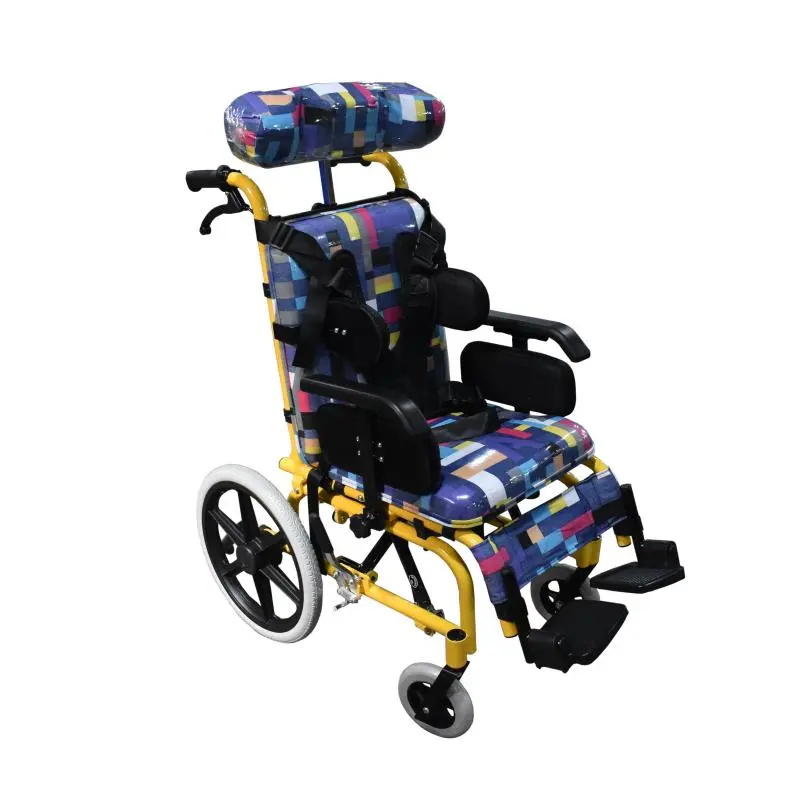
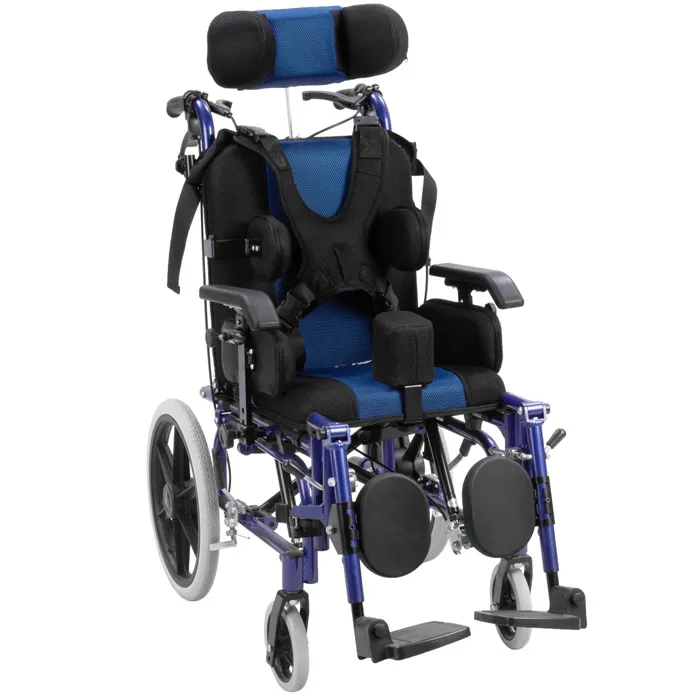
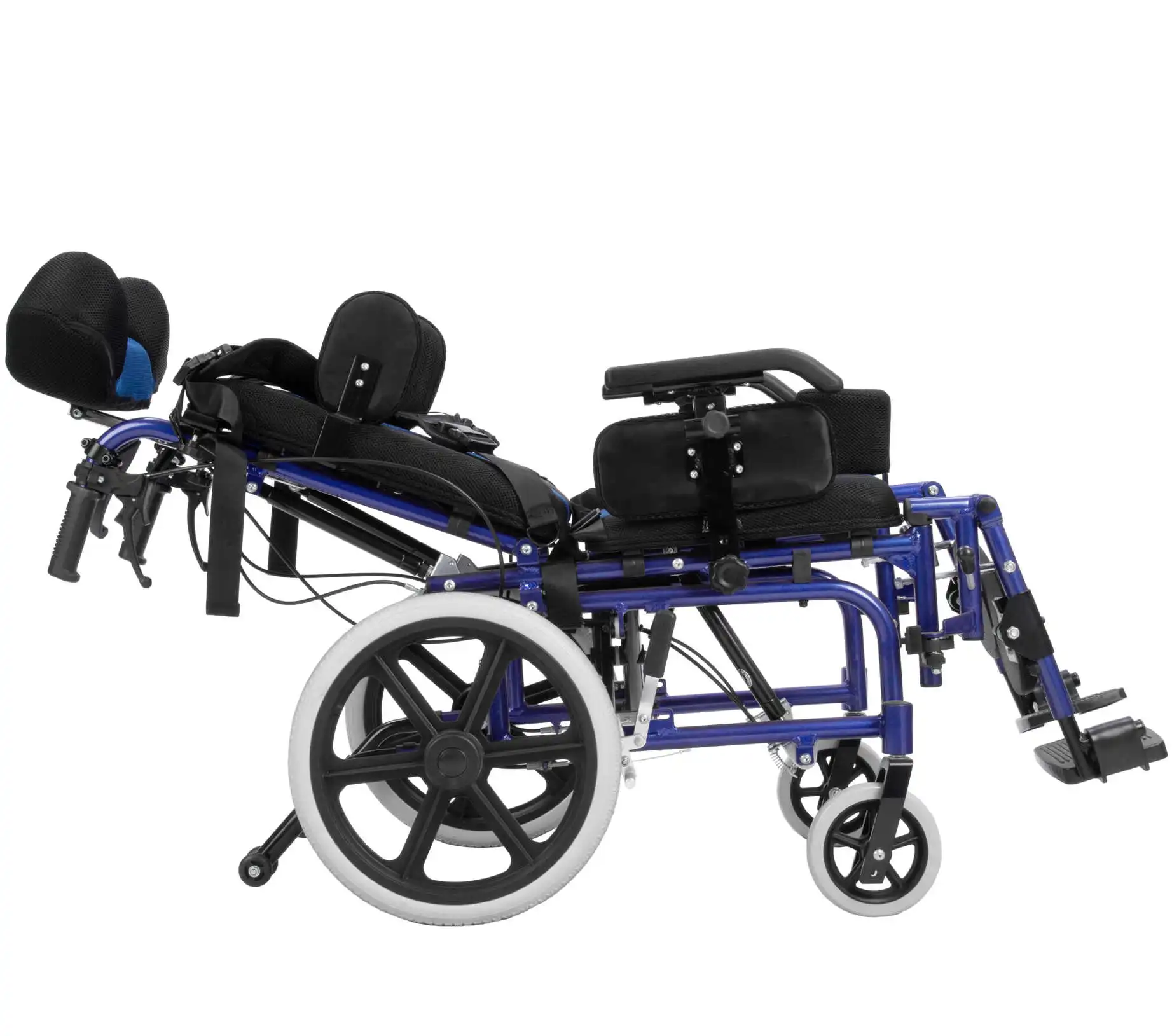
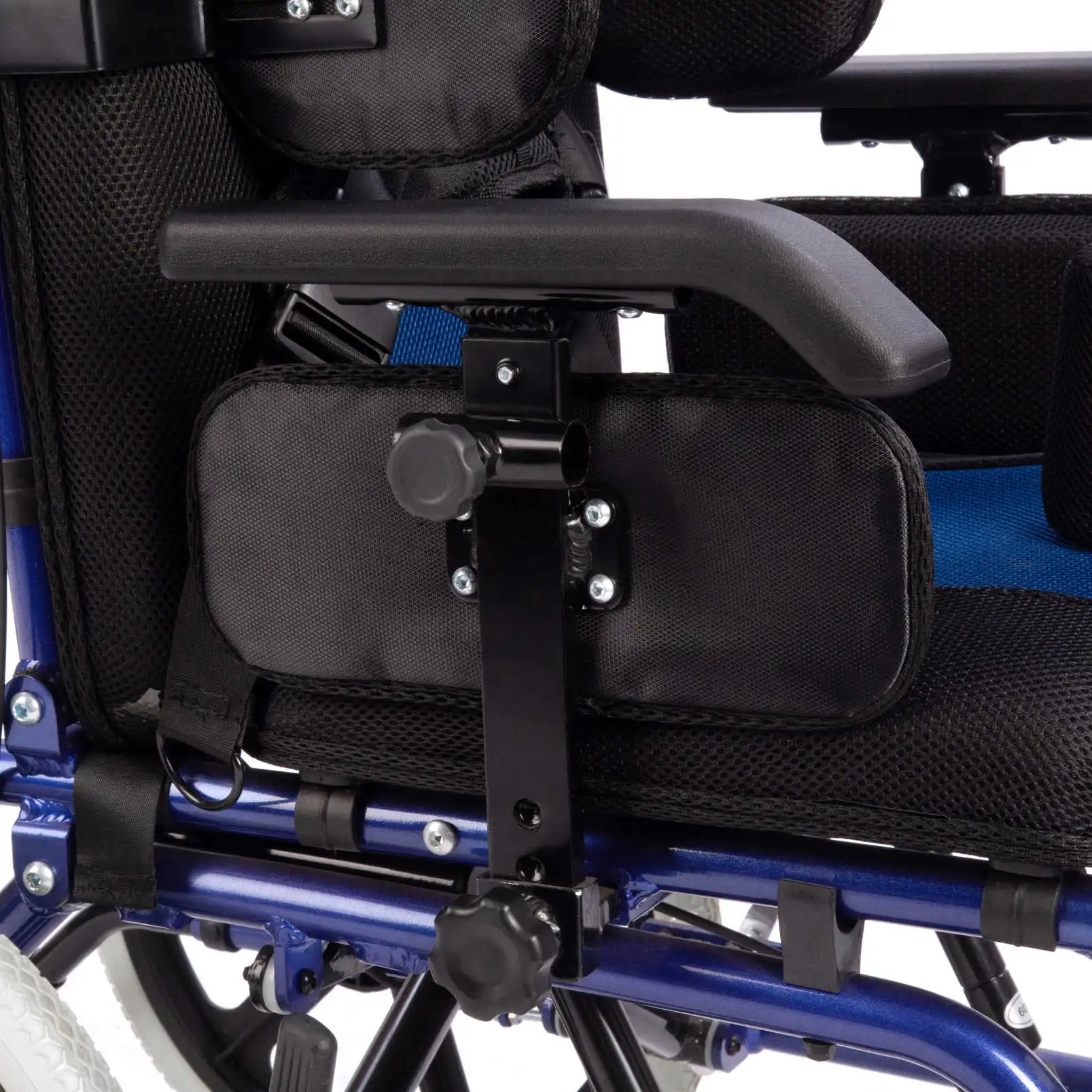
In contrast, specialized wheelchairs for cerebral palsy feature multi-point support systems—including headrests, lateral supports, pelvic belts, and trunk support devices—designed to help maintain proper posture.
What is the difference between a cerebral palsy wheelchair and a standard wheelchair?
Many people assume "cerebral palsy wheelchair" is simply another name for a standard wheelchair, but there are significant differences between the two.
The core objective of a cerebral palsy wheelchair goes beyond mobility; it prioritizes postural management and physical support.
Standard wheelchairs primarily address the need to move from Point A to Point B.
Cerebral palsy wheelchairs, however, must also address:
•Body stability;
•Postural correction;
•Pressure distribution;
•Functional participation;
•Long-term comfort.
Consequently, these wheelchairs are typically equipped with specialized structural components.
For example, head support systems help patients with poor head control maintain a steady line of sight; trunk support systems reduce leaning; pelvic stabilization devices improve sitting stability; and specialized seat cushions help lower the risk of pressure ulcers.
For patients with severe cerebral palsy, these features are not merely optional extras but essential elements for maintaining health and improving quality of life.
Will using a wheelchair cause patients with cerebral palsy to lose the ability to walk?
This is a major concern for many parents.
In reality, the outcome depends on how the wheelchair is used, not on the wheelchair itself.
If a patient has the potential for walking rehabilitation but completely abandons walking in favor of long-term wheelchair reliance, it can indeed lead to a decline in muscle strength and motor function.
However, modern rehabilitation philosophy emphasizes "maximizing function" rather than blindly pursuing walking as the only goal.
For some patients with moderate to severe cerebral palsy, forcing themselves to walk may result in:
•Excessive fatigue;
•Falls and injuries;
•Joint damage;
•Restricted range of motion. In such cases, the appropriate use of a wheelchair designed for cerebral palsy can actually help patients conserve physical energy, allowing them to devote more effort to learning, work, and social activities.
Therefore, rehabilitation specialists often advocate for a "combination of walking and wheelchair use" rather than simply choosing one or the other.
Needs for cerebral palsy wheelchairs vary across different age groups
Cerebral palsy is a lifelong condition; consequently, wheelchair requirements change as the individual ages.
During childhood, the wheelchair primarily serves functions related to postural management and developmental support.
Proper seating posture helps to:
•Promote visual development;
•Increase engagement in learning;
•Improve hand function;
•Reduce the risk of deformity.
During adolescence, the focus shifts toward school participation and social activities.
A suitable wheelchair enables students to integrate more easily into classroom and campus life.
In adulthood, the focus turns to employment and independent living.
At this stage, the wheelchair must balance comfort, mobility, and the need for social participation.
Older adults with cerebral palsy may develop new needs for a wheelchair due to declining physical stamina, joint degeneration, and the impact of chronic conditions.
Thus, the choice of a wheelchair is not a one-time decision but requires ongoing adjustments throughout different stages of life.
How do you determine if a wheelchair is needed?
The need for a wheelchair is typically assessed collaboratively by rehabilitation physicians, physical therapists, and assistive technology specialists.
Assessments generally cover:
•Gross motor function level;
•Walking distance;
•Fall risk;
•Muscle tone;
•Postural control;
•Participation in daily activities;
•Home care needs;
•School or work environments.
Modern rehabilitation medicine increasingly emphasizes individualized assessment, as the same diagnosis does not imply identical needs.
Some patients can walk several kilometers a day and naturally do not need to rely on a wheelchair long-term; conversely, others may be able to stand but cannot safely perform daily activities, making a wheelchair highly valuable in such cases.
The significance of the wheelchair extends beyond mobility
In the past, many viewed wheelchairs as a symbol of declining ability.
However, the philosophy behind modern assistive technology has shifted.
Today, an increasing number of professionals view the wheelchair not as a limitation, but as a tool for empowerment.
For those who need them, wheelchairs designed for cerebral palsy can help:
•Expand the range of mobility;
•Increase independence;
•Enhance educational opportunities;
•Improve employment prospects;
•Facilitate participation in social activities;
•Alleviate the burden on families;
•Improve overall quality of life.
What truly matters is not whether one uses a wheelchair, but whether the individual can achieve maximum social participation and personal development through appropriate assistive devices.
FAQ
Do all individuals with cerebral palsy need a wheelchair?
Not necessarily. Many individuals with mild cerebral palsy can walk, study, and work independently without the long-term use of a wheelchair. The need for a wheelchair depends primarily on the individual's level of motor function.
Which individuals with cerebral palsy have the greatest need for these wheelchairs?
Typically, this includes those who cannot walk independently, have poor balance, struggle with long-distance mobility, lack adequate postural control, or rely heavily on the assistance of others.
What is the difference between a wheelchair for cerebral palsy and a standard wheelchair?
Wheelchairs designed for cerebral palsy place greater emphasis on postural support and body control; they are often equipped with headrests, lateral supports, pelvic stabilization systems, and specialized seating designs, whereas standard wheelchairs focus primarily on mobility.
Will using a wheelchair for cerebral palsy cause the patient to lose the ability to walk?
Not if used appropriately. The key lies in continuing rehabilitation training and functional activities. For those who need them, these wheelchairs can reduce fatigue, enhance safety, and facilitate greater participation in social activities.
When should a child with cerebral palsy be fitted with a wheelchair?
When a child experiences difficulties with postural control, limitations in long-distance mobility, frequent falls, or a need for specialized seating support, the rehabilitation team may recommend a suitable wheelchair to promote development and enhance the child's ability to participate in activities.