
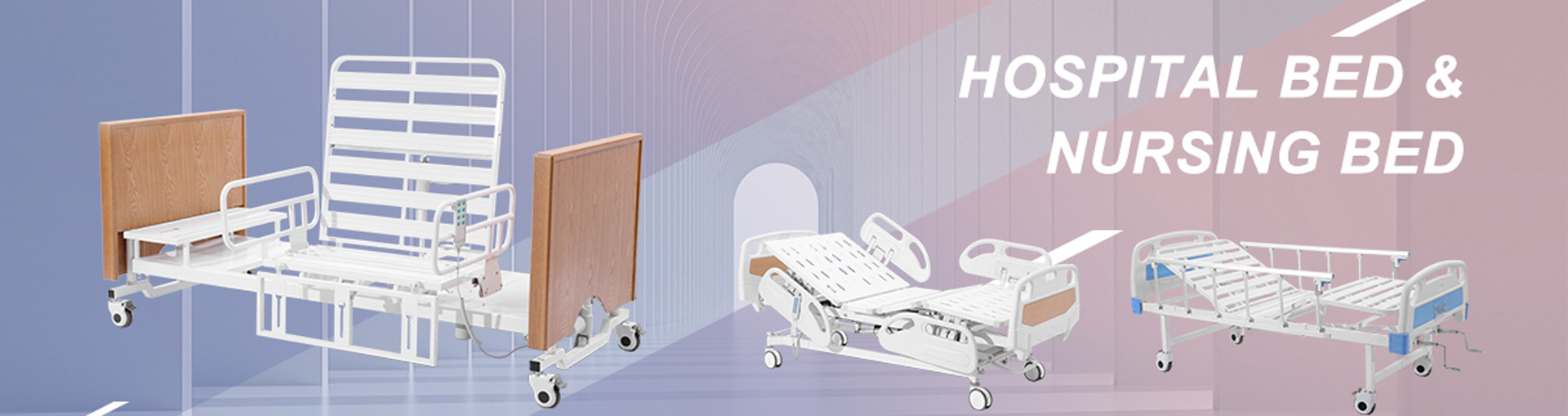
In the field of orthopedic care, recovery following hip surgery is a matter of significant importance. Whether the procedure involves hip replacement, the treatment of a hip fracture, or other surgeries in the hip region, postoperative care directly impacts the patient's physical comfort and ability to perform daily activities.
Throughout the recovery process, adjustable hospital beds have increasingly become vital pieces of assistive equipment in both hospital and home care settings.
Many patients ask, "Can I use an adjustable hospital bed after hip surgery?"
In fact, not only can they be used, but in many cases, medical adjustable beds play a crucial role in supporting recovery. A key challenge following hip surgery is managing body positioning; during recovery, patients often cannot freely get up, turn over, or transition between sitting and lying down as they normally would.
The primary advantage of an adjustable hospital bed is its ability to help patients change positions, thereby reducing physical strain and making caregiving easier. However, it is important to note that while these beds can be used after hip surgery, this does not mean the angles can be adjusted arbitrarily.
Because the hip joint provides essential structural support for the body, stability is compromised after surgery. Consequently, the way the bed is used—including angle changes and position adjustments—requires great care and caution.
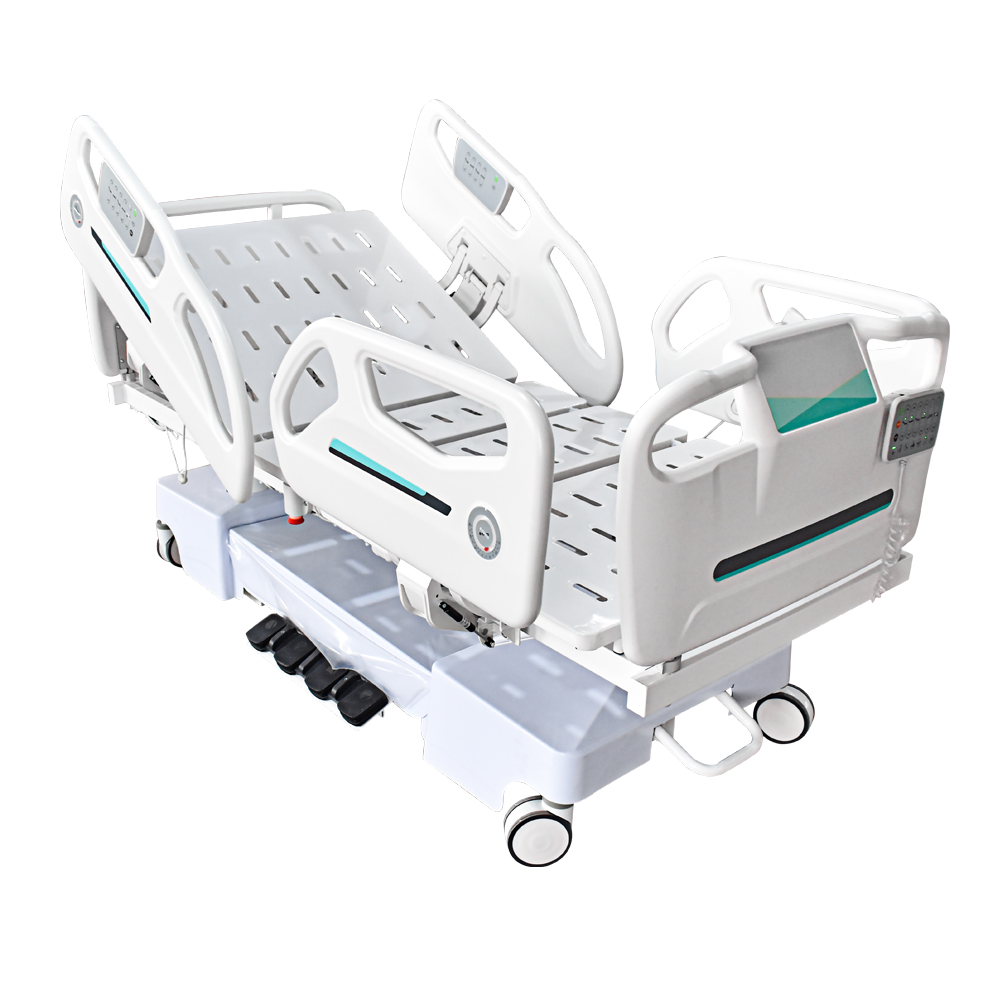
Why are the requirements for a hospital bed higher after hip surgery?
Many people view a hospital bed simply as a place to lie down and rest. For patients recovering from hip surgery, however, the bed directly influences the recovery experience.
1. The hip joint is vital for bodily movement
The hip joint connects the lower limbs to the torso. Simply put, the hip joint is involved in many everyday movements.
For example:
•Sitting down;
•Standing up;
•Turning over;
•Walking;
•Lifting the leg;
•Shifting body weight.
As a result, a patient's mobility is often significantly reduced after hip surgery, and certain movements must be strictly avoided.
2. Patients often cannot freely adjust their posture after surgery
For a healthy person, changing position is a natural, effortless act. After hip surgery, however, many simple movements become difficult.
For example:
•Moving from a lying position to a sitting position;
•Adjusting leg position;
•Turning over;
•Repositioning during the night;
•Getting in and out of bed.
Relying entirely on the patient's own strength to perform these movements often places a physical strain on the body.
Therefore, the ability of the hospital bed to provide assistance is particularly important during the post-operative recovery phase.
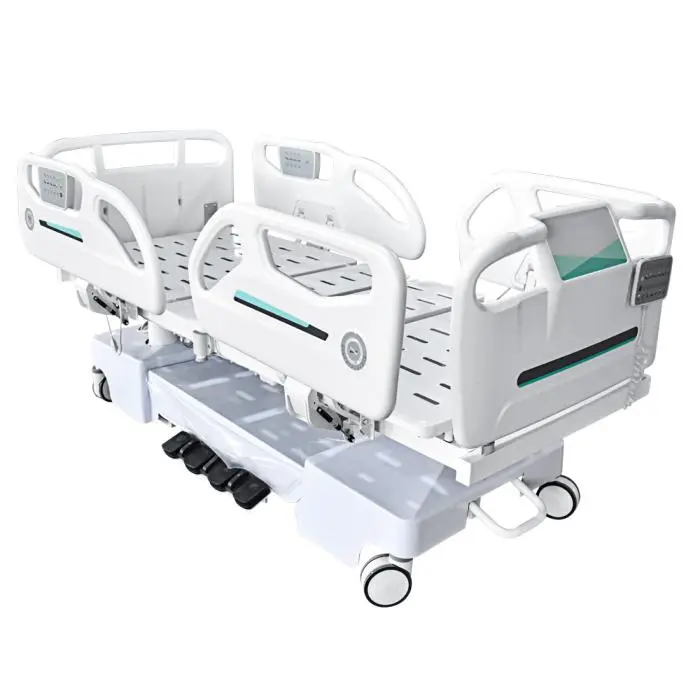
Why is an adjustable hospital bed suitable for patients recovering from hip surgery?
Compared to standard, fixed hospital beds, the key feature of an adjustable hospital bed is its ability to change the angle of the bed frame.
This means patients can adjust their posture without relying solely on their own physical strength—a crucial capability for those with limited mobility following hip surgery.
1. Adjustable hospital beds help patients sit up gradually
One of the most difficult challenges for many patients after hip surgery is sitting up. Rising suddenly from a lying position often puts strain on the hip area.
Some patients may experience:
•Increased pain;
•Loss of balance;
•Muscle tension;
•Restricted movement.
An adjustable hospital bed allows the patient to transition slowly from lying down to a semi-reclined or seated position by gradually raising the backrest. This method offers greater stability compared to the sudden exertion required to sit up manually.
Why is it unsuitable to make sudden, drastic changes in posture after surgery?
The body is often more sensitive to postural changes following hip surgery.
Especially during the early stages of recovery, movements that are too rapid can lead to:
•Increased pressure on the hip;
•Loss of balance;
•Worsened local discomfort;
•Noticeable muscle strain.
Consequently, caregivers often emphasize the importance of making postural changes slowly.
Adjustable hospital beds facilitate this by enabling "gradual postural adjustment."
1. Adjustable hospital beds reduce the physical strain of repositioning and transfers
Patients recovering from hip surgery should generally avoid frequent, large-scale movements or transfers, as the body is susceptible to strain during these processes. Adjustable hospital beds reduce the need for manual repositioning by allowing the bed itself to change configuration.
For example:
•Raising the upper body;
•Adjusting leg position;
•Changing the bed height;
•Assisting with turning over.
These functions help alleviate the physical burden on caregivers.
Why is the seated position important after hip surgery?
Many patients believe that "simply being able to sit up" is enough. However, in reality, there are often strict requirements regarding sitting posture following hip surgery.
1. Avoiding excessive hip flexion after surgery
During the recovery phase, patients must avoid excessive hip flexion, as sharp angles can increase localized pressure. Consequently, when using a medical adjustable bed, the upper body is typically not raised sharply in a single movement;
Instead, the angle is adjusted gradually.
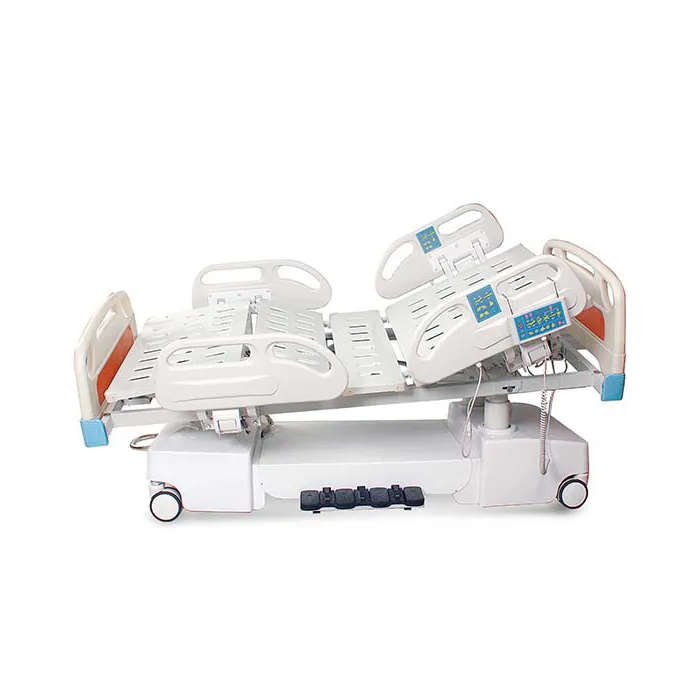
Why do medical adjustable beds offer more stable support than ordinary pillows?
Some families use multiple pillows to help patients sit up. While this provides temporary support, stability is often limited.
For example:
•Pillows tend to slide out of place;
•The angle of support is inconsistent;
•The body is prone to sliding down;
•Long-term comfort is poor.
In contrast, an adjustable hospital bed supports the body using the entire bed platform, resulting in superior stability.
Why do adjustable hospital beds help reduce physical fatigue?
Remaining completely flat for extended periods often leads to physical fatigue. Patients recovering from hip surgery, in particular, are prone to discomfort due to reduced mobility. Adjustable hospital beds allow patients to change their posture.
For example:
•Semi-reclining position;
•High-back sitting position;
•Leg-elevated position.
These variations help alleviate the pressure associated with maintaining a single posture.
Why do adjustable hospital beds make getting in and out of bed easier?
Patients often find it difficult to get in and out of bed after hip surgery, especially if the bed height is unsuitable. Some medical adjustable beds feature a full-bed lift function, allowing the height to be adjusted.
This ensures the bed is at an optimal height when the patient prepares to stand or transfer.
Why are medical adjustable beds helpful for nighttime care?
Patients often face greater mobility challenges at night following surgery.
For example:
•Difficulty turning over;
•Difficulty sitting up;
•Intense pain;
•Body stiffness.
Adjustable hospital beds allow caregivers to adjust the patient's position more easily,
while also reducing the need for the patient to exert themselves frequently during the night.
Why is turning over more difficult after hip surgery?
Turning over is a simple task for the average person. However, after hip surgery, many patients worry about:
•Weight-bearing on the hip;
•Body strain;
•Instability during movement;
•Increased pain.
Consequently, the act of turning over is usually performed more slowly. A medical adjustable bed, however, utilizes synchronized back and leg adjustments to help the body change positions more smoothly and steadily.
Why is a medical adjustable bed better suited for long-term recovery than a standard hospital bed?
For short-term bed rest, the limitations of a standard bed may not be apparent. However, over a prolonged recovery period, the differences become increasingly obvious.
This is because, during long-term recovery, patients need to perform daily activities such as:
•Changing positions;
•Adjusting between sitting and lying down;
•Receiving nursing care;
•Eating;
•Getting up to move around.
Standard fixed beds cannot actively alter their structure. In contrast, medical adjustable beds offer superior body support.
How does an adjustable hospital bed help reduce caregiver fatigue?
Post-operative care places significant physical demands on caregivers.
For example:
•Assisting the patient to sit up;
•Adjusting positions;
•Lifting the legs;
•Helping the patient turn over.
Relying entirely on manual effort for these tasks creates a heavy caregiving burden.
Adjustable hospital beds can alleviate some of these repetitive physical tasks.
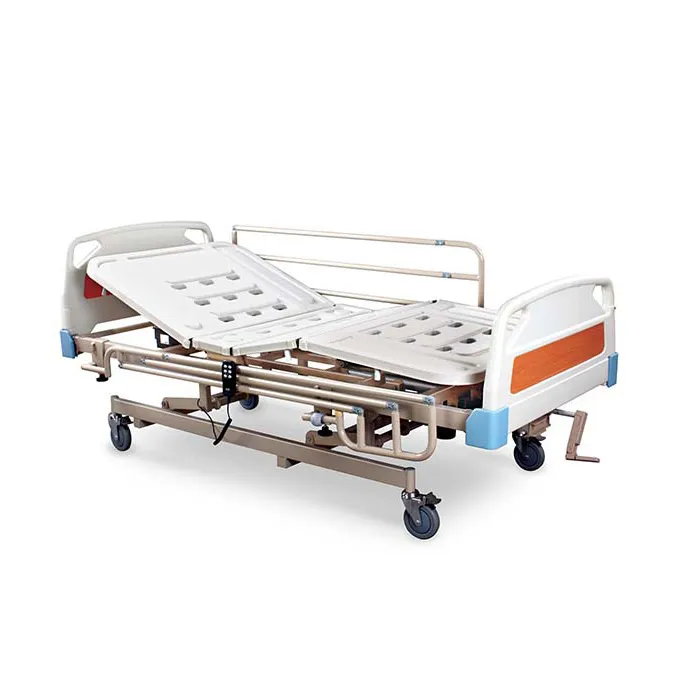
What should be kept in mind when using an adjustable hospital bed after hip surgery?
While medical adjustable beds offer many benefits, attention must still be paid to how positions are changed.
1. Avoid sudden, large-angle adjustments
Some patients may wish to sit up quickly. However, during the post-operative recovery phase for the hip, rapid changes in angle can increase discomfort.
Therefore, it is generally better to adjust the bed slowly.
2. Avoid maintaining a single position for too long
Even with a medical adjustable bed, staying in the same position for an extended period can lead to fatigue. Thus, changing positions appropriately remains crucial.
3. Do not overlook leg support
Many people focus solely on raising the backrest. In reality, leg support significantly affects body stability.
This is particularly true in a semi-reclined position; without adequate leg support, the body is more likely to slide downward.
Why do some patients develop a reliance on adjustable hospital beds?
Because, compared to standard beds, adjustable hospital beds genuinely and significantly reduce the physical strain on the body.
In particular, they offer:
•Easier rising;
•Greater stability while seated;
•Greater ease in turning over;
•Enhanced comfort during prolonged bed rest.
These changes directly impact the recovery experience.
What is the main difference between a medical adjustable bed and a standard hospital bed?
A standard hospital bed serves primarily as a place to lie down, whereas a medical adjustable bed emphasizes postural support. It does more than just provide a position for rest.
It actively assists patients with:
•Adjusting body posture;
•Providing physical support;
•Transitioning between sitting and lying down;
•Facilitating daily activities.
Consequently, for patients recovering from hip surgery, a medical adjustable bed is often better suited for long-term recovery.