

With the development of sports for people with disabilities and rising public health awareness, more and more wheelchair users are engaging in various sports activities. From wheelchair basketball, tennis, badminton, and racing to wheelchair marathons and wheelchair rugby—which have seen growing participation in recent years—the demand for sports has moved beyond mere rehabilitation. It now extends to fitness, recreation, socializing, and even competitive athletics.
Against this backdrop, a frequently asked question arises: since sports wheelchairs are essentially manual wheelchairs, does that mean *any* manual wheelchair can be used for sports?
The answer is no.
In fact, while "manual wheelchairs" and "sports wheelchairs" are related categories, they are not synonymous. A sports wheelchair is a specialized type of manual wheelchair; the vast majority of manual wheelchairs, however, are designed for daily mobility, home life, rehabilitation care, and medical assistance—not for athletic activities.
Many users mistakenly believe that any wheelchair propelled by hand possesses athletic capabilities. However, from the perspectives of engineering design, ergonomics, safety, and the specific demands of sports, there are distinct differences between standard manual wheelchairs and professional sports wheelchairs. For users wishing to participate in sports, understanding these differences is crucial—not only for the quality of the sporting experience but also for safety and physical well-being.
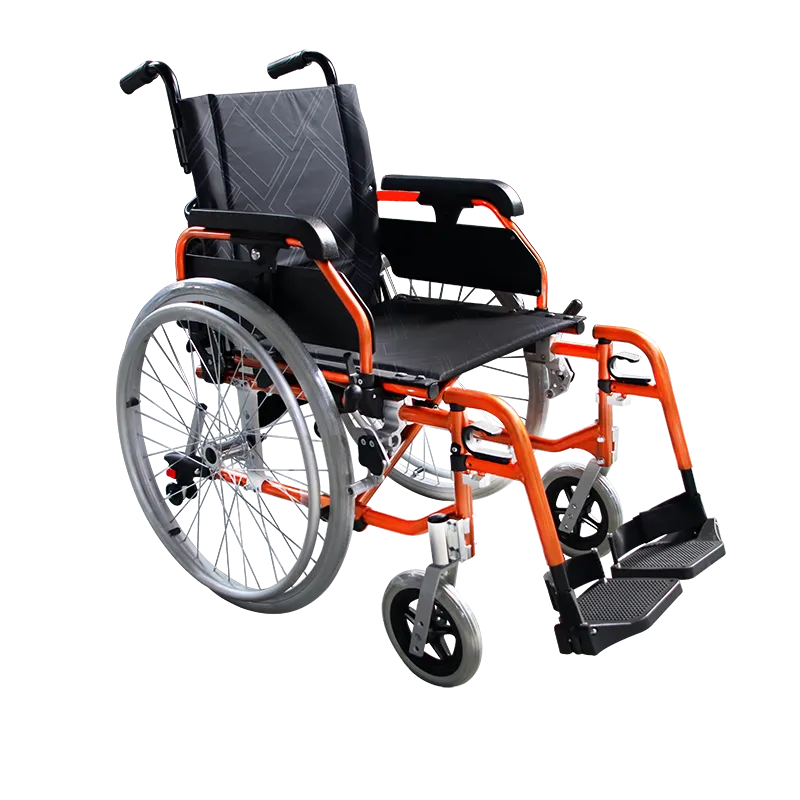
Manual wheelchairs and sports wheelchairs are not the same thing
In terms of industry classification, "manual wheelchair" is a broad product category. Any wheelchair propelled by the user's hand force acting on the drive wheels falls under this classification. This category encompasses everything from the basic wheelchairs common in hospitals to home-care models, lightweight travel chairs, rehabilitation training chairs, and professional sports wheelchairs.
Confusion often arises because, at first glance, both types appear similar: they feature two large wheels and two small wheels and rely on hand-rims for propulsion. However, when a standard manual wheelchair is placed side-by-side with a professional sports wheelchair, the differences become immediately apparent.
Standard manual wheelchairs prioritize comfort, stability, and versatility. Designers must consider factors such as comfort during prolonged use, everyday maneuverability, ease of folding and transport, and suitability for the home environment. In contrast, sports wheelchairs are akin to professional athletic equipment; they are designed to enable users to achieve higher speeds, greater agility, and superior athletic performance.
Public data from the international disability sports community indicates that professional sports wheelchairs have become the standard for competitive wheelchair sports. Whether at the Paralympic Games or other international competitions, athletes rarely use standard manual wheelchairs, as these products simply cannot meet the rigorous demands for speed, agility, and safety required in competitive sports.
Why are standard manual wheelchairs unsuitable for sports?
Many wheelchair users new to sports often ask: "My manual wheelchair is easy to push in daily life, so why can't I just use it for ball games or racing training?" Theoretically, standard manual wheelchairs can certainly be used for light activity; however, when "sports" implies sustained training, fitness workouts, or competitive events, standard manual wheelchairs often exhibit significant limitations.
1. Frame structure determines athletic capability
The most common design for standard manual wheelchairs is a folding frame. This structure is primarily intended to facilitate transport and storage—such as fitting into a car trunk, using public transportation, or saving space at home. For daily living, the folding design is indeed highly practical.
However, from a sports perspective, a folding structure compromises the frame's overall rigidity. When a user accelerates rapidly, stops suddenly, or turns at high speeds, some of the applied force is absorbed and dissipated by the frame, resulting in reduced propulsion efficiency. This energy loss is particularly pronounced in sports requiring rapid movement, such as wheelchair basketball and wheelchair tennis.
Sports wheelchairs, conversely, typically feature a rigid frame structure. This integrated design allows propulsion force to be transferred more directly to the drive wheels, thereby enhancing athletic efficiency. Studies show that rigid-frame wheelchairs can improve propulsion efficiency by approximately 10% to 20% compared to traditional folding wheelchairs. For competitive athletes, this difference can directly impact performance in competition.
2. Center of gravity design affects handling
To enhance stability, standard manual wheelchairs are typically designed with a center of gravity positioned relatively far back. This design reduces the risk of tipping backward, making it safer for the elderly, rehabilitation patients, and users with limited mobility.
However, in a sports context, a center of gravity positioned too conservatively presents distinct disadvantages. These include slow acceleration, sluggish steering response, inefficient directional changes, and a lack of agility in movement control. When a user attempts a quick burst of speed or a series of turns, they will clearly feel that the wheelchair's response lags behind their body movements.
Professional sports wheelchairs, by contrast, shift the center of gravity slightly forward, placing more weight on the drive wheels. This not only improves propulsion efficiency but also enhances agility during high-speed movement. Many high-end sports wheelchairs even allow the center of gravity to be adjusted based on the athlete's physique and the specific demands of the sport to achieve optimal handling.
3. Tire systems fail to meet athletic demands
Tires are a crucial component influencing a wheelchair's athletic performance.
To minimize maintenance costs, many standard manual wheelchairs use solid tires or general-purpose tires. While these tires are durable, puncture-resistant, and easy to maintain, they suffer from relatively high rolling resistance and limited grip, increasing the physical effort required for propulsion during sports activities.
In contrast, sports wheelchairs typically utilize high-performance pneumatic tires. Some competition-grade models even allow for adjustments to tire pressure and tread design based on court conditions to maximize grip and rolling efficiency.
For wheelchair basketball players, superior grip translates to faster changes of direction; for wheelchair racers, lower rolling resistance means higher cruising speeds. These performance characteristics cannot be achieved simply by modifying a standard manual wheelchair.
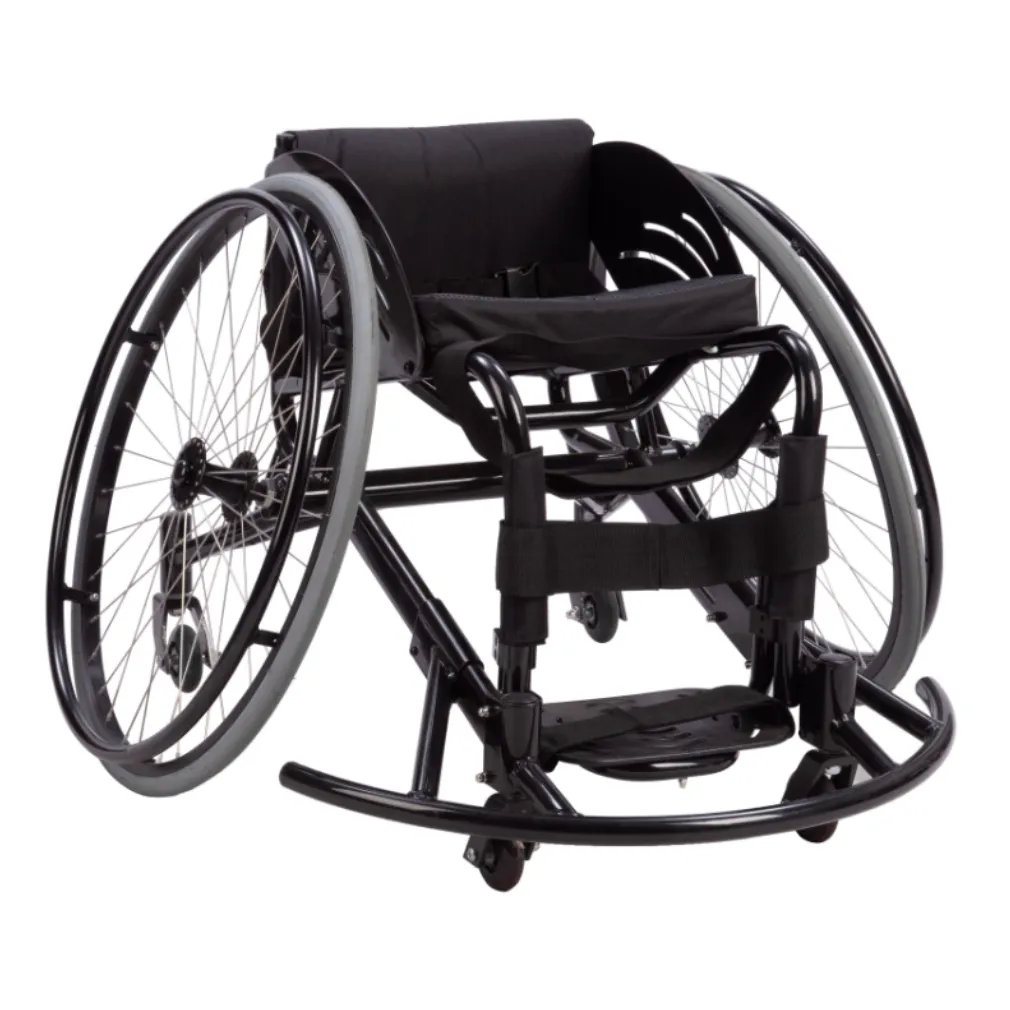
Different sports have vastly different requirements for wheelchair performance
Many people view sports wheelchairs merely as upgraded versions of standard wheelchairs; in reality, different sports require specific types of sports wheelchairs. Even within the realm of professional sports wheelchairs, there is no such thing as a "one-size-fits-all" model suitable for every sport.
1. Wheelchair Basketball
Wheelchair basketball is one of the most widely played wheelchair sports in the world. Data from the International Wheelchair Basketball Federation indicates that the sport is practiced in over 100 countries and regions globally.
Because the sport involves frequent sprinting, sudden stops, sharp turns, and physical contact, basketball wheelchairs typically feature a design with widely splayed (cambered) wheels. The wheel camber angle typically ranges from 12 to 20 degrees; this design enhances lateral stability and reduces the risk of tipping over. Additionally, impact-resistant structures are usually installed at the front and rear of the frame to withstand the collisions inherent in intense competition.
2. Wheelchair Tennis
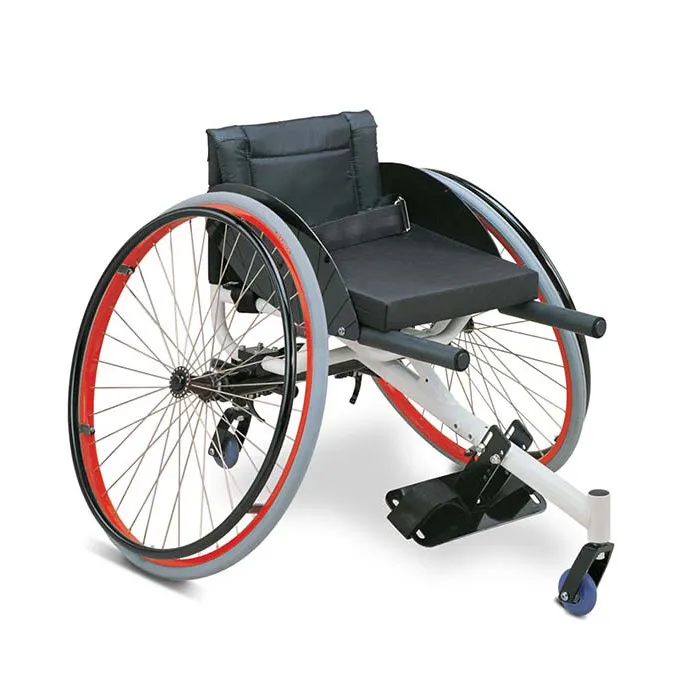
Wheelchair tennis demands exceptional speed and agility. Athletes must move rapidly across the court to execute shots, so the wheelchair's weight is kept as low as possible.
Many professional tennis wheelchairs are constructed from aerospace-grade aluminum alloy or carbon fiber, with some high-end models weighing less than 10 kilograms. This lightweight design significantly improves acceleration and maneuverability.
3. Wheelchair Racing
Wheelchair racing is one of the fastest wheelchair sports. Racing wheelchairs differ vastly from standard manual wheelchairs.
They typically feature a three-wheel configuration—two rear wheels and one front wheel. The frame is longer, and the design emphasizes aerodynamics. Athletes usually adopt a forward-leaning posture to minimize wind resistance and maximize propulsion efficiency.
In international Paralympic events, top wheelchair racers can achieve speeds exceeding those of some able-bodied runners, underscoring the importance of specialized racing wheelchairs.
4. Wheelchair Rugby
Wheelchair rugby is renowned as one of the most physically intense wheelchair sports. High-speed collisions occur frequently during matches, requiring the wheelchair structure to possess immense strength.
These wheelchairs often feature reinforced frames and specialized impact guards at the front and rear. A standard manual wheelchair used in such a sport would likely suffer structural failure or cause safety accidents in a short time.
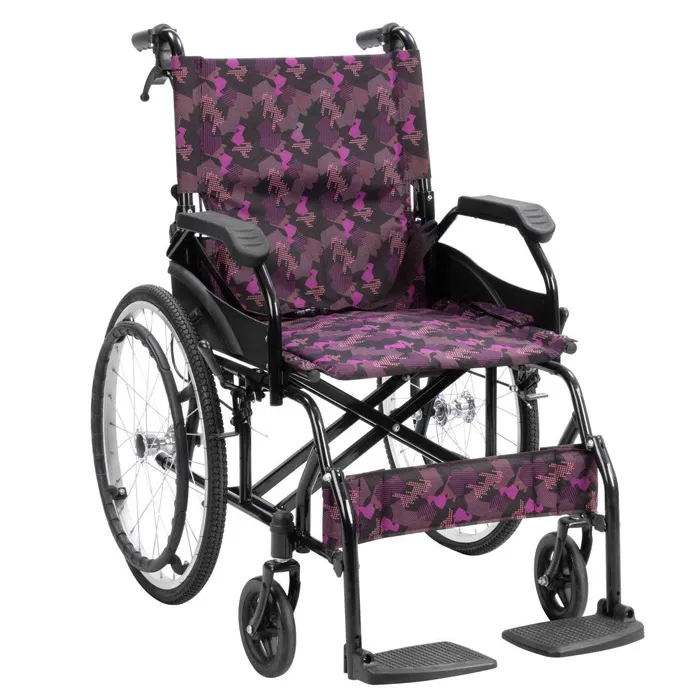
Risks of Using Standard Manual Wheelchairs for Sports
Many people with limited budgets may wish to use their existing manual wheelchairs for sports training. While this is not entirely unfeasible for light fitness activities, it is important to recognize the potential risks.
First is the risk of structural damage. Standard manual wheelchairs are not designed to withstand frequent impacts, high-intensity turning, or sustained acceleration. Prolonged sports training can lead to frame deformation, cracked welds, and accelerated wear on the wheel assemblies.
Second is the risk of physical injury. Due to the lower propulsion efficiency of standard manual wheelchairs, users often need to exert more effort to perform the same movements. This can place increased strain on the shoulder, elbow, and wrist joints. Research indicates that long-term use of unsuitable wheelchairs for high-intensity sports increases the risk of overuse injuries in the shoulders.
Furthermore, insufficient stability can raise the risk of falls. Standard manual wheelchairs are more prone to tipping over or losing control, particularly during rapid turns, navigating slopes, or sudden stops.
How do you determine if you need a sports wheelchair?
Not every wheelchair user needs to purchase a specialized sports wheelchair. The decision to upgrade depends primarily on the frequency and intensity of your activity, as well as your personal goals.
If you only engage in occasional activities like strolling in the park, participating in community events, or light exercise, a lightweight manual wheelchair is usually sufficient.
However, if you train multiple times a week and wish to systematically pursue specific sports—such as wheelchair basketball, badminton, or tennis—a specialized sports wheelchair will significantly enhance your experience.
For those preparing for competitions or engaged in long-term competitive training, a sports wheelchair is essentially an essential piece of equipment. In a competitive setting, it not only boosts performance but also serves as a crucial foundation for safety.
FAQ
What is the main difference between a standard manual wheelchair and a sports wheelchair?
The primary difference lies in their design objectives. Standard manual wheelchairs are designed for daily mobility and rehabilitation, whereas sports wheelchairs are developed specifically for athletic activities, featuring professional optimizations in weight, center of gravity, rigidity, maneuverability, and safety protection.
Can you play wheelchair basketball in a standard manual wheelchair?
Theoretically, you can try it out, but long-term use is not recommended. Wheelchair basketball involves frequent turning, sprinting, and physical contact; standard manual wheelchairs struggle to meet these performance demands and carry a higher risk of structural failure and injury.
Is a sports wheelchair always faster than a standard manual wheelchair?
In a sporting context, it is usually faster. Thanks to their lighter weight, optimized center of gravity, and more efficient power transfer systems, sports wheelchairs generally offer superior acceleration and cruising efficiency compared to standard manual wheelchairs.
Can a single sports wheelchair be used for all types of sports?
No. Sports such as wheelchair basketball, wheelchair tennis, wheelchair racing, and wheelchair rugby have vastly different requirements regarding wheelchair design; consequently, specialized sports wheelchairs tailored to each specific discipline are typically required.
Is it necessary for beginners to purchase a professional sports wheelchair right away?
If you are simply exploring an interest in the sport, you might want to try the activity first before deciding whether to make a purchase. However, if you have committed to long-term training or competition, selecting a suitable sports wheelchair is generally a more cost-effective investment, as it can significantly enhance both athletic efficiency and safety.