
Among various nursing care devices, the "toilet chair(commode chair)" is a very common assistive tool, especially playing an indispensable role in providing a safe and convenient way for the elderly, those with mobility impairments, and post-operative recoveries to use the toilet.
In recent years, many toilet chairs have incorporated wheels, allowing caregivers to push patients, thus creating what are known as "wheeled toilet chairs."
However, many users ask when purchasing or using them: Can a wheeled commode chair be used as a wheelchair?
The answer is very clear and must be emphasized: No. A wheeled commode chair cannot be used as a wheelchair.
Although a wheeled toilet chair may resemble a wheelchair, there are fundamental differences between wheeled commode chairs and true wheelchairs in terms of structure, safety, load-bearing mode, intended use, mobility, and design standards. Mistakenly using a wheeled toilet chair as a wheelchair could not only damage the device but also pose a direct physical risk to the user.
This article will comprehensively analyze the true purpose of a toilet chair.
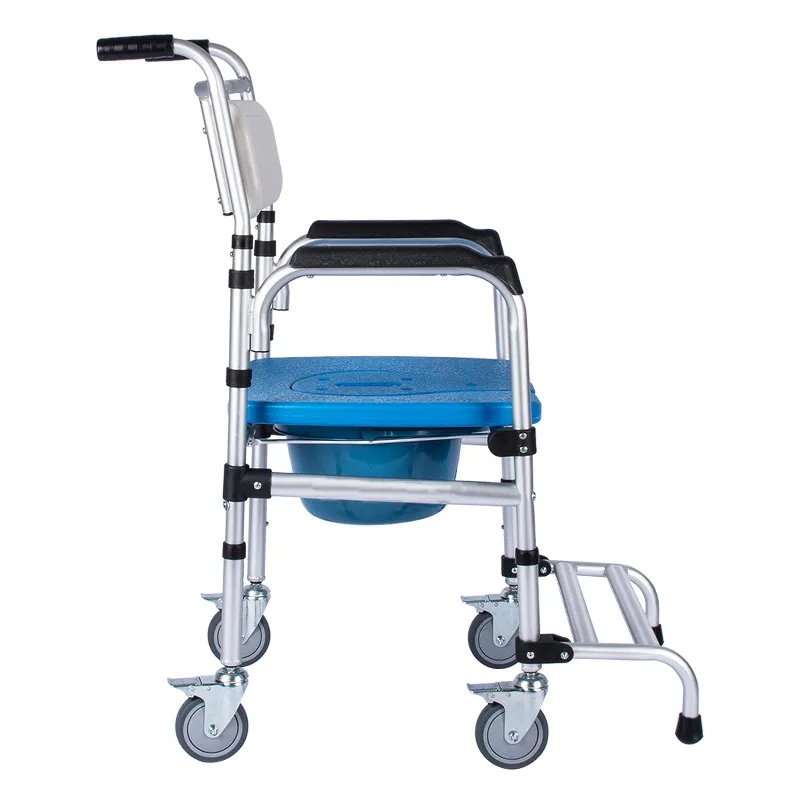
Why can't a wheeled toilet chair be used as a wheelchair?
While a wheeled toilet chair has wheels, these wheels are designed for a completely different purpose than those of a wheelchair. The primary purpose of a toilet chair is always to assist with toileting, not for long-distance movement, transfers, or daily mobility.
The following will explain the reasons in detail from multiple perspectives.
Wheeled Toilet Chairs vs. Wheelchairs: What are the structural differences?
While wheeled toilet chairs and wheelchairs may look similar, both having seats, footrests, armrests, and even push handles, their structural philosophies are completely different.
1. The seat structure of a toilet chair is not designed for prolonged weight-bearing
Toilet chair seats typically have:
• A central opening
• A structure for mounting the toilet bowl
• A support structure for toileting
• A waterproof cushion or thin seat ring
This type of structure is essentially designed for successfully completing the act of toileting, not for prolonged, long-distance seated movement.
Conversely, wheelchair seats typically use:
• High-strength load-bearing materials
• Suitable for prolonged sitting
• Provide back support
• Provide hip stability
Their design purposes and load-bearing modes are completely different.
2. Toilet chair armrests are designed for toileting support, not mobility support
Toilet chair armrests are primarily used for:
• Support for getting up
• Maintaining balance during toileting
• Assisting with positioning during transfers
While wheelchair armrests are designed to maintain stability during movement, including:
• Maintaining body orientation when turning
• Damping from road vibrations
• Adjusting seating position forward and backward
Their design purposes are completely different.
3. Commode chair backrests are shorter and thinner, and cannot provide wheelchair-style support
Wheelchair users may sit in their wheelchairs for extended periods, therefore the support capacity of a wheelchair backrest must be ergonomic.
Commode chair backrests are typically:
• Thinner
• Shorter
• Only provide slight support during toileting
• Unsuitable for prolonged leaning
Long-term use may lead to lower back fatigue and even a risk of falling.
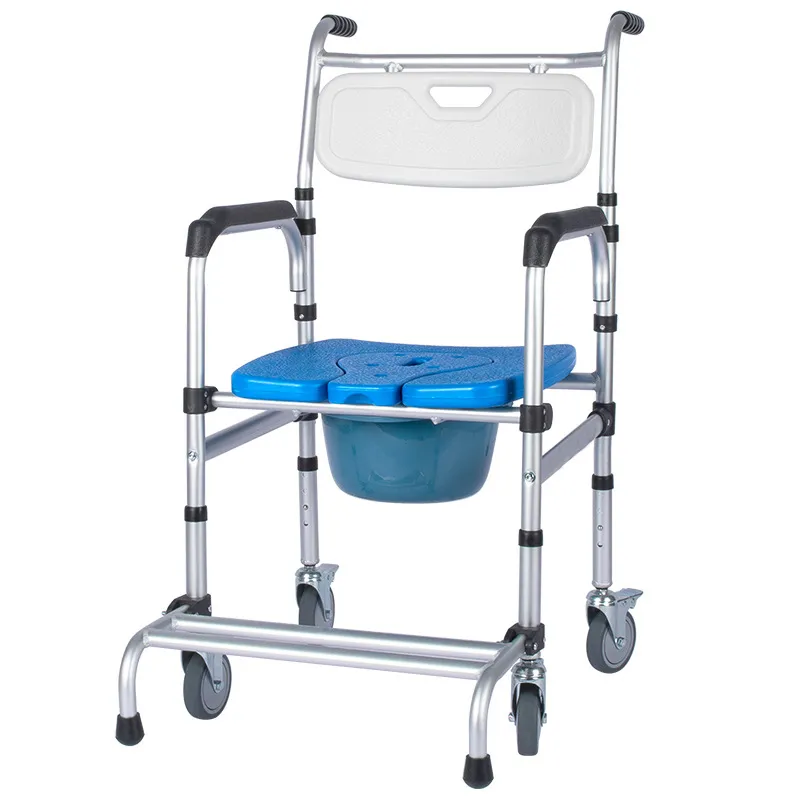
Why are the wheels of a wheeled commode chair unsuitable as wheelchair wheels?
The wheels are the most easily confused feature between wheeled commode chairs and wheelchairs, but their wheel types, materials, support structures, and safety standards are completely different.
1. Toilet chair wheels are usually smaller
Toilet chair wheels typically:
• Have a small diameter
• Are only suitable for smooth indoor surfaces
• Have limited wheel weight capacity
• Lack shock absorption
While wheelchairs typically have large rear wheel diameters because:
• Are suitable for pushing
• Are suitable for self-propelled movement
• Can cross steps and thresholds
• Are suitable for various indoor and outdoor surfaces
Wheeled toilet chairs simply cannot meet these requirements.
2. Toilet chair wheels are designed for short-distance movement
The main purposes of toilet chair wheels include:
• Allowing caregivers to move the vehicle slightly within the room.
• Allowing users to move short distances while seated in the toilet chair (e.g., bedside to toilet).
• Not for any form of mobility.
Wheelchair wheels, on the other hand, are designed for:
• Long-distance movement.
• Wear resistance.
• Heavy load capacity.
• Ambient traversing.
3. The braking structure of toilet chair wheels is not suitable for frequent movement
Wheelchairs have front and rear wheel braking systems, and some even have anti-tipping mechanisms. Toilet chair braking structures are typically only used to lock the position when in use, resulting in low usage frequency and low stability.
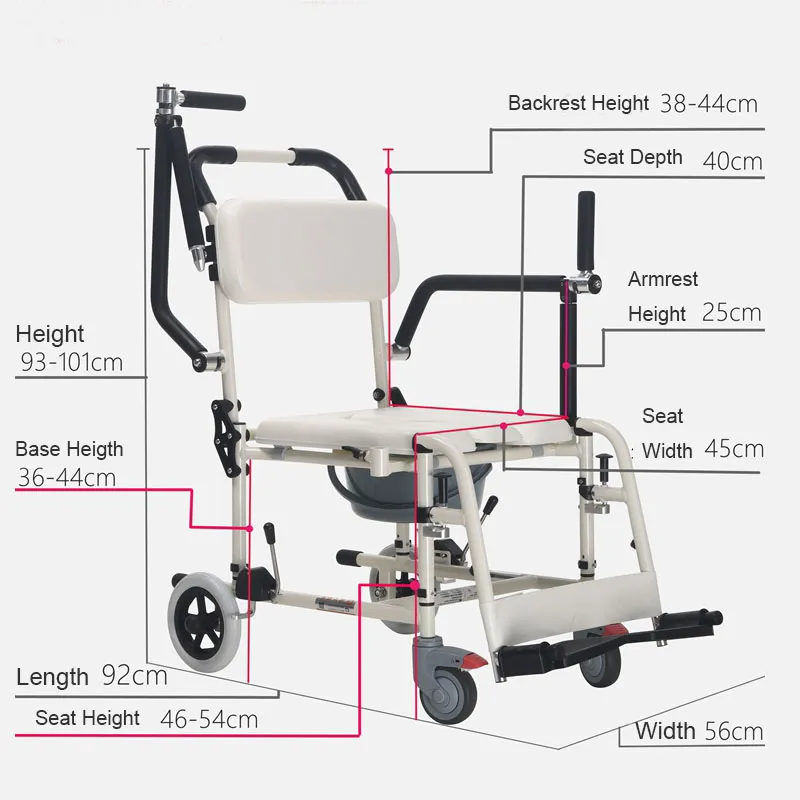
Are there safety hazards associated with using wheeled commode chairs for movement?
1. The center of gravity of a commode chair differs from that of a wheelchair, making it prone to tipping over
Due to the seat hole structure and the presence of a toilet bowl support, the center of gravity of a wheeled commode chair is usually further forward or unstable than that of a wheelchair.
This can lead to:
• Increased risk of tipping over when turning
• Increased risk of tipping over when encountering obstacles
• Increased danger when going downhill or on slopes
Wheelchairs, on the other hand, improve stability through a proper center of gravity and a wide wheelbase.
2. Toilet chairs are prone to wobbling during acceleration or deceleration
Toilet chairs are not designed for speed changes. If used for movement:
• Noticeable wobbling
• The user may slide
• Even slip off the seat
Very dangerous.
3. Toilet chair footrests are more fragile.
Many wheeled toilet chairs have footrests only for:
• Resting feet during short breaks
• Resting feet while using the toilet
Not suitable for:
• Placing all weight on the footrest
• Prolonged support
• Rapid propulsion
A damaged footrest can cause falls.
Can wheeled toilet chairs be self-propelled? Why not?
Wheelchairs usually have large wheels for users to push by hand, while commode chairs generally do not have self-propelled large wheels. Reasons include:
• The seat structure does not allow for the installation of large wheels.
• A footrest area is required.
• The weight-bearing structure of the toilet chair is not suitable for self-propelled operation.
• The tire material cannot withstand prolonged friction.
Attempting to have a user push it using small wheels is extremely dangerous.
If a wheeled toilet chair cannot be used as a wheelchair, then what is its true purpose?
The positioning of a wheeled toilet chair must be very clear:
✔ A mobility aid for toileting, not a means of transportation.
Its true purposes include:
• Helping people with mobility impairments move short distances within a room to the appropriate location for toileting.
• Can be used at the bedside, in nursing area bathrooms, and in rehabilitation areas.
• Reduces the burden on caregivers by reducing the strain on them.
• Provides a safe toileting posture.
• Reduces the risk of falls.
• Reduces the likelihood of patients entering slippery bathrooms.
The wheeled design is for ease of movement, not for transportation.
What are the differences in design standards between commode chairs and wheelchairs?
Medical devices must be designed in accordance with regulations. Commode chairs and wheelchairs belong to different categories, and their design standards correspond to:
• Toilet chair = Toileting assistive device standard
• Wheelchair = Medical mobility device standard
Key differences include:
Therefore, toilet chairs completely fail to meet the mobility and safety requirements of wheelchairs.
Why can't wheeled commode chairs be used as mobility aids for the elderly?
Many families want to save on equipment and try to use wheeled commode chairs as wheelchairs, but this is a mistake.
Reasons include:
• The seat is not suitable for prolonged sitting
• The footrest has poor load-bearing capacity
• The wheels lack durability
• Low safety
• Insufficient turning stability
• A drastically shortened lifespan
Most importantly:
This puts the elderly in a highly unsafe situation.
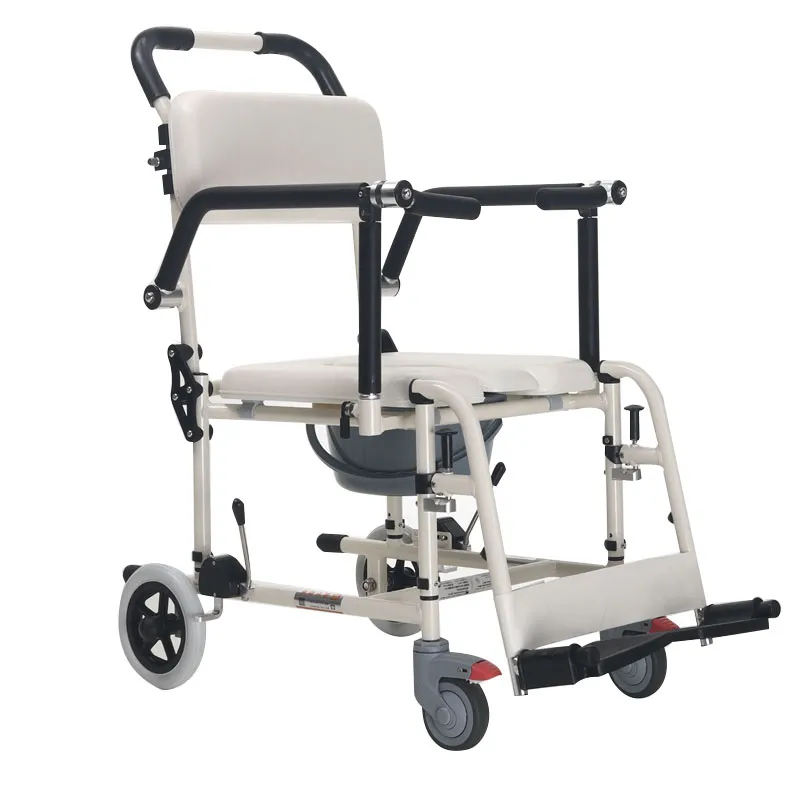
WheeledToilet Chairs Cannot be Used as Wheelchairs
Although wheeled toilet chairs have wheels, their essence remains: toilet assistance equipment, not a means of transportation.
The reasons are summarized as follows:
• Different seat structure
• Different armrest design
• Different wheel structure
• Different braking system
• Different weight-bearing methods
• Insufficient stability
• Different safety standards
Therefore, from a medical care perspective, an engineering perspective, and a safety perspective, wheeled toilet chairs must never be used as wheelchairs.
When using them, it must be clear:
A toilet chair is a toilet chair, and a wheelchair is a wheelchair; the two should not be used interchangeably.
Where Is Yikang Medical Located and What Are the Benefits?
Our factory is based in Foshan, Guangdong province—a hub for industrial manufacturing and international trade. The city's proximity to major ports and logistics centers ensures fast shipping and reliable supply chains. Buyers benefit from efficient production, accessible site visits, and low transportation costs when choosing our factory in China for their healthcare equipment needs.