

Whether a door is wide enough for a wheelchair to pass through is a frequently asked but often misunderstood question when choosing or using a wheelchair. This is especially true when the doorway is only 24 inches (approximately 61 cm) wide, leading many users to wonder: Can a manual wheel chair pass through a 24-inch wide door?
This seemingly simple question actually involves several technical aspects, including the overall width of the manual wheel chair, its structural design, tire type, armrest type, and the actual operating space required for passage.
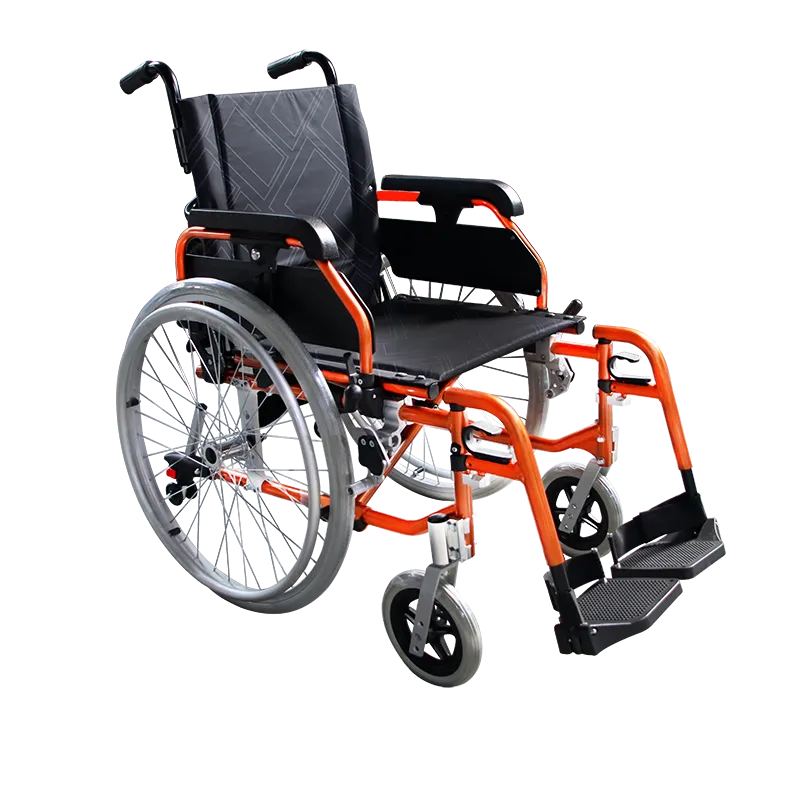
What does a 24-inch wide door mean in terms of accessible access?
Before discussing whether a manual wheelchair can pass through a 24-inch wide door, it's essential to clarify what "24-inch door width" actually represents.
1. The Actual Measurement of Door Width
In the fields of architecture and furniture, door width typically refers to:
• The net width inside the door frame
• Not the door panel size or the total width of the wall opening
In other words, a 24-inch wide door usually refers to the effective space a wheelchair can actually pass through when the door is fully open. 2. What level of door width is 24 inches?
From the perspective of passage space:
• 24 inches is a relatively narrow doorway width.
• It is commonly seen in many older buildings, storage rooms, restrooms, or auxiliary rooms.
For people who walk, this doorway width is not a problem; however, for manual wheel chairs, 24 inches is often close to or even lower than the overall width of most products.
What is the typical overall width of a manual wheelchair?
Determining whether a manual wheelchair can pass through a 24-inch wide doorway hinges on a key parameter: the overall width of the wheelchair.
1. What is the overall width of a manual wheelchair?
The overall width of a manual wheelchair is not just the seat width, but includes:
• The outermost distance between the two rear wheels
• External structures such as armrests and side panels
• The width of the tires themselves
Therefore, the overall width is often significantly greater than the seat width.
2. Common Width Ranges of Manual Wheelchairs
From common industry specifications:
• Most standard manual wheel chairs are typically wider than 24 inches.
• Even manual wheel chairs with narrower seat widths often have a rear wheel track distance close to or exceeding this value.
This means that, without considering special design features, a 24-inch doorway width is a relatively restrictive passage condition for most manual wheelchairs.
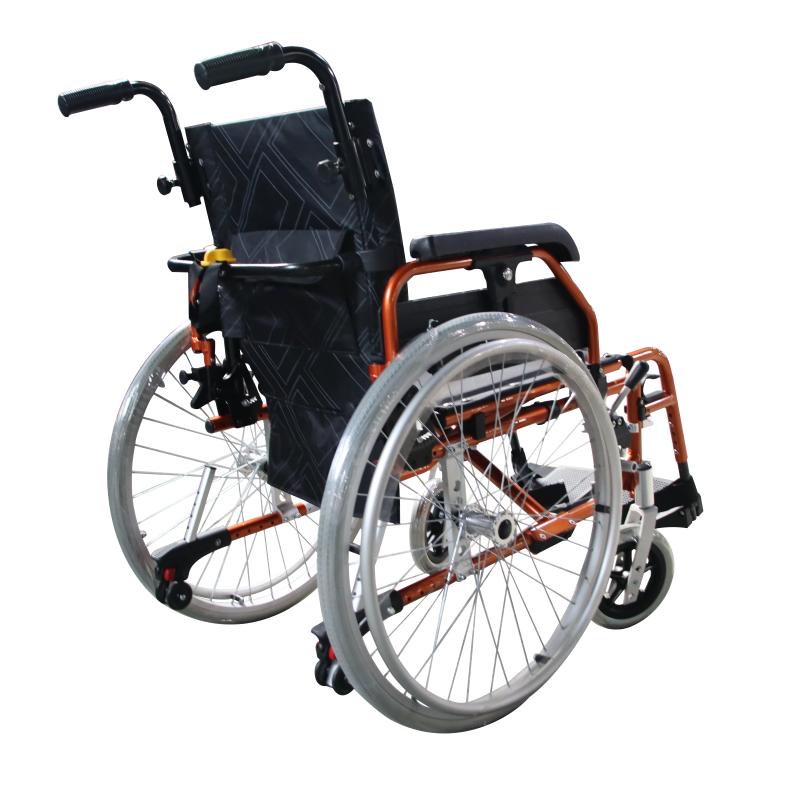
Can a manual wheelchair pass through a 24-inch wide doorway?
Answering the question "Can a manual wheelchair pass through a 24-inch wide doorway?" cannot be simply summarized as "yes" or "no," but should be based on the following key logic:
1. Is the overall width of the wheelchair less than the clear width of the doorway?
This is the most basic and important criterion:
• If the overall width of the manual wheel chair is greater than 24 inches, it cannot pass under normal conditions.
• If the overall width is close to 24 inches, there is almost no clearance when passing through, making operation extremely difficult.
In actual use, a certain safety clearance should also be left to avoid scratching the door frame.
2. Should dynamic operating space be considered?
When a wheelchair passes through a doorway, it is not completely static:
• Fine-tuning of direction is required during pushing.
• The wheelchair may sway slightly.
• The pusher or arms need some room to move.
Therefore, even if a manual wheel chair is "exactly 24 inches" on paper, it is still difficult to pass smoothly in practice.
3. Does the door opening method affect passage?
The door opening method also affects the available space. For example:
• Can a hinged door open fully to 90° or greater?
• Does the door handle encroach on the passage width?
These factors further reduce the passage space for manual wheelchairs.
Why is a 24-inch wide door so restrictive for manual wheelchairs?
Many people wonder: 24 inches doesn't sound particularly narrow, so why is it so problematic for manual wheel chairs? This is closely related to the structural characteristics of manual wheelchairs.
1. Rear Wheels Determine Minimum Passage Width
Manual wheelchairs have larger rear wheel diameters and are located at the outermost edges of both sides:
• The distance between the rear wheels is almost equal to the widest point of the entire wheelchair.
• The tires themselves have a certain thickness.
This makes manual wheelchairs almost "compressible" in terms of lateral space.
2. Armrests and Side Panels Add Additional Width
Even in some lightweight manual wheelchairs, armrests and side panels are still necessary structures:
• To support the arms
• To provide lateral protection
These structures, without being removed, further increase the overall width.
3. Manual Wheelchairs Are Not Designed for Extremely Narrow Spaces
From a design perspective, most manual wheel chairs are designed around:
• Indoor public passageways
• Standard residential doorways
• Medical facility access requirements
A 24-inch doorway width is not a standard accessible size.
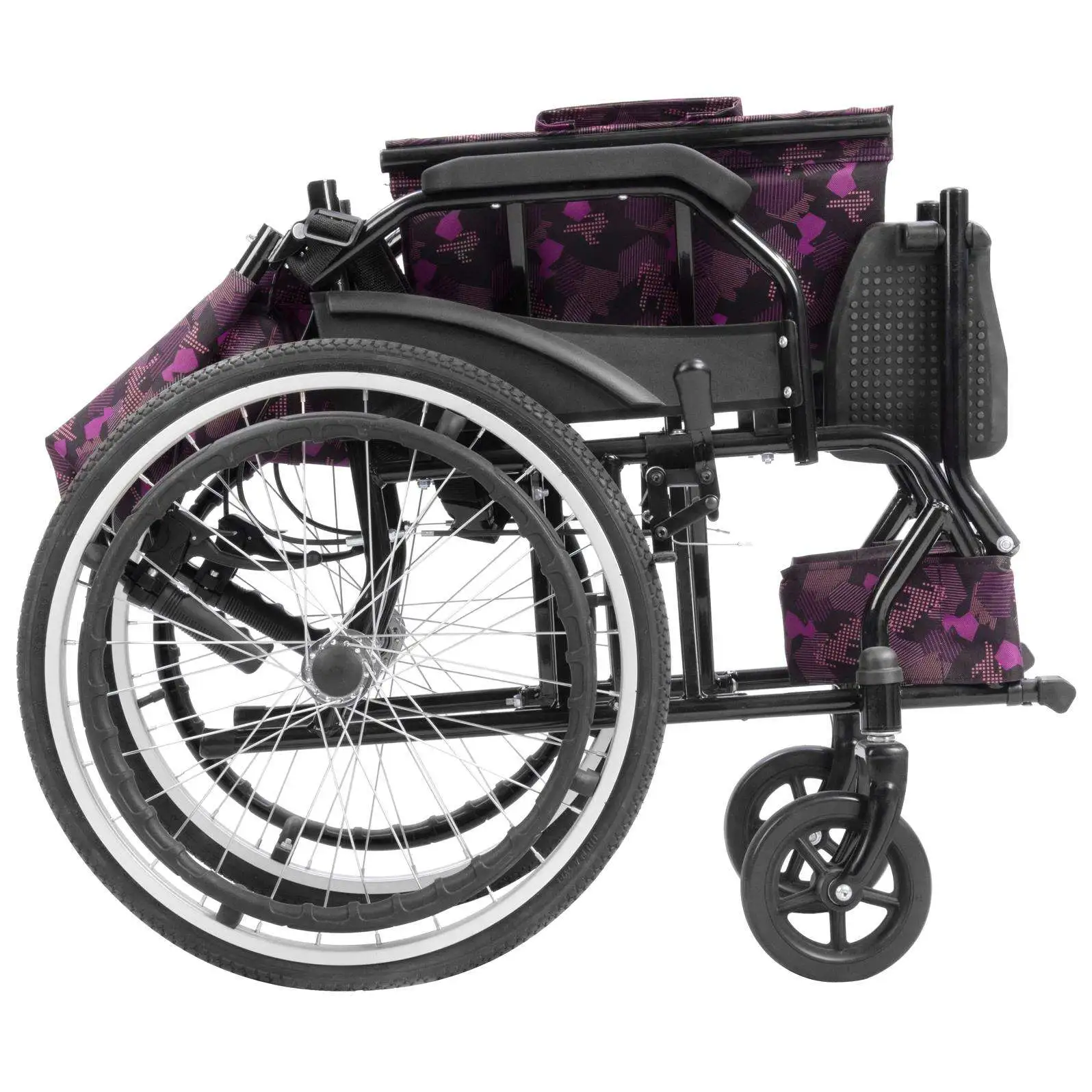
Do different types of manual wheelchairs have different adaptability to a 24-inch doorway width?
While this article doesn't compare specific models, it objectively analyzes the differences in door width adaptability among different types of manual wheel chairs from a structural classification perspective.
1. Standard Manual Wheelchairs
Standard manual wheel chairs typically have:
• Larger rear wheels
• Fixed armrest structure
• Relatively stable overall width
These types of manual wheelchairs usually have difficulty passing through 24-inch wide doors.
2. Lightweight or Compact Manual Wheelchairs
Some lightweight manual wheelchairs are designed with:
• More compact frames
• Smaller tire width
• Relatively simplified external structure
Theoretically, these manual wheelchairs have an advantage in space adaptability, but the overall width parameters still need to be strictly verified.
3. The Impact of Removable Structures on Width
Some manual wheelchairs allow:
• Removable armrests
• Fold-up footrests
However, it's important to note that rear wheel width is usually still a key limiting factor that cannot be changed.
What objective conditions must a manual wheelchair meet to pass through a 24-inch wide door?
If a manual wheel chair must attempt to pass through a 24-inch wide doorway, multiple conditions must typically be met simultaneously, not just a single factor.
1. The clear width of the doorway must actually be 24 inches
Many doors appear wide enough, but when actually measured:
• Insufficient width inside the door frame
• Door handle encroaching on space
Both will make the effective width less than the nominal value.
2. The ground must be flat and free of thresholds
Any additional resistance will increase the difficulty of passage:
• Thresholds
• Differences in floor level
• Carpet edges
Under extreme width conditions, these factors will amplify the problem.
3. Extremely high precision is required during pushing
With almost no lateral clearance:
• The pushing direction must be highly stable
• Even a slight deviation can cause jamming or scraping.
This places extremely high demands on the user or caregiver's operational skills.
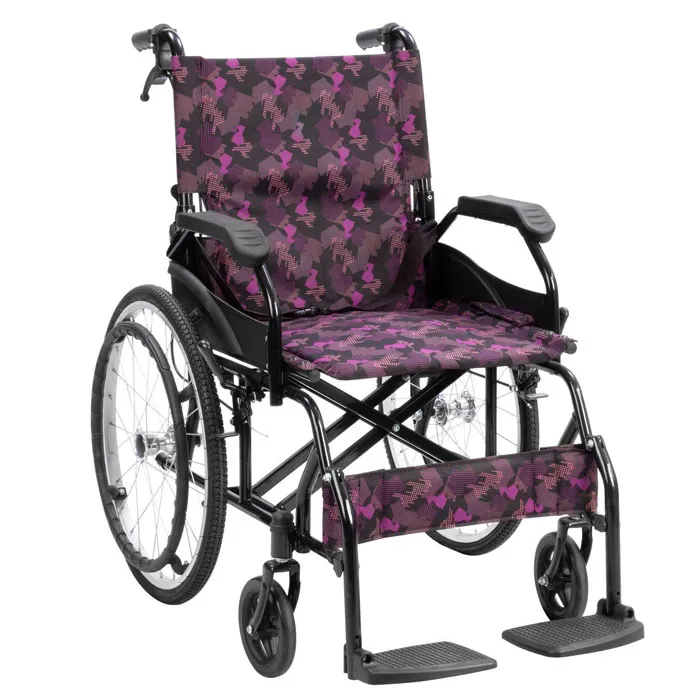
Why can't you judge whether a manual wheelchair can pass through a doorway based solely on "seat width"?
In actual consultations, many people habitually use "seat width" to determine whether a manual wheelchair can pass through a doorway, which is a common misconception.
1. Seat Width ≠ Overall Wheelchair Width
The seat width of a manual wheel chair refers only to the internal seating space, not the external dimensions:
• Rear wheels flare outwards on both sides of the seat.
• Armrests are usually located outside the seat width.
Therefore, seat width alone cannot determine whether it can pass through a 24-inch doorway.
2. When looking through a doorway, focus on the outermost edge dimension
Whether it's the front or rear wheels, if any structure exceeds the width of the doorway, the manual wheel chair will not be able to pass.
Why choose Yikang Medical as your supplier?
Choosing Yikang Medical means partnering with a trusted hospital equipment manufacturer and supplier in China. Since 2010, we have been producing high-quality medical hardware, and since 2014, we have specialized in hospital beds and wheelchairs. Our factory supports OEM production for top brands, providing customized solutions to meet diverse customer needs.
Our product line includes hospital beds, nursing beds, electric wheelchairs, manual wheel chairs, toilet chairs, shower chairs, walkers, and crutches.